wayground logo

Free Printable Worksheets

Font size

S
M
L
XL
Worksheets

Biology Revision

Total questions: 80

Worksheet time: 46mins

Name
Class
Date
1.

What is H?

a)

pancreas

b)

liver

c)

small intestine

d)

large intestine

2.

The villi provides a surface area for the absorption of nutrients into the bloodstream.

a)

True

b)

False

3.

Fingerlike projection of the small intestine that increase the surface area for absorption are called

a)

bronchi

b)

alvioli

c)

villi

d)

chyme

4.

Protein digestion takes place

a)

in the mouth

b)

in the stomach

c)

in the stomach and duodenum

d)

all of the above

5.

Bile is produced by the

a)

Liver

b)

Pancreas

c)

Small Intestine

d)

Large Intestine

6.

The protective substance that lines the stomach is called

a)

Mucus

b)

Saliva

c)

Pepsin

d)

Trypsin

7.

Waves of contractions that move food one way through the digestive system are called

a)

Impulse

b)

Peristalsis

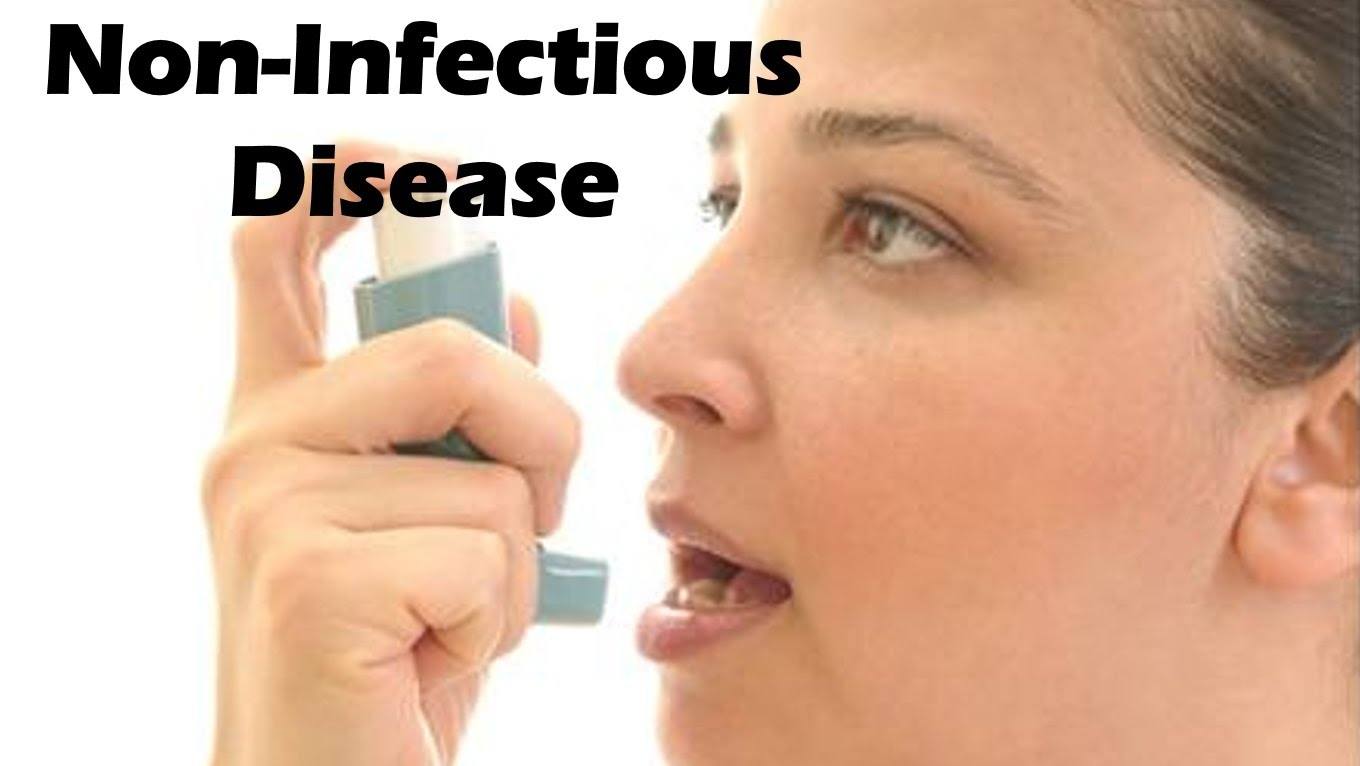
c)

Action Potential

d)

Metabolism

8.
This is the enzyme that works on protein.
a)
pepsin
b)
HCl
c)
Bicarbonate
d)
Lactase
9.

Most nutrient absorption occurs in the ________________ .

a)

mouth

b)

stomach

c)

large intestines

d)

small intestines

10.
This is the enzyme that breaks down the sugar lactose in your small intestine.
a)
pepsin
b)
HCl
c)
Bicarbonate
d)
Lactase
11.

Bile juice helps in the digestion of fat because it contains

a)

enzymes

b)

vitamins

c)

bile salts

d)

bile pigments

12.

The stomach wall produces mucus to cover its surface. Which of the following statements correctly describe(s) the function of the mucus?

(1) It kills the bacteria in the ingested food.

(2) It prevents the rubbing of food against the stomach wall.

(3) It protects the stomach wall from the action of the digestive enzymes.

a)

(1) only

b)

(3) only

c)

(1) and (2) only

d)

(2) and (3) only

13.

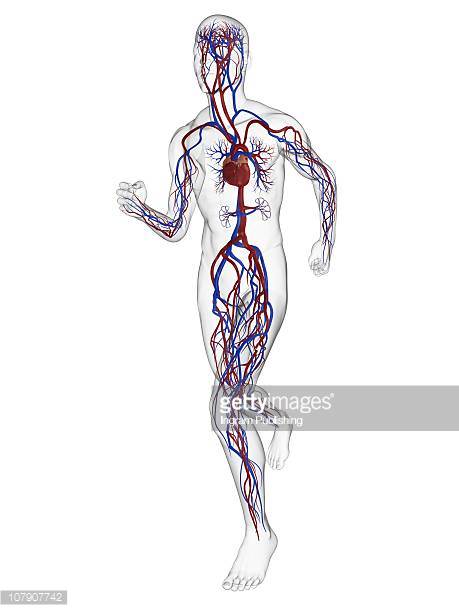
What is the main organ of the circulatory system?

a)

small intestine

b)

bone

c)

lungs

d)

heart

14.

Arteries carry oxygen rich blood away from the heart.

a)

True

b)

False

15.

Veins carry oxygen poor blood back to the heart.

a)

False

b)

True

16.

The job of the heart is to . . .

a)

pump blood around the body.

b)

send food to the small intestines.

c)

break down food.

d)

give energy to the body.

17.

The heart is about the size and shape of your . . .

a)

head

b)

fist

c)

hand

d)

foot

18.
The circulatory system works with the ___________ system to provide our body with oxygen.
a)
respiratory
b)
digestive
c)
muscular
d)
skeletal
19.
The main function of the circulatory system is 
a)
To give the body structure and support
b)
Excrete waste
c)
transport blood, nutrients, and gases throughout the body
d)
to transport messages from the body to the brain
20.
The heart has ___ chambers.
a)
1
b)
2
c)
3
d)
4
21.
What is the Circulatory System also known as?
a)
The heart
b)
Cardiovascular System
c)
Nervous System
d)
Aorta
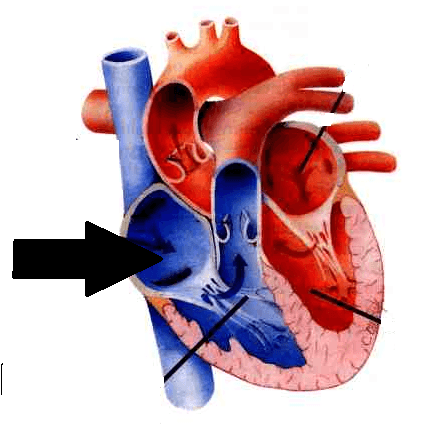
22.
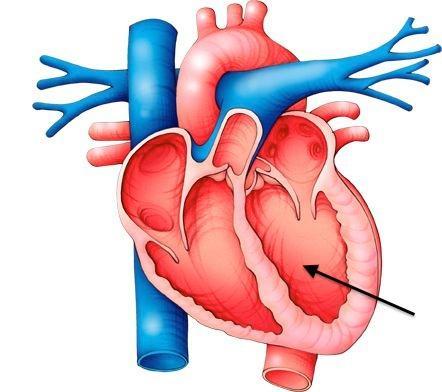
Identify
a)
Left atrium
b)
Right atrium
c)
Left ventricle
d)
Right ventricle
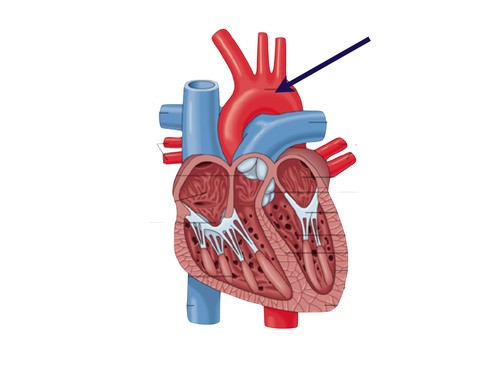
23.
Identify
a)
Pulmonary veins
b)
Pulmonary artery
c)
Aorta
d)
Vena cava
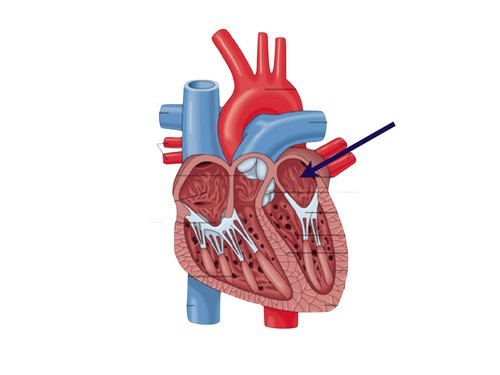
24.
Identify
a)
Left atrium
b)
Right atrium
c)
Left ventricle
d)
Right ventricle
25.
Identify
a)
Left atrium
b)
Right atrium
c)
Left ventricle
d)
Right ventricle
26.
This chamber of the heart RECEIVES blood returning from the body
a)
Right Atrium
b)
Right Ventricle
c)
Left Atrium
d)
Left Ventricle
27.

This chamber of the heart pumps the blood back out to the body cells through the Aorta

a)

Right Atrium

b)

Left Atrium

c)

Right Ventricle

d)

Left Ventricle

28.
What type of respiration requires oxygen?
a)
Aerobic
b)
Anaerobic
29.
Which type of respiration is most efficient?
a)
Aerobic
b)
Anaerobic
30.
Where in the cell does anaerobic respiration take place?
a)
Nucleus
b)
Cytoplasm
c)
Mitochondria
d)
Cell membrane
31.
What is required to carry out fermentation or anaerobic respiration?
a)
glucose
b)
the absence of oxygen
c)
glucose and the abscense of oxygen
32.
Which equation shows the reaction for anaerobic respiration
a)
carbon dioxide + water --> glucose and oxygen
b)
glucose + Oxygen --> lactic acid and energy
c)
glucose + oxygen --> carbon dioxide and water and energy
d)
glucose --> lactic acid and energy
33.
 The expression "feel the burn" means that a person exercising is goes through...
a)
lactic acid fermentation
b)
alcoholic fermentation
c)
photosynthesis
d)
aerobic respiration
34.
The trachea branches off into two:
a)
Alveoli
b)
Bronchi
c)
Bronchioles
35.
Another name for the throat is called the:
a)
Nasopharynx
b)
Pharynx
c)
Larynx
36.
Which body structure protects the lungs from outside harm?
a)
Cartilage
b)
Tiny Sacs
c)
The Rib Cage
37.
What important activity takes place in the lungs?
a)
Food is digested
b)
Waste filtered from blood
c)
Oxygen (O2) is exchanged for Carbon Dioxide (CO2)
d)
Trachea is exchanged for the larynx
38.
To go on living, the body's cells need food, water, chemicals and ...
a)
Helium
b)
Oxygen
c)
Nitrogen
d)
Carbon Dioxide
39.

Which is not a job of the respiratory system?

a)

taking in oxygen

b)

taking in carbon dioxide

c)

moisten air

d)

transport glucose

40.
What are the tiny air sacs at the end of the Bronchioles, that transfer oxygen into the blood stream?
a)
Trachea
b)
Bronchi
c)
Alveoli
d)
Larynx
41.

What is labeled at E?

a)

bronchi

b)

trachea

c)

pharynx

d)

none of the above

42.
What are the lungs getting rid of when you exhale?
a)
Air
b)
Oxygen
c)
Carbon Dioxide
d)
Nitrogen
43.
Where are your vocal cords located?
a)
Nose
b)
Lungs
c)
Larynx
d)
Alveoli
44.

Everyone should try to reduce their ...

a)

carbon footprint

b)

solar footprint

c)

pylon footprint

d)

global footprint

45.

Choose two terms that start with: CO2 ...

a)

emissions

b)

footprint

c)

turbine

d)

panel

46.

A group of compounds that are able to trap heat in the atmosphere, keeping the Earth's surface warmer than it would be if they were not present.

a)

CO2 emissions

b)

greenhouse gases

c)

climate change

47.

What is depicted in the photo?

a)

coal mine

b)

oil rig

c)

power station

d)

solar panel

48.
What is the greenhouse effect?
a)
warming of the earth due to gases in our atmosphere.
b)
cooling of the earth due to gases in our atmosphere
49.
We need the natural greenhouse effect for Earth to be habitable.
a)
True
b)
False
50.
Which of the following sets of evidence supports global warming?
a)
CO2 levels rising
b)
Sea Levels rising
c)
Glacier mass decreasing
d)
All of the Above
51.
The following graph tells us what?
a)
Sea Levels are decreasing.
b)
Sea Levels are rising.
52.
What temperature would Earth be with no greenhouse effect?
a)
25 degrees C
b)
50 degrees C
c)
-18 degrees C
d)
0 degrees C
53.
What are some predictions about local changes brought on by global warming?
a)
More severe thunderstorms
b)
Days warming faster than nights
c)
Rising sea levels
d)
All of the above
54.
What would happen if greenhouse gases destroyed Earth's ozone layer?
a)
Radiation exposure would increase
b)
liquid water would vaporize
c)
we might have solar flares
d)
all of the above
55.
1.What cells carry electrical signals?
a)
Red blood cells
b)
Nerve cells
c)
Sperm cells
56.
What cells have NO nucleus?
a)
Leaf cells
b)
Animal cells
c)
Red blood cells
d)
egg cells
57.
 What is another name for a palisade cell?
a)
Egg cell
b)
Sperm Cell
c)
Leaf cell
d)
Animal cell
58.
The nucleus 
a)
contains genetic material
b)
is for respiration
c)
is for photosynthesis
d)
is for movement
59.
Diffusion is...
a)
movement of a substance from high concentration to low concentration
b)
movement of a substance from low concentration to high concentration
c)
Movement of a substance
60.
Which of these is not a unicellular organism?
a)
Amoeba
b)
Euglena
c)
Protozoa
d)
Red blood cells
61.
Flagella are used for...
a)
Food
b)
Movement
c)
Collecting sunlight
d)
Respiration
62.

This type of cell is not yet specialized, but has the ability to turn into a variety of specialized cell types.

a)

stem cell

b)

bone cell

c)

nerve cell

d)

gamete

63.

What is a cell?

a)

The smallest and most basic unit of life

b)

A non living organism

c)

A type of element

d)

An atom

64.

This is a example of........

a)

an organ system

b)

cells

c)

organs

d)

tissues

65.

Which of the following tissues is made up of cells that contract and relax to move substances through the body and help the body move?

a)

Epithelial

b)

Connective

c)

Muscle

66.
The role of these specialised cells is to help fight off infection and foreign bodies.
a)
Palisade Cells
b)
Nerve Cells
c)
White Blood Cells
d)
Red Blood Cells
67.

Specialized cells that absorb water by osmosis

a)

Phloem

b)

Xylem

c)

Stoma

d)

Root Hair Cell

68.
Antibiotics work against most
a)
Bacteria
b)
Bacteria & Viruses
c)
Vaccines
d)
Viruses
69.
Which of the following illness is caused by pathogens?
a)
Bruise
b)
Blood Clot
c)
Diabetes
d)
Influenza
70.
Vaccinations are used for
a)
Curing the illness
b)
Preventing the Illness
c)
Getting the illness
71.
What are the 4 types of pathogens that could cause illness?
a)
animals, bacteria, fungi and plants
b)
bacteria, fungi, nucleus, protist
c)
bacteria, fungi, viruses, protist
d)
bacteria, plants, fungi, protist
72.
What type of microbe is used in a vaccine?
a)
it doesn't really matter
b)
a damaged one
c)
a weakened or inactivated one
d)
a normal one
73.
What is the main purpose of the immune system?
a)
support the body through bones and muscles
b)
get rid of waste from the body
c)
protect the body from pathogens
d)
move blood through the body
74.
Vaccines stimulate the body to produce...
a)
autoimmune diseases
b)
helper t-cells
c)
fever
d)
antibodies
75.
Ringworm is caused by which pathogen?
a)
Bacteria
b)
Virus
c)
Protist
d)
Fungi
76.
A disease that is harmful to the body and is contagious is called....
a)
Non-Infectious
b)
Infectious
77.
Which disease is a non-infectious disease?
a)
Diabetes
b)
Influenza
c)
AIDS
d)
Chickenpox
78.

Insect-pollinated flowers typically have

a)

Small, inconspicuous flowers

b)

No scent

c)

Light, powdery pollen grains

d)

Relatively large, and often sticky grains of pollen

79.

What type of pollination is shown in this diagram?

a)

Cross pollination

b)

Self pollination

c)

Single pollination

d)

Transfer pollination

80.

Which of the following structures is part of the male reproductive system in plants (stamen)?

a)

Anther

b)

Style

c)

Ovary

d)

Sepal