
 Worksheets
Bio B Finals Practice
Total questions: 187
Worksheet time: 2hrs 20mins
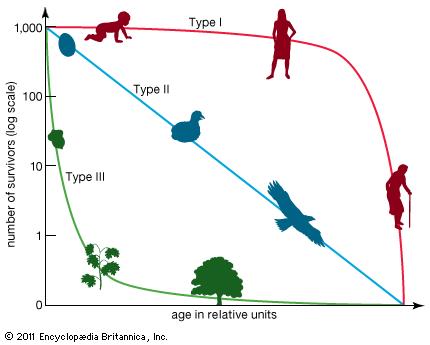
The mortality rate of organisms following a type I survivorship curve is __________.
fairly constant throughout life
higher in post-reproductive years
lower after the organisms become established
unrelated to age
Which contribute to a positive population growth?
immigration
positive birth rate
emigration
positive death rate
Which of the following is NOT an outcome of high population density?
mortality increase
predators tend to ignore prey that is overabundant
reduction in births
decreased resource availability

Which of the following describes the population of elephants in Kenya from 1973-1989?
(immigration + births) – (emigration + deaths) = 0
(immigration + births) – (emigration + deaths) = 1
(immigration + births) – (emigration + deaths) < 0
(immigration + births) – (emigration + deaths) > 0
What type of factor has an increasing impact as the population size increases?
density-independent
density-dependent
cohort effect
survivorship factor
Which of the following are density dependent factors?
competition for resources
predation
disease
natural disasters
Which of the following are examples of a density independent factors?
forest fire
seasonal cycles
storms
disease
Factors like predation can have a positive benefit to the population of prey organisms because predators tend to keep prey populations below their ___________.
carrying capacity
sustainibility number
exponential growth point
competition level
As a population of a species increases within a territory, which of the following most likely also increases?
Immigration
Food supply
Carrying capacity
Competition
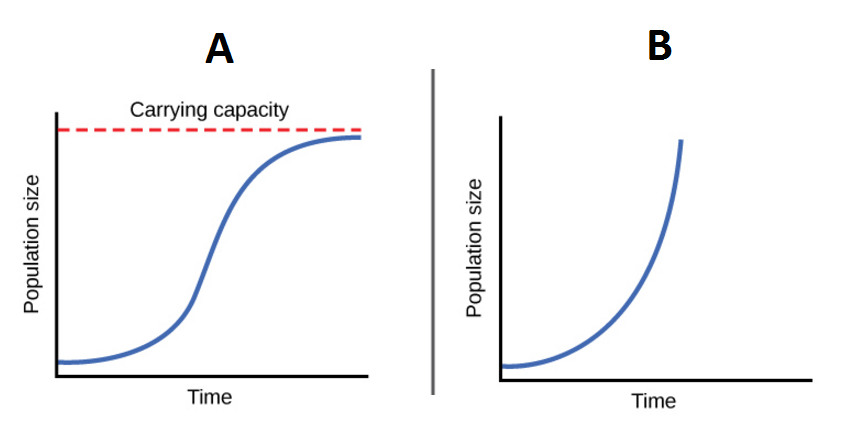
What type of growth model is shown in image A?
Exponential
Logistic
What type of growth model is shown in image B?
Exponential
Logistic
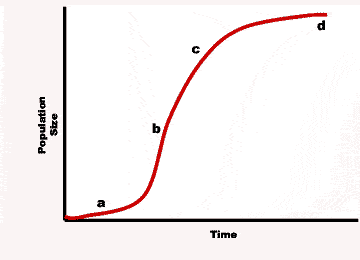
What point on the graph represents carrying capacity?
a
b
c
d
At carrying capacity, a population __________.
increases rapidly
increases slowly
decreases slowly
is in dynamic equilibrium
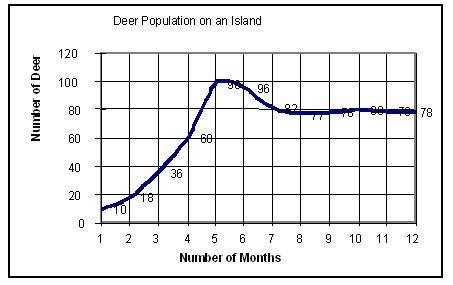
Which choice most closely approximates the deer population's carrying capacity based on the graph?
100
80
60
10
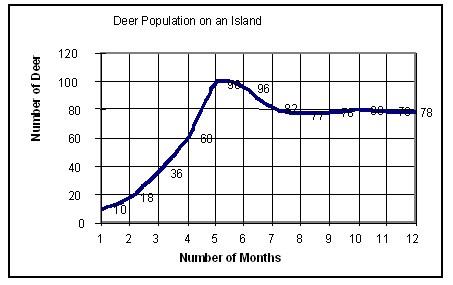
Which mathematical model most closely describes the population growth curve shown in deer population graph from the previous question?
logistic growth
exponential growth
Which of the following populations is most likely to go extinct?
a very small population in an unstable environment
a moderate-sized population of r strategists
a large population with lots of genetic variability
all would be equally likely to go extinct
What is the the closest approximation of the size of the human population today?
850 million
7.5 billion
20.8 billion
1.7 trillion

Which population growth model most closely describes the human population in the modern age?
logistic growth
exponential growth
upward growth
tumor growth


This graph shows ....
When one population increases, the other decreases.
When one population decreases, the other increases.
When one population increases, the other increases instantly.
When one population increases, it causes the other to increases shortly after.


Nesting birds often space themselves evenly from other nests. This pattern is called
uniform dispersion
clumped dispersion
random dispersion
type I dispersion

The first species to take hold in a barren area after a disaster has occurred is called a
climax community
parasite
pioneer species
carnivore


According to the graph, which age group is the smallest for the male population in the United States?
20-24
85+
50-54
Mitosis is the stage of the cell cycle during which ____.
the cell's nucleus divides into two new nuclei.
the cell divides into two new cells.
the cell's DNA is replicated.
the cell's cytoplasm divides.
During what stage of the cell cycle does replication occur?
interphase
cytokinesis
prophase
mitosis
What happens during cytokinesis of an animal cell?
Each organelle divides into two parts.
A new round of mitosis begins.
Two new daughter cells are formed.
A cell plate forms.
Chromatids are...
identical daughter cells.
doubled rods of condensed chromatin.
pigments that absorb the energy in sunlight.
identical strands of chromosomes.
Cycle of growth and division that cells undergo is...
replication
the cell cycle.
interphase.
mitosis.
At the end of prophase, each of the following happens except
tighter coiling of the chromosomes.
breaking down of the nuclear envelope
disappearing of the nucleolus.
chromosomes line up in the middle.
The longest phase of the cell cycle is...
prophase
interphase
metaphase
mitosis
The structures that become tightly packed during cell division and contain DNA are
centromeres
centrioles
chromosomes
spindle fibers
Which stage of mitosis do the chromosomes line up the middle?
anaphase
metaphase
prophase
telophase

Which stage of mitosis is visible here?
anaphase
prophase
telophase
metaphase

Which stage is visible?
anaphase
prophase
telophase
metaphase
What happens during cytokinesis?
nuclear division
DNA replicates
cell grows
cytoplasm divides

Identify the stage.
prophase
anaphase
metaphase
telophase
Chromatids are...
identical daughter cells.
doubled rods of condensed chromatin.
pigments that absorb the energy in sunlight.
identical strands of chromosomes.
What is apoptosis?
A cell passing a checkpoint.
A cell pausing to fix something wrong with itself.
cell death
a part of the cell "pops" into place.
What is the end result of Mitosis/cytokinesis?
two genetically different daughter cells
four identical daughter cells
two identical daughter cells
four genetically different daughter cells
Cancer cells...
divide too frequently
are uncontrolled
can metastasize (move) to other locations
all of these.


Which of the following are reasons why cells need to divide?
Growth
Replace
Repair
Reproduction
A cell has a volume of 64 units and total surface area of 96 units. What is the cell's surface area to volume ratio?
1.5
2.8
3.4
4.7
A small cell has a ________ surface area to volume ratio than a larger cell.
larger
smaller
equal
The cell's surface area to volume ratio limits the size of a cell by limiting the transport of nutrients and gases into and out of the cell.
True
False

Which of the following is least efficient?
A
B
C
D

Which of the following has the largest surface area to volume ratio?
A
B
C
D

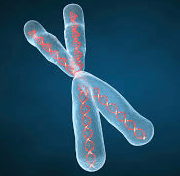


The disc shaped protein core that DNA wraps around is called
histone
nucleosome
chromatin
gene
Chromosomes contain genetic information in the form of
DNA
histone
centromere
karyotypes
A histone core with DNA wrapped around it is called a
somatic cell
gene
centromere
nucleosome
A segment of DNA
nucleosome
gene
histone
chromatin
Made of chromatin and become visible during cell division
chromosomes
histones
mitochondria
nucleosomes
DNA stands for
(a)
Which of the following statements about chromosomes is correct?
Chromosomes are long, thread-like structures
Chromosomes are found in the nucleus of all cells in the human body
Chromosomes contain DNA
All of the above
How many chromosomes are found in each cell of your body?
46
23
40
45
What does DNA stand for?
Deoxyribonucleic acid
ribosenucleic acid
Deoxyribose
Nucleic acid
How many pairs of chromosomes do human cells contain?
23
46
16
32
What is a long coiled strand of DNA and proteins?
gene
RNA
chromosome
genome
Where is DNA found in a human cell?
ribosome
nucleus
cell membrane
cytoplasm

From smallest to largest how would genetic information be organized?
genes, cell, nucleus, chromosome, DNA
chromosome, cell, gene, DNA, nucleus
DNA/nucleotides, gene, chromosome, nucleus, cell
nucleus, cell, gene, DNA, chromosome
A _______ is an egg that has been fertilized by a sperm cell.
gene
chromosome
zygote
embryo

ATG TGA CAG

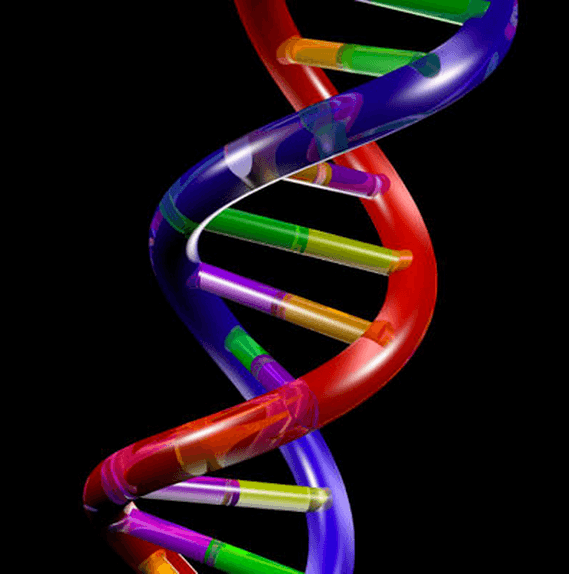
According to the Base Pair rule, Cytosine always pairs with
Adenine
Uracil
Thymine
Guanine

In a ________ mutation, a base is left out.
substitution
insertion
deletion
A _________________ is a cell organelle made of ribosomal RNA and protein.
ribosome
mitochondria
nucleus
In a(n) ____________________ mutation, an extra base is added.
substitution
insertion
deletion
When replication is complete, there are two _____________ DNA modules.
identical
different
similar

Who was the scientist who used X-rays to "take a picture" of DNA which was eventually used to figure out the structure of DNA?
Rosalind Franklin
Watson and Crick
Maurice Wilkins
Sherlock and Watson

What is the name of the two scientists who used Rosalind Franklin's X-ray image to determine the double helix shape of DNA?
Watson and Crick
Watson and Franklin
Crick and Franklin
Sherlock and Watson
DNA that codes for a specific protein is called a
gene
codon
amino acid
phenotype

What does the arrow indicate on the DNA model?
The bond between adjacent phosphate and deoxyribose molecules
The junction of introns and exons in the sense strand of DNA
The hydrogen bond between complementary nucleotides
The junction of a codon and a DNA triplet

What letter represents the part of the nucleotide that is the genetic code?
1
2
3
None of the above
3' AGGTCAGGT 5'
5' AGGTCAGGT 3'
5' ACCTCUGGT 3'
5' TGGACTGGA 3'
5' TCCAGTCCA 3'

Which letter represents the phosphate group on the DNA strand?
X
Y
W
Z
Which letter represents the deoxyribose sugar on the DNA strand?
X
Y
W
Z
Which enzyme is responsible for forming phosphodiester bonds between the Okazaki fragments?
Ligase
Helicase
DNA Polymerase 1
DNA Polymerase 3
Which enzyme proofreads and removes RNA Primase
Ligase
Polymerase 1
Polymerase 3
Helicase
Direction that DNA is replicated
3' to 5'
5' to 3'

Structure C is
helicase
primase
DNA polymerase III
gyrase

H is the
leading strand
lagging strand
parent strand
none of these

Structure G is
primase
gyrase
DNA polymerase III
DNA polymerase I

Replication is occurring AWAY FROM the replication fork on strand
I, the leading strand
I, the lagging strand
H, the leading strand
H, the lagging strand

This structure is an Okazaki fragment.
A
D
F
G

The picture below shows the steps of DNA replication beginning with step one and ending with step three.
Because you are reusing the old, or parent, DNA strand DNA replication is said to be
Semi- Conservative
Semi-discontinuous
Continuous
Fully-Conserveative
Which enzyme is responsible for adding the free nucleotides to the replicating DNA?
DNA Helicase
DNA Ligase
DNA polyermase
RNA Polymerase
Which is the first step?
DNA Helicase unwinds original DNA strand
RNA Primase lays down RNA primer for new nucleotide bases.
DNA polymerase builds new strands by bring in new nucleotide bases.
Ligase knits together fragments on lagging strand
Which is the second step?
DNA Helicase unwinds original DNA strand
RNA Primase lays down RNA primer for new nucleotide bases.
DNA polymerase builds new strands by bring in new nucleotide bases.
Ligase knits together fragments on lagging strand
Which is the third step?
DNA Helicase unwinds original DNA strand
RNA Primase lays down RNA primer for new nucleotide bases.
DNA polymerase builds new strands by bring in new nucleotide bases.
Ligase knits together fragments on lagging strand
Which is the fourth step?
DNA Helicase unwinds original DNA strand
RNA Primase lays down RNA primer for new nucleotide bases.
DNA polymerase builds new strands by bring in new nucleotide bases.
Ligase knits together fragments on lagging strand

Which letter in the picture below depicts the leading strand in DNA replication?
A
C
B
None of the above
If a person suffered from a disorder where their DNA fragments were unable to fill in the missing slots in between the fragments of the lagging strand, they would most likely have a disorder that affected which enzyme?
DNA Helicase
DNA Ligase
DNA polyermase
RNA Polymerase
DNA replication runs from ______' to _____' and is said to be ______________________
5, 3, antiparallel
3, 5, antiparallel
5, 3, parallel
3, 5, parallel
The directionality of DNA is said to be ___________, because it is side by side by goes in opposite directions.
Anti-directional
Parallel
Anti-parallel
Anti-uniform
In what process is mRNA synthesized?
Transcription
Translation
DNA Replication
Mitosis
Where does TRANSCRIPTION occur?
Nucleus
Ribosome
Cytoplasm
Mitochondria
How many codons equals 1 amino acid?
1
2
3
4
How many nucleotides equal 1 amino acid?
1
2
3
4
TRANSCRIBE this DNA sequence: TACGTTACT
AUGCAAUGA
ATGCAATGA
AUGGATUGA
TACGTTACT
Which of the following are differences in the structure between RNA and DNA
DNA uses deoxyribose sugar, RNA uses sugar ribose
DNA pairs Adenine with Uracil, RNA pairs Adenine with Thymine
DNA is a double helix, RNA is a single helix
DNA pairs Adenine with Thymine, RNA pairs Adenine with Uracil
Which organelle is the location where protein is made?
Ribosome
Nucleus
Cytoplasm
Nucleotide
When these bond together, they form a protein
Amino Acids
Peptide Bonds
Ribose
Nucleotides


What process is steps 1-3 referring to?
DNA Replication
Transcription
Translation
Nucleus
What is 11. pointing to?
Cytoplasm
Ribosome
mRNA
Nucleus
What is 2. pointing to?
Cytoplasm
Ribosome
mRNA
Nucleus
What process is step 12 referring to?
DNA Replication
Transcription
Translation
Nucleus
What does tRNA carry to the ribosome?
Nucleus
Codons
Amino Acids
None of the Above
Where does TRANSCRIPTION occur?
Nucleus
Ribosome
Cytoplasm
Mitochondria
Which of the following is a codon?

ATG
AUG
AUT
On which molecule can an anticodon be found?
mRNA
DNA
tRNA
rRNA

A polypeptide is a sequence of ____________________ held together by a ______________ bond.
amino acids; peptide
fatty acids; ionic
proteins; hydrogen
fatty acids; covalent
How do you know when to begin translating a strand of mRNA?
look for AUG
start at the beginning
look for ATG
when the teacher says so!!!
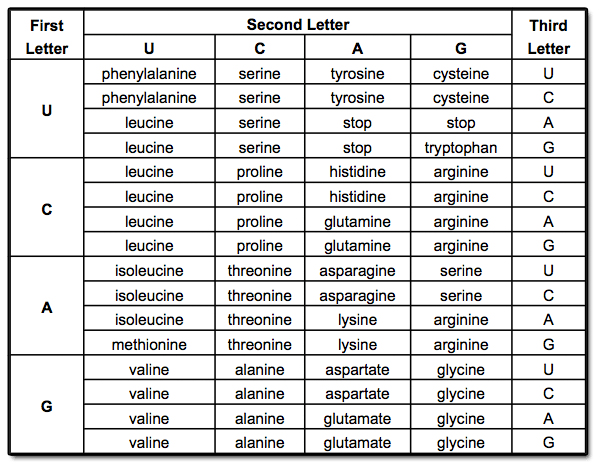
TRANSLATE this RNA sequence: AUGCAAUGA
Met-Glu-Stop
Met-His-Stop
Thr-Glu-Stop
Thr-Pro-Stop
Another name for a point mutation is:
Substitution
Frameshift
Insertion
Deletion
The mutated DNA segment is TTACGCAAC. This is an example of ___ mutation.
ATTGAGCC - Mutated
The example above is an example of a

