
 Worksheets
Final prep day 3
Total questions: 215
Worksheet time: 2hrs 55mins

Which statement best describes what Earth’s outer layer is like underneath the surface in the image?
Underneath both the soil and the ocean, Earth’s outer layer is made of sand and water.
Underneath both the soil and the ocean, Earth’s outer layer is made of hard, solid rock.
Underneath the soil, Earth’s outer layer is made of hard, solid rock. Underneath the ocean, Earth’s outer layer is made of sand.
Underneath the soil, Earth’s outer layer is made of water.

Dr. Raisa and her team of geologists have been studying GPS data that shows that two plates moved apart. Which diagram shows what happened between the two plates as they moved away from each other?
Diagram A: A new plate from underneath filled in the gap that was created by the plates moving apart.
Diagram B: Sand and dirt filled in the gap that was created by the plates moving apart.
Diagram C: Ocean water filled in the gap that was created by the plates moving apart.
Diagram D: Soft, solid rock from underneath the plates rose and hardened, adding solid rock to the edges of both plates.

Fossil remains of Lystrosaurus (an extinct four-legged animal) have been discovered in India and South Africa. When they were living, all the Lystrosaurus lived together on land, and they could not swim. However, now there is an ocean between the Lystrosaurus fossils. What could explain how these fossils got so far apart?
India and South Africa are parts of different plates. The plates slowly moved far apart as soft, solid rock from underneath got added to the edges of the plates over millions of years.
India and South Africa are parts of different plates. The plates floated away from each other across the ocean.
India and South Africa are parts of different plates. The plates slowly moved apart as new plates from underneath got added between them over millions of years.
India and South Africa are parts of different plates. The plates were sometimes pushed far apart by earthquakes, and soft, solid rock from underneath got added to the edges of the plates.

Scientists often study cross sections to better understand what the inside of something looks like. If we took a cross section of a potted plant by cutting it vertically, what would the cross section look like?
Diagram A
Diagram B
Diagram C
Diagram D

A team of geologists wants to study hard, solid rock under the surface of Earth. The team is considering drilling down in Saudi Arabia (1) or in the Arabian Sea (2). Where will the geologists find hard, solid rock?
neither under 1 nor 2, because there is sand and gravel under both places
neither under 1 nor 2, because there is water under both places
under 1 and 2, because Earth’s entire outer layer is made of hard, solid rock
only under 1, because Earth’s outer layer is made of hard, solid rock under continents but not under the ocean

Dr. Patel and her team have been using GPS to track two plates that are moving toward each other. Which diagram shows what is happening at the place where the plates are moving toward each other?
Diagram A: Two plates are hitting each other, and the plates are breaking into pieces, creating sand.
Diagram B: Two plates are pushing against each other, causing the edges to bend upward.
Diagram C: One plate is going underneath the other plate and sinking into the soft rock below.
Diagram D: One plate is going underneath the other plate and sinking into the ocean below.

Similar rock formations have been discovered in Brazil and South Africa. These rock formations were formed at the same time and are made of the same types of rocks. What could explain how these rocks got so far apart?
Brazil and South Africa are parts of different plates. The plates were sometimes pushed far apart by earthquakes, and soft, solid rock from underneath got added to the edges of the plates.
Brazil and South Africa are parts of different plates. The plates floated away from each other across the ocean.
Brazil and South Africa are parts of different plates. The plates slowly moved apart as new plates from underneath got added between them over millions of years.
Brazil and South Africa are parts of different plates. The plates slowly moved far apart as soft, solid rock from underneath got added to the edges of the plates over millions of years.

Patterns on this map tell us that . . .
volcanic activity and earthquakes can cause damage to buildings and hurt people.
volcanic activity and earthquakes happened in similar areas.
volcanic activity and earthquakes happened in random locations all over the map.
volcanic activity and earthquakes happened in the following order: volcanic activity, earthquake, volcanic activity, earthquake, and so on.

Which statement best describes what Earth’s outer layer is like underneath the surface in the image?
Underneath the soil, Earth’s outer layer is made of water.
Underneath the soil, Earth’s outer layer is made of hard, solid rock. Underneath the ocean, Earth’s outer layer is made of sand.
Underneath both the soil and the ocean, Earth’s outer layer is made of hard, solid rock.
Underneath both the soil and the ocean, Earth’s outer layer is made of sand and water.

Dr. Bailey and his team are studying two plates that are far apart from each other. However, these two plates used to be next to each other. Which diagram shows what Dr. Bailey and his team would find between these plates?
Diagram A: Soft, solid rock from underneath the plates rose and hardened, adding solid rock to the edges of both plates.
Diagram B: A new plate from underneath filled in the gap that was created by the plates moving apart.
Diagram C: Sand and dirt filled in the gap that was created by the plates moving apart.
Diagram D: Ocean water filled in the gap that was created by the plates moving apart.

In the past, Africa used to be farther away from Europe than it is now (shown above). What could explain why Africa is closer to Europe now than it was before?
Africa and Europe are parts of different plates. The plates floated toward each other across the ocean.
Africa and Europe are parts of different plates. The plates were sometimes pushed toward each other by earthquakes, and one plate went under the other plate into soft, solid rock.
Africa and Europe are parts of different plates. The plates slowly moved toward each other over millions of years. When the plates hit each other, they broke into smaller pieces.
Africa and Europe are parts of different plates. The plates slowly moved toward each other as one plate went under the other plate into soft, solid rock over millions of years.

Scientists often study cross sections to better understand what the inside of something looks like. If we took a cross section of an apple by cutting it vertically, what would the cross section look like?
Diagram A
Diagram B
Diagram C
Diagram D

A team of engineers wants to study hard, solid rock under the surface of Earth. The team is considering drilling down in the Indian Ocean (1) and in Sri Lanka (2). Where will the team find hard, solid rock?
under 1 and 2, because Earth’s entire outer layer is made of hard, solid rock
only under 2, because Earth’s outer layer is made of hard, solid rock underneath continents but not under the ocean
neither under 1 nor 2, because there is water underneath both places
neither under 1 nor 2, because there is sand and gravel underneath both places

A team of researchers has been using GPS data to track two plates that are moving toward each other. Which diagram shows what is happening at the place where the plates are moving toward each other?
Diagram A: One plate is going underneath the other plate and sinking into the ocean below.
Diagram B: One plate is going underneath the other plate and sinking into the soft rock below.
Diagram C: Two plates are hitting each other, and the plates are breaking into pieces, creating sand.
Diagram D: Two plates are pushing against each other, causing the edges to bend upward.
Fossil remains of Cynognathus (an extinct large-bodied animal) have been discovered in Argentina and South Africa. When they were living, all the Cynognathus lived together on land, and they could not swim. However, now there is an ocean between the Cynognathus fossils. What could explain how these fossils got so far apart?
Argentina and South Africa are parts of different plates. The plates slowly moved apart as new plates from underneath got added between them over millions of years.
Argentina and South Africa are parts of different plates. The plates floated away from each other across the ocean.
Argentina and South Africa are parts of different plates. The plates slowly moved far apart as soft, solid rock from underneath got added to the edges of the plates over millions of years.
Argentina and South Africa are parts of different plates. The plates were sometimes pushed far apart by earthquakes, and soft, solid rock from underneath got added to the edges of the plates.

Patterns on this map tell us that . . .
volcanic activity and earthquakes happened in the following order: volcanic activity, earthquake, volcanic activity, earthquake, and so on.
volcanic activity and earthquakes happened in random locations all over the map.
volcanic activity and earthquakes can cause damage to buildings and hurt people.
volcanic activity and earthquakes happened in similar areas.

A diagram that shows what the inside of something looks like/ un diagrama que muestra cómo es el interior de algo
cross section / corte transversal
core sample/ muestra de núcleo
landform/ accidente geográfico
model/ modelo
___________ any of Earth's main continous areas of land, such as Africa and South America.
Geyser
Country
Continent
Landform
___________ is moving toward the same place.
Divergent
Transform
Convergent
Geyser
___________ is a diagram that shows what the inside of something looks like.
Cross Section
Eruption
Landform
Model
___________ is moving apart in different directions.
Divergent
Convergent
Transform
Cross Section
___________ is a sudden shaking of Earth's Surface.
Lava
Geyser
Volcano
Earthquake
____________ is the sudden pushing out of something, such as lava from a volcano.
Earthquake
Eruption
Geyser
Lava
___________ is the evidence of life from the past, such as fossilized bones, footprints, or leaf prints.
Landform
Antiques
Mesosaurus
Fossil
____________ is a natural spring tha sends hot water and stem suddenly into the air from a hole in the ground.
Geyser
Eruption
Earthquake
Volcano
________________ is a feature that forms on the surface of a planet, such as a mountain, channel, or sand dune.
Continent
Landform
Convergent Boundary
Divergent Boundary
___________ hot liquid rock on the surface of Earth.
Magma
Lava
Earthquake
Hot Chocolate
________ hot liquid rock below the surface of Earth.
Magma
Lava
Earthquake
Hot Tea
__________ is the layer of soft, solid rock underneath Earth's Plate
Lithosphere
Mantle
Inner Core
Crust
__________ is the extinct reptile that lived about 300 million years ago (we have been discussing it for 3 weeks).
T-Rex
Mesosaurus
Crocodile
Brachiosaurus
________ is an underwater mountain range formed when two plates move apart.
Hawaii
Mid-Ocean Ridge
Mt. St. Helen
Mt. Everest
__________ is an object, diagram, or computer program that helps us understand something by making it simpler or easier to see.
Pattern
Model
Claim
Analyze
_________ is the Earth's outermost layer of hard, solid rock that is underneath the soil and vegetation.
outer layer (Lithosphere)
Continent
Mantle
Inner Core
________ is something we observe to be similiar over and over again.
Model
Pattern
Diagram
Claim
___________ one of the very large sections of hard, solid rock that make up Earth's outer layer.
Plate
Continent
Mountain
Volcano
_________ is the place where two plates meet.
Plate boundary
Rate
Rifting
Mountain
___________ is how often or fast something happens.
Speed
Rate
Miles/hour
Transform
_____________ the slow pulling apart of land that is caused by plate movement.
Divergent
Rifting
Convergent
Transform
________ is the outside or top layer of something.
outer layer
Surface
outside
cover
___________ is a set of interacting parts forming a complex whole.
Pattern
Model
System
Claim
_________ is along, deep indentation in the ocean floor formed when two plates move together.
Mountain
Volcano
Trench
Earthquake
__________ is any of the many processes (such as eruptions and lava flows) in which gas, lava, and ash are pushed out on the surface of the Earth.
Mountain
Magma
Volcanic Activity
Convergent Boundary
__________ is to examine in detail for a purpose
Claim
Analyze
Pattern
Rate

1. Georgina is a rock collector. She is looking at some information about two of the rocks she has collected on her travels. The information is as follows:
Rock A formed from small pieces of rock.
Rock B formed from liquid rock in a different place. Rocks A and B formed at about the same time.
Are Rocks A and B the same or different types of rock?
The rocks are:
the same type because they both formed from rock material.
the same type because they formed at the same time.
different types because they formed in different ways.
different types because they formed in different places.
2. Hank passes by a building every day on his way to school. He notices that the rock used to build the walls of the building is a different type than the rock used to build the steps. How could energy have played a role in the different rock types forming?
Energy from different sources leads to different types of rock. Energy inside Earth melts rock into liquid rock, but energy from the sun causes rock to weather into small pieces of rock.
Energy causes different types of rock to change in different ways. Energy changes igneous rock into liquid rock and changes sedimentary rock into small pieces of rock.
Energy caused one rock type to form, but not the other. Rock that forms because of energy is a different type of rock than rock that forms without energy.
Energy changes rock on different continents in different ways. Each continent on Earth has different rock that might form liquid rock or small rock pieces when exposed to energy.

3. A geology student describes a rock sample she is studying in class. The rock sample is igneous rock, but the student wonders if the material that it formed from was part of a sedimentary rock formation millions of years ago. Could this be correct? Could the material for igneous rock come from sedimentary rock?
Yes, if sedimentary rock is exposed to energy from the sun at Earth’s surface for a long enough time, it can melt into liquid rock and form igneous rock.
Yes, if sedimentary rock is moved below Earth’s outer layer and exposed to energy from Earth’s interior, it can melt into liquid rock and form igneous rock.
No, igneous rock can only form from other igneous rocks. Sedimentary rock cannot change into igneous rock.
No, igneous rock forms under Earth’s outer layer due to energy from Earth’s interior, but sedimentary rock only forms at Earth’s surface.
4. On the island of Hawaii, Keanu notices that the sand on the beach is black, the same color as the rock formations on the island. Keanu realizes the sand used to be part of the rock formations. How did material from the rock formations turn into sand?
Rays from the sun shone down on the rock, and it broke into pieces.
If anything were left out for a long time, it would break into small pieces.
The sand was formed by earthquakes, tsunamis, and other natural disasters. These disasters were strong enough to break the rock into small pieces.
Wind and rain interacted with the rock, breaking it into small pieces.

5. On vacation at a lake, Saira’s mom sees an interesting-looking rock formation. Saira just learned about rocks in geology class and tells her mom that the formation is made of gneiss, a type of metamorphic rock. How did this metamorphic rock form?
Rocks don’t form; they stay as they are.
It melted and cooled.
It broke into sediment and then compacted.
It was heated and put under pressure.

6. Geologists in Egypt and Ethiopia are comparing rock samples from rocks found in the two countries. They are sharing information about the rocks to figure out whether they are the same or different types of rock. The information is as follows:
Rock A formed from small pieces of rock. Rock B formed from liquid rock in a different place. Rocks A and B formed at about the same time.
Are Rocks A and B the same or different types of rock?
The rocks are
different types because they formed in different ways.
different types because they formed in different places.
the same type because they both formed from rock material.
the same type because they formed at the same time.
7. Reina is making museum exhibits about two different rock types. How could energy have played a role in the different rock types forming?
Energy causes different types of rock to change in different ways. Energy changes igneous rock into liquid rock and changes sedimentary rock into small pieces of rock.
Energy caused one rock type to form, but not the other. Rock that forms because of energy is a different type of rock than rock that forms without energy.
Energy from different sources leads to different types of rock. Energy inside Earth melts rock into liquid rock, but energy from the sun causes rock to weather into small pieces.
Energy changes rock on different continents in different ways. Each continent on Earth has different rock that might form liquid rock or small rock pieces when exposed to energy.
8. Geologists have evidence of an igneous rock formation under Earth’s outer layer. Is it possible that material from this rock formation could ever form sedimentary rock on Earth’s surface?
No, sedimentary rock can only form out of material from other sedimentary rock. There is no way that sedimentary rock can form from material in igneous rock.
No, sedimentary rock forms at Earth’s surface because energy from the sun causes rock to weather, but igneous rock under Earth’s outer layer is not exposed to energy from the sun.
Yes, energy from Earth’s interior can cause igneous rock to break into small rock pieces that can form sedimentary rock.
Yes, if igneous rock is moved to Earth’s surface and exposed to energy from the sun, it could weather into small rock pieces that could form sedimentary rock.
9. Giovanni and his family go on a trip and they drive over a mountain range. Giovanni wonders how the rock they see as they drive over the mountain range might be different when they drive back home next week. What would you tell Giovanni about how the rock will change?
The rock will probably change a lot. Rock is always changing and transforming.
The rock is not likely to change very much. Most rock transformation processes happen very slowly.
The rock will not change at all. Rock just stays as it is.
The rock might change if it is the right season.

10. Africa and Europe are very close to each other, but they used to be far apart. Which diagram below shows what happened to the plates that Africa and Europe are part of?


11. Dr. Nomura is a geologist who studies rock formations from the Cretaceous period of Earth’s history. His most recent study compares rocks from rock formations in two different locations. The information from the study is as follows:
Rock A formed from small pieces of rock. Rock B formed from liquid rock in a different place. Rocks A and B formed at about the same time in the Cretaceous period.
Dr. Nomura wants to write a report to other geologists. Are Rocks A and B the same or different types of rock?
The rocks are
different types because they formed in different places.
different types because they formed in different ways.
the same type because they formed at the same time.
the same type because they both formed from rock material.
12. A mining company was comparing rock samples from two different mines. Their observations showed that the rock samples were two different types of rock.
How could energy have played a role in the different rock types forming?
Energy from different sources leads to different types of rock. Energy inside Earth melts rock into liquid rock, but energy from the sun causes rock to weather into small pieces of rock.
Energy causes different types of rock to change in different ways. Energy changes igneous rock into liquid rock and changes sedimentary rock into small pieces of rock.
Energy changes rock on different continents in different ways. Each continent on Earth has different rock that might form liquid rock or small rock pieces when exposed to energy.
Energy caused one rock type to form, but not the other. Rock that forms because of energy is a different type of rock than rock that forms without energy.

13. Every day on his ride to school, Max sees some sedimentary rock. He starts to wonder: Could material from this sedimentary rock ever form igneous rock?
No, igneous rock can only form out of other igneous rock. Sedimentary rock cannot change into igneous rock.
No, igneous rock forms under Earth’s outer layer due to energy from Earth’s interior, but sedimentary rock is only at Earth’s surface.
Yes, if sedimentary rock is exposed to energy from the sun at Earth’s surface for a long enough time, it can melt into liquid rock and form igneous rock.
Yes, if sedimentary rock is moved below Earth’s outer layer and exposed to energy from Earth’s interior, it can melt into liquid rock and form igneous rock.
14. On a hike up a mountain, Delilah sees small pieces of rock along the trail. The small pieces look just like the rock that the mountain is made from. How did these small pieces of rock break off from the mountain?
Wind and rain interacted with the rock, breaking it into small pieces.
The small pieces of rock were formed by earthquakes, tsunamis, and other natural disasters. These disasters were strong enough to break the rock into small pieces.
Rays from the sun shone down on the rock, and it broke into pieces.
If anything were left out for a long time, it would break into small pieces.

15. India is a country connected to the continent of Asia. India used to be far apart from Asia. Which diagram below shows what happened to the plates that India and Asia are part of?


16. Dr. Garcia is a geologist from Peru, and Dr. Ferreira is a geologist from Brazil. They are comparing rocks from their areas for their research and have some information about them. The information is as follows:
Rock A formed from small pieces of rock. Rock B formed from liquid rock in a different place. Rocks A and B formed at about the same time.
As they work on their study they need to answer the question: Are Rocks A and B the same or different types of rock?
The rocks are
the same type because they both formed from rock material.
the same type because they formed at the same time.
different types because they formed in different places.
different types because they formed in different ways.
17. Jasmine travels a lot and collects rocks wherever she goes. She was examining two rocks from her collection, and she noticed that they are different types of rock. How could energy have played a role in the different rock types forming?
Energy changes rock on different continents in different ways. Each continent on Earth has different rock that might form liquid rock or small rock pieces when exposed to energy.
Energy caused one rock type to form, but not the other. Rock that forms because of energy is a different type of rock than rock that forms without energy.
Energy from different sources leads to different types of rock. Energy inside Earth melts rock into liquid rock, but energy from the sun causes rock to weather into small pieces of rock.
Energy causes different types of rock to change in different ways. Energy changes igneous rock into liquid rock and changes sedimentary rock into small pieces of rock.
18. Steve is making a model for geology class, showing how rocks form. He is wondering if his model should show how an igneous rock formation underneath Earth’s outer layer could turn into a sedimentary rock formation. Is this possible?
Yes, if igneous rock is moved to Earth’s surface and exposed to energy from the sun, it could weather into small rock pieces that could form sedimentary rock.
Yes, energy from Earth’s interior can cause igneous rock to break into small rock pieces that form sedimentary rock.
No, sedimentary rock forms at Earth’s surface because energy from the sun causes rock to weather, but igneous rock under Earth’s outer layer is not exposed to energy from the sun.
No, sedimentary rock can only form out of material from other sedimentary rock. There is no way that sedimentary rock can form from material in igneous rock.
19. Isidro visits the same park every week. The park has lots of different rock formations. How does the rock at the park change from week to week?
The rock might change if it is the right season.
The rock is not likely to change very much. Most rock transformation processes happen very slowly.
The rocks will not change at all. Rock just stays as it is.
The rock will probably change a lot. Rock is always changing and transforming.

20. Michelangelo's David is a statue that was carved in the early 1500s. The statue is made from marble, which is a type of metamorphic rock. How did the metamorphic rock used in the David form?
It melted and cooled.
It broke into sediment and then compacted.
It was heated and put under pressure.
Rock doesn’t form; it stays as it is.
The process of sediment being glued together.
compaction
cementation
erosion
weathering
The process of sediment being glued together.
compaction
cementation
erosion
weathering
The process of sediment being buried and pressed together.
cementation
compaction
erosion
weathering
A diagram that shows what the inside of something looks like.
cross section
model
sample
The ability to make things move or change.
energy
matter
sample
cross section
The movement of sediment from one place to another, often caused by wind or flowing water.
weathering
erosion
deposition
matter
The rock type that forms when magma or lava cools and solidifies.
igneous
sedimentary
metamorphic
sediment
The hot liquid rock below the surface of Earth.
lava
magma
Anything that has mass and takes up space.
matter
sediment
mineral
sample
The rock type formed when heat and pressure deep underground changes existing rock.
metamorphic
igneous
sedimentary
sediment
One of many different types of matter that makes up rock.
mineral
sediment
rock materials
One of the very large sections of hard, solid rock that make up Earth's outer layer
plate
mineral
metamorphic
cross section
The place where two plates meet is called the ________ _____________.
(a)
_______ ___________ is a region of rock that formed together as a single rock type.
(a)
_____ __________ is everything made of rock: magma, sediment and all rock types
(a)
A small part that is meant to show what the whole is like.
cross section
sample
model
(a) is small pieces of rock.
The rock type that is formed when sediment is pressed and glued together.
igneous
sedimentary
metamorphic
The process by which rock material moves under Earth's outer layer and into the mantle due to plate motion
subduction
uplift
weathering
erosion
The process by which all the rock formations of a region are used up due to plate motion.
subduction
uplift
weathering
erosion
(a) is the process of rock breaking down into smaller pieces due to wind or moving water
water, ice, wind or gravity
moves fragments of rock
and soil.
water, ice, wind or gravity
deposit rock sediments
and soil in a new place.
Earth’s crust into smaller
and smaller pieces.
water, ice, wind or gravity
moves fragments of rock
and soil.
water, ice, wind or gravity
deposit rock sediments
and soil in a new place.
Earth’s crust into smaller
and smaller pieces.

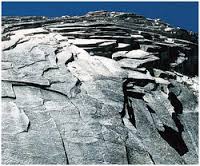
Which statement best explains why this process results in weathering?


These rocks were broken apart from the continuous freeze/thaw of water in the cracks of the rocks. This is an example of:
cryofracturing
acid rain
permeability
abrasion


water, ice, wind or gravity
moves fragments of rock
and soil.
water, ice, wind or gravity
deposit rock sediments
and soil in a new place.
Earth’s crust into smaller
and smaller pieces.

What is weathering?
A process that breaks down rocks into smaller pieces
A shift in weather patterns
The process by which mountains are formed
The process by which the seasons change

How might a weathered mountain appear different from an unweathered mountain?
The weathered mountain would be taller
The weathered mountain would appear rounder in shape
The weathered mountain would appear more jagged
The weathered mountain would contain fewer trees

What can you infer about ice from the information presented in the movie?
It usually causes chemical weathering
It expands as it freezes
It barely causes weathering at all
It does not exert pressure on rocks

How is mechanical weathering different from chemical weathering?
Chemical weathering happens over a much shorter time frame than mechanical weathering
Chemical weathering occurs in the tropics; mechanical weathering occurs in temperate climates
Chemical weathering occurs in mountains; mechanical weathering occurs on flat surfaces
Chemical weathering changes the chemical composition of materials; mechanical weathering does not

What might cause mechanical weathering?
Acid rain
Violent earthquakes
Growing plants and expanding ice
Volcanic eruptions

What impact does weathering have on soil formation?
Chemical weathering adds helpful chemicals to the soil
Rocks are broken down into smaller pieces, and finally into sediment
Mechanical weathering adds ice to the soil, which turns into water
Volcanic eruptions contribute metamorphic rocks to the soil

What types of rocks are formed by weathering?
Metamorphic rocks
Igneous rocks
Sedimentary rocks
Volcanic rocks

How long does the weathering process take?
A few days
No more than a month
Exactly one year
Years and years

Carbonic acid is a mixture of:
Water and carbon dioxide
Calcite and quartz
Oxygen and hydrogen
Water and limestone

What process hollows out limestone caves?
Mechanical weathering
Chemical weathering
Spatial weathering
Cave weathering

What type of changes does erosion cause?
Physical changes
Chemical changes
Electrical changes
Magnetic changes

Erosion occurs when natural forces alter the landscape. What does it mean to alter a landscape?
To blow dust around
To change what land looks like
To deposit silt at the mouth of a river
To create a floodplain

Which term BEST describes the rate at which glacial erosion takes place?
Quick
Short
Slow
Sudden

How do sandy beaches form?
Waves pounding pebbles int smaller and smaller pieces
Wind eroding pebbles into smaller pieces
Water freezing and thawing the cracks of pebbles
Rain wearing away rocks into smaller and smaller pieces

Which of the following features would be most affected by weathering?
A
B
C
D

How would a sandblasted rock differ from a rock that hasn't been sandblasted?
A sandblasted rock would be bigger
A sandblasted rock would be smoother in shape and less jagged
A sandblasted rock would be composed of volcanic material
A sandblasted rock would be covered by water

Why is it hard to see glacial erosion in action?
Because glaciers are so big
Because light from glaciers refracts too much
Because glaciers move very, very slowly
Because glacial erosion is usually very subtle

What do floodplains, sandbars, and river deltas have in common?
They've all been formed by water erosion
They've all been formed by glacial erosion
They've all been formed by wind erosion
They've all been formed by sandblasting

What would be a simple way to prevent erosion?
Blocking the wind
Planting trees
Preventing rainfall
Preventing the flow of rivers

What can you infer about the type of erosion that formed the Grand Canyon?
Wind erosion
Water erosion
Sandblasting
Glacial erosion
How does wind weather a rock?
The wind slowly drills a hole in the side of a rock.
The wind smashes big rocks against each other.
The wind shakes the big rock and makes it weak.
The wind blows tiny pieces of rock against a big piece of rock. The tiny pieces slowly break the big piece.
How does wind erode rocks?
The wind just leaves the pieces of rock where they are.
When small pieces of rock or sand fall off of a big piece, the wind blows them away and deposits them somewhere else.
Wind does not erode rocks.
The wind turns the sand back into rock.

How do sand dunes move?
Wind blows sand over the edge of the dune and drops it on the other side.
Wind moves the entire sand dune at once.
Wind blows the bottom part of the sand dune, and makes it move.
Wind picks up the sand dune and drops it somewhere else.
How far can a sand dune move in one year?
About 2 meters.
About 25 meters.
About 25 kilometers.
About 25 centimeters.
Wind can move bigger pieces of rock than water can.
True
False
Wind can carry sand and dust farther than water can.
True
False
What can help protect against wind erosion?
Rocks
Sand
Plants
People
Where do you think wind erosion is most common?
Deserts
Jungles
Forests
Cities
What is true about the Dust Bowl?
Farmers removed the grass that was protecting against wind erosion.
The people were happy and took care of nature.
There was a drought. The farmers' crops died and exposed the soil.
There was so much dust that it even buried houses!
What is a windbreak?
It is a wall that people build to keep the wind out.
It is when the wind breaks.
It is a row of small plants.
A row of plants (like trees) on the side of the farm to protect it against most of the wind.

What can you say about this picture?
The soil was good for growing crops.
There were many wildflowers.
The land was extremely dry.
The land was lush and green.
A windy storm that blows dust from one place to another is a
Dust Bowl
Dust storm
Sand dune
Windbreak
What is another name for a dust storm?
Habeeb
Kaboom
Haboob
Baboon
what holds everything down on Earth?
parents
straps
gravity
GRAVITY MAKES GLACIERS MOVE.
TRUE
FALSE
ANGLE OF REPOSE IS THE STEEPEST ANGLE AT WHICH MATERIAL SLIDES DOWNSLOPE.
TRUE
FALSE
NAME THE FACTORS THAT CAN AFFECT THE MOVEMENT OF MATERIALS DOWNHILL.
MOISTURE CONTENT AND VEGETATION
EARTHQUAKES AND VOLCANOES
ANIMALS
MASS MOVEMENTS ARE ALWAYS RAPID.
TRUE
FALSE
NAME ONE EXAMPLE OF RAPID MASS MOVEMENT.
LANDSLIDES
POLITICS
TECHNOLOGY
WHICH OF THESE IS A TYPE OF MUDFLOW?
LAHAR
SLUMP
ROCK FALL
AVALANCHE
EARTHQUAKES CAN CAUSE LANDSLIDES AND AVALANCHES.
TRUE
FALSE
A MUDSLIDE IS ANOTHER NAME FOR MUDFLOW.
TRUE
FALSE
TREES CAN ANCHOR SOIL TO PREVENT IS FROM MOVING.
TRUE
FALSE
The movement of water over land and taking particles with it is called
Deposition
Runoff
Erosion
Weathering
When a runoff forms tiny grooves this is formed
Stream
Gully
Tributary
Rills
The area where the streams or gullies join is called a
Tributary
Stream
Ocean
Lake
What do we call the type of water erosion feature when it cuts off from the river ?
Meander
Oxbow lake
Waterfall
Valley
In which season will water erosion take place slower ?
Summer
Autumn
Winter
Spring
Which land features are formed by water erosion and deposition?
Plains
Oceans
Lakes
Mountains and plateaus
Which factor does not affect the amount of runoff?
Vegetation
Amount of rain
Weathering
Type of soil
A loop like bend in the shape of the river as the river winds from side to side
Stream
Gully
Rills
Meander
When the river flows into an ocean or lake the following erosion feature is formed
Alluvial Fan
Delta
Meander
Gully
An alluvial fan is
A wide sloping deposit of sediment from a plain
A wide sloping deposit of sediment from a narrow valley
A wide sloping deposit of sediment where a stream leaves a mountain
None of te above
The term that geologists use for underground water
Underground water
Ground water
Permeable water
Water soil
Cave formations is formed because of the action of this on limestone in caves
hydrochloric acid
Carbonic acid
Water only
Carbon only
A deposit that hangs like an icicle from the roof of a cave is called a
Stalactite
Stalagmite
weathered rock
Eroded rock
Slow dripping build ups from the floor of the cave are called
Carbonic acid
Stalactites
Stalagmites
Rocks
The main difference between gullies and rills
Gullies are wide and rills are narrow
Gullies are narrow and rills are wide
Both are wide
Both are narrow
When the runoff flows in a thin layer this type of erosion is called
Water erosion
Glacier Erosion
Tsunami
Sheet erosion
Waterfalls
May occur where the stream meets the rills
May occur where the gully meets the ocean
May occur where the river meets the area of rock that is very hard and erodes slowly
May occur where the river meets the area of rock that is very hard and erodes fast
The flat wide area of land along a river is called a
Meander
Oxbow lake
Stream
Flood plain



