
 Worksheets
Revision Biology
Total questions: 79
Worksheet time: 48mins
Enzymes are an example of
Lipids
Carbohydrate
Protein
Nucleic Acid
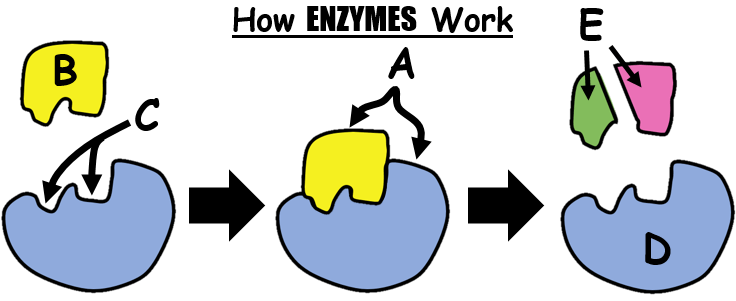
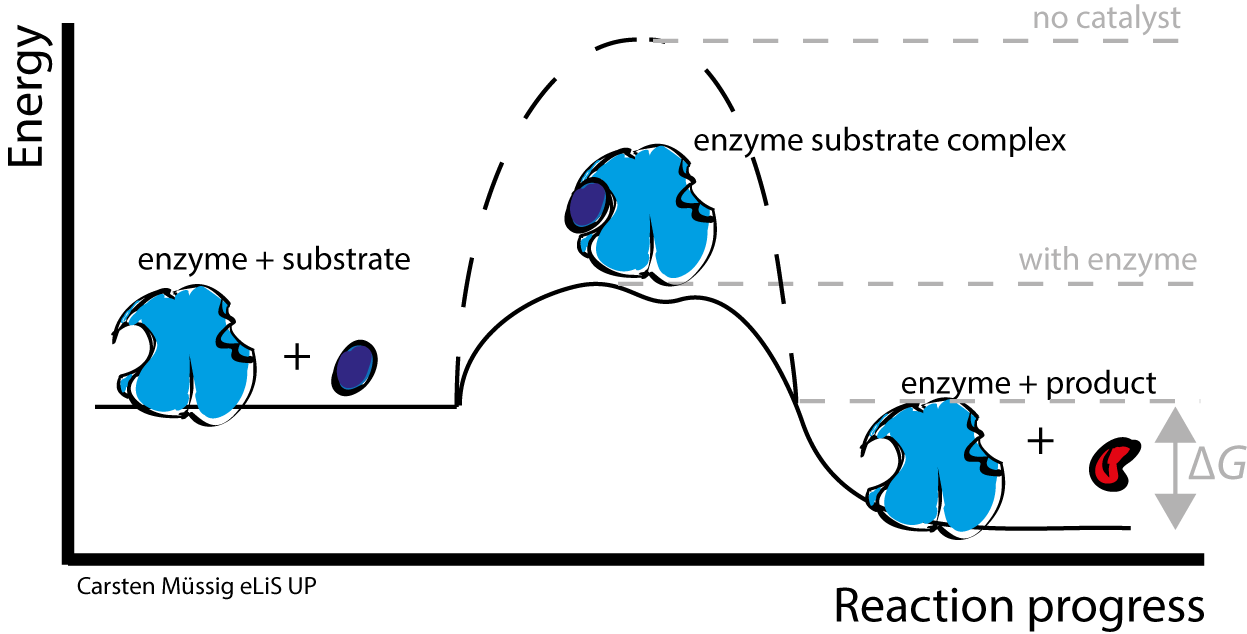
Which of the following best explains why enzymes are necessary for reactions in our cells?
The reactions are too slow to meet the needs of the cell if enzymes are missing.
Enzymes supply the oxygen necessary for the reactions.
Enzymes change reactants from solid to liquid during the reactions.
The reactions take up too much space in the cell if enzymes are missing.
The ____________________ mechanism describes how each substrate must fit into the enzyme.
lock and key
hammer and nail
jigsaw puzzle
seesaw
Where do substrates bind to an enzyme?
calcium channels
active site
receptor molecules
voltage-gated channels
they produce
Which enzyme used for lipid?
lipase
amaylase
protein
fat
What are the enzymes called when they are at high temperature or extreme pH?
denatured
Killed
inactive
normal

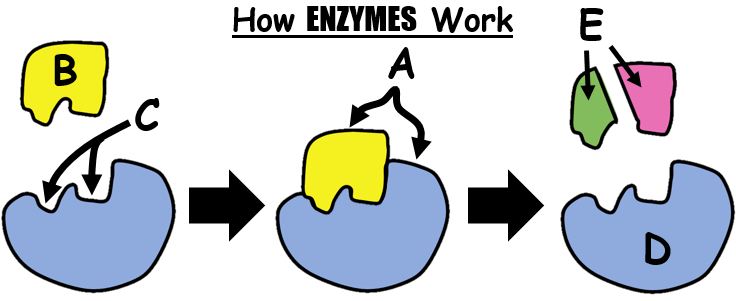
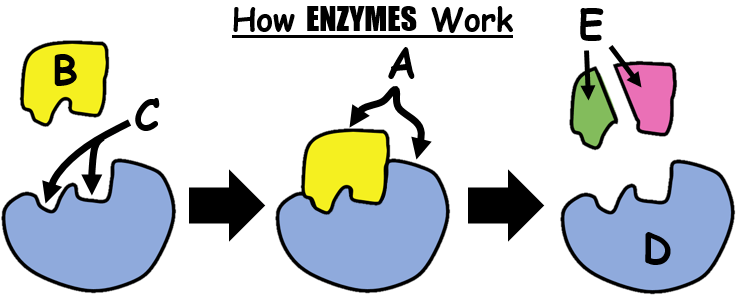
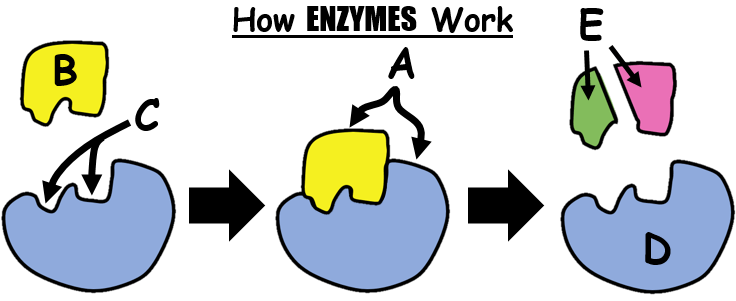
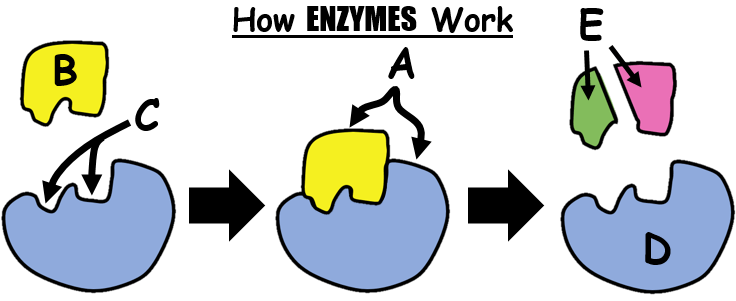
Which molecule would most likely react with the enzyme?
A
B
C
D
Enzyme function is based on their
size
weight
DNA
shape
What type of macromolecule are enzymes?
Carbohydrates
Lipids
Proteins
Nucleic Acids
Where do substrates bind to an enzyme?
calcium channels
active site
receptor molecules
voltage-gated channels
Once a new product leaves an enzyme, the enzyme is unchanged and ready for the next substrate. What is this called?
fragile
reusable
specific
catalyst
After the enzyme and substrate bind together and perform the reaction, what does the substrate become?
a substrate
an active site
an enzyme
a product
Enzymes are _______________ that _____________________ chemical reactions by ____________ the amount of activation energy required to start the reaction.
carbohydrates, slow down, lowering
proteins, speed up, increasing
lipids, speed up, lowering
proteins, speed up, lowering
they produce
Which is a definition for photosynthesis?
Releasing energy from nutrients
The breaking down of large insoluble molecules into small soluble molecules
The process by which plants make carbohydrates from raw materials using energy from light
The movement of particles from a high concentration to a low concentration
Carbon dioxide is absorbed through the
Stoma
Cuticle
Vessel
Palisade Cells
Chlorophyll is the ___ pigment found in the chloroplast
Blue
Green
Red
Purple

The arrows in the diagram all point to the
Cytoplasm
Nucleus
Mitochondria
Chloroplast
Part of the leaf which allows the diffusion of gases to occur
Palisade Cells
Spongy Mesophyll Cells
Epidermis
Phloem
carbon dioxide + _______ = glucose + oxygen
Water
Hydroxide
Chlorophyll
Sunlight
The following compounds goes in and out of the stoma EXCEPT
Oxygen
Glucose
Carbon Dioxide
Water
In plants the glucose produced in photosynthesis gets stored as which molecule?
Starch
Glycogen
Lipids
Protein
In the absence of which of the following will photosynthesis not occur in leaves?
vacuole
stomata
chlorophyll
cytoplasm
When we observe the lower surface of a leaf through a magnifying lens we see numerous small openings. Which of the following is the term given to such openings?
stomata
midrib
vein
lamina
What are the nutrients plants get from Air?
Water
Oxygen
Carbon Dioxide
Chlorophyll
Sunlight
Organisms which prepare food for themselves using simple naturally available raw materials are referred to as
heterotrophs
autotrophs
parasites
saprophytes
It is the process by which organisms obtain energy and nutrients from food, for growth, maintenance and repair.
Nutrition
Nutrients
Photosynthesis
Respiration
They are all the elements and compounds taken into a living thing.
Nutrition
Nutrients
Fruits and vegetables
Meat
'Autos' in the word autotrophic means:
self
feed
light
animals
Which of the following organisms is a parasite?
dog
bird
whale
flea
What do you call the organisms exhibiting heterotrophic mode of nutrition?
Saprotrophs
Holos
Autotrophs
Heterotrophs
Which of the following has the correct sequence in the stages of holozoic nutrition?
digestion, absorption, assimilation, egestion, ingestion
ingestion, digestion, egestion, assimilation, absorption
ingestion, digestion, absorption, assimilation, egestion
absorption, digestion, assimilation, ingestion, egestion
What do you call the organism that lives on or in the body of a living organism and obtain nutrients from the host?
parasite
host
carnivore
animals
What do you call the organisms that feed on decaying organic matter?
parasites
herbivore
autotrophs
saprophytic organisms
Heteros means _______.
others
animal
light
chemical

Which organelle is responsible making food (Glucose) using sunlight?
Ribosomes
Nucleus
Chloroplast
Mitochondria
What is the green pigment that "traps" sunlight?
Chlorophyll
Chloroplasts
Photosynthesis
ATP
Glucose
What is storage product in plants.
Starch
food
Glucose
Sucrose
What is role of chlorophyll.
make food
Change light energy to chemical energy
tranfer food
photosynthesis
In which form Glucose transport in Plants.
Starch
Sucrose
Glucose
none of these
What does a Nitrogen deficiency look like?
Tip and center veins become yellow.
Yellow spots appear under the leaf.
The stem turns yellow.
The whole leaf turns yellow.
What is the term for when leaves on a plant yellow?
burn
marginal scorch
chlorosis
chlorophyll
Which promotes fast growth of leaves and stems?
Oxygen
Hydrogen
Phosphorus
Nitrogen
Which nutrient is very important in chlorophyll formation?
Iron
Magnesium
Nitrogen
Sulfur
What is chlorosis?
Yellowing of the stem
Shedding of flowers
Rotting of the roots
Yellowing of the leaf blade

Which deficiency?
Iron
Magnesium
Nitrogen
Phosphorus

Which deficiency?
Nitrogen
Phosphorus
Potassium
Sulfur
What are the main uses of Glucose in plants?
Respiration, storage of insoluble starch, making proteins, producing lipids for storage, producing fructose and weakening the cell wall.
Respiration, storage of insoluble starch, making proteins, making cell walls, producing sucrose for storing in fruits and producing lipids for storage.
Storage of insoluble starch, making proteins, making cell walls, producing sucrose for storing in fruits and producing lipids for storage and aerobic respiration.
The glucose made in photosynthesis can be used for respiration to
to produce oxygen for the plant
make more glucose
provide energy for the plant
The glucose made in photosynthesis can converted into starch for
storage
rapid use
to prevent decay
The glucose made in photosynthesis can stored in nuts and seeds as
starch
fats and oils
concentrated glucose
The glucose made in photosynthesis can be converted into cellulose, which is needed to
fill chloroplasts
strengthen cells walls
make chromosomes in the nucleus
The glucose made in photosynthesis can be converted into amino acids to make
starch
fats
protein
To make proteins plants need glucose from photosynthesis to make amino acids and
nitrate ions from the soil
nitrates ion from the atmosphere
carbon dioxide from the air

