
 Worksheets
G6 T3 Review (2)
Total questions: 130
Worksheet time: 1hrs 24mins
__________ is the condition of Earth’s atmosphere at a specific time and place.
weather
wind
temperature
current
Water that falls to Earth in any form, including rain, snow, sleet, or hail.
precipitation
condensation
sublimation
transpiration
How hot or cold something is and is measured using a thermometer
temperature
humidity
density
volume
Land areas close to large bodies of water usually have __________ temperatures.
moderate
hot
cold
freezing
The weight of air molecules pressing down on the surface and is measured with a barometer.
air pressure
air density
visibility
velocity
Coastal areas close to ___________ surface currents tend to have warmer weather than inland areas at the same latitude and elevation.
Hide Answers
warm water
cold water
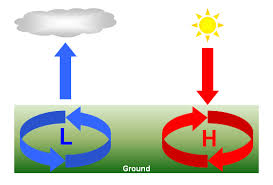
System that forms when an air sinks and spreads outwards
high pressure
low pressure
The movement of air due to difference in air pressure caused by uneven heating
wind
weather
temperature
density
Systems occur when air rise, and cool, forming clouds, rain, and stormy weather
Low pressure
High pressure
Coastal areas near _____ surface currents tend to have cooler weather than inland areas at the same latitude and elevation.
cold
warm
hot
moderate
The amount of water vapor in the air and is measured with a psychrometer.
humidity
density
propensity
wetness
Air moves from areas of high pressure to areas of low pressure, creating
wind
gas
acid
temperatures
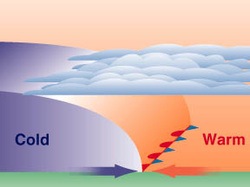
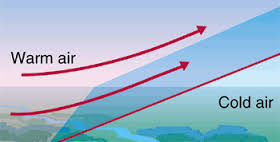
What is a warm front?
A mass of warm air moves over the top of a cold air mass.
A mass of warm air moves under a mass of cold air.
A mass of warm air is trapped between two cooler air masses.
A warm wind blows.

Which term describes the area where two air masses come together
front
back
side
up

T/F: Condensation can form clouds in the sky and and fog near the ground.
TRUE
FALSE
What moves our weather from west to east?
gulf stream
jet stream
Can pull cold air down from Canada or bring warm air up from the south to our area...
gulf stream
jet stream

Water heats up and cools down ____________ than land.
faster
more slowly

Because water heats up and cools down slowly, this causes coastal temperatures to...
change / fluctuate easily
be moderated / mild

T/F: Coastal cities tend to have cooler summers and warmer winters.
TRUE
FALSE
An air mass usually brings the weather of ...
its destination
its source location
its path of movement
an undetermined source
Which statement best explains why weather systems usually move from west to east across the United States?
Fronts move from west to east.
The jet stream moves from west to east.
Pressure systems form over the Rocky Mountains and move east.
Weather systems originate over the pacific Ocean and move east.
If city A is at the coast, and city B is far inland, which statement is most likely true if there is a cold surface current near city A?
During the fall, city B experiences more hurricanes than B.
During the summer, city B experiences cooler weather than city A.
During the winter, city B has warmer weather than A.
During the spring, city B has more thunderstorms than A.
Which two processes would have occurred for the hurricane to form over the ocean?
freezing and condensation
evaporation and precipitation
evaporation and condensation
condensation and precipitation
How can landforms affect weather?
Prevailing winds spread out.
The water evaporates in the ocean, then condenses and precipitates.
Prevailing winds bring humid air over the mountains which cools, condenses into clouds and causes precipitation on one side of the mountain.
The warm front moves over the cold front causing rain.
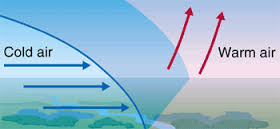
What is a cold front?
When a cold air mass moves above a warm air mass.
When cold air and warm air meet.
When a cold air mass moves under a warm air mass.
When a cold air mass is trapped between two warmer air masses.
What is a stationary front?
When there is no air movement.
When a cold front slows down as it meets a warm front and there is very little movement of either one.
When a cold air mass quickly passes a warm front.
The opposite of a moving front.
Which moves quickly and can bring rain, snowstorms, and thunderstorms?
Warm front
cold front
stationary front
occluded front
Which front leave warm weather after it passes?
warm front
cold front
stationary front
occluded front
Weather is
a description of the short-term conditions of the atmosphere at a particular time and place.
something no one ever talks about.
The amount of water vapor in the air is called
(a)
Air flows from high to low pressure.
True
False
On a weather map what does a capital letter H stand for?
An area of high air pressure
An area of low pressure
A cold front can usually bring
Thunderstorms
Clear skies
Hot temperatures
The Earth’s surface is heated unevenly because___.
Sunlight hits the poles with intense direct bright light and little sun hits the Equator.
Earth is a sphere and so the sunlight hits the Earth at different angles. The Equator gets direct intense light and the pols get indirect light.
The heat deep inside Earth heats up different hemispheres.
Which two factors are usually included in descriptions of climate?
precipitation and humidity
temperature and air pressure
temperature and precipitation
Which sentence best describes how latitude and air temperature are related?
The lower the latitude, the colder the air temperature.
The higher the latitude, the colder the air temperature.
The higher the latitude, the warmer the air temperature.
What is the difference between weather and climate?
weather is long term and climate is short term weather
weather and climate are the same
weather is short term and climate is long term
What are the three different climate zones on Earth?
polar, latitude, tropical
polar, temperate, tropical
ocean currents, elevation, prevailing winds

Name the zone between 30*N and 30*S
polar
temperate
tropical

Name the zone between 30*N and 60*N, and the zone between 30*S and 60*S
polar
temperate
tropical

Name the zone between 60*N and 90*N, and the zone between 60*S and 90*S
polar
temperate
tropical


Tornadoes and hurricanes are large areas of ____________ pressure.
No
High
Average
Low
The distance from sea level
weather
Elevation
climate
atmosphere
atmospheric circulation

Big, tall clouds that induce thunderstorms
air masses that form over land will be
dry
wet
air masses that form over water will be
dry
wet

How does the water cycle influence the weather?

What part of the water cycle happens when the sun adds energy to the cycle?
freezing
precipitation
evaporation
infiltration

What part of the water cycle happens when there is a loss of energy?
condensation
precipitation
evaporation
sublimation

How many different types of air masses can affect the weather in the USA?
4
3
2
1
Most of the damage caused by a hurricanes is the result of what?
Low winds
Storm surges


A severe storm with lightning, thunder, heavy rain, and strong winds
blizzard
hurricane
thunderstorm
tornado
A large storm that forms over warm ocean water with strong winds that blow in a circular pattern
blizzard
hurricane
thunderstorm
tornado
Which is an image of a tornado?


Which is an image of a hurricane?
Which is an image of a thunderstorm?
These can be produced by supercell thunderstorms
Hurricane force winds pushing down on the water creating high water levels and waves moving ashore is called:
Storm Surge
Hurricane
Tropical Wave
Tropical storm
What do hurricanes need as fuel?
warm and moist air
hot and dry air
cold and moist air
dry and warm air

Electricity may flow within the cloud also flow between the cloud and the ground. These electrical currents are _________________.
thunder
particles
lightning
When lightning moves through the air, the air gets very hot. The hot air expands rapidly. As it expands, it makes the air vibrate. These vibrations release energy in the form of sound waves called ______________.
thunder
particles
lightning
A _________ can from when a rapidly spinning column of low pressure air, called a funnel cloud touches the ground.
thunderstorm
hurricane
tornado
A _____________ is a large, rotating low-pressure system that forms over the warm waters of oceans near the equator.
tornado
hurricane
thunderstorm
flooding
Thunderstorms form along a cold front
True
False

Thunderstorm clouds are known as _____.
cirrus clouds
stratus clouds
onimbus clouds
cumulus clouds
Thunderstorms, hurricanes, and tornadoes form at __________ pressure systems, where you have warm (typically moist/humid) air quickly rising.
low
high
Do the center of hurricanes have high or low pressure?
high
low
What atmospheric conditions are necessary to form hurricanes?
warm water, high humidity, and low pressure
cool water, high humidity, and low pressure
cool water, low humidity, and high pressure
warm water, low humidity, and low pressure
What are the 3 ingredients necessary for a thunderstorm?
moisture, instability, & meeting of weather fronts
dry air, high pressure, & weather fronts
moisture, instability, & cool air
moist cool air, high pressure, and differential heating
Which of the images shows a storm surge?


The warm climate zone near the equator:
Tropical Zone
Polar Zone
Temperate Zone
Climate
The cold climate zone near both poles:
Tropical Zone
Polar Zone
Temperate Zone
Climate
The area between the tropical and the polar zones with seasonal climate:
Tropical Zone
Polar Zone
Temperate Zone
Climate
What is climate?
the condition of the atmosphere at any given time and place
cloud cover and temperature
precipitation and humidity at a given time and place
weather conditions in an area over a long period of time
Climate is affected by many factors including:
latitude, elevation, and proximity to bodies of water
tides and currents
wind
snow and sleet
Which two factors determine the climate in a particular region?
temperature and latitude
precipitation and humidity
temperature and precipitation
humidity and air pressure
What is elevation?
the depth of the ocean
the height of the atmosphere
the depth of a lake
the height above sea level
Cities near the ocean are cooler in the summer and warmer in the winter.
True
False
Areas closer to the equator receive more direct energy from the Sun and have warmer temperatures.
True
False
The higher the elevation of an area, the _______ the climate.
warmer
cooler
A narrow band of strong winds blowing over air that circulates cold air and warm air.
Gulf Stream
Jet Stream
Trades
Surface level ocean water that flows from near the
equator towards the poles.
Warm ocean currents
Cold ocean currents
Neutral ocean currents
Deep level ocean water that flows from the poles
towards the equator.
Warm ocean currents
Cold ocean currents
Neutral ocean currents
The driving force of the Water Cycle is?
The troposphere
The Sun
The oxygen
The clouds

What landform causes the rain shadow effect?
Mountains
Lakes
Plains
Valleys

Which side of the mountain gets more rainfall
The side facing towards the ocean
The side facing away from the ocean
Both sides get rainfall
Both sides don’t get rainfall
Which side of the mountain is a dry desert?
The side facing towards the ocean
The side facing away from the ocean
Both sides get rainfall
Both sides don’t get rainfall

