wayground logo

Free Printable Worksheets

Font size

S
M
L
XL
Worksheets

Chemistry Unit Review

Total questions: 130

Worksheet time: 2hrs 32mins

Name
Class
Date
1.

These are what type of particles?

a)

gas

b)

solid

c)

liquid

2.

These are what type of particle?

a)

gas

b)

solid

c)

liquid

3.

If a solid is moved from one container to another, the solid -

a)

changes its shape and volume

b)

keeps its shape and volume

c)

keeps it shape and changes its volume

4.

The particles in gas are-

a)

tightly packed

b)

keep their shape

c)

spread far apart

5.

Particles in solids -

a)

are spread far apart

b)

go with the flow

c)

vibrate

6.

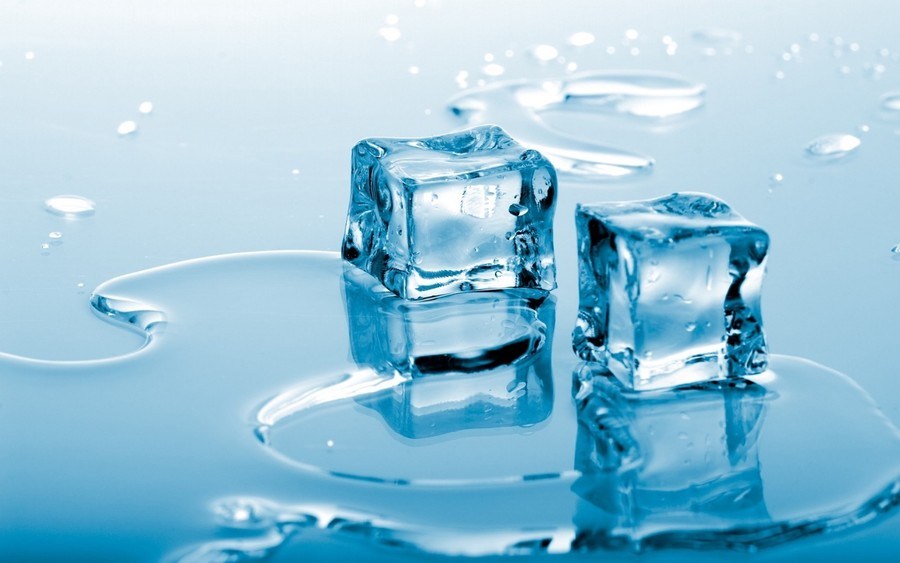
A gas changing to a solid like water on my diet coke is the process of

a)

freezing

b)

melting

c)

condensation

7.

The image is showing the process of -

a)

evaporation

b)

freezing

c)

melting

d)

condensation

8.

What do the particles do when something freezes?

a)

They move faster

b)

They move farther apart

c)

They slow down

9.

When a solid melts into a liquid, it's particles -

a)

move slower

b)

get closer together

c)

get faster

10.

It is the amount matter in an object.

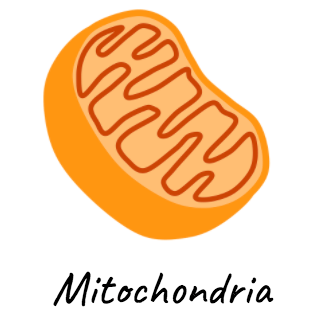
a)

mass

b)

volume

c)

properties

11.

Which state of matter has the least energy? (pictures not in energy order)

a)

solid

b)

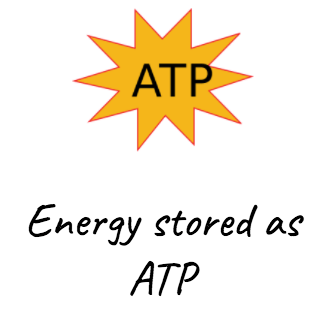
liquid

c)

gas

d)

plasma

12.

Which state of matter has more energy than a liquid? (pictures not in energy order)

a)

solid

b)

gas

c)

melted cheese

d)

cookies

13.

Which state of matter has no definite shape, but has a definite volume?

a)

solid

b)

liquid

c)

gas

d)

plasma

14.

Which state of matter has no definite shape and no definite volume?

a)

solid

b)

liquid

c)

gas

d)

plasma

15.

Which state of matter has a definite shape and a definite volume?

a)

solid

b)

liquid

c)

gas

d)

plasma

16.

Which state of matter has the most energy? (pictures not in energy order)

a)

solid

b)

liquid

c)

gas

d)

plasma

17.

Which state of matter results when energy is added to a liquid?

a)

solid

b)

liquid

c)

gas

d)

plasma

18.

Which state of matter results when energy is removed from a gas?

a)

solid

b)

liquid

c)

gas

d)

plasma

19.

Which state of matter can most easily contract or expand?

a)

solid

b)

liquid

c)

gas

d)

plasma

20.

Which state of matter has the most tightly packed particles?

a)

solid

b)

liquid

c)

gas

d)

plasma

21.

Which state of matter has the most tightly packed particles?

a)

solid

b)

liquid

c)

gas

d)

plasma

22.

Which state of matter has particles that are loosly packed and freely move, but are still in contact with one another?

a)

solid

b)

liquid

c)

gas

d)

plasma

23.

Which state of matter has particles in a regular pattern that can vibrate in place?

a)

solid

b)

liquid

c)

gas

d)

plasma

24.

When a liquid becomes a gas

a)

melting

b)

freezing

c)

vaporizing (evaporation)

d)

condensation

e)

sublimation

25.

When a liquid becomes a solid

a)

melting

b)

freezing

c)

vaporizing (evaporation)

d)

condensation

e)

sublimation

26.

When a gas becomes a liquid

a)

melting

b)

freezing

c)

vaporizing (evaporation)

d)

condensation

e)

sublimation

27.

When a solid becomes a gas

a)

melting

b)

freezing

c)

vaporizing (evaporation)

d)

condensation

e)

sublimation

28.

When energy is being added to a liquid

a)

melting

b)

freezing

c)

vaporizing (evaporation)

d)

condensation

e)

sublimation

29.

When energy is being removed from a liquid

a)

melting

b)

freezing

c)

vaporizing (evaporation)

d)

condensation

e)

sublimation

30.

When energy is being removed from a gas

a)

melting

b)

freezing

c)

vaporizing (evaporation)

d)

condensation

e)

sublimation

31.

Subatomic particles with a negative charge

a)

Electrons

b)

Neutrons

c)

Protons

d)

Quarks

32.
subatomic particles found on the outermost shell & responsible for the atom's reactivity
a)
neutrons
b)
valence electrons
c)
isotopes
d)
ions
33.
Subatomic particles with a positive charge
a)
neutrons
b)
atomic mass
c)
protons
d)
isotopes
34.
Measure mainly of the nuclear particles: protons + neutrons
a)
Subatomic Particles
b)
Atomic Number
c)
Atomic Mass
d)
Gluons
35.
Value representing the number of protons in an element
a)
Atomic Mass
b)
Mass Number
c)
Valence Electrons
d)
Atomic Number
36.
Subatomic particles that are neutral in charge
a)
Neutrons
b)
Protons
c)
Nucleus 
d)
Electrons
37.
The smallest particle of an element that shows all the properties of that element.
a)
Subatomic Particles
b)
Atom
c)
Quarks
d)
Gluons
38.
Where electrons are likely to be found as they travel around the nucleus
a)
Nucleus
b)
Electron Cloud
c)
Within a Proton
d)
Within a Neutron
39.
A tiny but very dense, positively charged portion of the atom that holds most of the atomic mass
a)
Electron Shells
b)
Orbitals
c)
Electron Cloud
d)
Nucleus
40.
Arrangement of elements organized by atomic number
a)
Electron Cloud 
b)
Periodic Table 
c)
Electron Configuration
d)
None of these
41.
Calculation used to find the number of neutrons in an atom
a)
Atomic Mass - Atomic Number
b)
Atomic Number - Atomic Mass
c)
Atomic Mass - Electrons
d)
none of these
42.
Which particle contributes the negative charge to the atom?
a)
proton
b)
electron
c)
neutron
d)
nucleus
43.
The nucleus of an atom is made of
a)
electrons and protons
b)
electrons and neutrons
c)
protons and neutrons
d)
empty space
44.
Most of the volume an atom is made of this
a)
the nucleus
b)
the protons
c)
the neutrons
d)
empty space
45.
Protons and neutrons is so small, they are assigned a mass of 1 in these units 
a)
grams
b)
milligrams
c)
amu (atomic mass unit)
d)
mass number
46.
The mass of 1 proton
a)
1 amu
b)
1 x 10 to the -24 amu
c)
-24 g
d)
-24 kg
47.
The mass of neutron
a)
1 x 10 to the -24 amu
b)
1 amu
c)
-24 g
d)
-24 kg
48.
The mass of this particle is so small that it is not counted.
a)
proton
b)
electron
c)
neutron
d)
quark
49.
All atoms of a particular element have the same number of these
a)
electrons
b)
neutrons
c)
protons
50.

The number of electrons in an atom is equal to ......

a)

the number of protons

b)

the number of neutrons

c)

the atomic mass

51.
The term "neutral" means
a)
having only a little bit of charge
b)
having a positive charge
c)
having a negative charge
d)
having no charge at all
52.

Which statement best describes an element?

a)

pure, made of more than one type of atom

b)

when combined, a chemical reaction forms

c)

pure, made of only one type of atom

d)

can be broken down easily

53.

When two or more different elements chemically combine, a __________________________ is formed.

a)

element

b)

compound

c)

mixture

d)

solution

54.

Examples are water (H2O) and carbon dioxide (CO2).

a)

elements

b)

compounds

55.

A section of the Periodic Table is shown. What is the Chemical Symbol for Magnesium?

a)

12

b)

Magnesium

c)

24.31

d)

Mg

56.
Is sugar (C12H22O11) an element or a compound?
a)
Element
b)
Compound
57.
Name this compound: H2O
a)
Water
b)
Carbon dioxide
c)
Hydrogen peroxide 
d)
Sulfuric acid
58.
A molecule is
a)
two or more atoms bonded together
b)
one type of atom
c)
smaller than an atom 
d)
an element
59.

How many Oxygen atoms are in H2O?

a)

1

b)

2

c)

0

d)

4

60.
How many atoms are there TOTAL in:
H2SO4
a)
6
b)
5
c)
7
d)
3
61.
How many elements are in C6H12O6?
a)
1
b)
2
c)
3
d)
4
62.

Anything that takes up space and has mass is

a)

Matter

b)

Volume

c)

Liquid

d)

Atom

63.
In which state of matter are molecules moving the fastest?
a)
solid 
b)
liquid
c)
gas
d)
the molecules move equally fast in all states of matter
64.
What state of matter has particles free to move past other particles but still have attraction?
a)
solid
b)
plasma
c)
liquid
d)
gas
65.
Is burning wood a chemical or physical change?
a)
chemical
b)
physical
66.
Is glass breaking a chemical or phyiscal change?
a)
chemical
b)
physical
67.
Is hammering wood together to build a house a chemical or physical change?
a)
chemical
b)
physical
68.
Is a a rusting bicycle a chemical or physical change?
a)
chemcial
b)
physical
69.
Is melting butter for popcorn a chemical or physical change?
a)
chemical
b)
physical
70.
Is spoiling food a physical or chemical change?
a)
phyiscal
b)
chemical
71.
Is making salt water to gargle with a physical or chemical change?
a)
physical
b)
chemical
72.
A change in the size, shape, or state of matter.
a)
chemical change
b)
physical change
c)
chemical reaction
d)
electron change
73.
Baking a cake by mixing flour, sugar, chocolate powder, eggs, and milk, and then heating them in the oven.
a)
Chemical Change
b)
Physical Change
74.
A change in which NEW substances are formed.
a)
Chemical change
b)
Physical change
c)
Casual change
d)
Formal change
75.
Evidence of a physical change.
a)
New substance
b)
Shape Change
c)
Light produced
d)
Gas released.
76.

What is a physical change?

a)

Any change that happens to any substance

b)

A change in the form or appearance of a substance

c)

a change in a substance to something new

d)

molecules interacting and changing into a new substance

77.

What is a chemical change?

a)

Forming a new substance

b)

When two or more substances combine to make a greater one

c)

When two or more substances combine to make a new chemical substance

d)

Combing substances

78.
Water freezing into ice is an example of a...
a)
Physical Change
b)
Chemical Change
79.
Which of the following indicates a chemical change?
a)
Change in state of matter
b)
Temperature change
c)
Change in size 
d)
Change in shape
80.

A solid substance that suddenly forms when 2 substances (usually liquid) are combined?

a)

Sublimation

b)

Precipitate

c)

Condensation

d)

Freezing

81.
Which of the following is a sign that a chemical reaction has occurred?
a)
change in shape
b)
melting
c)
formation of a gas
d)
dissolving
82.
What is the evidence of the chemical change seen here?
a)
Color change
b)
Light produced
c)
state change
d)
mixture
83.
Which of the following is a sign that a chemical reaction has occurred?
a)
change in shape
b)
melting
c)
formation of a gas
d)
dissolving
84.
All of the following are evidence of a chemical change EXCEPT-
a)
change in state of matter
b)
formation of a gas
c)
color change
d)
precipitate forms
85.
What are the products in cellular respiration?
a)
water and carbon dioxide
b)
water and glucose
c)
carbon dioxide and oxygen
d)
glucose and oxygen
86.

Which organisms go through cellular respiration?

a)

animals

b)

plants

c)

both animals and plants

d)

none

87.

What is photosynthesis?

a)

The process plants use to turn carbon dioxide and water into glucose(energy).

b)

The process plants use to chlorophyll and sunlight into air.

c)

The process plants use to turn sunlight and chlorophyll into soil.

d)

The process plants use to turn chocolate and milk into chocolate milk.

88.

Which organelle is responsible making food (Glucose) using sunlight?

a)

Cell Membrane

b)

Nucleus

c)

Chloroplast

d)

Mitochondria

89.
Cellular Respiration's goal is to
a)
make water
b)
make ATP
c)
make glucose
d)
make  oxygen
90.

Cellular Respiration occurs in what cell organelle?

a)

chloroplast

b)

cytoplasm

c)

mitochondria

d)

animal

91.

What are the 3 reactants of photosynthesis? The reactants are the things needed for photosynthesis to occur.

a)

oxygen, glucose, sunlight

b)

sunlight, oxygen, water

c)

water, oxygen, carbon dioxide

d)

carbon dioxide, sunlight, water

92.

Which product is "waste" and mostly released by the producer (plant)?

a)

oxygen

b)

carbon dioxide

c)

sugar

d)

glucose

93.

What are the 2 products of photosynthesis? The products are the things made in the process of photosynthesis.

a)

water, sunlight

b)

glucose, carbon dioxide

c)

oxygen, glucose

d)

sunlight, oxygen

94.
What is the chemical formula for carbon dioxide?
a)
H2O
b)
CO2
c)
CHO2
d)
CO2H
95.

Photosynthesis is an example of a chemical reaction

a)

True

b)

False

96.

Why is sunlight/ light energy written above the arrow and not as a Reactant?

a)

Sunlight makes plants green and only green plants photosynthesize

b)

Light energy travels through the plant down to the roots and causes the water rise

c)

Sunlight is needed for the chemical reaction in photosynthesis to occur

d)

Light energy can be written as either a Reactant or a Product of photosynthesis

97.

The two PRODUCTS of photosynthesis are

a)

Water and Oxygen

b)

Water and Carbon Dioxide

c)

Glucose and Oxygen

d)

Glucose and Carbon Dioxide

98.
What is the chemical formula for glucose?
a)
C6H12O6
b)
C6H6O12
c)
C12H6O12
d)
C6O2H6
99.
What are the products of photosynthesis?
a)
oxygen and carbon dioxide
b)
oxygen and glucose
c)
carbon dioxide and water
d)
water and glucose
100.
Mitochondria are...
a)
The location in cells where photosynthesis happens
b)
Kidney beans
c)
The location in cells where cellular respiration happens
d)
A type of pigment used for cellular respiration
101.
ATP is...
a)
A form of energy the cell can use that is produced by cellular respiration
b)
A kind of sugar produced in photosynthesis
c)
A battery
102.
The process by which sugar is converted into energy (ATP) by living organisms is called
a)
photosynthesis
b)
cellular respiration
103.
The reactants in cellular respiration are
a)
sugar (glucose), oxygen
b)
carbon dioxide, water
104.

What does the subscript in a chemical formula tell you?

a)

How many molecules are present

b)

How many atoms are present

c)

How many elements are present

d)

How many neutrons are present

105.

What is the total number of atoms in this formula? H2O2H_2O_2  

a)

2

b)

4

c)

3

106.
How many Magnesium are in 10MgCl2?
a)

10

b)

5

c)

20

107.
What is a coefficient?
a)
The small number on the right of the chemical symbol.
b)
The large number to the left of a formula.
108.
Which side of a chemical equation is the product side?
a)
Left (before the arrow)
b)
Right (after the arrow)
109.
Which side of a chemical equation is the reactant side?
a)
Left (before the arrow)
b)
Right (after the arrow)
110.
Is the equation balanced?: 2H2O + O2 --> 4MgO + 3Fe
a)
Yes
b)
No
111.
What does the Law of Conservation of Mass state?
a)

Matter cannot be gained or lost in a chemical reaction.

b)

Matter can only be lost in a chemical reaction.

c)

Matter can only be gained in a chemical reaction.

d)

Matter can be gained and lost in a chemical reaction. 

112.
Which of these is a property of metals?
a)
It's malleable
b)
It can't conduct electricity
c)
They are used in food
d)
It's very brittle
113.
Which of these grouping of elements could have the characteristic of brittle?
a)
Metal
b)
Nonmetal
114.
Which of the following is a good conductor of heat?
a)
Metal
b)
Nonmetal
c)
Metalloid
115.
If a material can easily be drawn into the shape of a wire, it is
a)
Ductile
b)
Magnetic
c)
Malleable
d)
Reactive
116.
Which elements are found on the left to middle of The Periodic Table? 
a)
Metals
b)
Nonmetals
c)
Metalloids
d)
Candles
117.
Silicon is a semiconductor and has properties of both metals and nonmetals. What type of element is Silicon? 
a)
Metal
b)
Nonmetal
c)
Metalloid
d)
Pretty
118.
All of these properties describe metals except...
a)
malleable
b)
conductors
c)
brittle 
d)
shiny
119.
Which of the following is a good conductor of heat?
a)
Metal
b)
Nonmetal
c)
Metalloid
120.
All of the following would classify an element as a metal except?
a)
Dull
b)
Luster
c)
Malleable
d)
Hard
121.
Luster is ___________
a)
A.  the way light is reflected off a surface.
b)
A.  how well a piece of matter conducts electricity. 
c)
A.  the capability of being drawn out into thin wires or threads.
d)
A.  the capability of being hammered out thin.
122.

Which element is at the top of the "staircase" of metalloids?

a)

Silicon

b)

Boron

c)

Bromine

d)

Hydrogen

123.

Which element is the only exception to nonmetals being on the right?

a)

Helium

b)

Silicon

c)

Boron

d)

Hydrogen

124.

Which metalloid is often used in electronics because it is a semiconductor?

a)

Silicon

b)

Boron

c)

Bromine

d)

Hydrogen

125.
Look at the periodic table that is provided. Where would metals be located? 
a)
to the left of the table 
b)
to the right of the table 
c)

on the staircase

126.
Look at the periodic table that is provided. Where would nonmetals be located? 
a)
to the left of the table 
b)
to the right of the table 
c)

on the staircase

127.

Look at the periodic table that is provided. Where would metalloids be located? 

a)
to the left of the table 
b)
to the right of the table 
c)

on the staircase

128.

If a neutron tries to buy a soda how much would it cost?

a)

3 for $5.00

b)

Sodas can't talk.

c)

$2.00

d)

no charge

129.

If a neutron tries to buy a soda how much would it cost?

a)

3 for $5.00

b)

Sodas can't talk.

c)

$2.00

d)

no charge

130.

If a neutron tries to buy a soda how much would it cost?

a)

3 for $5.00

b)

Sodas can't talk.

c)

$2.00

d)

no charge