wayground logo

Free Printable Worksheets

Font size

S
M
L
XL
Worksheets

Year 8 Ecological Relationships

Total questions: 86

Worksheet time: 2hrs 11mins

Name
Class
Date
1.

Observe the identification key carefully. Animal A is a _________

a)

cat

b)

frog

c)

bird

d)

fish

2.
______________ is home to a huge number of plants and animals and it rains A LOT.
a)
Desert
b)
Rainforest
c)
Grasslands
d)
Ocean
3.
A place where plants and animals live and grow is called a ____________. It provides, food, water, shelter, and air.
a)
shelter
b)
tree
c)
habitat
d)
organism
4.

An animal's qualities are listed below:

ANIMAL'S QUALITIES

● Moist skin

● Has four legs

● Lays eggs

● Breathes with lungs and gills

● Cold blooded


What type of animal is described in the box?

a)

amphibian

b)

fish

c)

mammal

d)

reptile

e)

bird

5.

Which of the following organisms is a vertebrate?

a)

insect

b)

sponge

c)

monkey

d)

earthworm

6.

Which term describes an animal without a

backbone?

a)

chordate

b)

invertebrate

c)

protozoan

d)

vertebrate

7.

According to the classification key above, which pair of animals could be classified as mammals?

a)

humans and dogs

b)

birds and fish

c)

birds and fish

d)

cats and birds

8.

The picture shows a unique animal called a pangolin. The pangolin has scales, is warm-blooded, gives live birth and nurses its young. What group of animals is the pangolin mostlike?

a)

reptiles, except it has scales

b)

mammals, except it has scales

c)

birds, because it nurses its young

d)

amphibians, because they are warm-blooded

9.

What is a square called that we use to sample populations?

a)

grid

b)

quadrat

c)

cube

d)

quarter

10.

What type of population would you ESTIMATE using a quadrat?

a)
b)
c)
d)
11.

Limpets were found in 25 out of 50 quadrats. What percentage of quadrats contained limpets?

a)

100%

b)

25%

c)

50%

d)

75%

12.

These four 1m2 squared quadrats were place in a 8m2 garden. Estimate the total population of flowers in the whole garden.

a)

16

b)

17

c)

8

d)

40

e)

20

13.

Which organism can be measured with a quadrat?

a)

lion

b)

flies

c)

rat

d)

dandelion plants

e)

fish

14.

This 1m2 squared quadrat was place in a 3m2 beach. Estimate the total population of crabs in the whole beach.

a)

15

b)

12

c)

18

d)

6

e)

5

15.

These are used to study the distribution of organisms

a)

microscopes

b)

transects

c)

measuring cylinders

d)

quadrats

16.

Why do scientists use sampling techniques to gather population data rather than counting everything?

a)

scientists are lazy

b)

sampling is more efficient and achievable

c)

sampling is more accurate

d)

scientists prefer estimations

e)

sampling is cheaper

17.

Tn 1m2 quadrats were placed in a 40m2 field. On average 2 snails were found in every quadrat. Estimate the population size of the whole field.

a)

2

b)

10

c)

40

d)

80

e)

20

18.

Food webs always start with:

a)

the sun

b)

producers

c)

primary consumers

d)

microorgansims

19.

Which of the following is random-sampling used for?

a)

Vegetation

b)

Animals

c)

People

d)

Bacteria

20.

All the organisms that live and interact in an ecosystem

a)

Population

b)

Community

c)

Habitat

d)

Interdependent

21.
_________ is a sample in which each individual or object in the entire population has na equal chance of being selected.
a)
Sample
b)
Population
c)
Random Sample
d)
Quartile
22.

Which of the following is a piece of equipment that can be used to sample the ground invertebrates in a habitat?

a)

Light meter

b)

Pitfall trap

c)

Quadrat

d)

pH meter

23.

Which of the following reasons explains why grass grows abundantly in a field but not in a wood?

a)

The woodland animals have eaten all the grass

b)

The wood will be too sheltered from the wind

c)

There is a higher light intensity in the field for photosynthesis

24.

How can a representative sample of the plant species growing in a field be obtained?

a)

By randomly placing a quadrat at many different locations around the field

b)

By randomly placing many quadrats in one corner of the field

c)

By placing one quadrat at a random location in the field

25.

Quadrats are used to estimate the number of...

a)

Large animals

b)

Plants and slow-moving animals

c)

Insects

d)

Plants

26.

What sampling technique could be used to estimate the number of woodlice in an area?

a)

Pitfall trap

b)

Quadrat

c)

Thermometer

d)

Tree beating

27.

Which technique is this?

a)

Line transect

b)

Pitfall trap

c)

Quadrat

d)

Tree beating

28.

What is a food chain?

a)

The flow of energy from one thing to another

b)

The way animals eat each other

c)

The way the sun makes everything

d)

How the plants grow

29.
What is a producer? 
a)
Organism that creates their own food.
b)
Organism that eat other organisms for energy
c)
Organism that eat other dead organisms
30.
What is a consumer? 
a)
Organism that creates their own food.
b)
Organism that eat other organisms for energy
c)
Organism that eat other dead organisms
31.
An animal that eats other animals is a....
a)
carnivore
b)
omnivore
c)
herbivore
d)
decomposer
32.
What animal is on the top of the food chain? 
*Remember Humans are on the top of all food chains because we do not get hunted. 
a)
Grass
b)
Grasshopper
c)
Mouse
d)
Owl
33.
What do Herbivores eat? 
a)
Plants ONLY 
b)
Animals ONLY
c)
Plants AND Animals
34.

What do plants need to make their own food?

a)

Sun, Water, and Animals

b)

Sun, Coke, and Soil

c)

Sun, Water, and Soil

d)

Nothing at all

35.

An example of a predator:

a)

shark

b)

mouse

c)

rabbit

36.

An example of prey:

a)

lion

b)

mouse

c)

shark

37.
Where does the energy start in this food chain?
a)
Plant
b)
Sun
c)
Deer
d)
Wolf
38.
What are animals called in a food chain?
a)
Producers
b)
Consumers
c)
Decomposers
d)
Plants
39.
What are plants called in a food chain?
a)
Producers
b)
Consumers
c)
Decomposers
d)
Scavengers
40.
What is the role of a producer?
a)
Use sunlight to make food
b)
Gain energy from eating other organisms
c)
Keep other species from overpopulating
d)
Breaking down dead stuff 
41.
Which of these organisms would receive energy from the snake?
a)
Plant
b)
Rabbit
c)
Mouse
d)
Hawk
42.
Which type of consumer eats meat and plants?
a)
Herbivores
b)
Carnivores
c)
Omnivores
d)
Plants
43.
Where do all life forms get their energy?
a)
Earth's Core
b)
Water
c)
Plants
d)
The Sun
44.
Recently, a family of bobcats moved into an area with a large rabbit population. What changes may occur in the ecosystem?
a)
The rabbit population may increase
b)
The rabbit population may decrease
c)
The rabbit population may increase first, then decrease
d)
The rabbit population will remain the same
45.
Animals that are being hunted and eaten by predators.
a)
prey
b)
extinct
46.
A population of mice lives in a barn community. A cat population has just joined the community. What will happen?
a)
Mouse and cat populations both go up?
b)
Mouse and cat populations both go down
c)
Mouse population goes down as cat population goes up
d)
Mouse population goes up as cat population goes down
47.
Where an animal lives is called the animal's ______
a)
wildlife
b)
habitat
c)
environment 
d)
carnivore 
48.
Use the diagram answer the question.
What is a fitting description for this diagram?
a)
A Food Chain
b)
An Ecosystem
c)
A Food Web
d)
Biotic and Abiotic Factors
49.
Use the diagram to answer the question.
The Mayfly is a food source for which 3 organisms?
a)
Frog, Dragon Fly and snake
b)
Frog, trout and dragon fly
c)
Frog, salamander and trout
d)
Frog and phytoplankton
50.
Use the diagram to answer the question.
The trout is a source of food for the human and the eagle. When there are more than one organism vying for the same source we call this____?
a)
Population
b)
Resources
c)
Community
d)
Competition
51.
a system of food chains that shows the transfer of energy  is termed
a)
food web
b)
food chain
c)
prey
d)
predator
52.
The direction of the flow of energy in a food web is represented by ___.
a)
Light bulbs
b)
Dotted Lines
c)
Arrows
d)
Bubbles
53.
Energy increases as you move up the food pyramid (from bottom to top).
a)
True 
b)
False
54.
Which of the following is NOT a consumer
a)
grass
b)
dog
c)
shark
d)
fish
55.
What does a Secondary Consumer eat?
a)
Tertiary Consumers
b)
Primary Consumers
c)
Producers
d)
Secondary Consumers
56.

Which of the following would be the most likely effect, if there were a sudden increase in the cricket population?

a)

There would be a decrease in the small bird population.

b)

There would be a decrease in the grass/flowers population.

c)

There would be a decrease in the mice population.

d)

There would be an increase in the grass/flowers population.

57.
__________ is an organism that only eats plants for energy.
a)
Carnivore
b)
Herbivore
c)
Omnivore
d)
Terivore
58.
__________ is an organism that only eats meat for energy.
a)
Omnivore
b)
Borivore
c)
Herbivore
d)
Carnivore
59.
__________ is an organism that eats BOTH plants and animals for energy.
a)
Omnivore
b)
Darnivore
c)
Carnivore
d)
Herbiovre
60.
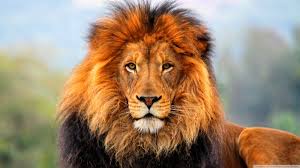
Lions only eat buffalo, antelopes, zebras and crocodiles. They are called __________.
a)
Omnivore
b)
Herbivore
c)
Carnivore
d)
Delivore
61.
Elephants only eat leaves, fruit, nuts and grass. They are called __________.
a)
Omnivore
b)
Fortivore
c)
Herbivore
d)
Carnivore
62.

Which is the primary source of energy for plants?

a)

producer

b)

consumer

c)

decomposer

d)

sun

63.

Which of the following would be the most likely effect, if there were a sudden increase in the cricket population?

a)

There would be a decrease in the small bird population.

b)

There would be a decrease in the grass/flowers population.

c)

There would be a decrease in the mice population.

d)

There would be an increase in the grass/flowers population.
64.
A consumer that hunts is called:
a)
a producer.
b)
an omnivore.
c)
a predator.
d)
a herbivore.
65.
Which one is NOT an example of a decomposer?
a)
mushroom
b)
leaves
c)
mold
d)
worm
66.
Grass is considered a ...
a)
consumer
b)
producer
c)
decomposer
d)
composers
67.
An organism that gets energy from eating other organisms is a ______________
a)
producer
b)
consumer
c)
decomposer
d)
prey
68.
The arrows in a food chain or web represents what?
a)
They point to the organism that is being eaten.
b)
It shows how sunlight flows within an ecosystem.
c)
They show what direction the energy is flowing between organisms. 
d)
They represent how water is transferred within a habitat.
69.
In this food chain, what will happen if the frogs become extinct?
a)
The snakes will increase.
b)
The grasshoppers will decrease.
c)
The eagles will remain the same.
d)
The grasshoppers will increase.
70.
A food chain shows the transfer of ___ from one organism to another. 
a)
matter
b)
consumers
c)
energy
d)
habitat
71.
What percentage of energy is passed on to each tropic level?
a)
10%
b)
50%
c)
90%
d)
100%
72.
How do producers obtain energy?
a)
They conduct photosynthesis.
b)
They consume plants.
c)
They consume primary consumers.
d)
They consume secondary consumers.
73.
A food web can be broken down into several seperate
a)
food chains
b)
food pyramids
c)
producers
d)
consumers
74.
Which represents the largest group in a food web?
a)
carnivores
b)
omnivores
c)
herbivores
d)
producers
75.
Where an organism lives
a)
habitat
b)
niche 
c)
heterotrogh
d)
biosphere
76.
What are the organisms that break down dead stuff?
a)
Producers
b)
Consumers
c)
Decomposers
d)
Organisms
77.
A food web can be broken down into several seperate
a)
food chains
b)
food pyramids
c)
producers
d)
consumers
78.
The diagram is intended to show relationships in an ecosystem. What do the arrows represent?
a)
The direction of population migration
b)
Differences in dietary habits
c)
Progressively smaller organisms
d)
The direction of the energy flow
79.

The approximate amount of energy that is transferred between each trophic level is:

a)

10%

b)

0.1%

c)

90%

d)

It totally depends on the ecosystem.

80.

What does a pyramid of numbers compare?

a)

the number of individual organisms at each trophic level

b)

the number of individuals in each population

c)

the number of predators and prey in an ecosystem

d)

the number of different populations at each trophic level

81.

The ecological pyramid that shows the number of organisms that were counted at each trophic level is called a pyramid of (a)  

82.

Which of the following examples would result in an inversion of a pyramid of numbers?

a)

a tree with thousands of spiders

b)

a forest of trees with a small herd of deer

c)

a tree with a spotted owl

d)

a forest of trees with a pack of wolves

83.

Why are there generally a maximum of five trophic levels?

a)

It's far easier to draw a pyramid that way.

b)

Because energy is lost at each level, there isn't enough energy left to support any more consumers.

c)

Generally a top predator is so fierce it has no predators and therefore can rule the top trophic level without fear.

d)

There simply is not a word beyond quaternary.

e)

BTW the word after quaternary is quinary (always read all the options in multiple choice questions)

84.
For a pyramid of numbers, the width of the bar shows the__________ of organisms present in each trophic level at a particular time. 
a)
number
b)
biomass
c)
energy
d)
volume
85.
Which of the following shows the correct pyramid of numbers for the food chain?
a)
A
b)
B
86.
Which of the following shows the correct pyramid of numbers for the food chain?
a)
A
b)
B