
 Worksheets
States of Matter
Total questions: 83
Worksheet time: 45mins
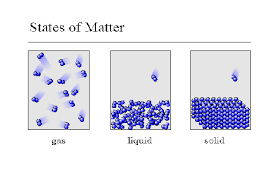
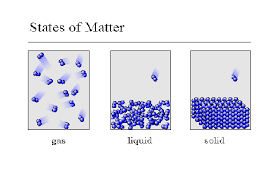
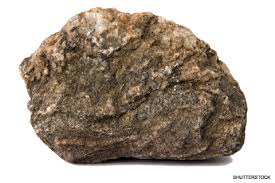

This state of matter is turning from a solid to a ____?
liquid
Freezing
Gas
Solid

This ice in this glass is ___________.
Freezing
Melting
Evaporating
Liquidizing

This picture shows liquid water changing into a ______.
Solid
Liquid
Gas

The picture is an example of what state of matter?
Solid
liquid
gas
freezing

The heat from the sun is causing the water to _________.
evaporate
condensate
boil
freeze

The picture is an example of _____________.
freezing
evaporation
condensation
melting
What causes a solid to turn into a gas?
Cold temperatures
Heat
Pressure

This is an example of ___________.
evaporation
Melting
Freezing
Condensation

The picture is an example of:
Solid
Liquid
Gas

This heat is causing the water to _____.
freeze
boil
melt
condensate
A ____________ substance has a definite volume and shape.
gas
liquid
solid
A ___________ substance has a definite volume but not a definite shape.
gas
liquid
solid
A _______________ does not have a definite volume or shape.
gas
liquid
solid
All matter is made of atoms or groups of atoms that are in constant motion. This idea is the ___________________________________.
States of Matter Theory
Kinetic Theory of Matter
Matter Theory
The particles in a _____________ vibrate, are close together, and do not move freely.
liquid
gas
solid
The particles in a ______________ are not fixed in place and can move from one place to another.
solid
liquid
gas
The particles in a ______________ can move easily in any direction.
gas
solid
liquid
True or False: Solids can easily change shape.
True
False
True or False: liquids take the shape of their container.
True
False
True or False: A gas will spread out and fill its container.
True
False
What happens to a substance with an increase in temperature?
it gains energy
it loses energy
its energy stays the same
How do you find the volume of a well-defined shape?
l x w x h (length times width times height)
b x h (base times height)
l + w + h (length plus width plus height)
none of these
Anything that has mass and takes up space is called
mass
volume
matter
solid
The amount of matter in an object is called
matter
mass
volume
density
A variety of elements and compounds that are not chemically combined is called a
mixture
element
compound
pure substance
A snow globe is an example of a
solution
colloid
suspension
Milk and gelatin (Jello) are examples of
solutions
colloids
suspensions


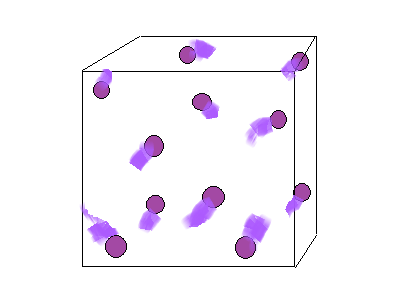


What is matter?
anything
something that has mass
anything that has mass and takes up space
what's the matter with you?
What are the characteristics of solid matter?
takes the shape of any container
molecules are packed closely together
objects have a definite shape
have a definite shape and molecules are packed closely together
Which describes liquid matter?
has a definite volume but no definite shape, takes the shape of every container
has a definite volume
it is wet
molecules are packed tightly together
Which description mostly explains a gas?
no specific shape
not a certain volume
it is all over
molecules move around freely, not tightly packed, no specific volume nor shape
What needs to be present in order for one phase to change from one to another?
space
increase in kinetic energy, resulting in temperature increasing
potential energy
evaporation
What is an example of evaporation?
rain water accumulating in a rain barrel
a puddle going away
leaves turning green
a ball rolling downhill
Which is NOT an example of condensation?
dew collecting on the grass in the morning
clouds filling with water vapor
water forming on the side of the glass of ice water
an oasis drying up in the desert
What describes "freezing" matter?
molecules moving rapidly
molecules not in motion and temperatures decreasing
molecules in motion
grass growing
The phase change sublimation is when matter changes from ....
solid turns to a liquid
solid turns directly to a gas
gas turns to a solid
liquid turns to a gas
In order for something to melt...
the objects temperature needs to be lowered
the molecules slow down to a "stand still"
you turn the air conditioner on
it requires the object's melting point to be reached

It is a liquid because the volume is fixed, and the shape changes.
It is a liquid because the substance retains its mass and volume.
It is a solid because the substance retains its mass and volume.
It is a solid because the length of the substance cannot be measured, and the shape changes.

Figure 1; the particles are tightly packed.
Figure 2; the particles are tightly packed.
Figure 1; the particles are filling the entire container.
Figure 2; the particles are far apart.

The student is correct because only a solid has mass and occupies space.
The student is incorrect because a solid does not retain its mass and volume.
The student is correct because a solid has a fixed shape and volume.
The student is incorrect because a solid takes the shape of the container it is placed in.

Observation 1
Observation 3
Observations 1 and 3
Observations 2 and 3

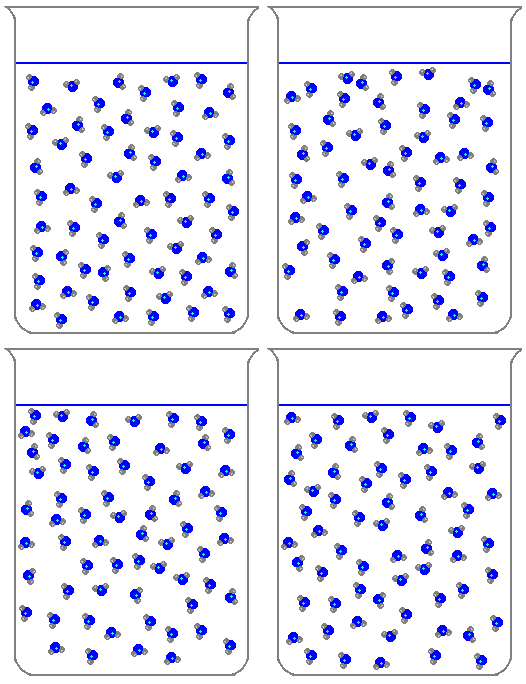
The mass of the water in Beaker 4 is greater and the temperature is cooler than the water in Beaker 1.
The mass of the water in Beaker 1 is less and the temperature is warmer than the water in Beaker 3.
The mass of the water in Beaker 3 is less and the temperature is cooler than the water in Beaker 4.
The mass of the water in Beaker 2 is greater and the temperature is warmer than the water in Beaker 3.

The substance is a liquid because the volume of the substance is retained.
The substance is a solid because the shape of the substance is retained.
The substance is a solid because the mass of the substance does not change.
The substance is a gas because the volume of the substance does not change.

Substance 1 should be classified as a solid, and Substance 3 should be classified as a liquid because a solid does not have a fixed shape.
Substance 1 should be classified as a solid, and Substance 2 should be classified as a liquid because the volume of a liquid does not change.
Substance 2 should be classified as a gas, and Substance 3 should be classified as a solid because the particles of a solid have small spaces between them.
Substance 1 should be classified as a gas, and Substance 3 should be classified as a liquid because the volume of a liquid is fixed.

The substance is a liquid because it is clear, and its particles are spaced far apart.
The substance is a liquid because its shape and volume are indefinite.
The substance is a gas because its shape and volume are indefinite.
The substance is a gas because it is clear, and its particles are spaced far apart.

The water in Glass W is warmer than the water in Glass Z.
The water in Glass X is warmer than the water in Glass W.
The water in Glass Y is colder than the water in Glass Z.
The water in Glass Z is colder than the water in Glass X.

increased condensation and decreased evaporation
increased evaporation and decreased precipitation
increased transpiration and decreased condensation
increased precipitation and decreased transpiration

How many states of matter are there?


liquid

