
 Worksheets
Form 4 Music End of Term 3 Exam
Total questions: 60
Worksheet time: 30mins
The term "Renaissance" literally means:
Art
Learning
Prosperity
Rebirth
Which of the following composers do NOT belong in the Renaissance era?
Ludwig van Beethoven
William Byrd
Palestrina Giovanni
Thomas Tallias
True or False: Renaissance Art was more focused on religious symbolism?
True
False
The Renaissance era spanned which years:
450-950 A.D.
1600-1750 A.D.
1400-1600 A.D.
1800-1900 A.D.
What is sacred music?
Music sung by Troubadours.
The music of the church.
Music sung in the courts.
Music that included the hurdy-gurdy.
What is secular music?
Music sung by monks.
Music performed during the Catholic Mass.
Music played outside of the church.
Music written by priests.
Check all of the Renaissance Composers:
Beethoven
Claudio Monteverdi
William Byrd
Thomas Tallis
Palestrina
True or False: Palestrina wrote religious music.
True
False
The Renaissance Era lasted from?
1150- 1400
1600- 1750
1400- 1600
Where was sacred music created and performed?
The Church
Town Square
Pubs
Villages
Which European families was secular choral music written for?
Lower Class
Courts
Royalty
Poor
What was the most important invention in the Renaissance Era? Invented in 1439 and gave composers the ability to duplicate their music.
Harpsichord
Paper
Printing Press
Piano Forte
Name the 8 elements of music.
Melody, Rhythm, Form, Texture/ Harmony, Tempo, Timbre, Dynamice, Articulation
Water, Air, Breath, Instruments, Mouthpiece, Fingering, Sound, Speed
Melody, Rhythm, Form, Texture/ Harmony, Tempo, Timbre, Dynamice, Sound
Melody, Rhythm, Posture, Texture/ Harmony, Tempo, Timbre, Dynamice, Articulation
What is rhythm?
Beats
A pattern of sounds
and silences within a
beat
sounds in a measure
beats and rests in a song
What is melody?
the song
One note at a time, the part of the song you can sing or hum.
the lowest part
the loudest part
What is Texture/Harmony?
Arpeggios
More than one note at a
time. Examples are: Monophonic,
Polyphonic, and Homophony
Song
the note C
What is tempo
volume
Silence
Texture
The speed of the music
What is another term for Timbre?
Lonely melody
Happy tune
Tone color of the sound
a type of rhythm
What are dynamics?
Volume: Soft and Loud
aerodynamics
changing speed
Arrows
What is Structure?
Notes sounding together
Instruments/voices working together
Instruments/voices
Plan of a piece
The Renaissance began in Italy, and it was a time of:
war
starvation
sadness
rebirth
Multiple notes played or sung at the same time are also known as:
Melodies
Harmonies
Steady Beat
Rests
Select the correct definition of Texture.
The volume of the music.
The rhythm of the music.
The combination of sounds and harmonies in the music.
The speed of the music.
Which time signature has 6 quaver beats per bar?
6/8
6/4
6/6
6/2
Which of the following is not a concept related to pitch?
Syncopation
Melody
Harmony
Tonality
Which texture includes one single melody line and band backing?
Homophonic
Monophonic
Polyphonic
Heterophonic
Monophonic Texture is...
A texture with a melody and harmony
How fast or slow the music is played
A texture with many melodic lines playing at the same time
A texture with a single layer; one melodic line
Polyphonic texture is...
A texture with a single layer; one melodic line
Two or more instruments or voices playing or singing the same pitches
A texture with many melodic lines playing at the same time
A texture with a melody and harmony
Harmony is...
Two or more pitches played at the same time that support the melody
Two or more voices or instruments playing the same pitches at the same time
The main idea made up of a single line of notes
A texture with a single layer; one melodic line
Which of the following refers to a texture with one melody with out accompaniment or harmony?
Monophonic
Polyphonic
Homophonic
Heterophonic
It refers to the number of individual musical lines (melodies) and the relationship these lines have to one another.
texture
timbre
harmony
balance
An ostinato is _______________.
a pattern that repeats.
a pattern that changes.
Singing a different melody along with the main melody is called a __________?
Round
Osinato
Countermelody
Singing a repeated pattern along with the main melody is called __________?
an Ostinato
a Round
a Countermelody
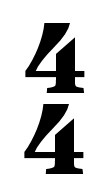
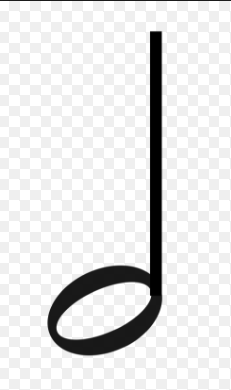

What is the name of this symbol?
Treble Clef, G Clef
Alto Clef
Tenor Clef
Bass Clef, F Clef
What is the definition of a bar line?
Tells you how many beats are in a measure
large stick
Divides the staff into measures
What are the names of the 4 families of the orchestra?
Percussion, Brass, String, Woodwind
Brass, Drums, Wood, Metal
String, Percussion, Shakers, Bows
Metals, Woods, Strings, Drums
Which family is typically played with a bow or plucked?
Percussion
String
Woodwind
Brass
Which family is played by striking the instrument, either with your hand or a mallet?
String
Woodwind
Percussion
Brass

Which family does the viola belong to?
Brass
Woodwind
Percussion
String
Which does NOT belong in the BRASS family?
Tuba
Trombone
Trumpet
Violin
How many beats are in a 3/4 Time Signature?
2 beats
3 beats
4 beats
1 beat
What type of note gets the beat in 3/4 Time Signature?
Whole Note
Half Note
Quarter Note
Eighth Note
What type of note gets the beat in 6/8 Time Signature?
Whole Note
Half Note
Quarter Note
Eighth Note


In Minuet in G, what is the only accidental in the piece?
C#
Bb
D#
F#
When a flat, sharp, or natural appears in music, it is called an...
Key Signature
Accidental
Half Step
Whole Step
What is a natural sign?
A symbol that cancels out all sharps and flats.
A symbol that raises a note a step.
A symbol that lowers a note a step.
I don’t know.

what is the purpose of the flat sign?
it raises the pitch one half step
it lowers the pitch one half step

NAME THE GIVEN NOTE
C SHARP
G SHARP
C FLAT
F SHARP

NAME THE GIVEN NOTE
C DOUBLE FLAT
G FLAT
A FLAT
B FLAT

