
 Worksheets
General Education: Science - Pre-Test
Total questions: 103
Worksheet time: 34mins
What is an observation?
A large person
Information gathered by using the senses
Short stay at a hotel
What is Kinetic Energy?
Energy related to an object's motion
Energy from the foods we eat
Energy at rest
What is Thermal Energy?
The energy produce by water
Energy produce by the sun
The energy contained within a system that is responsible for its temperature.
What is Potential Energy?
Energy in motion
Energy related to an object's position.
Energy that produces by the tidal waves
What is Energy Transformation?
A change of energy from one form into another.
Transformers-the movie
Energy that you get from sleeping.
Energy cannot be destroyed or created. Is this true or false?
True
False
What is the Hydrosphere?
A super slide
All of Earth's water
A lake

What is Newton's first law of motion?
Every action has an equal opposite reaction
An object in motion stays in motion unless acted upon by an unbalanced force
The force acting on an object is equal to the mass of an object times its acceleration
Sandwich

What is the atomic number of oxygen?
5
Sandwich
8
17
What is the formula for force?
Net force ÷ Mass
Sandwich
Mass × Acceleration
Mass × Velocity

A low voice has...
Short wavelengths
No wavelengths
Sandwich
Long wavelengths
What is an Herbivore?
Meat eater
Sandwich
Plant & Meat eater
Plant eater
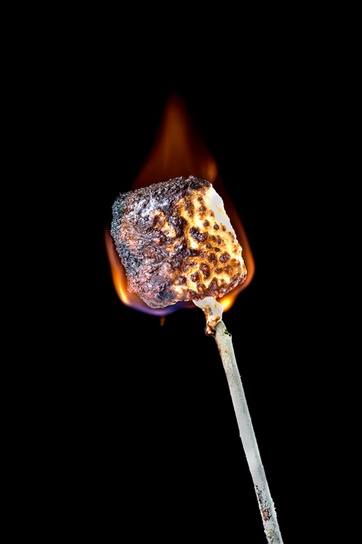
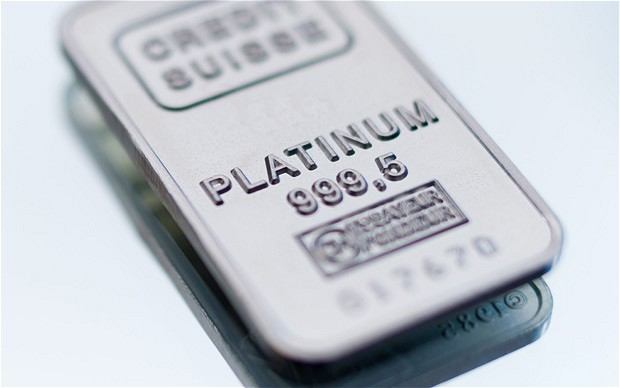


Hydrogen + Oxygen --> water
Identify the reactant(s).
What step in the water cycle occurs when a water turns into water vapor?
condensation
precipitation
evaporation
Igneous Rock forms ...
by heat and pressure warping a rock.
by magma.
by earthquakes.
The cause of a rock breaking due to frozen water is an example of...
soil formation.
erosion.
weathering.
A plate moving along a fault often causes...
an earthquake.
a tornado.
a hurricane.
Choose the correct definition and example of a fossil fuel.
a rock rich in minerals that can be removed from Earth. Ex. metal
cell that changes energy from the Sun into electrical energy. Ex. solar panels
items made from organisms that lived long ago. Ex. coal
Clay holds too much water, and the plant's roots will rot.
True
False
Physical weathering...
is when only the size of the rock changes.
is when nothing changes.
is when rock is broken into smaller pieces, and the material that makes up the rock or soil also changes.
What option shows an example of a renewable and nonrenewable natural resources?
trees and solar energy
plants and oxygen
water and natural gas
Which of Earth's system is made of all the liquid, water, and snow?
Biosphere
Geosphere
Hydrosphere
Atmosphere
The _______________ includes all living and formerly alive organisms, including humans.
Biosphere
Hydrosphere
Geosphere
Atmosphere
The atmosphere is made up of all the...
water
rocks and soil
living things
gases
Pangaea is a theory where all continents began as
one big country
one big continent

Fossils can also give evidence for a Pangaea theory
True
False
Breaks in the crust called __________ form where plates meet.
mountains
rift valleys
faults
trenches
Earth's plates meet at ____________.
plate tectonics
plate boundaries
continental drift
oceans
The inner core is
Layer of molten metal.
Outermost layer of the Earth.
Made up of the lithosphere and asthenosphere .
Innermost layer of solid metal.
The outer core is
Made up of the lithosphere and asthenosphere .
Solid material extending to Earth's core.
Layer of molten metal.
Outermost layer of the Earth.
When inside a volcano or inside of the earth's crust, the hot liquid that can cool to form rocks is called __________.
lava
magma
extrusive
liquid goo
Which of the following statements summarizes how the formation of the solar system was similar to the differentiation of Earth into layers?
In both processes, the densest materials moved to the center.
In both processes, the densest materials moved to the outside.
In both processes, the densest materials formed the middle layer.
In both processes, the densest materials were evenly distributed.
Why are meteorites important to the study of the Earth's interior?
Meteorites are most likely debris ejected from the sun and moon.
Meteorites come from bodies in space that formed along with the planets and are thought to have similar compositions to Earth's layers.
Meteorites formed far outside the solar system at the same time Earth formed.
In the early 1900's, a hypothesis was introduced that proposed a single large landmass broke into smaller landmasses and formed and continents, which drifted in their present locations. What is the name of this hypothesis?
continental shift
continental drift
plate movement
plate tectonics
Where have great amounts of volcanic activity been found to concentrate?
along shorelines
near magnetic poles
near plate boundaries
at high elevations
Select TWO of the following discoveries that are evidence supporting the idea of continental drift? You need to find two that are evidence of continental drift.
the discovery of matching plant and animal fossils found on different continents
the discovery that most earthquakes are near plate boundaries
coal found in Antarctica
the discovery of the rock age increases as distance from mid-ocean ridges increases
the discovery of sea-floor rock patterns due to magnetic reversal
which of the following explains why tectonic plates move?
Plates move because of the gravitational force of the moon pulling on Earth's surface.
Plates move because the asthenosphere is slowly moving.
Plates move because landforms cause them to move in different directions.
Plates move because they are slowly expanding and growing larger.
A subduction zone is a place where a more dense plate (oceanic) and a less dense plate (continental) collide and the more dense plate goes underneath the less dense plate. What would you call this boundary and what landform is likely to occur here?
divergent, trench
divergent, volcanoes
convergent, folded mountains
convergent, volcanoes
Which feature does NOT result from seismic activity?
faults
volcanoes
glacial deposits
folded rock layers
What two processes occur at mid-ocean ridges? Check two.
Material rises from the mantle to the crust.
Sediments from the crust sink into the mantle.
Crustal rock subducts into the mantle and melts
Thermal energy rises from the mantle to the crust.
Tsunami waves transfer energy from the crust to the mantle.


The following features are found only in the plant cell except _______
Lysosome
Cell wall
Chloroplast
Central vacuole
"Plants, animals and microbes used in traditional and modern medicine." This shows the importance of Biodiversity in the field of:
Places of Recreation and Ecotourism
Raw Materials for Industries
Medical
Sources of Food

The Hawaiian Islands were formed as a result of _____________.
deposition
glaciers
hurricanes
volcanic activity
Which of these can rapidly affect Earth’s surface?
earthquakes
annual rainfall
sediment deposits
frozen precipitation
Holds high- and low-power objectives; rotates to change magnification.
Arm
Revolving Nosepiece
Base
Stage Clips
Supports the microscope slide and viewing object
Stage Clips
Base
Mirror
Stage
Provides the least magnification, 10X
Revolving Nosepiece
High-Power Ojective
Low-Power Objective
Coarse Adjustment Knob
Passageway for light and maintains the correct distance between the lenses.
Body Tube
Diaphragm
Mirror or light source
Stage
Controls the amount of light that enters the body tube
Eyepiece
Mirror
Coarse Adjustment Knob
Diaphragm

The diagram shows a series circuit with three lit bulbs. How many of the bulbs will remain lit if the wire is cut a the point shown by the arrow?
0
1
2
3

Many types of fans are used in homes. One type of electric fan is shown above. In addition to mechanical energy, which of these is produced as electric current passes through the circuit of this fan?
Heat
Mass
Light
Water Vapor

A simplified diagram of a system using solar energy is shown. To recharge the battery for later use without lighting the bulb, which of the following switches should be closed?
switch S only
switches R and S only
switches R and T only
switches R, S, and T

Students constructed a circuit using different-colored lightbulbs. What will happen if Switch 3 is closed and the other switches are left open?
Only the white bulb will operate
None of the bulbs will operate
Only the white and yellow bulbs will operate
Only the red and blue bulbs will operate
You are planning to buy a home along a river. You want to make sure that your home is safe from flooding and erosion. Which home should you buy?
A house on land that is level with the river with lots of pretty flowers.
A house on rocky, gently sloping land away from the river.
A house at the top of a steep cliff that is made of sandy soil.
Sand dunes in the Middle East are created when the wind moves sand from deserts to new places. The sand being moved to a new location is an example of which of Earth's processes?
erosion and deposition
glacier movement
Earth crust movement
land mass motion

Over many years, the depth of a lake gets more shallow. What could cause this change?
The climate in the area gets warmer.
Sediments are deposited in the lake.
The Sun evaporates the water.
A hurricane brings heavy rains.
Anything that has mass and takes up space.
rain
mass
moisture
matter

In which direction will the box move?
A. in the direction arrow P is pointing
B. in the direction arrow Q is pointing
C. in the direction arrow R is pointing
D. in the direction arrow S is pointing

Which person has gained the most gravitational potential energy ?
a. a 50kg person who lives on the second floor
b. a 50kg person who lives on the third floor
c. a 100kg person who lives on the second floor
d. a 100kg person who lives on the third floor

What happens to Box X and Box Y as a result of the forces?
A. Box X starts moving, speeding up, and Box Y remains at rest.
B. Box X starts moving at constant speed, and Box Y remains at rest.
C. Box X starts moving at constant speed, and Box Y starts moving, speeding up.
D. Box X starts moving, speeding up, and Box Y starts moving at a constant speed.

Which bunny will fall fastest?
Bunny 1
Bunny 2
Bunny 1 and Bunny 2 will fall at the same time.


