
 Worksheets
Organelle Practice
Total questions: 70
Worksheet time: 1hrs 6mins

Science often depends on engineering advances. Which tool allowed scientists to observe organisms too small to see with the naked eye?
Telescope
Stethoscope
Spectroscope
Microscope
Which cell part is a specialized part of the cell with a specific job?
Lysosome
Organelle
Chloroplast
Cytoplasm
Which statement is part of the cell theory?
All cells come from existing cells
All cells are prokaryotic or eukaryotic
All cells can make a tissue
All cells grow and develop

turns SUNLIGHT into food for PLANTS
cell wall
chloroplasts
lysosome
endoplasmic reticulum

gives the cell ENERGY
mitochondria
vacuole
cytoplasm
ribosomes

FLUID in the cell
lysosome
vacuole
cytoplasm
golgi bodies

allows nutrients/waste IN and OUT of cell
endoplasmic reticulum
cell membrane
nucleus
cell wall

CONTROLS all the functions of the cell
nucleus
mitochondria
cytoplasm
golgi bodies

STORAGE of food, water, and waste
lysosome
ribosome
cell wall
vacuole

makes PROTEINS
ribosomes
endoplasmic reticulum
cytoplasm
mitochondria

gives STRUCTURE and PROTECTION in PLANT cell
cell membrane
cell wall
chloroplasts
cytoplasm

MAKES and TRANSPORTS proteins
cell membrane
chloroplasts
cytoplasm
endoplasmic reticulum
The _____________ stores food, water, wastes, and other materials in both plant and animal cells.
Vacuole
Mitochondria
Cytoplasm
Nucleus


What can only be found in plant cells?
Cell Wall
Big Vacuole
Chloroplast
Mitochrondria
The two kinds of cells are Prokaryotes and Eukaryotes. How are they different?
Prokaryotes have a nucleus.
Eukaryotes have a nucleus.
Prokaryotes are plant cells.
There is no difference.

I am a plant cell!


Name two organelles that are only found in plant cells.
Cell wall and chloroplasts
Cell wall and nucleus
Chloroplast and mitochondria
Cell membrane and ribosome

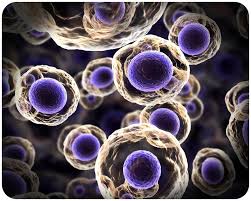
What type of cell is in the picture?
plant
fungi
animal
bacteria
What are cells made of?
organs
convection
mitochondria
organelles
True or False: all cells have a cell membrane.
True
False
I am a animal cell!
Two students were looking at a leaf that was brown and dried out. Student A said, "I would call this nonliving". Student B said "I think it's better to say that it is dead."
Student A because a leaf is not a living part of a plant
Student A beaucse a leaf can't breath or reproduce
Student B because a leaf was once living
Student B because a leaf is made of cells
Check ALL phrases that are a characteristic of living systems.
Reproduces
Exchanges gas
Moves
Needs water
Has a pulse
Which of the following is NOT part of cell theory?
All living things come from one or more cells.
Cells are the basic unit of life in all organisms.
All cells come from existing cells.
All cells must be able to make their own food.

The cytoplasm is an internal fluid that contains cell structures. The cytoplasm is labeled what letter on the diagram?
I
J
K
L
Labeled "L" on the diagram, this membrane stores water and other substances. It also provides structure and support for the plant cell.
mitochondria
vacuole
nucleus
chloroplast
turns SUNLIGHT into food for PLANTS
cell wall
chloroplasts
lysosome
endoplasmic reticulum
gives the cell ENERGY
mitochondria
vacuole
cytoplasm
ribosomes
FLUID in the cell
lysosome
vacuole
cytoplasm
golgi bodies
allows nutrients/waste IN and OUT of cell
endoplasmic reticulum
cell membrane
nucleus
cell wall
CONTROLS all the functions of the cell
nucleus
mitochondria
cytoplasm
golgi bodies
STORAGE of food, water, and waste
lysosome
ribosome
cell wall
vacuole
makes PROTEINS
ribosomes
endoplasmic reticulum
cytoplasm
mitochondria
gives STRUCTURE and PROTECTION in PLANT cell
cell membrane
cell wall
chloroplasts
cytoplasm
MAKES and TRANSPORTS proteins
cell membrane
chloroplasts
cytoplasm
endoplasmic reticulum
The _____________ stores food, water, wastes, and other materials in both plant and animal cells.
Vacuole
Mitochondria
Cytoplasm
Nucleus
The two kinds of cells are Prokaryotes and Eukaryotes. How are they different?
Prokaryotes have a nucleus.
Eukaryotes have a nucleus.
Prokaryotes are plant cells.
There is no difference.
I am a plant cell!
I am a animal cell!
The function of the cell wall is
to protect and give shape to the plant cell
to protect and give shape to the animal cell
controls movement of substances into and out of the cell
Which part of the cell contains genetic material and controls the activities?
chloroplast
cytoplasm
nucleus
What role does the mitochondria play in the cell?
traps sunlight during photosynthesis
produces energy and regulates cellular metabolism
controls the genetic materials of a cell
Consisting of many cells.
prokaryote
multicellular
eukaryote
bacteria
Consisting of one cell.
multicellular
prokaryote
eukaryote
unicellular
Individual microscopic organism with no nucleus.
eukaryotic
prokaryotic
unicellular
multicellular
moves proteins, ribosomes attached
smooth ER
nucleus
nuclear membrane
rough ER
collects, processes & packages proteins
Endoplasmic Reticulum
golgi apparatus
lysosomes
ribosomes
digests & removes cell waste
lysosome
nucleus
vacuole
ribosome
powerhouse of the cell. provides cell energy
lysosome
ribosome
nucleus
mitochondria
produces ribosomes
nucleus
cell membrane
cytoplasm
nucleolus

