
 Worksheets
Unit 1: States of Matter
Total questions: 40
Worksheet time: 25mins
Matter is
Anything that has volume
Anything that has mass
Anything that has mass and volume


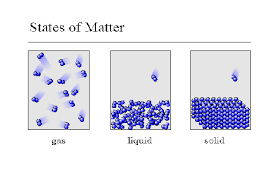
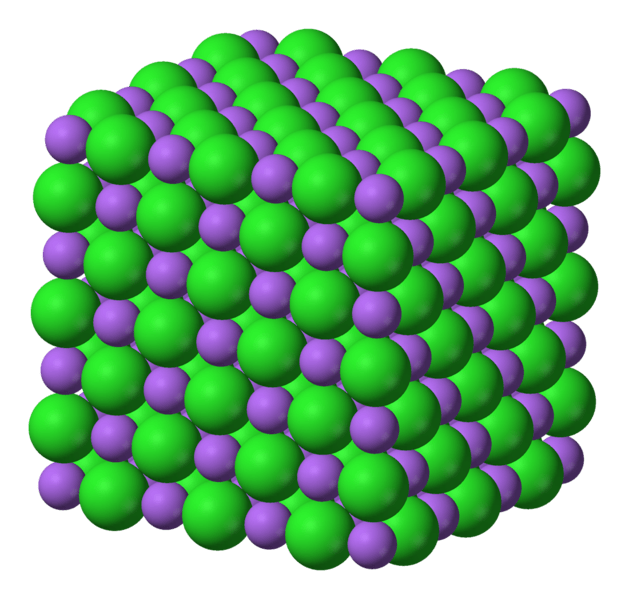
Which state of matter does this picture show?
Solid
Liquid
Gas
As temperature increases, what happens to particles?
They speed up
They slow down

What is happening in this picture of this lake freezing?
Molecules are speeding up
Molecules are slowing down

TRUE or FALSE: In order to change the state of matter, you need to increase or decrease the energy (heat).
TRUE
FALSE

TRUE or FALSE: The particles in solids move around a lot and spread out.
TRUE
FALSE

TRUE or FALSE: Gases have the least kinetic energy out all 3 states of matter.
TRUE
FALSE

Phase change from liquid to gas is called:
Freezing
Condensation
Vaporization
Sublimation
Phase change from liquid to solid is called:
Melting
Freezing
Deposition
Condensation
Phase change from gas to liquid is called:
Melting
Freezing
Deposition
Condensation

When changing a substance from liquid to solid, the energy has to...
INCREASE
DECREASE
When changing a substance from liquid to gas, the energy has to...
INCREASE
DECREASE
When changing a substance from gas to liquid, the energy has to...
INCREASE
DECREASE
Match the following:
solid to a liquid
melting
liquid to a gas
evaporation (vaporization)
liquid to a solid
freezing
gas to a liquid
condensation
solid to a gas
sublimation
Particles of a solid (a) . Particles of a liquid (b) . Particles of a gas (c) .
Particles of a solid have a (a) attraction for each other and a low kinetic energy. Particles of a liquid have (b) attraction than solids but (c) kinetic energy. Particles of a gas have a (d) attraction for each other and a high kinetic energy.

particles of a solid

particles of a liquid

particles of a gas
Select all of these that have a definite shape (meaning they keep their shape):
solid
liquid
gas
Select all of these that keep their own volume (meaning they have a definite/defined volume):
solid
liquid
gas
Which process could cause a material to change state from gas to liquid?
Adding heat
Adding energy
Removing particles
Removing energy
If I add heat to a solid, how will the motion of the particles be affected?
They will move slower
They will stop moving
They will move faster
They will move to a different container
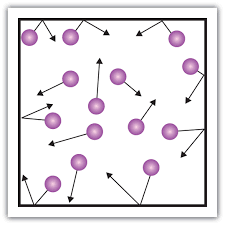
A gas typically consists of:
low energy particles that experience high attractive forces between them.
low energy particles that experience no attractive forces between them.
high energy particles that experience high attractive forces between them.
high energy particles that experience little attractive force between them
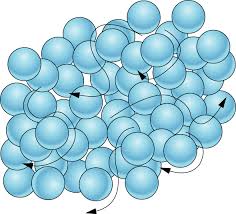
Which is not true about the liquid state of matter?
The liquid state has a definite volume and a definite shape.
The liquid state takes on the shape of its container.
The liquid state has a definite volume and an indefinite shape.
The particles in a liquid can easily move past each other.
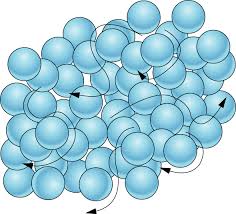
What state of matter?
Solid
Liquid
Gas
Which of the following is a physical change?
Rotting Wood
Boiling Water
Burning Food
Baking a Cake
Changes or properties that can not be observed without changing the chemical makeup of the substance is known as what?
Physical
Chemical
Quantitative
Qualitative
The average kinetic energy of water molecules is greatest in which sample?
steam at 200oC
liquid water at 90oC
liquid water at 100oC
ice at 0oC
What is NOT true about solids.
Solids have a fixed volume
Solids have a fixed shape
Solids have the lowest kinetic energy
Solid particles can move past each other


