
NEW
Font size
 Worksheets
AP Gov Unit 1.1
Total questions: 45
Worksheet time: 51mins
The idea that governments only have power with the consent of the governed is called
Social Contract
Republicanism
Natural rights
Popular sovereignty
Social contract is best described as
When a society has a consensus about its basic beliefs
When we elect representatives to govern on our behalf
When the people vote directly on all matters
When people agree to obey the government as long as it protects their rights
Electing representatives to govern on our behalf is called
Direct Democracy
Republicanism
Limited Government
Natural rights
If Congress passes a law and the president vetoes it, this is an example of
Limited government
Republicanism
Social Contract
Popular sovereignty
People who advocate for the legalization of marijuana would most likely agree with which argument?
We started in a state of nature and therefore should get in touch with nature by consuming plants
The idea of popular sovereignty says that individual people should be able to do what they want
Social Contract theory says that people don't need to follow laws that they don't like
The natural right of liberty includes the right to consume what you want
A member of the Senate makes a statement to the press that she is unsure of how she is going to vote on a bill. After numerous calls from her constituents asking her to vote for the bill, she votes in support of the bill.
This is an example of which of the following democratic ideals?
Social contract
Republicanism
Natural rights
Limited government

Which of the following is an accurate comparison of the Articles of Confederation and the Constitution?
Comparison A
Comparison B
Comparison C
Comparison D
The govt of MD is considering increasing its welfare benefits significantly.
Which of the following describes a difficulty that the state govt may face in the policy implementation process?
Due to the "full faith and credit" clause of Article IV, citizens of other states might expect to receive Maryland's welfare benefits in addition to their own
Due to the exclusive powers of the federal government, MD does not have the power to tax its citizens in order to pay for an increase in benefits
Due to the 14th Amendment's guarantee of equal protection under the law, MD cannot extend welfare benefits to its citizens unless other states do as well
Due to the "privileges and immunities" clause of Article IV, poorer citizens of other states might move to Maryland in order to take advantage of the benefits
An informal group advocating for a $15 minimum wage collects 590,000 signatures from registered voters in their state. In the next election, this initiative appears on the ballot for voters to decide whether it becomes a state constitutional amendment.
This is an example of which of the following models of democracy?
Pluralist democracy
Elite democracy
Representative democracy
Participatory democracy
"Liberty is to faction what air is to fire", James Madison wrote in which paper?
Federalist #10
Federalist #51
Federalist # 70
Brutus I
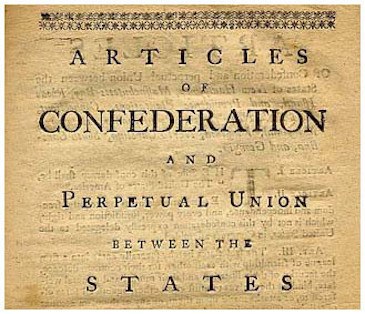
Federalists believed that the Articles of Confederation were a ________ and had a ________ National Government.
Success, Strong.
Success, Weak.
Failure, Weak.
Failure, Strong.
How did James Madison view the existence of “faction” in America?
He feared faction and felt that there was no way to control it.
He liked faction and wanted the strongest faction to dominate
He refused to acknowledge that any factions existed in the new nation.
He feared faction but thought its effects could be managed by the existence of many competing factions.
The Anti-Federalists in Brutus #1 argue that the proposed constitution would create too _________ a republic, a system of government that has never successfully existed in history.
small
large
weak
divided
The Great (Connecticut) Compromise was a compromise between--

What does Article IV (4) establish?
The Constitution is Supreme
How to amend the Constitution
How to ratify the Constitution
Relationships between the states
Federalist No. 51 argues for the following principles of government in order to limit the power of government?
Separation of Powers and Checks and Balances
Elitism and Pluralism
Hyperpluralism and Federalism
Federalism and Elitism
This branch can override a presidential veto.
Legislative
Executive
Judicial
This branch can appoint Supreme Court Justices.
Legislative
Executive
Judicial
This branch confirms all appointments to the Supreme Court.
Legislative
Executive
Judicial
This branch can declare legislation unconstitutional.
Legislative
Executive
Judicial
This branch can veto legislation.
Legislative
Executive
Judicial
Who can formally initiate the impeachment process?
the House of Representatives
any citizen of the United States
the President

The Supremacy Clause in Article VI (6) states that
What part of the national government was inspired by the New Jersey Plan?
US House of Representatives
Electoral College
US Senate
US Supreme Court
The debates between Federalists and Anti-Federalists were primarily about which of the following issues?
right of people to rebel
scope of power of the central government
representation of large and small states
Need to establish national bank
which is the main difference between elite theories and pluralist theories of democracy?
Elite democracy concentrates on the role of interest groups; pluralist emphasizes the role of the individual
Elite theory emphasizes the role of the individual; pluralist emphasizes the role of the wealthy
Elite theory emphasizes the role of a select few powerful elites; the pluralist emphasizes the role of political parties and interest groups
none of the above
No branch of government performs the same functions as another. This is an example of ____.
Checks and Balances
Federalism
Limited Government
Separation of Powers
Which of the following was NOT a problem in the Articles of Confederation?
Congress had no power to tax
Unanimous consent needed for amendments
The executive Branch was too powerful
National gov't was far inferior to state gov'ts
Direct involvement of citizens in political decisions-- not through elected officials
Elite Democracy
Participatory Democracy
Pluralist Democracy
Representative Democracy
The outcome of a conflict between the federal Constitution & law, and the states is determined by
the Great Compromise
the supremacy clause
Federalist #10
judicial review
Which of the following is an example of checks and balances, as established by the Constitution?
A requirement that states lower their legal drinking age to eighteen so they can receive federal highway grants
Media criticism of public officials during an election campaign period
The requirement that presidential appointments be approved by the Senate
The election of the President by the Electoral College rather than by direct election
The Constitution grants Congress the power to establish post offices and build roads. This is an example of
enumerated powers
implied powers
reserved powers
concurrent powers
Which of the following best characterizes the general argument made in Brutus 1?
A large republic is dangerous to personal liberty and undermines the states.
A small republic is more susceptible to corruption than a large republic.
A large republic would be preferable to a small one because more people could participate.
A small republic would pose more danger to individual liberty than a large republic.
In The Federalist 10, which of the following did James Madison argue would best control the negative effects of factions?
A large federal republic
A large unitary government
A small direct democracy
A law that prohibits factions
Which of the following is an accurate comparison of representative democracies?
In a pluralist democracy conflict is unlikely, whereas in an elite democracy conflict arises from an overabundance of choice.
In a pluralist democracy conflict may arise and compromise is required, whereas in an elite democracy elites are willing to bargain with the broader public when making policy decisions.
In a pluralist democracy interest groups actively compete in the political arena, whereas in an elite democracy a small number of powerful elites have the most influence.
In a pluralist democracy small groups comprised of upper class rule according to self-interest, whereas in an elite democracy interest groups compete to promote policy preferences.
In the Constitution, the implied powers of Congress to execute its enumerated powers come from the
Origination Clause
Presentment Clause
All of the following powers are enumerated in the Constitution EXCEPT
The power to maintain an army and navy
The power to establish and fund welfare programs
The power to coin money
The power to punish acts of treason

