wayground logo

Free Printable Worksheets

Font size

S
M
L
XL
Worksheets

HHS Intro to Biology: Unifying Themes and Characteristic of Life

Total questions: 25

Worksheet time: 14mins

Name
Class
Date
1.
A group of cells that live and work together to make one organism is...
a)
unicellular
b)
colonial
c)
multicellular
d)
bacteria
2.
One advantage of cell specialization...
a)
cells are efficient at what they can do
b)
all cells perform the same duties as others
c)
if one type of cell dies they all perish
d)
the cells are not efficient
3.
This is an organism made of one cell.
a)
multicellular
b)
unicellular
c)
colonial
d)
plant kingdom
4.
All cells have two things in common.  Name those two things.
a)
Nucleus and DNA
b)
cell membrane and DNA
c)
Organelles and cell wall
d)
nuclear membrane and cytoplasm
5.
The name given to the internal balance that a cell maintains with its external environment.
a)
velocity
b)
membrane
c)
homeostasis
d)
circulation
6.
A group of tissues that works together for a common function is called ___.
a)
organ
b)
cell
c)
organ system
d)
organism
7.
Evolution...
a)
Is the result of natural selection
b)
Means animals turn into other animals
c)
Always has to involve billions of years
d)
Means weak traits never get passed onto offspring.
8.
The branch of biology that studies the interaction of organisms and their environment is called ___.
a)
psychology
b)
ornithology
c)
ecology
d)
paleontology
9.
Life on Earth depends on energy from...
a)
the sun
b)
fossil fuels
c)
rocks and soil
d)
mining
10.
A plant growing towards the light is an example of 
a)
reproduction.
b)
responding to a stimuli.
c)
metabolism.
d)
homeostasis.
11.
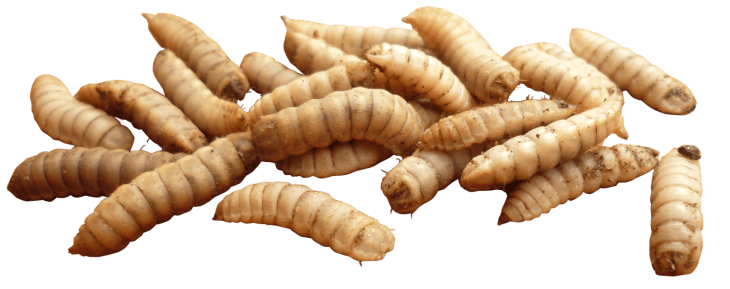
A maggot changing into a fly is an example of 
a)
reproduction.
b)
growth and development.
c)
homeostasis.
d)
evolution.
12.
The maintenance of an organism’s internal environment is called:
a)
compensating
b)
homeostasis
c)
balancing
d)
routine
13.
 All organisms contain instruction molecules that help determine which traits the organism will have is an example of 
a)
universal genetic code (DNA/RNA)
b)
metabolism
c)
evolution
d)
growth and development
14.
A group of cells that work together to perform the same function.
a)
colonial
b)
tissue
c)
organ
d)
unicellular
15.

Groups of organs working together to carry out an important life process are called . . .

a)

cytoskeleton

b)

organisms

c)

organelles

d)

organ systems

16.

The chemical reactions through which an organism builds up or breaks down materials as it carries out its life processes is called

a)

Metabolism

b)

Respiration

c)

Mitosis

d)

Homeostasis

17.

A change in genetic makeup of a population of a species (the change in living things over time)

a)

Adaptation

b)

Biodiversity

c)

DNA

d)

Evolution

18.
Biology is the study of...?
a)
animals
b)
plants
c)
bacteria
d)
all living things
19.

Living things are made up of units called

a)

DNA

b)

Cells

c)

Homeostasis

d)

Seeds

20.

A stimulus can be external or internal.

a)

False

b)

True

21.
All living things are composed of cells. 
a)
True
b)
False
22.

Which of the following are characteristics of all living things?

a)

ability to reproduce

b)

problem solve

c)

response to the environment

d)

care for offspring

23.

Which characteristic of life does this illustrate?

"A pill bug (roly poly) eats a carrot."

a)

All living things contain cells

b)

All living things need energy

c)

All living things maintain homeostasis

d)

All living things grow and develop

24.

Which characteristic of life does this illustrate?

"A tulip opens in the morning at sunrise and closes in the evening at sunset"

a)

All living things have cells

b)

All living things use energy

c)

All living things respond to their environment

d)

All living things grow and develop

25.

Which characteristic of life does this illustrate?

"An adult hydra is producing its offspring through budding."

a)

All living things use energy

b)

All living things reproduce

c)

All living things contain cells

d)

All living things grow and develop