Wayground logo

Free Printable Worksheets

Font size

S
M
L
XL
Worksheets

Biomolecules, Levels of Org. Pro vs Eu

Total questions: 47

Worksheet time: 2hrs 34mins

Name
Class
Date
1.
The basic unit of structure and function for the body.
a)
cell
b)
atom
c)
organelle
d)
nucleus
2.
A group of similar cells that perform the same function.
a)
tissue
b)
organelle
c)
mass
d)
tendon
3.
Which of the following is the correct order of organization in living things from most basic (simple) to most complex?
a)
a.  Organism, cell, tissue, organ, organ system
b)
a.  Organ system, organ, tissue, cell, organism
c)
a.  Cell, tissue, organ, organ system, organism
d)
a.  Cell, organ, tissue, organ, organism, organ system
4.
Which biomolecule contains pastas and breads?
a)
Lipid
b)
Protein
c)
Nucleic Acid
d)
Carbohydrate
5.
Which biomolecule is made of nucleotides and contain you DNA?
a)
Carbohydrate
b)
Lipids
c)
Protein
d)
Nucleic Acid
6.
Which biomolecule helps form muscles?
a)
Nucleic Acid
b)
Carbohydrate
c)
Protein
d)
Lipids
7.
Which biomolecule is responsible for insulation and energy storage?
a)
Protein
b)
Nucleic Acid
c)
Lipid
d)
Carbohydrate
8.
Which biomolecule has sugars and starches?
a)
Lipids
b)
Proteins
c)
Carbohydrates
d)
Nucleic Acid
9.

What is the function of carbohydrates?

a)

provides quick energy

b)

stores energy

c)

helps with growth and repair of tissues

d)

stores genetic information

10.

What is the function of lipids?

a)

provides quick energy

b)

stores energy

c)

helps with growth and repair of tissues

d)

stores genetic information

11.

What is the function of proteins?

a)

provides quick energy

b)

stores energy

c)

helps with growth and repair of tissues

d)

stores genetic information

12.

What is the function of nucleic acid?

a)

provides quick energy

b)

stores energy

c)

helps with growth and repair of tissues

d)

stores genetic information

13.

Fats and oils: a major source of food providing long term energy and other functions.

a)

Sugars

b)

Carbohydrates

c)

Lipids

d)

Proteins

14.
DNA and RNA are examples of...
a)
proteins
b)
nucleic acids
c)
carbohydrates
d)
lipids
15.
The four most common elements found in biomolecules are:
a)
Carbon, Nitrogen, Phosphorus, Bromine
b)
Sulfur, Nitrogen, Iron, Carbon
c)
Sulfur, Phosphorus, Carbon, Oxygen 
d)
Carbon, Oxygen, Nitrogen, Hydrogen
16.
The monomer (building block) of a nucleic acid is
a)
Monosaccharide
b)
Amino Acid
c)
Nucleotide
d)
Polysaccharide
17.

Which of the following is a term that refers to the building blocks of all cells?

a)

Macromolecules

b)

Micromolecules

c)

Molecules

d)

DNA

18.

Which of the following is a term that refers to an energy source obtained from plants?

a)

Cellulose

b)

Glycogen

c)

Lipids

d)

Starch

19.
Which biomolecule contains pastas and breads?
a)
Lipid
b)
Protein
c)
Nucleic Acid
d)
Carbohydrate
20.
The monomer of a protein is called...
a)
an amino acid
b)
a monosaccharide
c)
a fatty acid
d)
a nucleotide
21.
Which biomolecule is also known as enzymes?
a)
Carbohydrate
b)
Lipid
c)
Nucleic Acid
d)
Protein
22.

Which organic molecules is paired with its function?

a)

nucleic acid- to store energy

b)

lipids – to regulate metabolic.

c)

protein- to provide insulation.

d)

carbohydrates – to provide quick-release energy.

23.

Carbon, hydrogen and oxygen are (a)   found in biomolecules.

24.

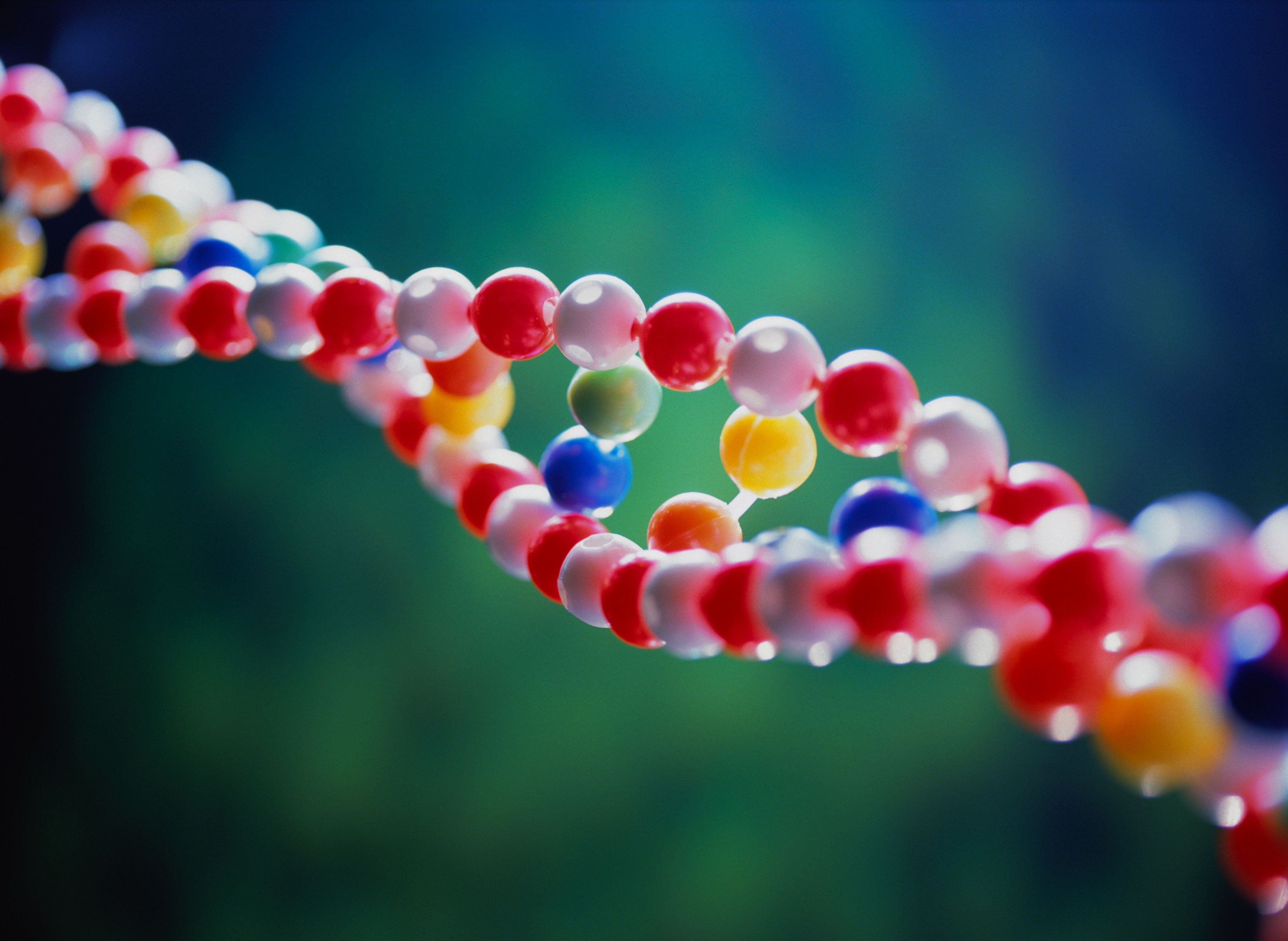
What is the image representing?

a)

nucleic acid

b)

protein

c)

lipid

d)

carbohydrate

25.
Which organic macromolecules are composed of chains of amino acids that join to form the structural components of organisms?
a)
carbohydrates
b)
nucleic acids
c)
proteins
d)
lipids
26.
Which of these substances stores and transmits the information that specifies the traits of an organism?
a)
DNA
b)
RNA
c)
enzymes
d)
carbohydrates
27.

What is a producer?

a)

an organism that uses energy from the sun to create food

b)

an organism that obtains energy from other organisms
28.
Why is DNA important?
a)
it is very small and very complicated
b)
it's in everything
c)
it serves as the blueprint for traits of all living things
d)
because we eat it every day for energy
29.
What are the building blocks of proteins ?
a)
monosaccharides
b)
nucleotides
c)
ribosomes
d)
Amino Acids
30.
The basic unit of structure and function in the human body is the....
a)
organ
b)
organ system
c)
cell
d)
tissue
31.
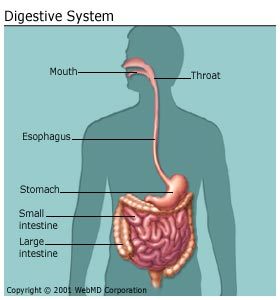
This is a example of........ 
a)
organ system
b)
cells
c)
organ
d)
tissue
32.
The cell is the building block of all living things.
a)
True
b)
False
33.
Which list includes only structures that would be found in a prokaryotic cell? 
a)
Cell wall, plasma membrane, mitochondria
b)
Central vacuole, cell wall, lysosome
c)
Cell wall, plasma membrane, cytoplasm
d)
Plasma membrane, nucleus, mitochondria
34.

Which are examples of lipids?

a)

glucose, pasta, bread

b)

fats, oils, waxes

c)

meats, enzyme, lactase, eggs

d)

DNA, RNA

35.

Which are examples of Nucleic Acids?

a)

glucose, pasta, bread

b)

fats, oils, waxes

c)

meats, enzyme, lactase, eggs

d)

DNA, RNA

36.

The monomer of carbohydrates is called

a)

Monomer

b)

Monosugar

c)

Monosaccharide

d)

Polymer

37.

The main job of carbohydrates is

a)

Weight gain

b)

Main energy source

c)

Genetic material

d)

Muscle development

38.

The main job of lipids is

a)

Short term energy storage

b)

Long term energy storage

c)

Genetic material

d)

DNA

39.

Is an animal a prokaryote or eukaryote?

a)

Prokaryote

b)

Eukaryote

40.

Is a Fungus (plural: fungi) a prokaryote or eukaryote?

a)

Prokaryote

b)

Eukaryote

41.

Is a Plant a prokaryote or eukaryote?

a)

Prokaryote

b)

Eukaryote

42.

Which of the following would be found in all cells?

a)

Nucleus

b)

Cell Wall

c)

Cell Membrane

d)

Chloroplasts

43.
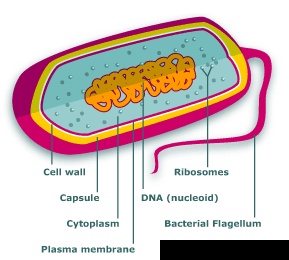
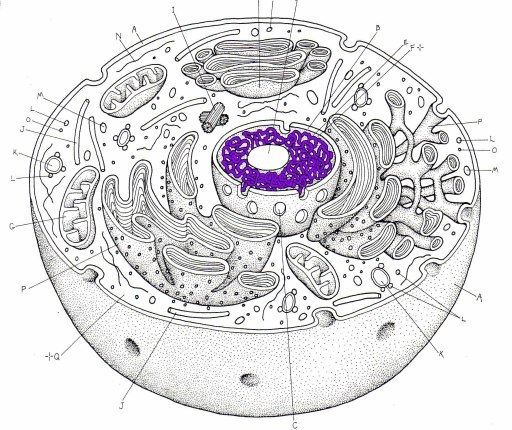
Which type of cell?
a)
Prokaryote
b)
Eukaryote
44.
Prokaryote are?
a)
simple, mostly single-celled organism that lacks a nucleus, or any other membrane-bound organelle.
b)
have a peptidoglycan cell wall and many have polysaccharide capsules.
c)
have a true nucleus, which means the cell's DNA is surrounded by a membrane.
d)
contain membrane-bound organelles, such as the nucleus
45.
What kind of cell is this?
a)
Eukaryotic
b)
Prokaryotic
46.

The modern cell theory states that...

a)

Most living things are made of CELLS.

b)

All living things are made of ATOMS.

c)

All living things are made of CELLS.

d)

Some living things are made of CELLS

47.

One main difference between prokaryotic and eukaryotic cells is that...

a)

only prokaryotic cells have cell walls

b)

only eukaryotic cells have a nucleus

c)

only prokaryotic cells have ribosomes

d)

only eukaryotic cells have DNA