
NEW
Font size
 Worksheets
Ecosystems Assignment
Total questions: 75
Worksheet time: 6hrs 15mins
Biotic factors are...
living things
non-living things
undead things
Abiotic factors are...
living things
non-living things
undead things
Which of the following is an abiotic factor that plants depend on?
seed-eating birds
insect pollinators
ants building their nests in trees
nutrients in the soil
Which of the following is an abiotic factor that could be used for shelter?
a tree
a bush
a bridge
a field of corn


Identify the ecosystem
Forest
Tundra
Freshwater
Desert
A place where living and nonliving things interact
population
community
ecosystem
nutrient cycle
What is the smallest level of organization within an ecosystem?
population
community
ecosystem
organism
What is an example of an ecosystem?
a deer
a group of deers, the sun, rabbits, the lake, the soil, a bird, a tree
a group of deers
a group of deers, rabbits, a bird, and a tree
Which of the following groups are abiotic?
bird, fish, tree, frog
shark, manatee, fly, lizard
water, shark, tree, soil
water, sun, 98 degrees, soil

Wild hogs introduced to Texas from Europe became feral after the hogs escaped from the ranches where they lived. Feral hogs are omnivores that feed on native plants, crops, and small animals. Feral hogs can damage an ecosystem by rooting through the soil to look for food and trampling small plants.
Which types of native organisms do feral hogs most likely compete with for food sources?
Carnivores and producers
Herbivores and carnivores
Producers and decomposers
Decomposers and herbivores

Giant salvinia is an aquatic plant that floats on water and reproduces rapidly. When these plants die, decomposition by bacteria affects oxygen levels in the water. As more plants die, less oxygen is available in the water. Students observe a pond covered by giant salvinia.
Which statement is the best prediction the students can make about the immediate future of the pond?
The depth of the water in the pond will increase.
Fish populations in the pond will begin to decrease.
The amount of bacteria in the pond will suddenly decrease.
The number of different types of plants around the pond will increase.

A group of scientists studied some trees in a pine forest. In the densely forested areas, the trees were within 1 m of each other. The scientists observed that these trees had dead branches near the ground. They measured the height above the ground at which the first living branches were found on different-sized trees in the forest. Then they repeated this procedure on the same kind of trees in an open meadow. This graph summarizes the scientists’ data.
Which inference is best supported by these data?
Pine trees in a dense forest can grow taller than pine trees in an open meadow.
Pine trees in a dense forest compete for sunlight with the surrounding trees.
Pine trees in a dense forest are part of a less-complex food web than pine trees in an open meadow.
Pine trees in a dense forest have more living branches than pine trees in an open meadow.
Black walnut trees produce a nontoxic chemical that becomes highly toxic when it is exposed to air or soil.
How does this chemical help black walnut trees compete with plants growing nearby?
By attracting herbivores to the other plants
By suppressing the growth of the other plants
By increasing the photosynthesis rates in the other plants
By limiting the amount of water available to the other plants

The Prairies Region and the Cross Timbers are located in north-central Texas. The graph below shows information about eating habits of white-tailed deer in these regions.
A Cross Timbers rancher is concerned about competition between the ranch animals and the deer. Based on the graph, which ranch animals compete for the most food with white-tailed deer?
Cattle that eat grass and feed
Goats that eat weeds and shrubs
Turkeys that eat seeds and fruit
Hogs that eat fruit, seeds, and feed

Fish in a lake have to compete for space. Different fish have different optimal temperature ranges. The graph below shows the temperature ranges of four fish species.
At which temperature range will there be the most competition for space among these fish species?
5°C to 10°C
10°C to 15°C
15°C to 20°C
25°C to 30°C


Which diagram can show us the AMOUNT OF ENERGY that flows from producers to consumers?
Food chain
Web chain
Food pyramid
Where is the habitat of a frog?
Fresh water pond, water plants
Rocky soil
Sand Dunes
Fast moving river
Select the RIGHT food chain in a shortgrass prairie
grasshopper → bird → mouse → buffalo
hawk → snake → mouse → grasshopper
grasshopper → mouse → snake → hawk

What type of living thing is this?
Producer
Consumer
Predator
Decomposer

What type of living thing is this?
Producer
Consumer
Predator
Decomposer

What type of living thing is this?
Producer
Consumer
Predator
Decomposer

What type of living thing is this?
Producer
Consumer
Predator
Decomposer
Why are plants considered as producers?
Plants convert energy from the sun into chemical energy in the form of glucose (food).
Plants produce root crops that supply carbohydrates to animals.
Plants provide vegetable for animals and human consumption.
Plants produce fruits that can be eaten by animals.
Where does the food chain START?
with consumers that eat grass
with the sun giving energy to producers
with the sun giving energy to consumers
with consumers eating other consumers
Animals that eat a variety of meats, fruits, and vegetables are
producers
Carnivores
omnivores
herbivores
In any food chain, the first trophic level is occupied by:
Herbivores
Secondary consumer
Producers
Keystone species



Decomposers get energy from...
the sun
eating plants
eating animals
dead things and waste
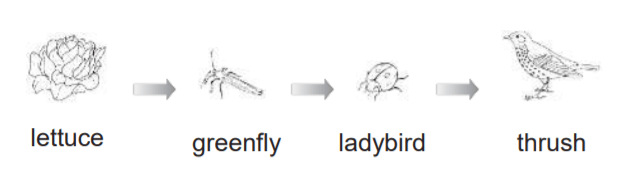
Who is the producer?
lettuce
greenfly
ladybird
thrush
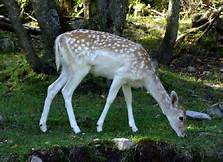
The deer population has significantly increased in an ecosystem, the best hypothesis is

Which type of organism should replace the X in the food web?
an omnivore
an herbivore
a carnivore
a producer

Which list contains only animals that receive energy transferred directly from consumers in this food web?
Red-tailed hawks, snowshoe hares, and caterpillars
Snowshoe hares and caterpillars
Snowshoe hares and shrews
Shrews and red foxes

Which statement correctly describes the transfer of energy in a food chain in this wetland?
Energy is transferred from hawks to shrews to grasshoppers to marsh grasses.
Energy is transferred from marsh grasses to crickets to hawks to frogs.
Energy is transferred from grasshoppers to crickets to frogs to hawks.
Energy is transferred from cattails to crickets to shrews to hawks.
Bacteria, fungi, and worms typically serve what role in an ecosystem?

Which of these completes the food chain correctly?
a rock
a fox
a plant
an egg

Which of these is a possible food chain for this environment?
Sun → grass → fly → frog
frog → fly → grass → Sun
Sun ← grass ← fly ← frog
Sun → fly → frog → snake


What is the effect of removing prey from a food chain?
All predators above them will die or suffer.
The prey's predator will die or suffer, but everybody else should be fine.
The prey will always, eventually, come back
The predators population will grow

If the mouse population becomes sick and decreases, which statement about the food web will be true?
The grass population will decrease.
The hawk population will increase.
The grass population will increase.
The wildflower population will decrease.
An example of prey:
lion
mouse
shark
An example of a predator:
shark
mouse
rabbit
A student wants to grow a sunflower plant. He knows it is a producer
and can make its own food.
The plant needs all of the following in order to make its own food EXCEPT
carbon - dioxide
insects
water
sunlight

These two species of birds, the egret and heron, eat the same types
of fish as their maindiet. They live in the same ecosystem.
How would the egrets in this area MOST LIKELY respond if all of the herons were removed from the area?
They would move to different ponds.
They would change to another diet.
They would build fewer nests.
They would have an increase in population.

In 2011, fires in Bastrop County, Texas, were the most destructive
wildfires in Texas history.
The fire spread through the Loblolly pine trees and scorched
nearly 5,700 acresof Bastrop State Park.
The majority of the Houston Toad’s habitat was lost, and
the Lost Pines Forest was heavily affected.
A food web of the Bastrop State Park environment is shown below.
The loss of habitat for the Houston Toad most likely affected
the food web by -
causing a decrease in the number
of wildflowers
causing an increase in the number
of insects
causing a decrease in the number
of armadillos
causing an increase in the number
of opossums
Sandra plants a vegetable garden in her backyard. She plants yellow squash and red peppers. Unfortunately, slugs begin eating the vegetables while squash bugs begin drinking the sap from the squash vines. The slugs and the squash bugs are both
plants
consumers
decomposers
producers

The diagram shows a grassland food web.
The grassland ecosystem is experiencing a drought where very little
rain has fallen for many years.
How would the organisms in the grassland ecosystem be affected
by the drought?
There would be fewer shrubs
and there would be more deer.
There would be fewer numbers of
each type of organism.
There would be more numbers of
each type of organisms.
There would be fewer hawks and
there would be more mice.

Look at the picture of the forest.
What prevents the small trees in the forest from growing larger?
Less rain reaches the smaller trees.
Less sunlight reaches the smaller trees.
Less soil reaches the smaller trees.
Less rain, sunlight and soil reaches the smaller trees.

The table lists some characteristics of producers and consumers.
Which example would best replace the “X” in the table?
Plants
Trees
Shrubs
Goats

The food web shows interactions in a forest environment.
What statement about the interactions within the forest is correct?
Carpenter ants are producers.
Lichen are not producers.
Voles do not get energy from owls.
Black-tailed deers will not get energy from berries.
The transfer of energy and nutrients through a community is called a __________
Food Web
Food Chain
Replication
Competition
Animals that hunt and eat other animals are called _______
herbivores
prey
predators
producers
___________ are usually the second link of a food chain.
herbivores
predators
decomposers
producers
Several food chains linked together form a
ecosystem
food web
chain links
habitat
when two or more organisms try to use the same resources it is called
community
competition
niche
predator
Organisms can be affected when one part of their food web changes
True
False

How many predators eat the rabbit for energy in this food web?
2
3
4
5

The diagram shows an incomplete food chain. Which of the following would best complete this food chain?
Producer
Consumer
Decomposer
Animal

The picture shows the energy flow through a meadow community. Which of the following would most likely occur to the populations within the community of organisms immediately after a wildfire burns the environment?
Hawks would increase and foxes would increase.
Hawks would decrease and foxes would increase.
Meadow plants would increase and rabbits would decrease.
Meadow plants would decrease and rabbits would decrease.

The population of foxes would decrease due to no food source.


What is the animal's carrying capacity?
2500
100 years
7250
10000

