
 Worksheets
Intro to the Lab Yr9
Total questions: 75
Worksheet time: 1hrs 1mins
Why is it important to know the names and appearance of lab equipment before doing laboratory work?
So you will score higher on the lab test.
So you can quickly obtain your laboratory supplies before lab.
So you can follow the lab instructions clearly.
So you can make sure everything has been cleaned before beginning the lab procedure.
What is the correct procedure for students to follow if a chemical is spilled:
Stand back and advise the teacher of the spill.
Run madly about the room.
Splash large amounts of water onto the spill.
Immediately ask to go to the restroom.
I can perform an experiment of my own when:
When I am sure it is safe to do so.
Whenever I want to.
Only with permission from the teacher
Never.
Keeping the work area neat and clean is important because:A. Mr O is a neat-freakB. I won't lose my supplies in the clutter.C. It keeps the room from looking messy.D. It helps prevent accidents. A. B. C. D.
My teacher is a neatness freak
I won't lose my supplies in the clutter.
It keeps the room from looking messy.
It helps prevent accidents.
If you are not sure what to do during a lab activity:
Guess.
Change lab partners.
Ask my teacher.
Just sit quietly and do nothing.
A spill can cause an accident. Clean up a spill:
When you have time.
After the teacher has told you 3 or more times.
At the end of the lab.
Immediately.
Safety glasses must be worn when using:
Bunsen burners
Glassware
Chemicals
all of the time
If you see something in the classroom or laboratory that is dangerous, tell the teacher
When you have time
At once
After class
After school
The most important thing in laboratory experiments is:
Getting done first.
Getting the answer right.
Safety.
Penmanship.


Approved eye protection devices (such as goggles) are worn in the laboratory
to avoid eye strain
to improve your vision
so that you look super cool
any time chemicals, heat or glassware are used

If you do not understand a direction or part of a lab procedure, you should
skip it and move on
ask your teacher or classmates
try different things until something works
figure it out as you do the lab


What does this symbol indicate?
Corrosive substances
Wash your hands.
Wear appropriate gloves.
Bacteria are present.


What do you think this symbol means?
Emergency eye wash station
Safety shower
Eye positive sprinkler system
Eye brush station

Identify the Image
Radioactive
Flammable
Biological hazard
Toxic

What does this safety symbol mean?
flammable
oxidising
hot
explosive

What does this safety symbol mean?
cross
harmful / irritant
sharp
chemical

What do you think this symbol means?
Emergency eye wash station
Safety shower
Transporter beam system
Keep area dry
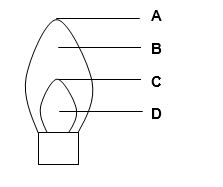

When the air hole is closed, what color is the flame?
Blue/Yellow/Orange
Dark and Light Blue
The gas should be turned on ____________ lighting the match.
Before
After
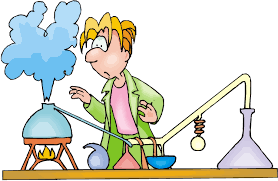
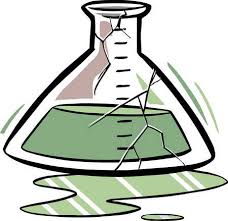
First steps to using a bunsen burner:
Place on heat proof mat, connect gas hose to a gas tap and make sure the air hole is closed
Place on heat proof mat, connect gas hose to a gas tap and make sure the air hole is open
Place on heat proof mat, connect gas hose to a gas tap and light the bunsen burner
Place on the bench, connect gas hose to a gas tap and make sure the air hole is open
A mixture of __________ and __________ burn at the top of the barrel to produce a flame
Air, carbon dioxide
Gas, carbon dioxide
Gas, air
Air, helium
When you first light a bunsen burner, the flame should be:
Yellow
Blue
Either
Non existent. You shouldn't be using a bunsen burner to light things in the lab
When heating a test tube you.....
Wear safety goggles, use a test tube holder and hold the test tube away from you
Wear safety goggles, use tongs and hold the test tube close to you
Wear safety goggles, use a test tube holder and make sure the flame is only yellow
Wear safety goggles, use tongs and hold the test tube away from you
The different parts of a bunsen burner include:
Barrel, collar, air hole, gas hose and base
Barrel, collar, air vent, gase hose and base
Barrel, collar, air vent, gas hose and bottom
Barrel, neck, air hole, gas hose and base

You are testing how the amount you water a plant affects its growth. What would be the INDEPENDENT VARIABLE in this experiment.
They type of pot you put the plants in.
The amount you water each plant.
The amount of sunlight the plants get.
The amount the plant grows.

What is the DEPENDENT variable (effect) in this experiment?
"Does eating breakfast improve test scores?"
eating breakfast or not
the grade you got on the test
what time you get up in the morning
how tasty the breakfast is
This variable is the one thing that changed on purpose...
Dependent Variable
Control
Independent Variable
You are testing how the amount you water a plant affects its growth. What would be the INDEPENDENT VARIABLE in this experiment.
They type of pot you put the plants in.
The amount you water each plant.
The amount of sunlight the plants get.
The amount the plant grows.

Mr. Pransky wants to see how different surfaces affect how high a tennis ball can bounce. What is the independent variable?
the different surfaces
using the same ball
how high they bounce

A student wants to test the hypothesis of "If salt is added to water then the boiling point of water will decrease (go down)." What is the independent variable?
Whether salt is added or not
Boiling Point
Amount of water
If you were testing the time it took for objects of different sizes to reach the ground after being dropped from 30 feet in the air, which of these would be the DEPENDENT VARIABLE?
The time it takes for each object to hit the ground.
The size of each object.
The type of object you use.
The height you drop the object from

Sadie is testing how the age of a seed affects how fast plants grow. Look at the picture to see if you can figure out what makes her experiment unfair. Mark all that apply.
She used different types of seeds/plants.
The plants are in different pots.
She did not plant very many plants.
Seed age might not make a difference.
What is the responding variable?
what we are changing or testing
what we are observing or measuring
what we are keeping the same to make the experiment fair
What are the constant variables?
what we are changing or testing
what we are observing or measuring
what we keep the same to make the experiment fair
Scientific Question: Does being tardy impact test scores?
What is the manipulated variable?
test scores
the time a student arrives to class
amount of time to complete test

The following is used to measure
length
volume
mass

What is the volume of water in this graduated cylinder in ml?
(a)

What is the volume of water in this graduated cylinder in ml?
(a)

What is the volume of water in this graduated cylinder in ml?
(a)

What is the volume of water in this graduated cylinder in ml?
(a)
What is the volume of water in this graduated cylinder in ml?
(a)
What is the volume of water in this graduated cylinder in ml?
(a)
What is the volume of water in this graduated cylinder in ml?
(a)
What is the volume of water in this graduated cylinder in ml?
(a)

What is the volume of water in this graduated cylinder in ml?
(a)

What is the volume of water in this graduated cylinder in ml?
(a)

What is the volume of water in this graduated cylinder in ml?
(a)

What is the volume of water in this graduated cylinder in ml?
(a)

What is the volume of water in this graduated cylinder in ml?
(a)

What is the volume of water in this graduated cylinder in ml?
(a)


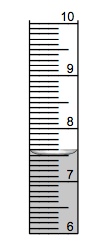


Which of the following best describes a line graph?
A graph that uses bars to represent data.
A graph that uses points connected by lines to show changes over time.
A graph that uses circles to represent data.
What is the primary use of a bar graph?
To display the relationship between two variables.
To compare quantities across different categories.
To show trends over time.
When would you choose a line graph over a bar graph?
When you want to compare different categories.
When you want to show data changes over a continuous period.
When you want to display data in a circular format.

