
 Worksheets
Unit 3: Energy, Energy types and Energy Conversions
Total questions: 49
Worksheet time: 12hrs 1mins
Electrical → Mechanical → Sound
Which device were the students most likely observing?

What energy transformation occurs in the chameleon as it quickly launches its tongue to catch an insect?
Radiant --> Chemical
Thermal --> Chemical
Chemical --> Mechanical
Mechanical --> Chemical



What is the kinetic theory of matter?
Everything is made up of matter
Matter is made of solids, liquids & gases
The particles that makes up all of matter are constantly in motion
What is Thermal Energy?
The constant movement of particles in a substance
The total kinetic energy of all the particles that make up a substance
The average measurement of the particles in a substance
The _____ particles that are in a substance at a given temperature, the _____ the thermal energy.
More, Less
Lesser, Greater
More, greater
Potential energy depends on the ________ and ________ of the object.
Height (position)
Mass
Speed
Friction

Which point has the most potential energy?
G
F
B
A
The faster an object moves, the ________ kinetic energy it has.
more
less
Kinetic energy depends on the ________ and ________ of the object.
Height (position)
Mass
Speed
Friction
What is the unit of measure
ment for KE
Newton
Watt
Joule
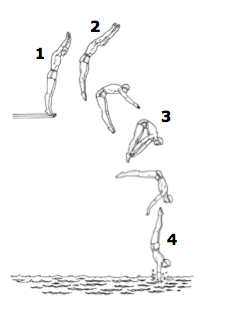
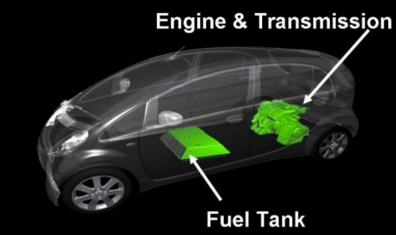
What form of energy is found in gasoline in a car tank (car is not on).
Potential
Kinetic
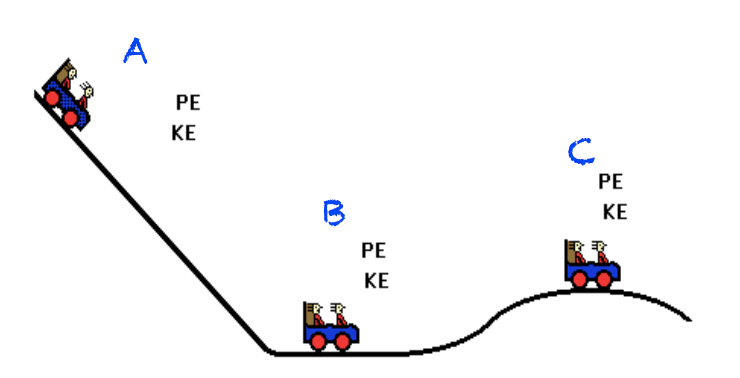
The coaster at B is at -
Maximum PE, Minimum KE
Minimum PE, Minimum KE
Minimum PE, Maximum KE
Maximum PE, Maximum KE
The energy associated with motion is called
kinetic energy
potential energy
sound energy
nuclear energy
Thermal Energy is
the energy of motion
energy of nuclear processes
an indication of a physical change
heat energy
At higher temperature
Particles in an object have less kinetic energy
particles in an object move faster
a gas contracts
particles in an object move slower
Hot objects begin to cool as
cooler air is transferred to the hot object
atoms in the object react with the oxygen in the air
thermal energy in the object is transferred to the surrounding air
thermal energy in the object cancels out the energy in the air
Which of the following is TRUE about particle motion when particles GAIN thermal energy?
particles move more slowly
particles stop moving
particles move further apart
particles move closer together
What happens to particle movement/speed when energy is removed?
particles slow down
particles go faster
particles don't move
particles stay the same speed
The temperature of a substance increases as
the substance expands
the substance's volume increases
the substance's mass increases
the average kinetic energy of its particles increaes
Potential energy depends on the _______ and _________ of an object.
Height and friction
position and composition
Height and mass
Mass and friction
Unlike Kinetic energy, Potential energy is __________.
distributed
stored
destroyed
created
The Law of Conservation of Energy states that ...
Energy can be created but not destroyed
Energy cannot be created or destroyed but can be transferred or transformed.
Energy cannot be created but can be destroyed.
Energy and work are measured in _________.
Newtons
Joules
m/s
Meters
What happens when a ball is dropped?
PE decreases and KE decreases
PE increases and KE decreases
PE decreases and KE increases
PE increases and KE increases
Roller coasters slow down when going up because . . .
Someone stops it
Kinetic energy gets converted to Potential energy as you are gaining more height.
Kinetic energy increases because more height at the top.
Velocity is increasing thus roller coaster slows down
What are the two type of mechanical energy?
Kinetic & Potential
Potential & Thermal
Kinetic & Electrical
Electrical & Thermal
Energy released when atoms split or join together is called
Gravitational
Nuclear
Elastic
Chemical
Energy stored in the bonds of chemical compounds that is released during certain reactions is called...
Sound
Elastic
Radiant
Chemical
Energy stored in an object when it is compressed or stretched like in a spring or rubber band is called...
Sound
Elastic
Radiant
Chemical

gas molecules are soft
gas molecules are far apart
gas molecules follow the shape of the container

What happens to the gravitational PE of a rock that sits on the edge of a cliff as it starts to fall?
The rock loses PE and gains KE.
The rock loses KE and gains PE.
The rock retains all its PE and gains KE
The rock retains both PE and KE
Which of the following statements is implied by the law of conservation of energy?
Energy is static and unchanging.
Energy only ever transforms or transfers.
Energy will eventually run out.
None of these.

A leaf has fallen off a tree and hit the floor of the woods. Why is gravitational PE = 0 J ?
The leaf is no longer being acted upon by gravity.
The leaf no longer has any height off the ground.
The leaf no longer has any mass.
The leaf does not have 0 J of gravitational PE.

Energy released when atoms split or join together is called
Gravitational
Nuclear
Elastic
Chemical
Energy of an object due to its high position compared to a low one is called...
Gravitational
Potential
Elastic
Chemical
Sound is a type of energy
True
False
Energy made available through the flow of electric current is called...
Sound
Elastic
Radiant
Electrical
Energy stored in the bonds of chemical compounds that is released during certain reactions is called...
Sound
Elastic
Radiant
Chemical
Which object shows an energy transformation from electrical to mechanical?



