
 Worksheets
QUIZ-2
Total questions: 60
Worksheet time: 38mins
One mole of an ideal gas expands against a constant external pressure of 1 atm from a volume of 10L to 30L. Calculate the work done by the gas in Latm.
+20
-20
40
-40
What does Gibbs Free Energy tell us?
How much energy is given off by a reaction.
The tendency of a reaction to become "random"
How spontaneous a reaction is.
What information do we need to perform a calculation of Gibbs Free Energy?
Enthalpy of the reaction.
Entropy of the reaction.
The temperature of the reaction in Kelvin.
All of the above are needed.
Which of the following would most likely lead to a spontaneous reaction.
A high negative enthalpy.
A low negative enthalpy.
A high positive enthalpy.
A low positive enthalpy.
What are the best conditions to lead towards a spontaneous reaction?
high negative enthalpy, high temp, high negative entropy
high positive enthalpy, high temp, high negative entropy
high negative enthalpy, low temp, high positive entropy
high negative enthalpy, high temp, high positive entropy.
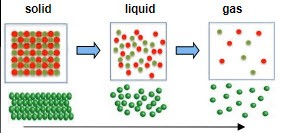
Which represents a decrease in entropy?
sublimation of CO2
boiling water
condensation of steam on cold glass
NaCl dissolving in water
Which sample has the lowest entropy?
HINT - Look at the phase of each chemical....
1 mole of KNO3(l)
1 mole of KNO3(s)
1 mole of H2O(l)
1 mole of H2O(g)
Which phase change represents a decrease in entropy?
solid to liquid
gas to liquid
liquid to gas
solid to gas
6. The formation ½ A2 + 2 B2 + C --> CAB4 has an enthalpy of formation of -104 kJ and a change in entropy of -60.8 J/K at 30 °C. What is the free energy and spontaneity of the reaction?
-85.6 kJ, spontaneous
-18.3 kJ, not spontaneous
+18.3 kJ, spontaneous
+85.6 kJ, not spontaneous
Predict the signs of ΔH , ΔS and ΔG for the reaction:
Mg(s) --> Mg(g)
Δ H = - , Δ S = + and Δ G = - (all temperature)
Δ H = + , Δ S = + and Δ G = - (At all temperature)
Δ H = + , Δ S = + and Δ G = - (At low temperature)
Δ H = + , Δ S = + and Δ G = - (At high temperature)
Which reaction has the greatest increase in entropy of the system?
A. HCl (g) + NH3 (g) → NH4Cl (s)
B. (NH4)2Cr2O7 (s) → Cr2O3 (s) + N2 (g) + 4H2O (g)
C. CaCO3 (s) → CaO (s) + CO2 (g)
D. I2 (g) → I2 (s)
A
B
C
D
Energy
the capacity for doing work
the heat coming from the sun
the vitamins we get from food
a unit for thermodynamics
Heat Energy
energy possessed within the object
energy transfer from one system to the other
energy resulted from the movement of molecules
energy stored in a body
Enthalpy
A thermodynamic quantity used to describe heat changes taking place at constant pressure.
A thermodynamic quantity used to describe heat conversion into a different form of energy.
A thermodynamic quantity used to describe heat storage on a system.
A thermodynamic quantity used to describe the movement of molecules resulting heat.
The second law of Thermodynamics define
Entropy
Energy
Enthalpy
Heat
_______ is an intensive property
volume
entropy
area
temperature
Isolated system can exchange _____ with its surroundings.
neither matter nor energy
both matter and energy
only matter
only energy
A system in which energy can cross the boundary but mass cannot is:
an isolated system
an open system
a closed system
an ideal system
_____ is the amount of matter a body contains
Gravity
Volume
Weight
Mass
Your enthalpy is +20 and your entropy is +5. Which temperature will give a spontaneous reaction?
0
4
8
Which combination of ΔH and ΔS NEVER has a spontaneous reaction?
+ΔH and +ΔS
+ΔH and -ΔS
-ΔH and -ΔS
-ΔH and +ΔS
At what temperature would a given reaction become spontaneous if ΔH =+119kJ and ΔS=+263J/K.mol
452 K
-2210 K
382 K
-363 K
How do you calculate Enthalpy of a reaction?
a. ΔH = ΔHproducts - ΔHreactants
b.ΔT = q / mC
c. ΔG = ΔH -TΔS
d. E = mc2
The SI unit of heat and energy is the __________.
a. calorie
b. heat
c. joule
d. watt

What type of reaction is shown in the reaction pathway?
a. endothermic reaction
b. exothermic reaction
c. both exothermic and exothermic
d. none of these
Entropy always increases when
a. enthalpy decreases.
.
b. temperature decreases.
c. temperature increases.
d. volume increases
What is the difference between heat and enthalpy?
a. Heat is always the energy in transit, in which 'crosses' the system boundaries. Whereas Enthalpy refers to initial heat content in a system.
b. Heat is always the energy in transit, in which 'crosses' the system boundaries. Whereas Enthalpy refers to total heat content in a system
c. Heat is sometimes transit in the system boundaries. Whereas Enthalpy refers to total heat content in a systemd
d. Heat is always the energy in transit, in which 'crosses' the system boundaries. Whereas Enthalpy refers to final heat content in a system
Predict the signs of ΔH , ΔS and ΔG for the reaction:
Mg(s) --> Mg(g)
Δ H = - , Δ S = + and Δ G = - (all temperature)
Δ H = + , Δ S = + and Δ G = - (At all temperature)
Δ H = + , Δ S = + and Δ G = - (At low temperature)
Δ H = + , Δ S = + and Δ G = - (At high temperature)
1. Given the following information, calculate ΔG0 for the reaction below at 250C: (K = 0C + 273)
SnCl4(l) + 2 H20(l) → SnO2(S) + 4HCl(g),
ΔH0=133.0 kJ and ΔS0 =401.5 J/K
-252.6 kJ
-13.4 kJ
13.4 kJ
252.6 kJ

Given their standard reduction potentials, which of the species is going to be oxidized?
Cu2+/Cu = 0.34V
Zn2+/Zn = -0.76V
Cu
Zn
CuSO4
ZnSO4
Nernst equation FOR (i) Mg(s) | Mg2+(0.001M) || Al3+(0.0001 M) | Al(s)
ECELL=E0CELL-0.0591/6 log[Mg2+]3/[Al3+]2
ECELL=E0CELL-0.0591/6 log[Al3+]2/[Mg2+]3
ECELL=E0CELL+0.0591/3 log[Mg2+]3/[Al3+]2
ECELL=E0CELL-0.0591/3 log[Mg2+] /[Al3+]
When across a period, the atomic size decreases so the first IE ___________.
increases
decreases
constant
i am not sure
Factors affecting the ionisation energy:
Atomic radius
Effective nuclear charge
Shielding effect
All of the above
The equation for the first ionisation energy of a sodium atom is:
Na (g) -> Na+ (g) + e-
Na+ (g) -> Na2+ (g) + e-
Na (s) -> Na+ (g) + e-
Na+ (g) + e- -> Na (g)
Which of the following electron configurations gives rise to the largest increase between the second and third ionisation energies?
1s2 2s2 2p2
1s2 2s2 2p6 3s1
1s2 2s2 2p6 3s2
1s2 2s2 2p1
Which electron configuration represents an element with the highest first ionization energy?
2-1
2-2
2-8-1
2-8-2

Where is there a big jump of ionization energy increase for successive ionizations of the element Silicon(Si)?
between 1 and 2
between 6 and 7
between 7 and 8
between 4 and 5
In general ionization energy ____ as you go down a group,
and ____ as you go across the periodic table.
decreases, decreases
decreases, increases
increases, decreases
increases, increases

Which element has the greater ionization energy?
Iodine (I)
Chlorine (Cl)
Which statement correctly and completely identifies a trend?
Atomic radius decreases across a period and increases down a group.
Electronegativity decreases across a period and decreases down a group.
Ionization energy increases across a period and increases down a group.
Ionic radius increases across a period and increases down a group.

What property is being measured in this diagram?
Density
Ionization Energy
Atomic Radius
Atomic Mass
Atomic size generally increases as we move __________.
down a group and from right to left across a period
up a group and from left to right across a period
down a group and from left to right across a period
up a group and from right to left across a period
What is the oxidation state of Fe in Fe2O3 ?
+2
-2
0
+3
What is the oxidation state of Mn in KMnO4 ?
+1
+5
+3
+7
What is the oxidation state of Cr in CrO42- ?
+8
+6
-6
-8
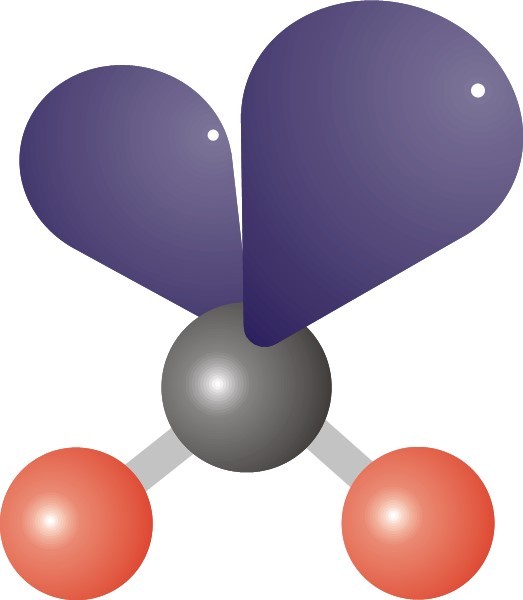
What is the name of this VSEPR shape? (The dark shapes are lone electron pairs)
trigonal planar
tetrahedral
bent
linear
The following species are exception to octet rule EXCEPT
I3 −
NH4 +
XeF4
SF4
AB4E is a symbol for molecular shape __________________
linear
T-shaped
seesaw
trigonal bipyramidal
F, N, B
2. Which degradation is not part of ‘external’ corrosion?
Soil corrosion
CO2 corrosion
Atmospheric corrosion
Seawater corrosion
4. What type of cracking is SCC (Stress Corrosion Cracking) ?
Anodic type
Cathodic type
Mechanical damage
Oxidation occurs at ...............................
Anode
Cathode

