wayground logo

Free Printable Worksheets

Font size

S
M
L
XL
Worksheets

Ecology Pt. 1

Total questions: 38

Worksheet time: 1hrs 11mins

Name
Class
Date
1.
The arrows in a food chain or web represents what?
a)
They point to the organism that is being eaten.
b)
It shows how sunlight flows within an ecosystem.
c)
They show what direction the energy is flowing between organisms. 
d)
They represent how water is transferred within a habitat.
2.
An organism that obtains energy by consuming plants and animals.
a)
Omnivores
b)
Carnivores
c)
Herbivores
d)
Humans 
3.
Carbon can be found in...
a)
The atmosphere
b)
Soil
c)
Fossil fuels
d)
All of the above
4.
Respiration is the process by which animals take in _____ and release _____. 
a)

carbon dioxide, water

b)

carbon dioxide, oxygen

c)

water, carbon dioxide

d)
oxygen, carbon dioxide
5.
Which of the following is an example of a decomposer?
a)
Owl
b)
Fish
c)
Tree
d)

Fungi

6.

All the different populations that live together in an area is the definition of ____________.

a)

Ecosystem

b)

Community

c)

Population

d)

Organism

7.

All living and non-living things that interact in an area is the definition of __________________.

a)

Ecosystem

b)

Community

c)

Population

d)

Organism

8.

All the members of one species in a particular area is the definition of ____________.

a)

Ecosystem

b)

Community

c)

Population

d)

Organism

9.
An organism that needs to eat other organisms to obtain energy is known as a:
a)
Autotroph
b)
Producer
c)
Consumer
d)
Mutualist
10.
In this Food Web Pyramid Which type of consumer gets only 10% of the energy stored in plants?
a)
Herbivore
b)
Carnivore
c)
Omnivore
d)
Secondary Consumer
11.
As you move upward, from level to level, in an energy pyramid, energy _____.
a)
increases
b)
decreases
c)
stays the same
d)
increases exponentially
12.

During photosynthesis, different gases move in and out of plant cells. Which phrase best represents the net flow of gases involved in photosynthesis?

a)

carbon dioxide moves in; oxygen moves out

b)

carbon dioxide moves in; nitrogen moves out

c)

oxygen moves in; carbon dioxide moves out

d)

Oxygen moves in; nitrogen moves out

13.

Which of the following is one of the ways that cellular respiration and photosynthesis are opposite processes?

a)

Photosynthesis releases energy; cellular respiration stores energy

b)

Photosynthesis removes carbon dioxide from the atmosphere; cellular respiration puts it back

c)

photosynthesis removes oxygen from the atmosphere; cellular respiration puts it back

d)

photosynthesis consumes glucose; cellular respiration produces glucose

14.

In the food web above, what organism is a tertiary consumer?

a)

Fox

b)

Frog

c)

Vole

d)

Grass

15.
In the energy pyramid here, how much of the energy in each level gets lost as heat or used by the organism for survival?
a)
80%
b)
90%
c)
10%
d)
20%
16.

Which organism in the food web shown to the right would

contain the lowest concentration of chemical pollutants?

a)

producers

b)

primary consumers

c)

secondary consumers

d)

tertiary consumers

17.

The phenomenon by which toxins concentrate in the organisms at higher trophic levels within an ecosystem is known as...

a)

Biotoxicity

b)

Biomagnification

c)

Eutrophication

d)

Predation

18.

What is the ultimate source of energy for most organisms?

a)

The Sun

b)

The Earth

c)

Plants

d)

Producers

19.

Consider the following food chain:

Algae > Mayfly > Minnow > Trout

In a polluted ecosystem, which organism would likely have the HIGHEST level of toxic chemicals in its body?

a)

Algae

b)

Mayfly

c)

Minnow

d)

Trout

20.
Which of the following would be the most likely effect, if there were a sudden increase in the cricket population?
a)
There would be a decrease in the small bird population.
b)
There would be a decrease in the grass/flowers population.
c)
There would be a decrease in the mice population.
d)
There would be an increase in the grass/flowers population.
21.
What would most likely happen if an ecosystem no longer received sunlight?
a)
The number of herbivores would increase
b)
The number of plants would increase
c)
all organisms would adapt
d)
All living organisms would eventually die
22.
Examples of how humans negatively affect local ecosystems are
a)
Building dams, deforestation (cutting down trees), adding point sources to nearby streams to allow for run-off, building roads and structures, and salting roads.
b)
Creating laws to prohibit fishing from local streams.
c)
Planting trees and other plants to attract native species.
d)
Removing non-native species from the environment.
23.
How would the biodiversity of this ecosystem be affected if the lantern fish disappeared?
a)
The ocean sunfish population would increase.
b)
The large shark population would die out.
c)
The squid would die out.
d)
There would be no change.
24.
Which organism do the owl and the weasel compete for in the food web?
a)
Hawk
b)
Spider
c)
Grasshopper
d)
Shrew
25.
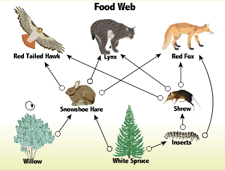
What may happen if the snowshoe hare was removed from the food web pictured?
a)
The insects in the habitat would increase.
b)
The shrew population would decrease due to being only hawk food source.
c)
The willow tree population would decrease.
d)
Foxes would dies due to no food source. 
26.
Cattle egrets forage (feed) in fields among cattle. The egret gets easy access to flying insects stirred up by the cattle, and the cattle don't care if they are there or not.
a)
mutualism
b)
commensalism
c)
competition
d)
parasitism
27.
A relationship between two organisms in which one organism benefits and the other is unharmed...
a)
Mutualism 
b)
Competition
c)
Parasitsm 
d)
Commensalism 
28.
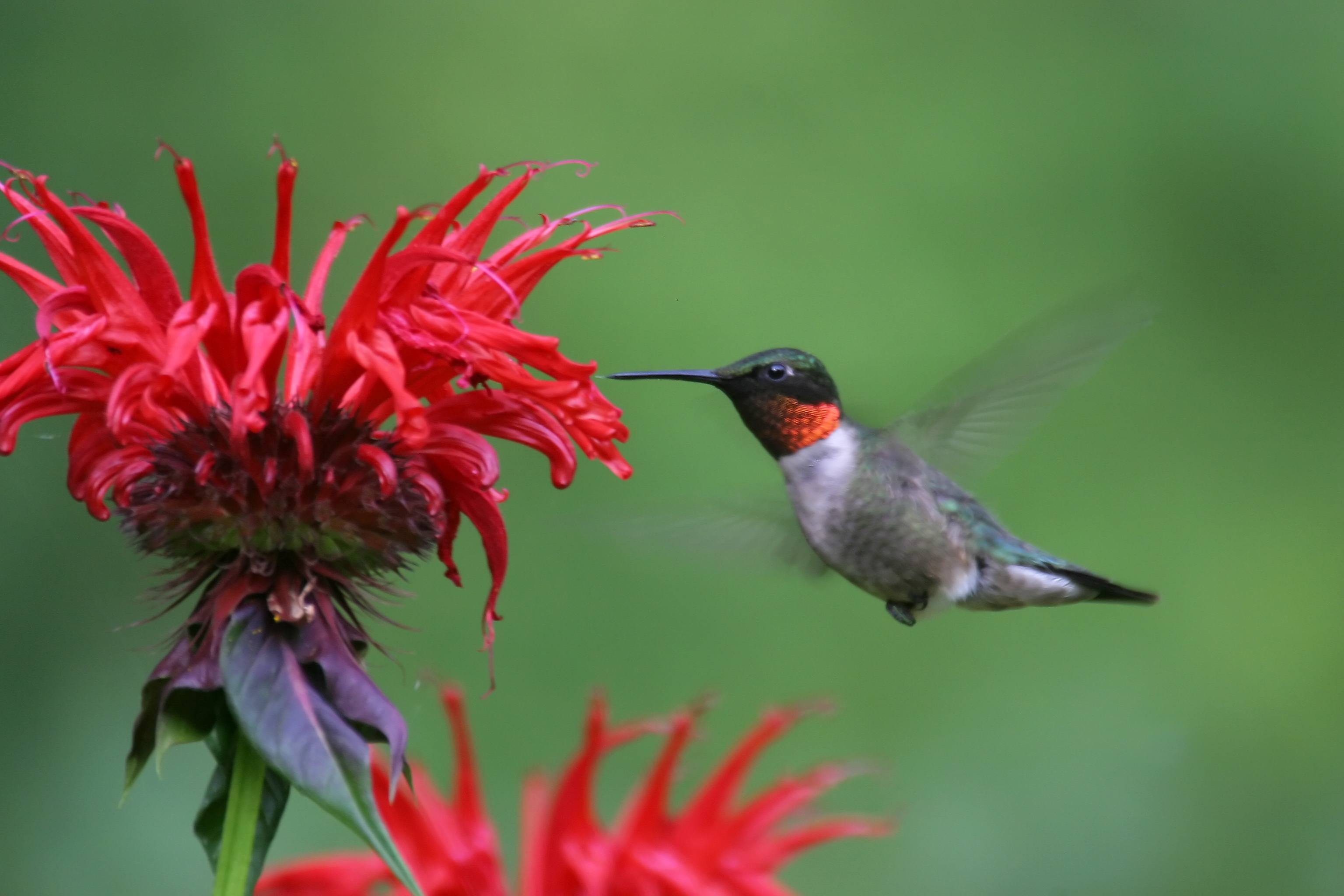
What type of symbiosis?  Hummingbirds feed on nectar from flowers.  The flowers are pollinated by hummingbirds as they move from flower to flower.
a)
commensalism
b)
mutualism
c)
parasitism
d)
predation
29.
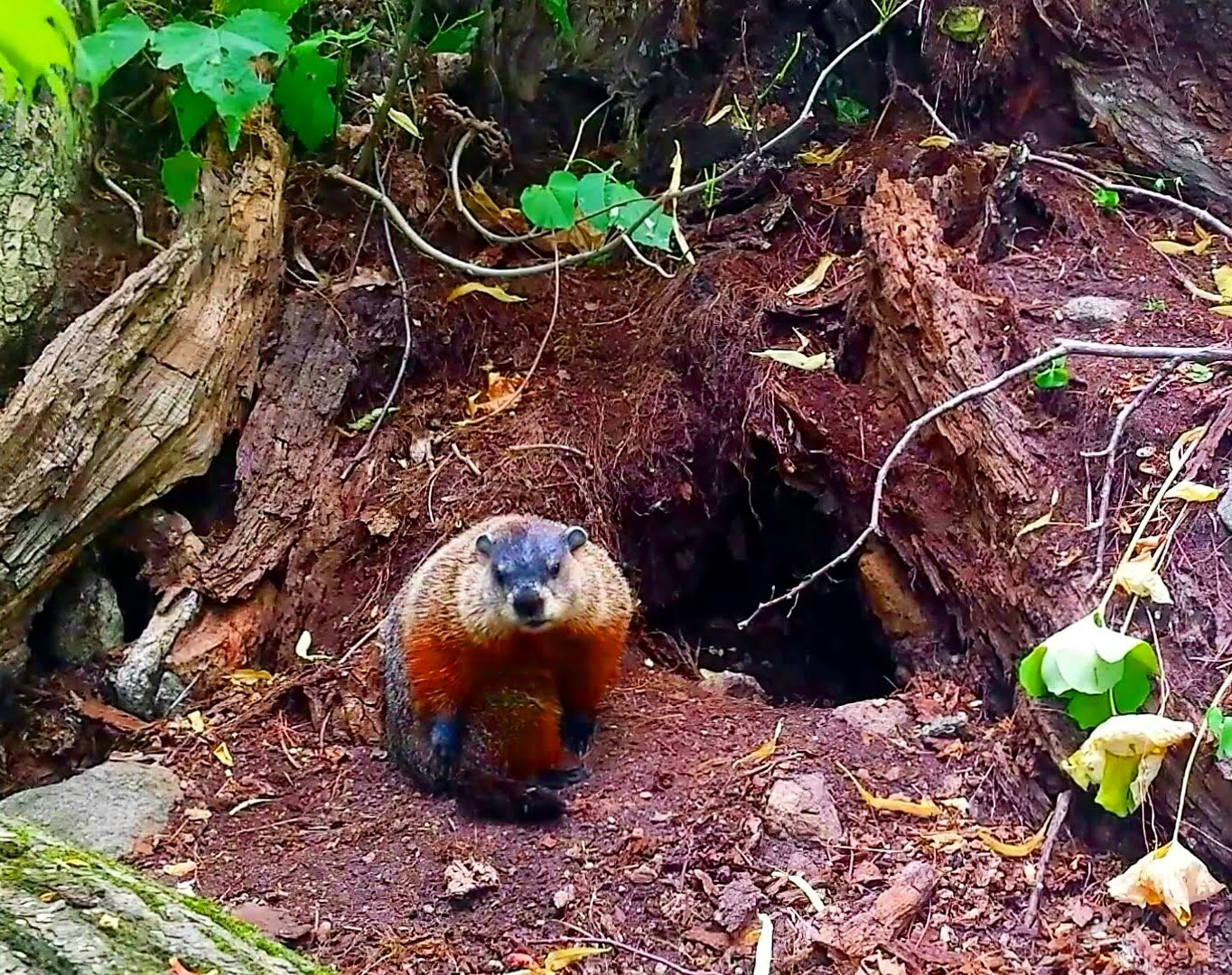
What type of symbiosis?  Skunks often live in burrows that have been dug and abandoned by woodchucks.  
a)
commensalism
b)
mutualism
c)
parasitism
d)
predation
30.
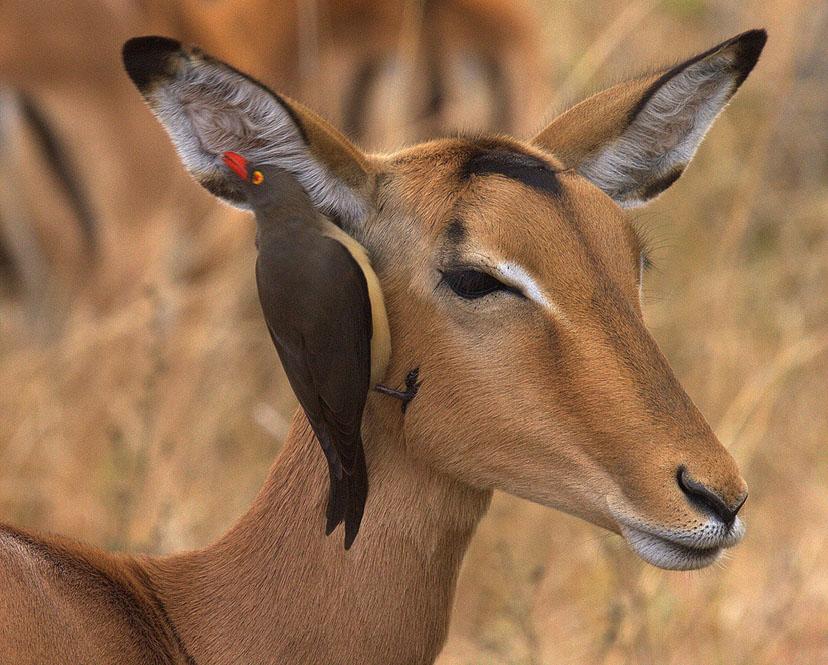
Red-billed oxpeckers are birds that often feed on parasites that infest impala.  This is an example of _______.
a)
commensalism
b)
mutualism
c)
neutralism
d)
competition
31.
A relationship between two organisms in which both organisms benefit. 
a)
Mutualism 
b)
Competition
c)
Parasitsm 
d)
Commensalism 
32.
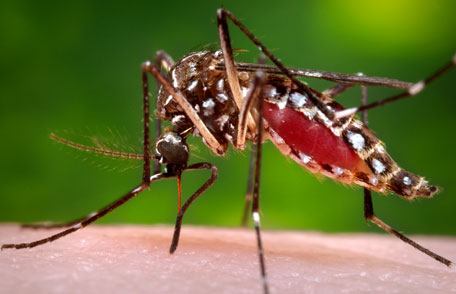
When a mosquito bites you, you are the __________ and the mosquito is the  ____________.
a)
host, hostess
b)
parasite, host
c)
host, parasite
d)
prey, predator
33.

Aphids are tiny insects that live on and eat the leaves of plants, removing vital nutrients from the plants.

a)

Predation

b)

Parasitism

c)

Commensalism

d)

Mutualism

34.
What type of symbiosis is this?
*
Hermit crabs find shells left by snails that have died and move in.
*
  Snails die and leave behind their shells.
a)
commensalism
b)
mutualism
c)
parasitism
d)
predation
35.
Silverfish live and hunt with army ants. They share the prey.  They neither help nor harm the ants. 
a)
Mutualism 
b)
Parasitism 
c)
Commensalism 
36.
Barnacles create home sites by attaching themselves to whales. This relationship neither harms nor benefits the whales. 
a)
parasitism
b)
commensalism
c)
mutualism
37.
Mistletoe extracts water and nutrients from a spruce tree. The spruce tree is harmed. 
a)
parasitism
b)
commensalism
c)
mutualism
38.
Ostriches and gazelles feed next to each other. They both watch for predators and alert each other to danger. Because their visual abilities are different, they can identify threats that the other animal would not see as readily. 
a)
parasitism
b)
commensalism
c)
mutualism