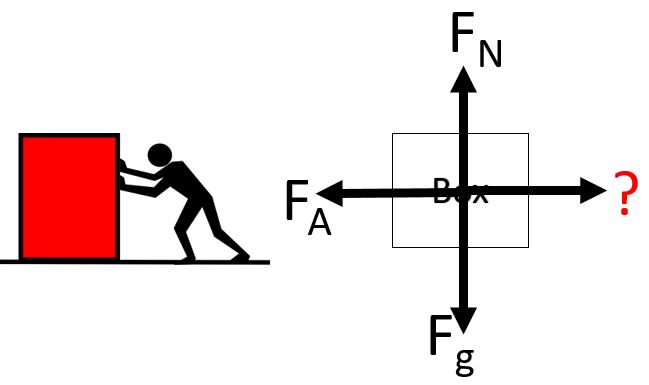
Worksheets
Physics Unit 1 and 2 Study Guide
Total questions: 73
Worksheet time: 54mins
A candela is an SI unit for what?
Radioactivity
Luminous intensity
Amount of substance
Inductance
Which of the following is the cause of an acceleration?
speed
inertia
force
velocity
What causes a moving object to change direction?
acceleration
velocity
inertia
force
Which of the following forces exists between objects even in the absence of direct physical contact?
a. frictional force
b. fundamental force
c. contact force
d. field force
Which of the following is the tendency of an object to maintain its state of motion?
a. acceleration
b. inertia
c. force
d. velocity
Which statement about the acceleration of an object is correct?
a. The acceleration of an object is directly proportional to the net external force acting on the object and inversely proportional to the mass of the object.
b. The acceleration of an object is directly proportional to the net external force acting on the object and directly proportional to the mass of the object.
c. The acceleration of an object is inversely proportional to the net external force acting on the object and inversely proportional to the mass of the object.
d. The acceleration of an object is inversely proportional to the net external force acting on the object and directly proportional to the mass of the object.
Which are simultaneous equal but opposite forces resulting from the interaction of two objects?
a. net external forces
b. field forces
c. gravitational forces
d. action-reaction pairs
Newton’s third law of motion involves the interactions of
.
a. one object and one force
b. one object and two forces.
c. two objects and one force.
d. two objects and two forces.
The magnitude of the gravitational force acting on an object is
a. frictional force.
b. weight.
c. inertia.
d. mass
A measure of the quantity of matter is
a. density.
b. weight.
c. force.
d. mass.
Which of the following forces is an example of a contact force?
a. gravitational force
b. magnetic force
c. electric force
d. frictional force
Which of the following forces is an example of a field force?
a. gravitational force
b. frictional force
c. normal force
d. tension
In general, Fnet equals
a. Ff.
b. Fg.
c. Fn.
d. Sum of Forces.
A small force acting on a human-sized object causes
a. a small acceleration.
b. no acceleration.
c. a large acceleration.
d. equilibrium.
A hammer drives a nail into a piece of wood. Identify an action-reaction pair in this situation.
a. The nail exerts a force on the hammer; the hammer exerts a force on the wood.
b. The hammer exerts a force on the nail; the wood exerts a force on the nail.
c. The hammer exerts a force on the nail; the nail exerts a force on the hammer.
d. The hammer exerts a force on the nail; the hammer exerts a force on the wood.
A car travels 100km. The journey takes two hours. The highest speed of the car is 80km/ h, and the lowest speed is 40km/ h. What is the average speed for the journey?
40km/ h
50km/ h
60km/ h
120km/ h
An object is released from rest and falls to Earth. During its fall, the object is affected by air resistance. The air resistance eventually reaches a constant value. Which description about successive stages of the motion of the object is correct?
constant acceleration, then constant deceleration
constant deceleration, then zero acceleration
decreasing acceleration, then constant deceleration
decreasing acceleration, then zero acceleration
An athlete runs at a speed of 8 m / s for 10 s, and then at a speed of 6 m / s for 12s. Which calculation gives the average speed of the athlete in m / s?
28+6
22(8×10)+(6×12)
22(8÷×10)+(6÷×12)
22(10÷×8)+(12÷6)
A boy runs 400 m at an average speed of 4.0 m / s. He runs the first 200 m in 40 s. How long does he take to run the second 200 m?
60 s
66.7 s
80 s
140 s
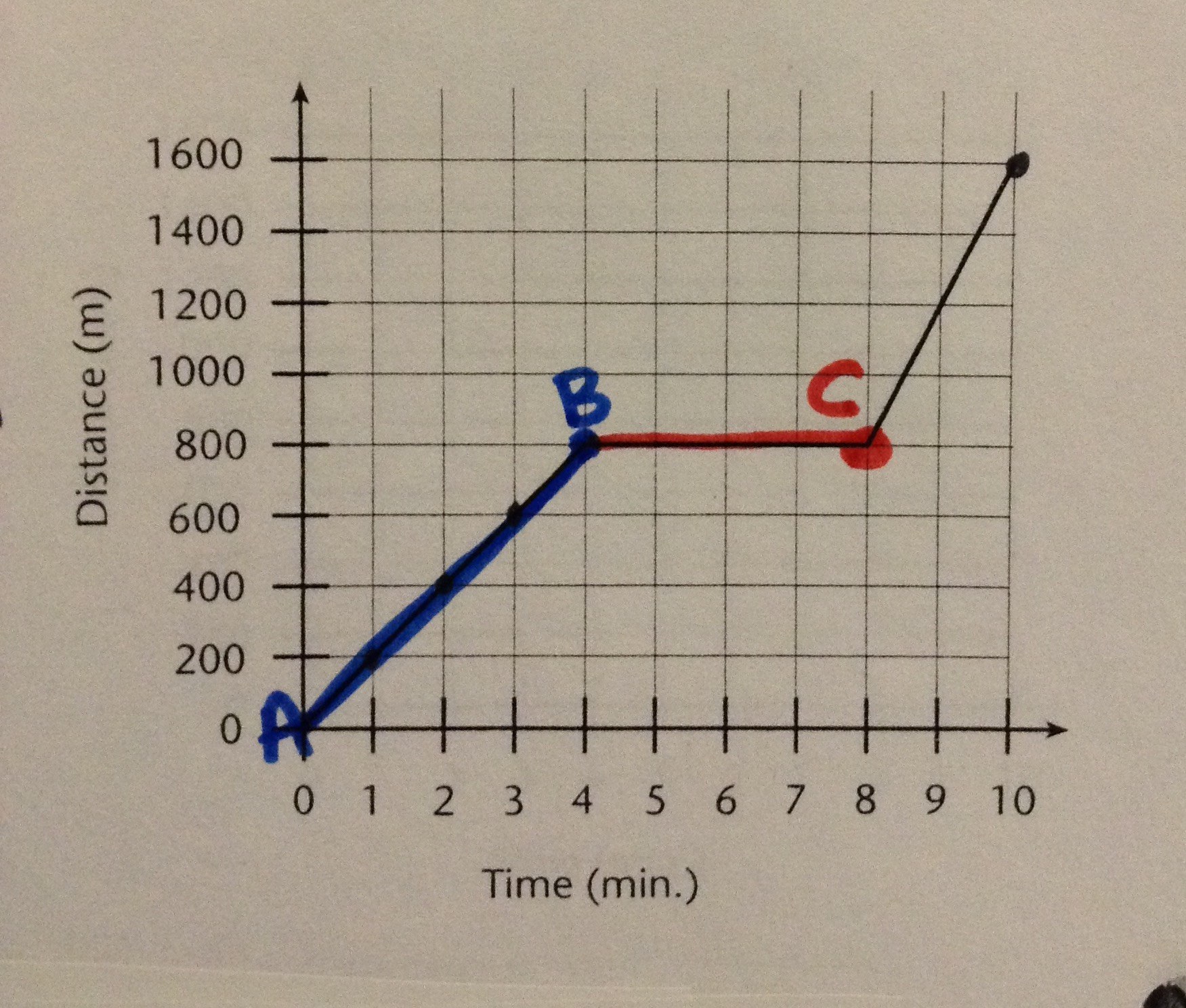
What is occurring from point A to point B?
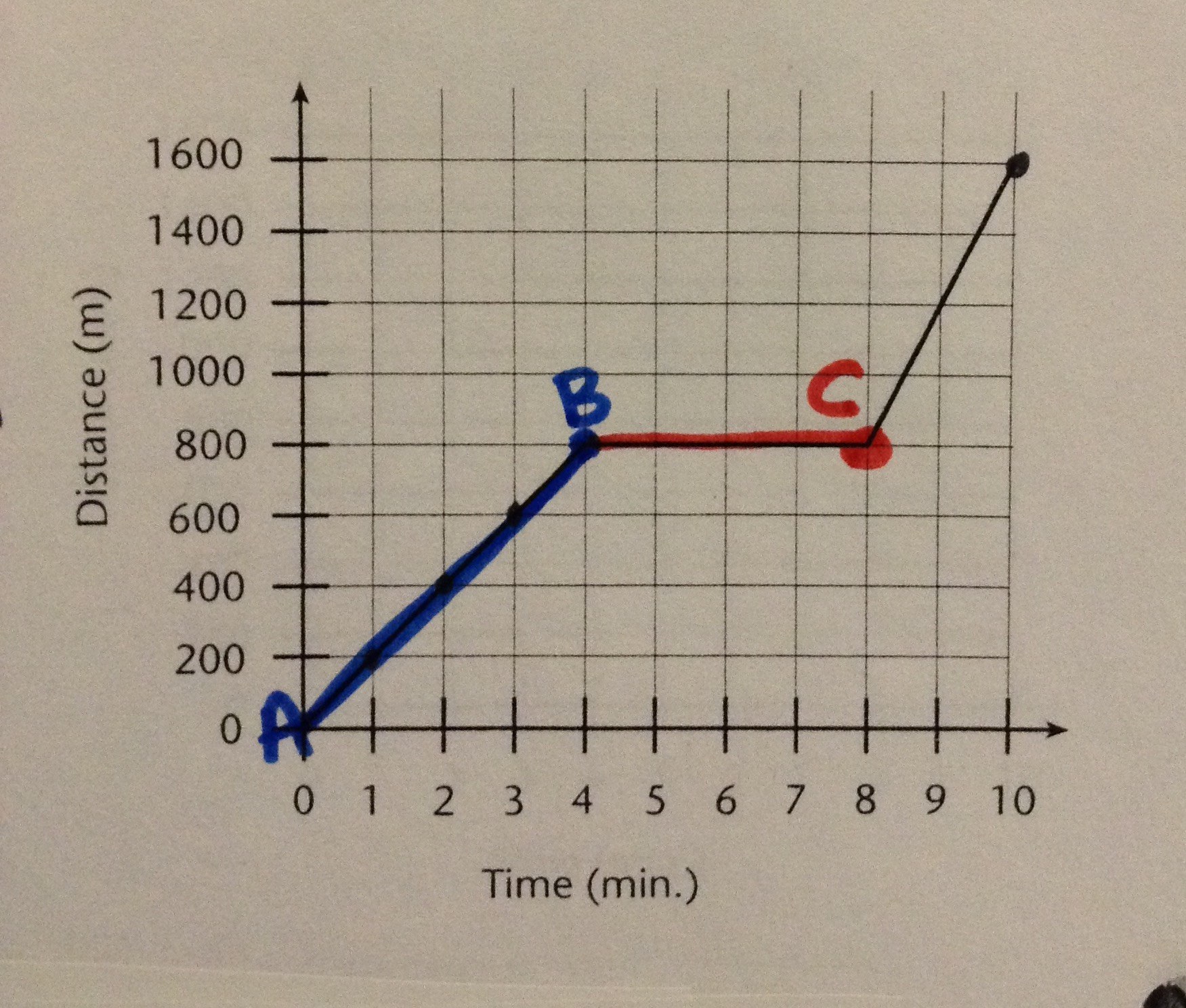
What was occurring from point B to point C?

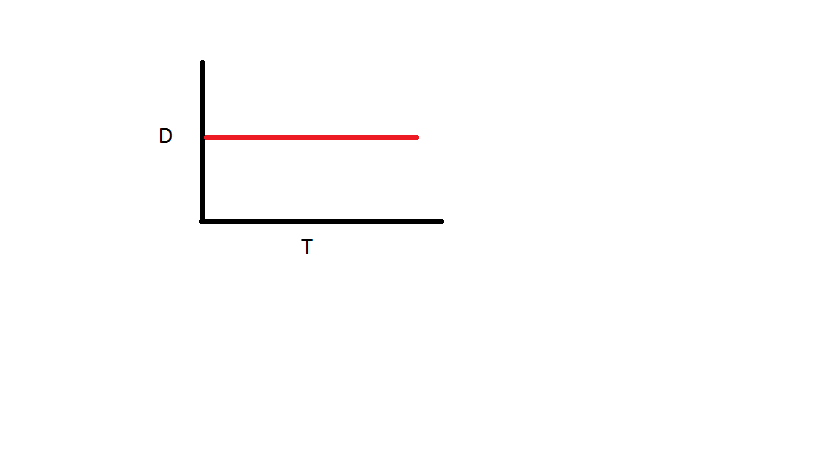
acceleration units
m/s
m/s2
m2/s2
m
vf
velocity
initial velocity
final velocity
acceleration
vi
velocity
initial velocity
final velocity
acceleration
time units (that we use in physics)
s
min
hr
year
A change in speed and/or direction...
Speed
Velocity
Acceleration
Force

A helicopter flies west 200 miles in 2 hours. What is its velocity?
99 mph
100 mph south
400 mph south
297 mph south
Basic SI unit of length or distance is:
Meter
Seconds
Grams
Minutes
A rocket travels 500 meters in 5 seconds. What was the speed of the rocket?
300 m/s
200 m/s
100 m/s
50 m/s

Using which point shows the object at speeding UP?
from A to B
from C to D
from D to E
from E to F
Speed has a direction.
true
false

What does this picture represent
Force,magnetism,acceleration
Force, money, Apples
Force, Mass, Acceleration
Funny, monkeys, Arrive

If there is a big mass, it would need a stronger force to accelerate it. Which law does this describe?
3rd law
1st law
2nd law
A book rests on a table. The force of gravity pulls down on the book. What prevents the book from accelerating downward?
Give three examples of Newton’s third law in everyday life. List the action and reaction forces in each example.
You throw a basketball by exerting a force of 20 newtons. According to Newton’s third law, there is another 20-newton force created in the opposite direction. If there are two equal forces in opposite directions, how does the ball accelerate?
How much work is done to move a 10,000-N car 20 meters?
about 9.8 m/s.
Free fall is any motion of a body where ____ is the only force acting upon it.
body attraction
tension
gravity
velocity
The momentum of an object depends upon the object's ___________&_____________.
mass and energy
mass and veloctiy
mass and speed
size and shape
The impulse-momentum theorem states that
Athe impulse on an object is less than the change in momentum it causes
the impulse on an object is greater than the change in momentum it causes
the impulse on an object is equal to the change in momentum it causes
the force on a moving object is equal to the magnitude of the impulse.
. A 40-kilogram mass is moving across a horizontal surface at 5.0 m/s. What is the magnitude of the net force required to bring the mass to a stop in 8.0 seconds?
1 N
40 N
25 N
5 N
How can a tennis ball and a bowling ball have the same momentum?
one is moving backwards
have the same speed
they can't
have different speeds
Which has more momentum?
A bus stopped at a stop sign
A bus barreling down the road (v = 10 m/s)
A hummingbird zipping down the street (v = 1 m/s)
A hummingbird hovering at a feeder
he difference between a car hitting a wall vs. a car hitting a hay stack is
the change in momentum of the car hitting the wall is greater
the force on the car hitting the hay stack is greater
the Impulse on the car hitting the wall is greater
the collision time of the car hitting the hay stack is greater
The law of conservation of momentum states that
the total initial momentum of all objects interacting with one another usually equals the total final momentum
the total initial momentum of all objects interacting with one another does not equal the total final momentum
the total momentum of all objects interacting with one another is zero
the total momentum of all objects interacting with one another remains constant regardless of the nature of the forces between the objects

The picture shows the end of what type of collision?
Explosive Collision
Inelastic Collision
Bouncy Collision
Elastic Collision
Two factors that determine work are...
Force
Mass
Velocity
Distance
Units of force are...
Newtons
Grams
Joules
Meters
Units of work are...
Newtons
Grams
Joules
Meters
If you push a cart with a force of 60 N for 2 m... how much work have you done?
120 J
30 J
120 N
30 N
Fred kicks a ball with a force of 20N to George, who is 5M away.
How much work was done to the ball?
25 J
100 J
4 J
75 J
Two objects stick together and move with a common velocity after colliding. Identify the type of collision.
elastic
perfectly elastic
inelastic
perfectly inelastic
Two billiard balls collide. Identify the type of collision.
elastic
perfectly elastic
inelastic
perfectly inelastic
A billiard ball collides with a stationary identical billiard ball in an elastic head-on collision. After the collision, which fo the following is true of the first ball?
it maintains its initial velocity
it has one-half its initial velocity
it comes to rest
it moves in the opposite direction
A quantity described by magnitude and does not need direction
Vector
Scalar
Speed is
Vector
Scalar
Billy runs 400 meters to Andy's house, turns around, and runs 400 meters back home. What is Billy's distance?
0 meters
400 meters
800 meters
1600 meters