
 Worksheets
Year 9 Mega Quiz
Total questions: 70
Worksheet time: 51mins
Which is an example of how we use electricity?
Battery
Solar panels
Light bulb
Wind turbine

What type of circuit is this?
Series
Parallel
Simple
In a series circuit, how is the brightness of a light globe affected when another globe is connected?
It gets brighter
It stays the same
It gets dimmer
It goes out
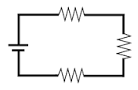
Why are Christmas lights wired in parallel?
It is cheaper to make
You can make longer strands
It uses less electricity
If a light breaks, the others keep working
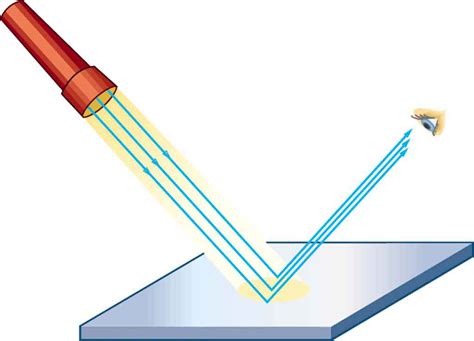
reflection or refraction?
reflection
refraction

what type of reflection is this?
diffuse reflection
regular reflection

3.This experiment shows
light travels in a straight line
light can be refracted
light can be rflected
5. If the distance between the light source
and the object is shorter, the size of the shadow becomes .............
smaller
larger
the same size

10 . Why the pencil look bent?
light from the spoon in the water is refracted when the light travels from water to air
ight from the spoon in the water is reflected when the light travels from water to air
ight from the spoon in the water is travels in a straight line when the light travels from water to air
The visible spectrum is
Colours which make up white light (ROYGBIV)
The amount of refraction that occurs when colour passes through a prism
The splitting up of white light through a prism
Also called a rainbow

We can see this calculator as white because it contains no pigments and
Reflects all colours
Reflects no colours
Absorbs all colours
Absorbs no colours

Why does this flower appear magenta to our eyes?
Only red and blue light are absorbed into our eye
Because all colours of the visible spectrum are absorbed
Because that's what colour the flower is
Only red and blue light are reflected into our eye
What can happen when germs invade the body?
biodiversity
infection
eukaryote
What role do mucus and stomach acid have in common?
Acting as barriers to pathogens
Stopping particles from being transmitted further into your body
Fighting off and/or trapping bacteria to prevent infections
This type of boundary creates folded mountains.
transform
divergent
continental-continental convergent
continental-oceanic convergent
Earth's solid, rocky surface is the
crust
mantle
core
fault
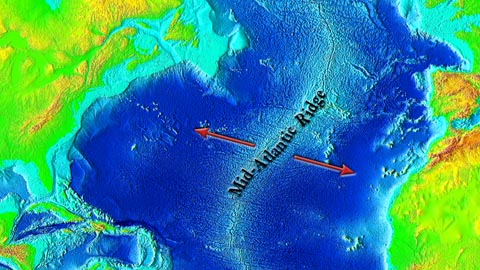
The image shows the Mid Atlantic Ridge. Which type of boundary occurs at this ridge where the ocean floor is spreading apart?
convergent
divergent
transform fault
reverse fault
What type of energy transfer occurs when hot water flows through cool water?
insulation
radiation
conduction
convection
What is all matter made of?
compounds
atoms
pollen
molecules
What is the centre of an atom called?
neutron
electron
nucleus
proton
Electrons carry a:
positive charge
positive charge on one side and negative charge on the other
negative charge
neutral charge
What does the nucleus of an atom consist of?
positive and negative charges
protons and electrons
neutrons and electrons
protons and neutrons
An isotope of an atom occurs when:
an atom gains or loses electrons
the atomic mass of an element has two options
the number of the protons in the nucleus varies
the number of neutrons in the nucleus varies
According to the Bohr model of the atom, electrons:
cannot exist in the electron shells
are mostly blue
are in the nucleus
move in orbits called electron shells
If a helium atom has two protons, how many electrons should it have?
2
4
1
0
What does subatomic mean?
Something underneath atoms
The spaces between atoms in a molecule or compound
Atoms that only exist at the depths of the oceans
Something smaller than an atom
Elements in the periodic table are ordered according to:
atomic number
mass number
the size of their nucleus
relative atomic mass

In the conventional representation of an element:
A = atomic number, Z = number of neutrons
A = atomic number, Z = mass number
A = mass number, Z = atomic number
A = mass number, Z = number of neutrons

The elements shown would be found in group:
4
1 and 2
1
2
All elements that have more than _____ protons are considered to be radioactive.
2
20
83
89
Which statement about radioactive isotopes is TRUE?
All radioactive isotopes decay at the same rate.
All radioactive isotopes release beta particles.
Scientists in labs create all radioactive isotopes.
All radioactive isotopes decay because their nucleus is unstable.

How many protons are in this isotope of Nitrogen-15?
15
7
22
8

How many neutrons are in this isotope of Nitrogen-15?
15
7
22
8
High frequency electromagnetic energy.
Alpha Particle
Beta Particle
Gamma Ray
Can be stopped by thin metal
Alpha particle
Beta Particle
Gamma Ray
Can be stopped by thick lead or concrete.
Alpha Particle
Beta Particle
Gamma Ray
Can be stopped by skin or paper.
Alpha Particle
Beta Particle
Gamma Ray

What is this?
Alpha Particle
Beta Particle
Gamma Ray
Half-life refers to the
Process by which an unstable nucleus turns into a stable nucleus
Amount of time for half of a radioactive sample to decay.
Number of radioactive nuclei that remain after 500 days.
Average mass of an element's isotope.

Approximately what percentage of the original radioactive sample remains after 2 half-lives?
100%
50%
25%
Need more information to answer.


What is an astronomical unit (A.U.)?
the time it takes light to travel one year
the distance between the Earth and the Moon
the distance between the Earth and the Sun
the distance between the Earth and the Neptune
Most stars are made of these two elements. (Choose two answers)
carbon
hydrogen
oxygen
helium
How many stars are in our solar system?
too many to count
billions
one
only the stars that we can see
Why will our sun not become a supernova?
It is too bright
It is too small
It is too large
It is too old
How will our sun end its life?
Black hole
Black dwarf
Brown dwarf
Neutron star
The reaction in the core of a star that makes them shine is called
nuclear fission
supernova
hydrostatic equilibrium
nuclear fusion
Which of the following will give the best indication of a star's temperature?
the distance of the star
the radius of the star
the color of the star
the age of the star
Which of the following stages represents a dying star?
Main sequence
Protostar
Nebula
Red Giant
Which of the following is the most abundant element in the Sun?
Hydrogen
Helium
Carbon
Oxygen
What happens to a high mass star after it fuses all of its helium?
It fuses carbon, nitrogen, oxygen, silicon, iron
It turns into a white dwarf
It explodes into a supernova
It fuses all of the elements on the periodic table to uranium
Bright and hot stars live longer than cool and dim stars
True
False

