
 Worksheets
Atoms
Total questions: 57
Worksheet time: 39mins
Which part of an atom has a positive charge?
Proton
Neutron
Electron
None of them
Which part of an atom has a negative charge?
Proton
Neutron
Electron
None of them
Which part of an atom has no charge?
Proton
Neutron
Electron
None of them

Using the picture from a periodic table, what is the Atomic Number?
26
Fe
55.845
56
Using the picture from a periodic table, what is the Atomic Mass?
26
Fe
55.845
56
Using the picture from a periodic table, what is the Mass Number?
26
Fe
55.845
56
Using the picture from a periodic table, how many PROTONS are in Iron?
26
30
55.845
56
Using the picture from a periodic table, how many NEUTRONS are in Iron?
26
30
55.845
56
When two atoms of the same element have different masses, they are called ______, and have a different number of ______.
Neutrons; Isotopes
Atoms; Isotopes
Isotopes; Protons
Isotopes; Neutrons
Calcium has the atomic number 20. If it has a mass number of 46, how many neutrons are present?
46
20
26
We cannot tell
What charge does an atom have when it GAINS electrons?
Positive
Negative
Neutral
What is a representation of an ion?
Li
Na-22
O-2

What is the mass number of bromine?
35
45
80
79.904

How many neutrons does this bromine atom have?
35
45
80

What type of atom is this?
Neutral atom
Cation
Anion
Isotope
What two particles determine the mass number?
Protons and electrons
Electrons and neutrons
Protons and neutrons

What type of atom is this?
Normal Atom
Cation
Anion
Isotope

How many neutrons does this Neon atom have?
21
11
10
12
Isotopes are atoms with the same number of protons but different number of (a) .
Forces that hold groups of atoms together and make them function as a unit.
(a)

When an atom gains electrons, it becomes a
positive ion
negative ion
neutral ion
neutral atom
Why do all bonds form?
to fill the outermost energy level
so an atom can be unstable
so the number of protons and electrons can equal.
so they can gain neutrons.
Valence electrons are found
outermost energy level
innermost energy level
some where in the electron cloud
How do covalent bonds form?
by sharing electrons between atoms
by donating or receiving electrons
Ionic bonds are between
metals and nonmetals
2 metals
2 nonmetals
How are ionic bonds formed?
transfer of electrons
sharing of electrons
Atoms involved in a covalent bond are not charged, while atoms involved in an ionic bond are charged (negative or positive)
true
false
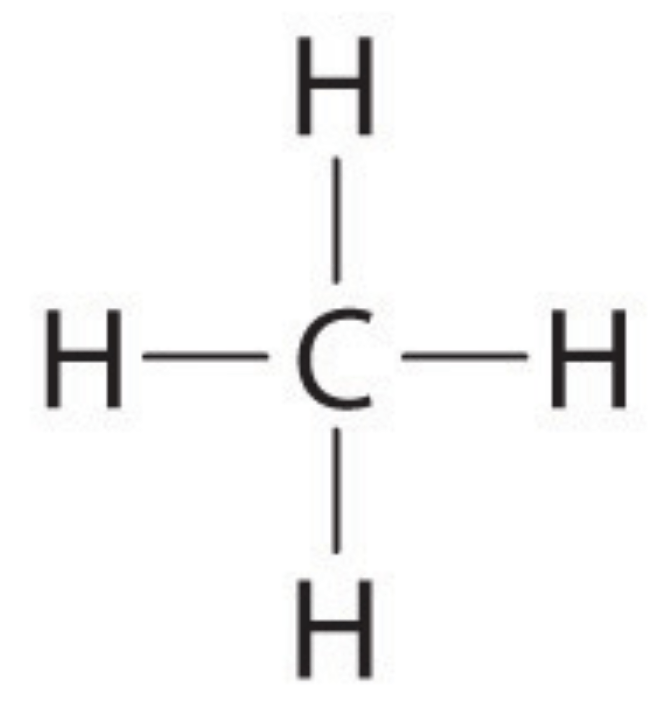
Classify the following molecule.
polar
nonpolar
Why is the molecule nonpolar?
There are lone pairs on the central atom.
There are different types of elements bonded to the central atom.
There are no lone pairs on the central atom and all of the atoms bonded to the central atom are the same.

Classify the following molecule.
polar
nonpolar

Classify the following molecule.
polar
nonpolar

Classify the following molecule.
polar
nonpolar

Classify the following molecule.
polar
nonpolar

Classify the following molecule.
polar
nonpolar

Classify the following molecule.
polar
nonpolar

Classify the following molecule.
polar
nonpolar
The attraction that an atom has for shared electrons in bonds is
electron affinity.
electronegativity.
electropositivity.
electromagnetism.
Polar molecules have
no charges.
slight positive and negative charges on opposite ends of the molecules.
only positive charges.
either positive or negative charges, but not both.
Excluding the Noble gas family, where on the Periodic Table are the elements with the highest electronegativity located?
upper right
lower right
upper left
lower left
Phosphorus has an electronegativity value of 2.1. Chlorine's electronegativity value is 3.0. What type of bond will these two elements form?
ionic
nonpolar covalent
polar covalent
metallic
Which of the following pairs of elements is most likely to form an ionic bond? (You should refer to a Periodic table.)
sulfur and oxygen
sulfur and fluorine
sodium and sulfur
oxygen and fluorine
In order to determine if a molecule is polar, you must consider the
polarity of bonds and symmetry of the molecule.
number of electrons and number of bonds.
polarity of bonds only.
total charge of each ion and number of multiple bonds.

This molecule has ______ bond and is a ______ molecule.
polar, nonpolar
nonpolar, nonpolar
nonpolar, polar
polar, polar
When is a molecule polar?
when it is asymmetrical with at least one polar bond
it is asymmetrical
it is symmetrical
it is symmetrical with at least one polar bond

This is an example of a ____ bond.
nonpolar covalent
ionic
polar covalent
metallic

Is H2S a polar or nonpolar molecule?
polar
nonpolar
Different forms of an element that have the same number of protons but a different number of neutrons
Isotope
Radioisotope
Chemical Reactivity
Molecules

What is this?
Molecule
Atom
Chemical Reactivity
Electron
How many electrons can the first orbital hold?
2
3
6
8
How many electons can the second orbital hold?
8
6
2
4
A polar molecule is....
slighly negative on one end and slightly positive on another
Slightly negative on both ends
Slighty positive on both ends
Fully positive or fully negative
A nonpolar bond is...
Equally charged
slightly negatve and slightly positive

