
 Worksheets
Physical Science Unit 4 Review
Total questions: 62
Worksheet time: 3hrs 38mins

How many VALENCE ELECTRONS does Chlorine have?
2
7
8
10
17

Ionic bonds are formed when electrons get
Shared between two atoms
Removed from both atoms
Transferred from one atom to another
Added to both atoms

Ionic bonds typically form between
A metal and a nonmetal
Two nonmetals
Two metals
A metalloid and a metal

What is the correct formula for Sodium Chloride?
SCl
NaCl
SC
NaCl2

Name this ionic compound: Al2O3
Dialuminum oxide
Aluminum oxygen
Oxygen Aluminide
Aluminum oxide
If you were to draw the lewis dot structure for Germanium (Ge), how many dots would you put around it?
2
4
6
8

Cations _______ electrons, becoming _______ charged.
Gain; positively (+)
Gain; negatively (-)
Lose; positively (+)
Lose; negatively (-)

Anions ____ electrons, becoming _____ charged.
Gain; positively (+)
Gain; negatively (-)
Lose; positively (+)
Lose; negatively (-)

Write the chemical formula for K and Br (potassium bromide).
KBr
K2Br
KBr3
KBr2

Write the chemical formula for Na and S (sodium sulfide).
NaS
S2S2
Na2S
NaS2
Lead Chloride is an ionic compound, made up from Pb2+ ions and Cl- ions. Which is the correct formula for this compound?
PbCl3
PbCl
PbCl4
PbCl2

What type of bonding does this picture show?
Ionic
Covalent

What type of bonding does this picture show?
Ionic
Covalent
Generally low melting and boiling points
Ionic compounds
Covalent compounds
Generally high melting & boiling points
Ionic compounds
Covalent compounds
Can be a solid, liquid, or gas at room temperature
Ionic compounds
Covalent compounds
Poor electrical conductivity
Ionic compounds
Covalent compounds
Valence electrons are shared
Ionic bonds
Covalent bonds
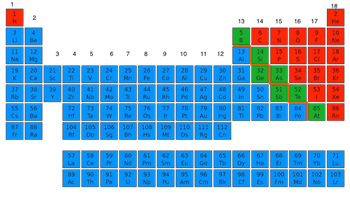
The chemical bond between a non-metal and another non-metal will be a ________ bond.
metal
ionic
covalent
polar
The chemical bond between a metal and a non-metal will be a _____ bond.
metal
ionic
covalent
polar
Sodium and Bromine will make a _____ bond.
ionic
covalent
metallic
Carbon and Oxygen will make a ___________ bond.
ionic
covalent
metallic
MgO
ionic
covalent
metallic
If two fluorine atoms bond they will make a _____ bond.
ionic
covalent
metallic
an element from Group 7
dinitrogen pentoxide
N2O5
NO5
N5O2
N2O6
P₄S₁₀
tetrapotassium decasulfide
phosphorus decasulfide
tetraphosphorus decasulfide
phosphorus (X) sulfide
SO₃
sulfate
sulfur oxide
sulfur trioxide
monosulfur trioxide
What is the OFFICIAL name for H2O? Hint.. This is a trick question so choose carefully!
Hydrogen Oxide
Oxygen Dinitride
Water
Dihydrogen Monoxide
LiBr is called
lithium bromine
lithium monobromine
lithium bromide
lithuim monobromide
Which is the correct formula for the compound: Calcium Oxide
CaO
CaO2
Ca2O
If an element is diatomic it should have a subscript of___
1, always
2, only when it is an element
it shouldn't have a subscript, it should have a coefficent
2, when bonded in a compound
Predict the products of this synthesis reaction: H2 + Cl2 →
HCl
H2Cl2
H2Cl
HCl2
Predict the products for the this Single Replacement reaction:
K + HCl →
KCl + H2
KHCl
KH + Cl2
HCl + K2
Predict the products for the this Single Replacement reaction: (Copper has a charge of 1+)
Mg + CuCl →
MgCl2 + Cu
Mg + Cu
MgCu + Cl2
MgCl + Cu2
Predict the product of this synthesis reaction:
Al + S₈ →
AlS
AlS8
Al2S
Al2S3
Predict the products for the decomposition of aluminum oxide, Al2O3 →
Al + O2
O + Al2
Al2 + O3
Al + O
Based on the information provided what type of reaction it this?
Au2S3 + 3 H2 ➔ 2 Au + ____________
Combustion
Single replacement
Double replacement
Synthesis
What would the missing product be?
Au2S3 + 3 H2 ➔ 2 Au + ____________
2 H3S
2 AuH3
3 H2S
Based on the information provided, what type of reaction is this?
Fe + O2 ➔ ___________
Double replacement
Single replacement
Synthesis
Decomposition
What would the missing product be?
Fe + O2 ➔ ___________
Fe2O2
2 FeO
2 FeOH
Based on the information provided, what type of reaction is this?
2 NO2 ➔ O2 + _________
Double replacement
Single replacement
Synthesis
Decomposition
What is the missing product?
2 NO2 ➔ O2 + _________
N2
N
NO
…NaCl + …F2 → …NaF +…Cl2 balance the equation
(a)
…H2 +…O2 → …H2O balance the equation
(a)
…P + …O2 → …P2O5 balance the equation
(a)
…S8 + …O2 → …SO3 balance the equation
(a)

Is the following reaction endothermic or exothermic
endothermic
exothermic

Is the following reaction endothermic or exothermic
endothermic
exothermic
If the size of an object decreases, surface area ________.
decreases
increases
Indicate whether each of the following will: Increase / Decrease / have No effect on the rate of reaction.
Increasing temperature
Increase
Decrease
No Effect
Indicate whether each of the following will: Increase / Decrease / have No effect on the rate of reaction.
Decrease Reactant Concentration
Increase
Decrease
No Effect
When surface area increases, the reaction rate
decreases
increases
does not change

