
 Worksheets
First Quarter Comprehensive Review
Total questions: 121
Worksheet time: 1hrs 3mins


The cavity surrounded by a box is?
Abdominal Cavity
Pelvic Cavity
Pleural Cavity
Cranial Cavity

Cranial Cavity
Pleural Cavity
Pericardial Cavity
Vertebral Canal

The cavity surrounded by a box is?
Thoracic Cavity
Abdominal Cavity
Pelvic Cavity
Vertebral Canal

The cavity surrounded by a box is?
Pleural Cavity
Pericardial Cavity
Abdominal Cavity
Mediastynum
List the cavities of the dorsal side of the human body.
Cranial, spinal
Cranial, spinal canal, thoracic, abdominopelvic
Cranial, vertebral/spinal canal, thoracic, diaphragm, abdominal, pelvic
None of these
Body cavity that contains the heart
abdominal
pericardial
pelvic
pleural

Number 3
pericardial cavity
pleural cavity
pelvic cavity
abdominal cavity

Number 4
abdominal cavity
pelvic cavity
spinal cavity
cranial cavity

What anatomical structure is labeled e?
lungs
heart
diaphragm
stomach

What is section 1?
Epigastric
Left Hypochondriac
Right Hypochondriac
Right iliac
What is section 2?
Epigastric
Left Hypochondriac
Right Hypochondriac
Right iliac
What is section 3?
Epigastric
Left Hypochondriac
Right Hypochondriac
Right iliac
What is section 7?
Epigastric
Left Hypochondriac
Right Hypochondriac
Right iliac
What is section 4?
Umbilical
Left lumbar
Right lumbar
Right iliac
What is section 5?
Umbilical
Left lumbar
Right lumbar
Right iliac
What is section 6?
Umbilical
Left lumbar
Right lumbar
Right iliac
What is section 8?
Hypogastric
Left iliac
Right iliac
Right lumbar
What is section 9?
Hypogastric
Left iliac
Right iliac
Right lumbar

Which of the following organs is found in the pelvic cavity?
small intestine
liver
pancreas
bladder

The pancreas is located in the ______ cavity
abdominal
pleural
pelvic
thoracic
Which of the following cavities holds the heart AND lungs?
pleural
pericardial
thoracic
abdominal
The pleural cavity encloses the
heart only
lungs only
heart and lungs
bladder and reproductive organs
The body cavity that houses the spinal cord:
Cranial
Cavity
Thoracic
Cavity
Vertebral
Cavity
Ventral
Cavity
The brain is housed in which body cavity:
Cranial
Cavity
Thoracic
Cavity
Pelvic
Cavity
Abdominal
Cavity
The structure that separates the thoracic cavity from the rest of the ventral cavity:
cervical
diaphragm
distal
stenum
The dorsal body cavities include:
Cranial
Cavity
Pelvic
Cavity
Thoracic
Cavity
Vertebral
Cavity
The Cavity that houses the stomach, liver and other digestive organs:
Thoracic
Cavity
Pelvic
Cavity
Dorsal
Cavity
Abdominal
Cavity
The "belly" region of the body is referred to as the _________ region.
abdominal
inguinal
coxal
pubic
Antebrachial refers to the ___________
forearm
elbow
neck
shoulder
The upper arm is called the ________ region.
brachial
antecubital
antebrachial
crural
The wrist is known as the ______ region of the body.
carpal
digital
patellar
orbital
The lower leg is known as the _______ region.
crural
patellar
femoral
brachial
The femoral region refers to the ________.
upper leg
knee
ankle

Which region does letter C refer to?
inguinal
femoral
pubic
coxal

Which region does letter F refer to?
acromial
axillary
supraclavicular
cubital
Axillary refers to the ________.
armpit
upper arm
upper back
neck
Cubital refers to the _______.
elbow
knee
wrist
foot
The buttocks is called the _______ region of the body.
gluteal
femoral
lumbar
popliteal

Which region does letter G refer to?
lumbar
gluteal
sacral
coccygeal

Which region does letter D refer to?
sacral
pelvic
parietal
axillary
A plane that divides the body to anterior and posterior halves
coronal plane
transversal plane
para median plane
sagittal plane
All of the following describe the anatomical position except..
the palm is facing forward
the face is facing foward
the upper limbs by the side
thumbs point towards the body
The right combination is..
Arm - crural
Neck - cephalic
Head - cervical
Thigh - Femoral
Wrist region
tarsal
crural
pedal
carpal
Cephalic Region
Cranium
Belly button
Forehead
Chest cavity
Thoracic Region
Cranium
Chest cavity
low back
armpit
Umbilical Region
pelvic & pubic bone
armpit
eye
belly button
Orbital Region
eye
ear
mouth
nose
nasal region
nose
ear
chin
mouth
Occipital Region
back of head
forehead
chin
breastbone
Buccal Region
nose
mouth
cheeks
eye
Otic Region
chin
ear
eye
cheeks
oral region
chin
mouth
ear
nose
The body is constantly controlling different aspects of its internal environment. This includes things like body temperature, blood pressure and pH.
What are body temperature, blood pressure and pH examples of.
Constants
Variables
References
Criteria
If the ideal blood pH in humans is 7.4, this refers to the ________ of blood pH.
Reference point
Ideal value
Set point
Reference range
The control center decides what to do in response to the stimulus and sends a message to the ....
Brain
Effector
Sensor
Responder

A sensor in the homeostasis control system feedback loop is
the brain
an organ or tissue that detects changes in the internal or external environment
Returns the set point back to normal.
able to decide what needs to happen when a change is detected.
Which organ maintains glucose levels in the blood by releasing hormones like insulin or glucagon?
Stomach
Small intestine
Liver
Pancreas
Homeostasis is maintained through control systems. Temperature _____ in our brain monitor body temperature. If it starts rising, moving away from its _____, this activates a(n) _____ tissue or organ that will help you start sweating to bring your temperature back to normal.
effectors, set point, sensor
effectors, sensor, set point
sensors, effector, control center
sensors, set point, effector
Control systems that tend to reduce the difference between the desired value of a variable and the observed value are called _____
None of these are correct
homeostasis systems
negative feedback systems or error correction systems
set points
Which of the following is an example of negative feedback in living things?
Oxytocin production in pregnancy
Blood clotting
Calcium blood levels regulation
Labor and childbirth
During which step of negative feedback is the variable brought back to normal?
Effector
Control
Sensor
Stimulus
With low oxygen levels, your breathing rate will increase. When your oxygen levels rise, what is the appropriate response?
stop breathing
increase heart rate
keep breathing rate high
return breathing rate to baseline
What are the four parts of a feedback loop, in the correct order?
Control center, action potential, hormone, effector
Sensor, stimulus, control center, nerves
Stimulus, sensor, control center, effector
Ejector, sensor, control center, vasodilation
__________________ is the process in which the blood vessels get smaller, decreasing blood flow and keep heat from being released.
Vasoconstriction
Vasodilation
Thermoregulation
Positive Feedback
In a negative feedback loop, what happens to a variable (like temperature) when it increases past its normal state?
It continues to increase.
It decreases until it resumes its normal state.
It decreases until it is lower than its normal state.
It does not change.
What type of feedback system is more dangerous to an organism?
positive
negative
balanced
neutral
This is the term used to describe a body part that provides the response needed to influence a change.
control center
set point
sensor
effector
Which of the following lists the correct order for the five levels of organization in the human body, from most to least complex?
Organism, organ, organ system, tissue, cell
Organism, organ system, organ, tissue, cell
Cell, tissue, organ, organ system, organism
Organism, cell, tissue, organ, organ system
Organ systems are _____.
not required in humans.
made up of only one tissue type.
made up of organs
made up of only one cell type.
In the human body, _____
there are many different cell types but only four tissue types.
there are many different cell types, and each cell type has its own tissue type.
there is one cell in each organ.
there is only one cell type but many different organs.
What is the relationship between cells and tissues?
Cells are made up of tissues.
There is no relationship between cells and tissues.
Tissues are made up of cells.
Cells make up organ systems, while tissues make up organs.
Organs are _____
tissues that do not contain cells.
only made of one tissue type.
collections of tissues that carry out a specific function.
made up of organisms.
encloses the lungs
pleura
pericardium
peritoneum
encloses the abdominopelvic region
pleura
pericardium
peritoneum
clings to the wall of the cavity, outside layer
serous
visceral
parietal
clings to the organs external surface, inside layer
serous
visceral
parietal
lubricating fluid
serous
visceral
parietal
Which membrane has a parietal and visceral layer?
cutaneous
serous
mucous
synovial
Serous membrane surrounding the lungs
pleural
pericardial
peritoneal
The serosa (serous membrane) lining and covering the abdominal cavity and covering it's organs.
pericardial
pleural
peritoneal
Serous membrane that lines the wall of the abdominal cavity.
parietal pleura
visceral pleura
parietal peritoneum
visceral peritoneum
parietal pericardium
Serous membrane covering the outer surface of the heart.
visceral pleura
parietal pleura
visceral pericardium
parietal pericardium
The _____________ layer of a serous membrane lines a specific portion of a wall of the ventral body cavity, while the ______________ layer of a serous membrane covers the outside of organs within that body cavity.
peritoneal, visceral
visceral, parietal
parietal, visceral
visceral, peritoneal

If the yellow area represents the space with fluid, what is the arrow pointing to?
Visceral pleura
Parietal pleura
Visceral peritoneum
Parietal peritoneum
Parietal pericardium

If the black area represents the space with fluid, what is the arrow pointing to?
Visceral pleura
Parietal pleura
Visceral peritoneum
Visceral pericardium
Parietal pericardium
Serous membranes are important because they:
lubricate our internal organs so there is no friction
clean the blood and put it back onto circulation
secrete mucous
digest foreign debris
What illness causes inflammation of the membranes that surround our brain and spinal cord?
keratosis
rheumatoid arthritis
dermatitis
meningitis
What organ system responsible for transport of material ?
Cardiovascular
Skeletal
Muscular
Respiratory
Endocrine
What organ system responsible for production of hormones?
Cardiovascular
Skeletal
Muscular
Respiratory
Endocrine
What organ system responsible for keeping blood oxygenated?
Cardiovascular
Skeletal
Muscular
Respiratory
Endocrine
Organ system responsible for producing movement and heat
Cardiovascular
Skeletal
Muscular
Respiratory
Endocrine
What organ system responds to internal and external stimuli?
nervous
Lymphatic
Integumentary
Urinary
Reproductive
What organ system responsible for protecting the deeper tissues from damage?
nervous
Lymphatic
Integumentary
Urinary
Reproductive
What organ system responsible for keeping the water balance?
nervous
Lymphatic
Integumentary
Urinary
Reproductive
Organ system involved in immunity
nervous
Lymphatic
Integumentary
Urinary
Reproductive
Each of the 11 body systems:
Is interchangeable
Depends on others to function
Performs a single task
Is controlled by the lungs
The locomotor system includes which two systems?
Circulatory and lymphatic
Skeletal and muscular
Nervous and immune
Digestive and excretory
Study of the functions of organs is called _______.
Homeostasis
Anatomy
Physiology
Metabolism
Homeostatic imbalance
Study of the The shape, size, and structure of organs is called?
Homeostasis
Anatomy
Physiology
Metabolism
Homeostatic imbalance
What organ system responsible for storage of minerals?
Cardiovascular
Skeletal
Muscular
Respiratory
Endocrine
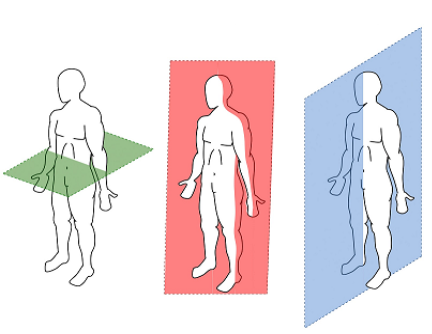
Divides the body into left and right portions.
Frontal
Transverse
Sagittal.
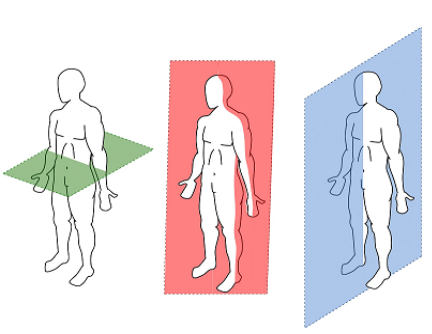
Divides the body into front and back portions.
Sagittal
Frontal
Transverse
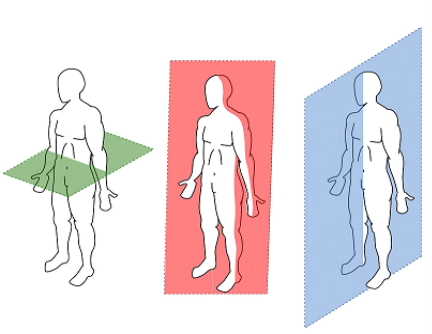
Divides the body into top and bottom portions.
Sagittal
Frontal
Transverse
Another term for superior.
Cranial
Caudal
Ventral
Dorsal
Another term for inferior.
Ventral
Superior
Caudal
Dorsal
Another term for anterior.
Dorsal
Distal
Lateral
Ventral
Another term for posterior.
Medial
Deep
Dorsal
Anterior

