
 Worksheets
Unity 1 Test Review: Cells
Total questions: 50
Worksheet time: 35mins
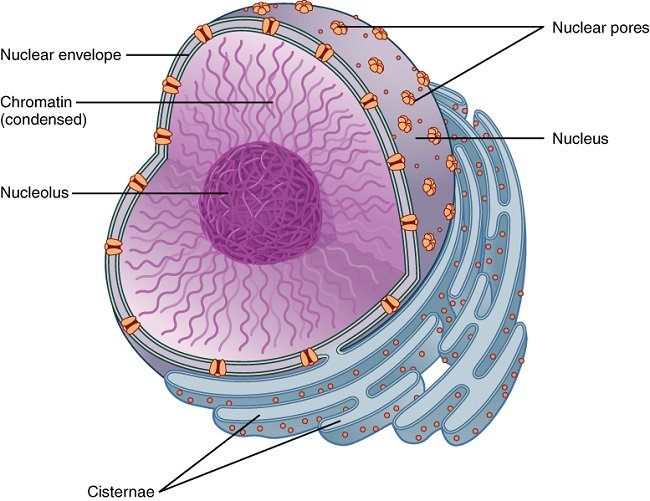
The control center of the cell.
cytoplasm
nucleus
nucleoplasm
chromatin
What is the powerhouse of a cell
Mitochondria
Cell membrane
Nucleus
Both
All is wrong
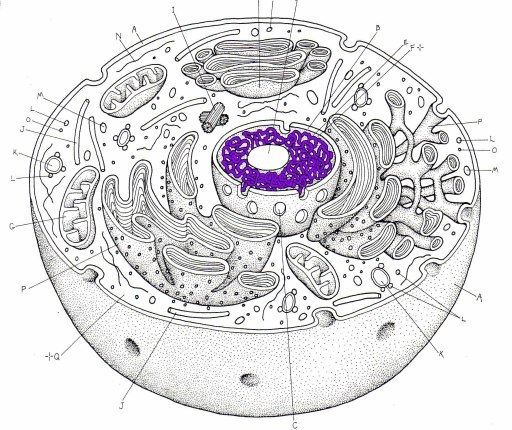
Which cell is larger?
Prokaryotic
Eukaryotic

What is the function of this organelle?
the control center
storage for food/water
synthesizes proteins
waste management
What organelle is responsible for processing, sorting, and transporting proteins?
Golgi Body
Endoplasmic Reticulum (ER)
Nucleus
Lysosome
Mitosis is important for an organism because-
It helps in growth, repair and reproduction.
It helps only in growth of the organisms.
It helps in reproduction of cells.
It is important for maintaining turgidity.
Mitosis is a type of cell division in which two cells are formed.
Identical
Similar
Different
Smaller
What happens when cells undergo uncontrolled division?
Cancer can develop in that part/organ.
Normal growth of body occurs.
Your body will grow rapidly.
Your body size will become bigger and bigger.
Which is the longest phase of cell cycle-
Interphase
Monophase
Meiosis
Mitosis
Chromosomes are made up of-
DNA and protein.
DNA
Protein
DNA and Amino acids.
In metaphase-
Nucleus disappear and chromosomes line up at the middle of the cell.
Chromosomes start moving randomly.
Chromosomes decondense.
Chromosomes clump at the middle.
Chromosomes move to opposite sides of the cell with the help of formed by centrioles.
Spindle fibres.
Amino acids.
Proteins.
Centrosomes.
Cytokinesis occurs after mitosis which divides the to form two identical cells.
Cytoplasm
Nuclei
Chromosomes
Proteins
Why does our body undergo mitosis?
fun and games
checks and balances
growth and repair
to build bigger muscles

What stage of mitosis is this?
Interphase
Anaphase
Cytokinesis
Prophase

What stage of mitosis is this?
metrophase
middlephase
centraphase
metaphase
It is otherwise known as "Resting stage" because the cell is not dividing.
Interphase
prophase
metaphase
anaphase
In what stage do the chromosomes line up along the equator of the cell?
interphase
prophase
metaphase
anaphae


Fruit fly body cells have 8 chromosomes. After mitosis, you would expect a resulting fruit fly daughter cell to have ...
16 chromosomes.
46 chromosomes.
8 chromosomes.
4 chromosomes.

Which type of passive transport focuses on the movement of water through the membrane?
Facilitated diffusion
Osmosis
Diffusion
What is the diffusion of water across a cell or semi-permeable membrane?

Which of these is NOT an example of active transport
Endocytosis
Exocytosis
Osmosis
Protein Pumps
What type of transport requires energy from the cell?
Passive Transport
Active Transport
What is the term to describe maintaining internal balance in the cell?
Diffusion
Homeostasis
Osmosis
Active transport
What is the process of moving water from high to low concentrations through the cell membrane?
Diffusion
Osmosis
Endocytosis
Exocytosis
What type of active transport does waste move out of the cell?
Endocytosis
Exocytosis
Sodium Potassium Pump
Diffusion


The process by which new organisms are produced sexually or asexually is called...
Digestion
Respiration
Circulation
Reproduction

A flatworm is cut in half and grows into two flatworms, is an example of which type of asexual reproduction...
Vegetative
Binary fissioin
Fragmentation
Parthenogenesis
Sporogenesis

An amoeba replicates its genetic material and divides into 2 identical daughter cells is an example of which type of asexual reproduction...
Vegetative
Binary fission
Fragmentation
Parthenogenesis
Sporogenesis

Asexual reproduction requires
One parent
Two parents
No parents

This image represents __________
Fragmentation
Budding
Vegetative Propagation
Binary Fission

Which of the following is an advantage of asexual reproduction?
There is greater genetic diversity in offspring.
There is more food available for offspring.
There is a greater number of offspring.
There is a longer development time for offspring.

Which of the following is a disadvantage of asexual reproduction?
High genetic variability
Offspring have limited ability to adapt
Requires a lot of energy
Facilitates adaptation

Asexual reproduction results in offspring that are...
genetically different
genetically identical

