
 Worksheets
Astronomy Club
Total questions: 140
Worksheet time: 1hrs 29mins
When did the solar system came into being?
4.7 billion years ago
4 billion years ago
4.5 billion years ago
How is our solar system’s star called?
Moon
Sun
Mercury
How many solar systems are there in the Milky Way galaxy?
over 500 millions
over 700 millions
over 800 millions
How many planets are there in our solar system?
8
9
10
Terrestrian planets are…
Mercury
Mars
Venus
Earth
Pluto
Jovian planets are…
Saturn
Jupiter
Uranus
Neptune
Mercury
Gas giants are…
Neptune
Uranus
Jupiter
Saturn
Ice giants are…
Neptune
Mercury
Uranus
Earth
The edge of the solar system is…
Oort cloud
Kuiper belt
Asteroid belt
Which planet might also supported life billions of years ago?
Venus
Neptune
Mars
Earth
Mercury, Venus, Earth, and Mars are considered
small planets
inner planets
terrestrial planets
all of the above

Which of the following is a characteristic of large planets
close to the sun
rings
life
rocky
The Big Theory describes
the reason for gravity
the planet colors
the creation of the universe
the creation of animals

How have our views change about the solar system
sun centered to moon center
earth centered to moon centered
sun centered to earth centered
earth centered to sun centered

It appeared that the stars and sun revolved around Earth, therefore scientist believed
in the big bang
in a sun centered model
in a moon centered model
in an Earth centered model
What shape is the milky way galaxy
spiral
elliptical
irregular
black hole

Which are ordered smallest to largest
person, galaxy, continent, universe,solar system
person, continent, solar system, galaxy, universe
universe, galaxy, solar system, continent, person
person, universe, solar system, continent, galaxy
The big bang supports that the universe is
exploding
expanding
disappearing
mutating
Gravity
created the universe
is only on Earth
causes the planets to orbit the sun
only affects apple trees

The milky way galaxy is home to
pluto
venus
earth
all of the above
The length of a planet's orbit is determined by
weight of the planet
the planets composition
the distance from Earth
The distance from the sun

Venus is closest in size to which planet?
Earth
Mars
Jupiter
Uranus

The model that had Earth in the center with everything orbiting it was known as
heliocentric
biocentric
geocentric
relative distance
Earth is located
outside the asteroid belt
third from the sun
in between the sun and mercury
after Saturn

Which planet is closest to the sun?
mars
mercury
venus
Earth

Which of the following describes an asteroid?
a rock
originates between mars and jupiter
vary in size
all of the above
Which of the following is a gas giant?
Venus
Earth
Mars
Neptune

Where is the asteroid belt located?
between Earth and Mars
between Jupiter and Saturn
between Mars and Mercury
between Mars and Jupiter
What is the order of a meteor as it falls to Earth?
Meteorite, meteor, meteoroid.
Meteor, meteorite, meteoroid.
Meteoroid, meteorite, meteor.
Meteoroid, meteor, meteorite.

How does gravity change from Earth to the Moon?
it increases
it decreases
it stays the same
there is no gravity on the moon
What does a star mainly consist of? (Tick 2 boxes.)
helium
iron
carbon
hydrogen
A large collection of stars, dust, and gas held together by gravity is a.........
solar systerm
galaxy
constellation
astronomy
Which statement is NOT true about inner planets?
Their density is low.
They are smaller than gas giants.
They are primarily comprised of a rocky type surface.
Mercury, Venus, Earth, and Mars are inner planets.
Which statement is NOT true about inner planets?
Their density is low.
They are smaller than gas giants.
They are primarily comprised of a rocky type surface.
Mercury, Venus, Earth, and Mars are inner planets.
What is the result of the Earth revolving around the Sun?
The existence of seasons
day-night transitions
Coriolis effect
It keeps the axis of our planet tilted.

How would you call this lunar phase?
last quarter
full moon
first quarter
new moon

How do you call this phenomenon?
lunar eclipse
ring of fire
solar eclipse
24-hours long night
Which statement best describes the geocentric model
of our solar system?
The Earth is located at the center of the model
The Sun is located at the center of the model.
All planets revolve around the Sun.
All planets except the Earth revolve around the Sun.
The best evidence of Earth's rotation is provided by the
Moon phases and global warming
Moon phases and Coriolis effect
Foucault pendulum and Coriolis effect
Foucault pendulum and global warming


Order these from largest to smallest.
Galaxy, Universe, Planetary System, Solar System
Planetary System, Solar System, Galaxy, Universe
Universe, Galaxy, Solar System, Planetary System
Solar System, Universe, Galaxy, Planetary System
Which of these planets do not have a moon?
Venus
Earth
Neptune
Uranus

What phase of the Moon is pictured?
Full Moon
Waxing Gibbous
Waning Crescent
New Moon
The largest and most massive planet in our solar system is ...
Jupiter
Saturn
Neptune
Earth
The smallest and closest planet to the sun is ...
Venus
Pluto
Mars
Mercury

How far away is the sun?
9530 miles
93 million miles
530 million miles
5 Kilometers
A light year (ly) is a unit of ...
time
distance
speed

If the Earth was not tilted we would not have ......
tides
a moon
seasons
rivers

What year did we land on the moon?
1965
1969
1970
1972
What type of star is our sun?
Main Sequence
White Dwarf
Red Giant
Protostar

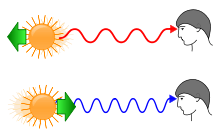
Which description is considered most accurate regarding what actually happened during the Big Bang?
Two galaxies collided causing an immense explosion as stars crashed into one another
All of what would become the universe was concentrated in a single small point, or singularity, which rapidly expanded into what is now stars, planets, galaxies, matter, and energy.
All matter emerged from a massive black hole at the center of the universe.
Parts of the sun were ripped off by massive internal explosions and were thrown into space where they cooled to become other things, like plants, comets, and other galaxies.
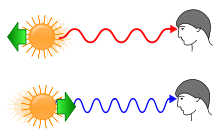
Main sequence stars have what in common?
They are primarily fusing hydrogen into helium
They are red in color
They are larger than most other stars
They are the hottest stars

How does Cosmic Microwave Background Radiation support the Big Bang Theory?
Microwaves are found everywhere in the universe.
Microwaves were only created at the time of the Big Bang
Microwaves are useful in our everyday lives
Microwave radiation is produced by stars

Which of the following is capable of making elements heavier than iron?
Proto-stars
Stars like our Sun
Supernova explosions by massive stars
Red Giant Stars
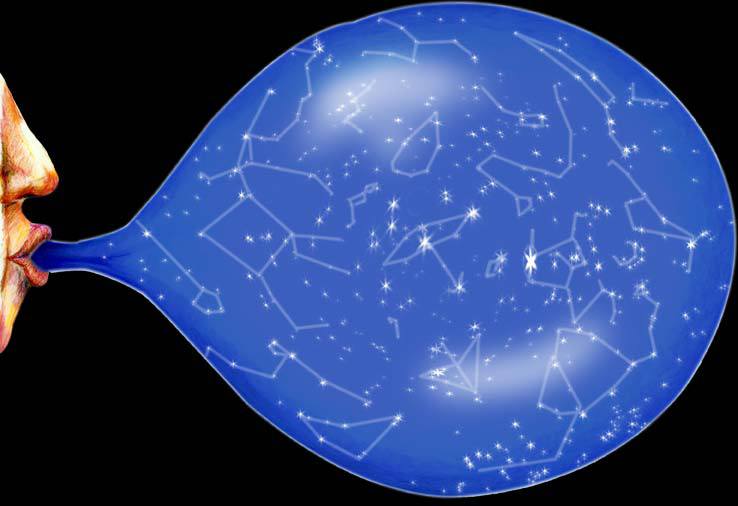
The "afterglow" of the energy from the origin of the universe that we see today.
Cosmic background radiation
sunlight
Doppler effect
Cosmic explosions
How is the "Big Bang" described?
an explosion
an expansion
a contraction
Real world observations match computer models of the Big Bang
What is a celestial body that is composed of gas and emits light from nuclear fusion reactions?
Nebula
Star
Galaxy
Planet
The part of the electromagnetic spectrum that is reflected back by an object and ours eyes interpret as color is the ______.
radiowaves
infrared
ultraviolet
visible light
Earth is made up of elements that were formed _____.
from nuclear fusion within stars
from nuclear fusion from a supernova
from Hydrogen and Helium left over from the Big Bang
all of the above
How many Apollo mission were supposed to happen?
19
18
22
20
What occurs when the moon's shadow hits earth OR earth's shadow hits the moon?
Solar eclipse
Total eclipse
Lunar eclipse
Eclipse
How many phases does the moon go through?
6
8
10
12
How are black holes formed?
Explosion from death of a small star
Planets colliding
Explosion from death of large star
Death of a moon
How big can black holes be?
as big as a planet
as big as a large star
as big as an atom
All of these options
Why doesn't the sun's gravitational pull make the earth crash into it?
Momentum
Inertia
The earth's mass is too much for the sun to pull it
The sun's gravitational pull has no effect on the earth
Who came up with the formula for gravitational pull and celestial motion?
Apollo
Copernicus
Kepler
Newton
How many dimensions are there thought to be?
8
9
10
11
What three dimensions do we experience daily?
Time, Depth, and Space
Up, Down, and Right
Length, Width, And Depth
Height, Width, And Depth
How fast does a rocket need to be going to fly above earth's atmosphere?
17,800 miles per hour
16,200 miles per hour
19,500 miles per hour
20,000 miles per hour
When Earth is closest to Mars how long will it take to get there?
7 days
7 weeks
7 months
7 years
What is the most important thing to have when living on Mars?
Oxygen
Food
Water
All of these options
Radiation on Mars can cause cancer.
True
False
Are aliens real?
Yes
No
Maybe
They live with us

What phase of the moon is this?
waxing gibbous
waning gibbous
full moon
new moon
The theory that states that the universe started from a single point and exploded outward is called the
butterfly theory
nebular theory
big bang theory
hawking theory
A star that is red shifting is
moving away from us
moving towards us
staying in the same place
changing direction
There would be no way to escape the gravitational pull of a
moon
black hole
white dwarf
neutron star
A group of stars with a story, used for navigation, and distances like the big dipper
constellation
globular cluster
halo
central bar

Which planet is this
mars
jupiter
neptune
saturn

What color of star is the hottest?
Red
Yellow
White
Blue

What is the source of energy for all stars?
hydrothermal
solar
nuclear fusion
nuclear fission

What effect adds depth to the 2D scene shown here?
Parthurnax
Parallax
Parallel
Posthumous

What type of galaxy do we believe the Milky Way is?
Spiral
Irregular
Elliptical
Dwarf

What effect in the light from distant objects did Edwin Hubble discover?
redshift
blueshift
greenshift
yellowshift

The further away a Galaxy is...
the faster it is coming toward us
the faster it is moving away from us
the slower its coming toward us
the slower its moving away from us

What is the average background temperature of the Universe?
0K
3K
18K
294K

What part of the Solar System do short period comets, like Haley's, come from?
the Moon
the asteroid belt
the Kuiper belt
other solar systems

Between what planets is the asteroid belt located?
Jupiter and Neptune
Mars and Jupiter
Earth and Mars
Mercury and Venus

When the solar system formed, where did most of the matter end up?
part of the Sun
asteroids and comets
space dust
planets
What was Galileo able to observe through his early telescope?
four moons of Saturn
Neptune and Uranus' rings
four moons of Jupiter

What planet is Olympus Mons, the largest volcano in the solar system, found on?
Venus
Mars
Earth
Mercury

Why does the surface of Mars appear red?
iron oxide in the soil
lava flowing across the surface
large storms
blood from many alien wars
This second century Greek astronomer developed a geocentric model of the solar system which is also referred to as the (a) model.
The following astronomers were proponents or developers of the earth-centered model of the universe EXCEPT for:
Nicholas Copernicus
Aristotle
Claudius Ptolemy
Plato
The study of the workings of the universe on the very largest scales is called:
cosmetology
astrology
cosmology
geology
none of the choices

Please name the universe model pictured here __________as well as the name of the astronomer who developed it________________
(a)
Tyche Brache's biggest contribution to astronomy was:
accurate observations of the stars and planets
inventing the telescope
developing the geocentric model
working as an apprentice to Kopernicus
Tyche Brache's biggest contribution to astronomy was:
accurate observations of the stars and planets
inventing the telescope
developing the geocentric model
working as an apprentice to Kopernicus
Astronomer Johannes Kepper...
was named the head of astronomical research for the Catholic Church
was the first to discover Neptune and Uranus
provided evidence that the earth and the planets revolve around the sun
further developed Galileo's telescope
none of the choices
The name for the average distance between the Earth and the Sun
light year
parallax
epicycle
astronomical unit
none of the choices

This picture of a flattened circle with string and thumbtacks represents which of the following terms describing a planet's orbit:
eclipse
epicycle
ellipse
retrograde motion
The heliocentric model was actually first proposed by:
Aristotle
Archimedes
Aristarchus
Eratosthenes
Geocentric models place the _______ at the center of the universe?
Sun
Moon
Stars
Earth
Ancient civilizations achieved all of the following in astronomy EXCEPT...
Keeping track of the time of day
Keeping track of the time of year
Tracked stages of the star cycle
Tracked cycles of the Moon
Which planet has the largest, and which is the smallest orbit time ?
Neptune and Saturn
Neptune and Mercury
Pluto and Sun
Pluto and Mercury
This is the only moon that is larger than a planet.
Ganymede
Titan
Europa
Earth's Moon
Why is making a model of the solar system difficult?
Don't have the right materials
The solar system is so big and the objects in it are so small in comparison
There are too many parts in a model
Because the science concepts are too difficult
Which describes the difference between nuclear fission and nuclear fusion?
Nuclear fission is the process that produces the energy of stars, and nuclear fusion splits a heavier nucleus into smaller nuclei.
Nuclear fission splits a heavier nucleus into smaller nuclei, and nuclear fusion is the process that produces the energy of the stars.
Nuclear fission produces the energy in the core of the Earth, and nuclear fusion produces energy in nuclear power plants
Nuclear fission produces energy in nuclear power plants, and nuclear fusion produces the energy in the core of the Earth
None of these are correct
How does the tilt of the Earth’s axis affect the seasons?
By changing the amount of direct solar energy reaching the surface of the Earth
By influencing the rate of chemical reactions occurring in the atmosphere
By deflecting the harmful rays of radiation emitted by the Sun
By changing the speed of the rotation of the Earth
If it is summer in the northern hemisphere, which statement is true?
Earth has changed the tilt of its axis by 20 degrees due to its revolution
It is winter in the southern hemisphere due to the tilt of Earth’s axis
It is summer in the southern hemisphere due to the tilt of the Earth’s axis
Earth has reached its closest point to the sun due to its revolution
Earth's tilt is how many degrees?
23.5
32.5
52.3
90
What part of the Earth is responsible for protecting us from solar winds?
ozone layer
magnetic field
clouds
atmosphere
How does heat from the Sun get to Earth?
by radiation, using electromagnetic waves to transfer the heat
by convection, using liquids and gases to transfer the heat
by conduction, using solids to transfer the heat
by absorption, using primary waves to transfer the heat
In the electromagnetic spectrum, which best describes the relationship between wavelength and frequency?
As frequency increases, wavelength decreases
As frequency decreases, wavelength decreases
As wavelength increases, energy increases
They are both proportional
Which statement describes the motion of Earth around the Sun?
The speed of Earth is constant regardless of its distance from the Sun.
The speed of Earth is constant because the distance remains the same
The speed increases the farther Earth is from the Sun and decreases the closer Earth gets to the Sun
The speed increases the closer Earth is to the Sun and decreases the farther Earth get to the Sun.
Which of the following chemical reactions produce the Sun’s energy?
Helium nuclei are combined by nuclear fusion
Hydrogen nuclei combine through nuclear fusion into helium
Oxygen is present to cause combustion of solar fuel molecules
Helium and oxygen break down through nuclear fission
What type of electromagnetic radiation is the most harmful to the human body? What type of frequency would this radiation have?
Gamma Rays, high frequency
Gamma Rays, low frequenc
Radio, high frequency
Visible Light, low frequency
During an Equinox it is said that the Earth experiences
more of the sun being covered by the moon
equal times of day and night
a shadow that falls upon the moon
none of these choices

Which layer is responsible for the sun it's characteristic color?
Radiative Zone
Photosphere
Core
Chromosphere
Which layer is responsible for providing the sun with light?
Radiative Zone
Photosphere
Core
Chromosphere
The big bang happened how many years ago?
10 Billion
18 Billion
14 Billion
6 Billion
What is the percentage of hydrogen and helium in the sun's core?
92.1% Hydrogen
& 7.8% Helium
90% Hydrogen & 10% Helium
85% Hydrogen & 15% Helium
93.1 % Hydrogen &
6.8% Helium

