
 Worksheets
Science fusion G7 Unit 2 sound
Total questions: 207
Worksheet time: 4hrs 15mins
Sound is a form of...
Energy
Matter
Medium
Sound waves travel through...
Solids
Liquids
Gases
Sound is made...
When particles vibrates back and forth in a medium
When matter doesn't move
When we see light
True or False:
Sound travels fastest through gases (air)
True
False
If a sound wave has a high pitch, it has _______.
low frequency
high frequency
high amplitude
low amplitude
The number of complete waves in 1 second is called _________.
amplitude
wavelength
frequency
volume
What is the unit of frequency?
Decibel
Meter
Hertz
Second
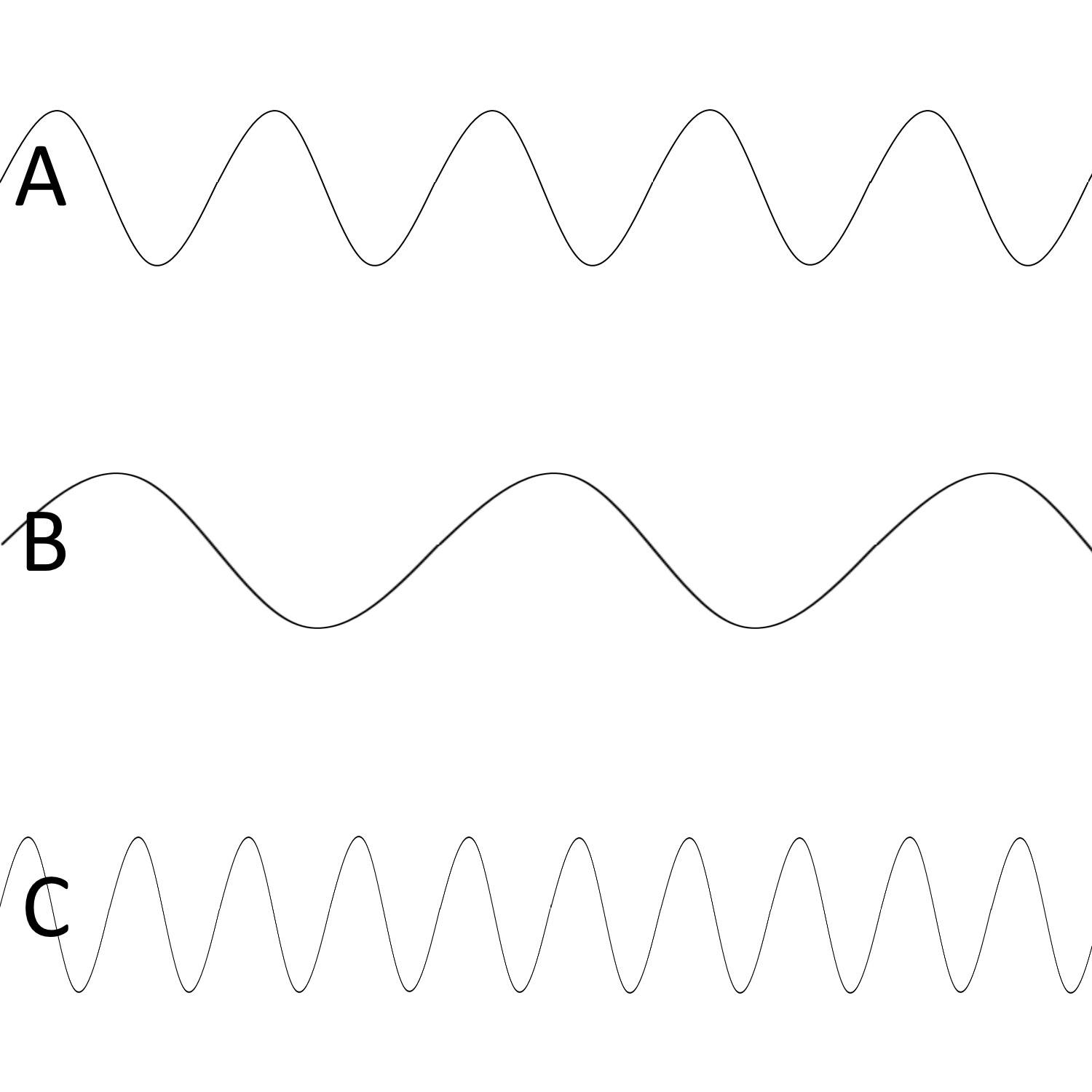
Which of the following sound wave produces the highest pitch of sound?


Diagram shows 3 types of sound waves generated from speaker.
Which of the following statements is true?
P, Q and R have the same pitch
P has a higher pitch than Q
Q has a higher pitch than R
R has the highest pitch





What is the Doppler Effect?
A change in frequency due to the relative motion of a wave source and an observer
When a wave overlaps with another wave
When a wave bounces off of another object
When a wave bends due to traveling through a different medium
The pitch of a sound wave relates to the wave's _________________.
Amplitude
Frequency
Wavelength
Period


Sound travels fastest in...
solids
liquids
gases
air


Sound wave is considered as ......................
Mechanical Waves
Electromagnetic Waves
sound is not a wave

Sound wave travels through a ...........................
Space
Vacuum
medium
Sound waves move at different speeds in different mediums.
True
False
What is the equation used to measure the speed of sound.
Speed =
Distance ÷ Time
Speed =
Distance x Time
Speed =
Distance + Time
Speed =
Distance - Time
calculate the speed of sound if it travels 800 meters in 2 seconds.
600 m/s
200 m/s
400 m/s
In which of the following mediums does sound travel the slowest.
water
wood
iron
air

a longitudinal wave that is caused by vibrations that travels through a medium
sound
light
electromagnet
electricity

how high or low a sound seems to be
pitch
frequency
hertz
amplitude

the substance through which a wave can travel
compression
SONAR
echo
medium

the number of wavelengths that are made in a given time
pitch
frequency
amplitude
hertz

the unit of frequency
seconds
meter
hertz (Hz)
m / s

an observed change in the frequency of a wave when the source or observer is moving
Doppler Effect
LASER
SONAR
echolocation

the largest distance the particles in a wave vibrate from their rest position
frequency
crest
wavelength
amplitude

a measure of how loud a sound is
hertz (Hz)
decibel
joule
ultrasonic

a reflected sound wave
echo
sonic boom
ultrasound
resonance

a phenomenon that occurs when two objects naturally vibrate at the same frequency; the sound produced by one object causes the other object to vibrate
sonar
resonance
echolocation
ultrasound

the process of using reflected sound waves to find objects; used by animals such as bats
sonic boom
sonar
echolocation
resonance
happens when a wave bounces back after hitting a barrier
reflection
refraction
diffraction
interference
when a wave passes through a substance
transmitted
dispersed
echo
interference
the bending of a wave as the wave passes from one medium to another at an angle
refraction
transmitted
reflection
echo
spread out in different directions
resonance
transmitted
dispersed
interference
the combination of two or more waves that results in a single wave
diffraction
echo
resonance
interference
when the crests and troughs of one wave overlap the crests of another wave or waves
resonance
constructive interference
destructive interference
reflection
when the crests of one wave and the troughs of another wave overlap
destructive interference
diffraction
resonance
constructive interference
when two objects naturally vibrate at the same frequency (ex. the sound produced by one object causes the other object to vibrate)
diffraction
interference
resonance
rarefaction
As the frequency increases, the wavelength
increases
decreases
stays the same
Sound does not require a medium
true
false
When a listener moves toward the source of a sound wave, the compressions of the wave are spread out.
True
False
If someone is standing behind a moving car, they would hear a ______ pitch than someone standing in front of it.
uglier
prettier
higher
lower

If these were sound waves, that increase would also increase the ___.
pitch
decibels (dB)
volume
frequency
When two waves amplify each other
interference
constructive interference
destructive interference
reverberation
Review: What is it called when a wave bounces off an object?
Reflection
Refraction
Diffraction
What is a general definition of wave interference?
When a wave bounces off an object
When more than on wave meet and interact in the same medium
When a wave bends around a corner
When a wave creates static
What is a general definition of wave interference?
When a wave bounces off an object
When more than on wave meet and interact in the same medium
When a wave bends around a corner
When a wave creates static
What is a rapid back-and-forth motion that can occur in solids, liquids or gasses?
vibration
sound
light
rarefaction
Sound waves can travel through:
solids
liquids
gasses
all of these
Sound waves cannot travel through:
solids
liquids
gasses
empty space
A sound wave is a type of:
longitudinal wave
transverse wave
mechanical wave
mechanical and longitudinal wave
Sound waves require a __________ to travel through.
medium
person
transverse
Slinky
Sound is a form of...
Energy
Matter
Medium
Sound waves travel through...
Solids
Liquids
Gases
Sound is made...
When particles vibrates back and forth in a medium
When matter doesn't move
When we see light
True or False:
Sound travels fastest through gases (air)
True
False
If a sound wave has a high pitch, it has _______.
low frequency
high frequency
high amplitude
low amplitude
The number of complete waves in 1 second is called _________.
amplitude
wavelength
frequency
volume
What is the unit of frequency?
Decibel
Meter
Hertz
Second
Which of the following sound wave produces the highest pitch of sound?
Diagram shows 3 types of sound waves generated from speaker.
Which of the following statements is true?
P, Q and R have the same pitch
P has a higher pitch than Q
Q has a higher pitch than R
R has the highest pitch
What is the Doppler Effect?
A change in frequency due to the relative motion of a wave source and an observer
When a wave overlaps with another wave
When a wave bounces off of another object
When a wave bends due to traveling through a different medium
The pitch of a sound wave relates to the wave's _________________.
Amplitude
Frequency
Wavelength
Period
Sound travels fastest in...
solids
liquids
gases
air
Sound wave is considered as ......................
Mechanical Waves
Electromagnetic Waves
sound is not a wave
Sound wave travels through a ...........................
Space
Vacuum
medium
Sound waves move at different speeds in different mediums.
True
False
What is the equation used to measure the speed of sound.
Speed =
Distance ÷ Time
Speed =
Distance x Time
Speed =
Distance + Time
Speed =
Distance - Time
calculate the speed of sound if it travels 800 meters in 2 seconds.
600 m/s
200 m/s
400 m/s
In which of the following mediums does sound travel the slowest.
water
wood
iron
air
a longitudinal wave that is caused by vibrations that travels through a medium
sound
light
electromagnet
electricity
how high or low a sound seems to be
pitch
frequency
hertz
amplitude
the substance through which a wave can travel
compression
SONAR
echo
medium
the number of wavelengths that are made in a given time
pitch
frequency
amplitude
hertz
the unit of frequency
seconds
meter
hertz (Hz)
m / s
an observed change in the frequency of a wave when the source or observer is moving
Doppler Effect
LASER
SONAR
echolocation
the largest distance the particles in a wave vibrate from their rest position
frequency
crest
wavelength
amplitude
a measure of how loud a sound is
hertz (Hz)
decibel
joule
ultrasonic
a reflected sound wave
echo
sonic boom
ultrasound
resonance
a phenomenon that occurs when two objects naturally vibrate at the same frequency; the sound produced by one object causes the other object to vibrate
sonar
resonance
echolocation
ultrasound
the process of using reflected sound waves to find objects; used by animals such as bats
sonic boom
sonar
echolocation
resonance
happens when a wave bounces back after hitting a barrier
reflection
refraction
diffraction
interference
when a wave passes through a substance
transmitted
dispersed
echo
interference
the bending of a wave as the wave passes from one medium to another at an angle
refraction
transmitted
reflection
echo
spread out in different directions
resonance
transmitted
dispersed
interference
the combination of two or more waves that results in a single wave
diffraction
echo
resonance
interference
when the crests and troughs of one wave overlap the crests of another wave or waves
resonance
constructive interference
destructive interference
reflection
when the crests of one wave and the troughs of another wave overlap
destructive interference
diffraction
resonance
constructive interference
when two objects naturally vibrate at the same frequency (ex. the sound produced by one object causes the other object to vibrate)
diffraction
interference
resonance
rarefaction
As the frequency increases, the wavelength
increases
decreases
stays the same
Sound does not require a medium
true
false
When a listener moves toward the source of a sound wave, the compressions of the wave are spread out.
True
False
If someone is standing behind a moving car, they would hear a ______ pitch than someone standing in front of it.
uglier
prettier
higher
lower
If these were sound waves, that increase would also increase the ___.
pitch
decibels (dB)
volume
frequency
When two waves amplify each other
interference
constructive interference
destructive interference
reverberation
Review: What is it called when a wave bounces off an object?
Reflection
Refraction
Diffraction
What is a general definition of wave interference?
When a wave bounces off an object
When more than on wave meet and interact in the same medium
When a wave bends around a corner
When a wave creates static
What is a general definition of wave interference?
When a wave bounces off an object
When more than on wave meet and interact in the same medium
When a wave bends around a corner
When a wave creates static
What is a rapid back-and-forth motion that can occur in solids, liquids or gasses?
vibration
sound
light
rarefaction
Sound waves can travel through:
solids
liquids
gasses
all of these
Sound waves cannot travel through:
solids
liquids
gasses
empty space
A sound wave is a type of:
longitudinal wave
transverse wave
mechanical wave
mechanical and longitudinal wave
Sound waves require a __________ to travel through.
medium
person
transverse
Slinky
Sound is a form of...
Energy
Matter
Medium
Sound waves travel through...
Solids
Liquids
Gases
Sound is made...
When particles vibrates back and forth in a medium
When matter doesn't move
When we see light
True or False:
Sound travels fastest through gases (air)
True
False
If a sound wave has a high pitch, it has _______.
low frequency
high frequency
high amplitude
low amplitude
The number of complete waves in 1 second is called _________.
amplitude
wavelength
frequency
volume
What is the unit of frequency?
Decibel
Meter
Hertz
Second
Which of the following sound wave produces the highest pitch of sound?
Diagram shows 3 types of sound waves generated from speaker.
Which of the following statements is true?
P, Q and R have the same pitch
P has a higher pitch than Q
Q has a higher pitch than R
R has the highest pitch
What is the Doppler Effect?
A change in frequency due to the relative motion of a wave source and an observer
When a wave overlaps with another wave
When a wave bounces off of another object
When a wave bends due to traveling through a different medium
The pitch of a sound wave relates to the wave's _________________.
Amplitude
Frequency
Wavelength
Period
Sound travels fastest in...
solids
liquids
gases
air
Sound wave is considered as ......................
Mechanical Waves
Electromagnetic Waves
sound is not a wave
Sound wave travels through a ...........................
Space
Vacuum
medium
Sound waves move at different speeds in different mediums.
True
False
What is the equation used to measure the speed of sound.
Speed =
Distance ÷ Time
Speed =
Distance x Time
Speed =
Distance + Time
Speed =
Distance - Time
calculate the speed of sound if it travels 800 meters in 2 seconds.
600 m/s
200 m/s
400 m/s
In which of the following mediums does sound travel the slowest.
water
wood
iron
air
a longitudinal wave that is caused by vibrations that travels through a medium
sound
light
electromagnet
electricity
how high or low a sound seems to be
pitch
frequency
hertz
amplitude
the substance through which a wave can travel
compression
SONAR
echo
medium
the number of wavelengths that are made in a given time
pitch
frequency
amplitude
hertz
the unit of frequency
seconds
meter
hertz (Hz)
m / s
an observed change in the frequency of a wave when the source or observer is moving
Doppler Effect
LASER
SONAR
echolocation
the largest distance the particles in a wave vibrate from their rest position
frequency
crest
wavelength
amplitude
a measure of how loud a sound is
hertz (Hz)
decibel
joule
ultrasonic
a reflected sound wave
echo
sonic boom
ultrasound
resonance
a phenomenon that occurs when two objects naturally vibrate at the same frequency; the sound produced by one object causes the other object to vibrate
sonar
resonance
echolocation
ultrasound
the process of using reflected sound waves to find objects; used by animals such as bats
sonic boom
sonar
echolocation
resonance
happens when a wave bounces back after hitting a barrier
reflection
refraction
diffraction
interference
when a wave passes through a substance
transmitted
dispersed
echo
interference
the bending of a wave as the wave passes from one medium to another at an angle
refraction
transmitted
reflection
echo
spread out in different directions
resonance
transmitted
dispersed
interference
the combination of two or more waves that results in a single wave
diffraction
echo
resonance
interference
when the crests and troughs of one wave overlap the crests of another wave or waves
resonance
constructive interference
destructive interference
reflection
when the crests of one wave and the troughs of another wave overlap
destructive interference
diffraction
resonance
constructive interference
when two objects naturally vibrate at the same frequency (ex. the sound produced by one object causes the other object to vibrate)
diffraction
interference
resonance
rarefaction
As the frequency increases, the wavelength
increases
decreases
stays the same
Sound does not require a medium
true
false
When a listener moves toward the source of a sound wave, the compressions of the wave are spread out.
True
False
If someone is standing behind a moving car, they would hear a ______ pitch than someone standing in front of it.
uglier
prettier
higher
lower
If these were sound waves, that increase would also increase the ___.
pitch
decibels (dB)
volume
frequency
When two waves amplify each other
interference
constructive interference
destructive interference
reverberation
Review: What is it called when a wave bounces off an object?
Reflection
Refraction
Diffraction
What is a general definition of wave interference?
When a wave bounces off an object
When more than on wave meet and interact in the same medium
When a wave bends around a corner
When a wave creates static
What is a general definition of wave interference?
When a wave bounces off an object
When more than on wave meet and interact in the same medium
When a wave bends around a corner
When a wave creates static
What is a rapid back-and-forth motion that can occur in solids, liquids or gasses?
vibration
sound
light
rarefaction
Sound waves can travel through:
solids
liquids
gasses
all of these
Sound waves cannot travel through:
solids
liquids
gasses
empty space
A sound wave is a type of:
longitudinal wave
transverse wave
mechanical wave
mechanical and longitudinal wave
Sound waves require a __________ to travel through.
medium
person
transverse
Slinky

