
 Worksheets
Matter Review
Total questions: 112
Worksheet time: 57mins
How many atoms in the following compound?
8K2CO3
8
48
2
How many molecules in the following compound?
NaCl
2
3
1
How many molecules in the following compound?
5NaCl
1
5
10
How many atoms in the following compound?
7H2O
21
7
14

How many atoms in the following compound?
24
12
1
How many molecules in the following compound?
12CO2
2
36
12
How many atoms of Hydrogen are in H2O
1
2
3
more than 3
How many different elements are present in H2COCH2
5
4
3
2
The ______ are numbers found on the lower right-hand side of an element symbol.
Coefficient
Exponent
Multiplier
Subscript
Coefficients in chemical formulas...
Multiply just the first atom
Add to the subscripts at the end of the molecule
Multiply elements without subscripts
Multiply EVERYTHING!
4CF2Cl2
C = 4, F = 4, Cl = 2
C = 1, F = 8, Cl = 8
C = 4, F = 8, Cl = 8
C = 1, F = 4, Cl = 8
H2SO4
H = 2, S = 4, O = 4
H = 2, S = 1, O = 4
H = 8, S = 4, O = 4
H = 2, SO = 4
A ______ is a number written in front of a chemical formula.
Coefficient
Subscript
Exponent
Coordinator
How many Hydrogen atoms are in 4H2O?
6
8
2
4
How many Sodium atoms are in 6NaCl?
1
12
6
A subscript is the small number below the element symbol that tells the number of _______ of that element.
atoms
valence electrons
protons
elements
How many atoms are present if there is no subscript following the element symbol?
0
2
only 1
1 million
Coefficients tell the number of __________ in a formula.
Molecules
Atoms
Elements
Oxygen
How many Magnesium atoms are in 10MgCl2?
10
5
20
How many atoms are there TOTAL in H2SO4 ?
6
5
7
3
How many elements are in this chemical formula? NaHCO3
1
2
3
4
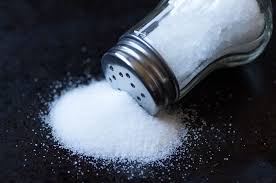
NaCl is the chemical formula for salt. Is NaCl considered a compound or an element?
element
compound
both
neither
What do we call the following molecule?
O2
Molecule
Compound
Diatomic Molecule
Which is a diatomic molecule?
2H2O
2NaCl
C6H12O6
N2
This is the big number before substances that tell you how many of that substance there is
coefficient
subscript
reactant
product
H2SO4
Coefficients in chemical formulas...
Multiply just the first atom
Add to the subscripts at the end of the molecule
Multiply elements without subscripts
Multiply EVERYTHING!
The ______ are numbers found on the lower right-hand side of an element symbol.
Coefficient
Exponent
Multiplier
Subscript
A ______ is a number written in front of a chemical formula.
Coefficient
Subscript
Exponent
Coordinator
Coefficients tell the number of __________ in a formula.
Molecules
Atoms
Elements
Oxygen


Where are metals located on the Periodic Table?
Left
Right
Zigzag
Horizontal rows on the periodic table are called_________.
Families
Groups
Period
Vertical columns that are grouped with similar properties are called _________.
Families
Periods
Nonmetals are located on the _______.
Left
Right
Zigzag
Metalloids are located on the _______.
Left
Right
Zigzag
Which type of bond is formed between a metal and nonmetal?
Ionic
Covalent
Metallic
What type of bond is formed between two metals?
Ionic
Covalent
Metallic
What type of bond is formed between two nonmetals?
Ionic
Covalent
Metallic
In ionic bonds, electrons are __________ from the metal to the nonmetal.
Shared
Transferred
In a covalent bond, electrons are _________ between the two nonmetals.
Shared
Transferred
In terms of electrons, how does an Ionic Bond differ from a Covalent Bond?
Ionic bonds share electrons while Covalent bonds have electrons transferred
They both share electrons
The electrons in Ionic bonds are transferred from the metal to the nonmetal, while Covalent bonds share electrons
Is H2O Ionic or Covalent?
Ionic
Covalent
Is NaCl Ionic or Covalent?
Ionic
Covalent
Is AlCl3 Ionic or Covalent?
Ionic
Covalent
Is Fe2O3 Ionic or Covalent?
Ionic
Covalent
Is NH3 Ionic or Covalent?
Ionic
Covalent
Is CaSO4 Ionic or Covalent?
Ionic
Covalent
Is CuCl2 Ionic or Covalent?
Ionic
Covalent
Is CO2 Ionic or Covalent?
Ionic
Covalent
What do subscripts represent?
Number of elements present
Number of molecules present
Number of compounds present
Number of atoms present
What do coefficients represent?
What do coefficients represent?
Number of elements present
Number of molecules present
How many Hydrogen atoms are in C4H8O2?
4
2
8
1
How many Sodium atoms are present in NaNO3?
3
2
10
1
How many total atoms are in C3H8O3?
3
8
11
14
How many Iron atoms are in 3Fe2O3?
3
6
9
2
How many Oxygen atoms are present in 3Fe2O3?
3
6
9
2
How many Nitrogen atoms are present in 4N2O?
4
8
2
1
How many Oxygen are present in 4N2O?
4
8
2
1
Which of the following represents a physical property of a nonmetal?
Luster
Brittle
Conductor
High Density
Which is true of metals?
They are always solid at room temperature
They are conductors of electricity
They are located on the right side of the periodic table
They have a high density and malleability
An example of a physical property is ___________
Flammability
Ability to Rust
Acidic
Color
What is NOT a physical property of a piece of paper?
It is white
It burns
It is smooth
It is flat
Color and shape are both ____________
Physical Properties
Chemical Changes
Chemical Properties
Chemical Properties
Magnetism is an example of a __________
Chemical Property
Physical Property
Chemical Change
Physical Change
Which of the following is an example of a chemical property?
Boiling Point
Ductile
Ability to Rust
Brittle

In a chemical equation the products are on the right side of the arrow. Are the products the beginning substances or the ending substances?
beginning
ending
In a chemical equation the reactants are on the left side of the arrow. Are the reactants the beginning substances or the ending substances?
beginning
ending

Andres is a chemist working at a company that makes ink. To make a new kind of ink, Andres mixed two liquid substances together in a sealed container. The diagram above shows the repeating groups of atoms that make up the two starting substances.
After mixing, Andres found two solid substances in the sealed container. (Nothing had escaped.) Which of the diagrams to the left shows the repeating groups of atoms that make up the ending substances?


The diagram above shows the repeating groups of atoms that make up two samples. Both samples are solids at room temperature. Will the other properties of the two samples likely be the same or different? (Examples of properties are smell, color, and the temperature at which a substance melts.)
The other properties will likely be different because there are more repeating groups of atoms in Sample 2.
The other properties will likely be different because the repeating groups of atoms that make up the two samples have different numbers of atoms.
The other properties will likely be the same because the repeating groups of atoms that make up the two samples have the same types of atoms.
The other properties will likely be the same because both samples are solids at room temperature.
In an endothermic reaction, heat is ...
taken in
given out
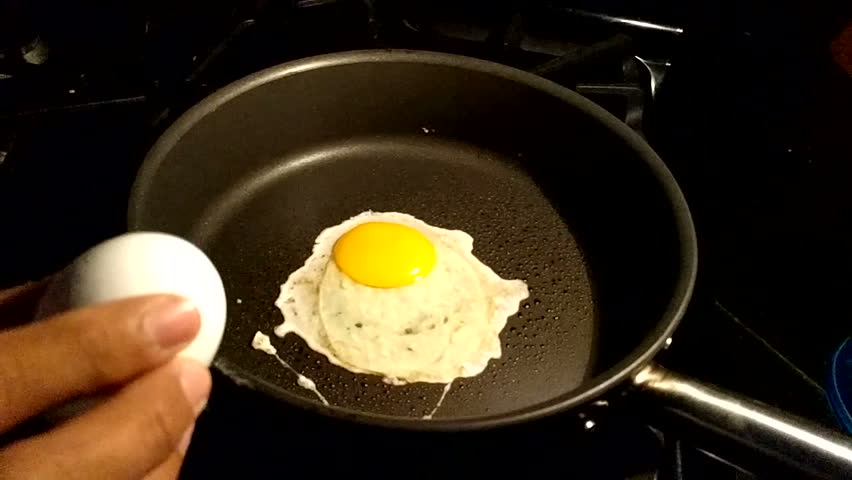
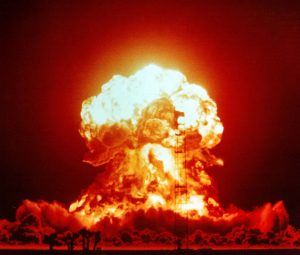

What type of reaction occurs in a hand warmer?
exothermic
endothermic
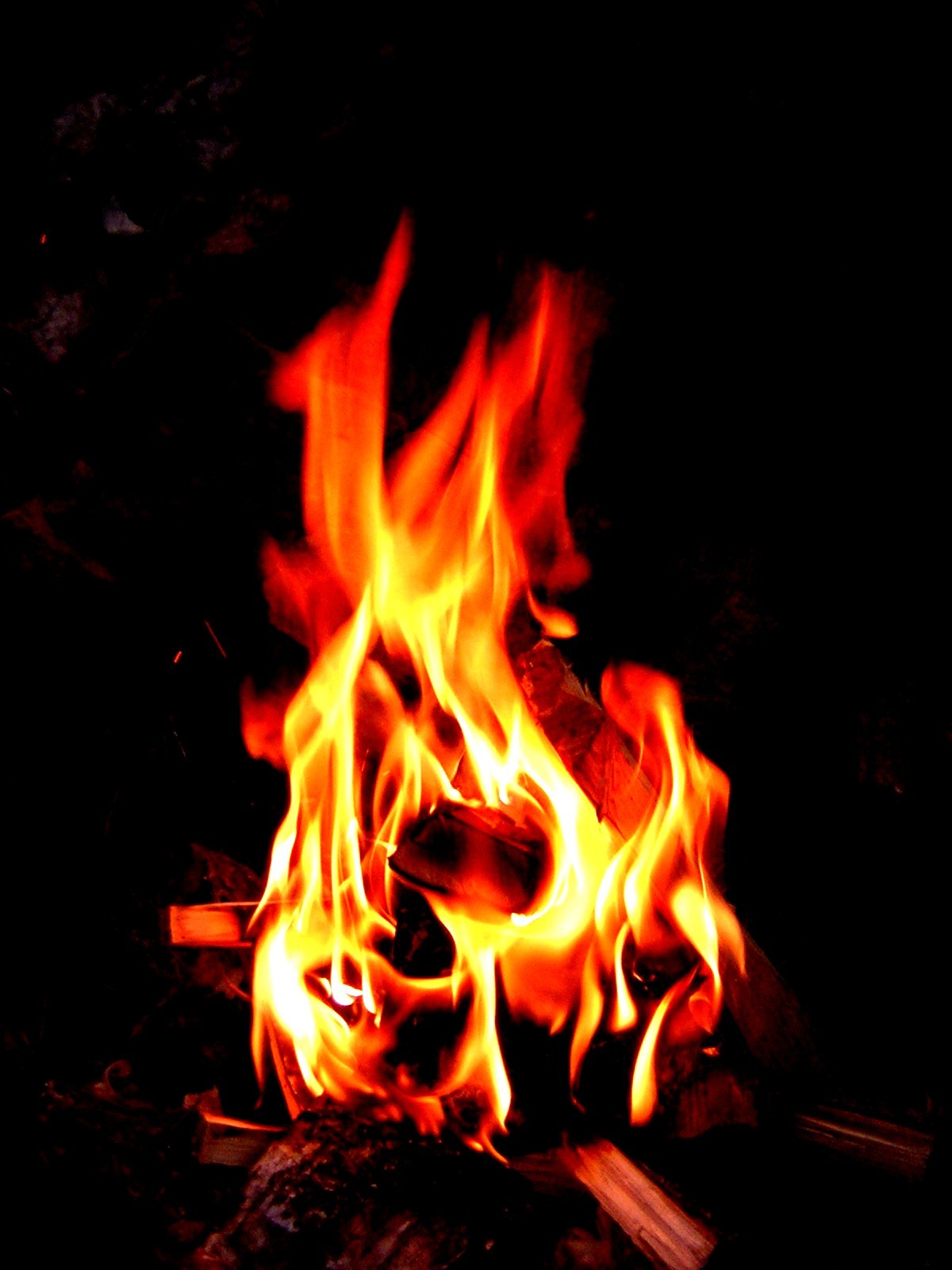
_____ reactions usually feel hot!
endothermic
exothermic
____ reactions usually feel cold.
endothermic
exothermic
Which of the following are examples of an Exothermic Reaction?
Cooking an egg
Plants making sugar through photosynthesis
Dynamite exploding
What does catalyst do to a reaction?
Slows down the reaction
Nothing changes
Speeds up the reaction
What do you call the energy that is required to start a reaction?
Alternative energy
Activation energy
Atmospheric energy
A combination of substances that can be physically separated from one another
mixtures
compound
element
molecule
A material with a particular chemical makeup
mixture
pure substance
hetogeneous
homogeneous
a substance in which the parts are clearly different shapes and colors; different throughout
mixture
homogeneous
heterogeneous
element
a substance in which all of the parts are the same throughout
homogeneous
element
heterogeneous
pure substance
A characteristic that can be observed (intensive), such as texture, color, odor, melting point, boiling point, density, or measured (extensive) such as mass, length, volume, that is used to describe matter and can be observed or measured without changing its composition
physical property
element
pure substance
chemical property
A characteristic of a substance that is measurable or observable during a chemical reaction; includes pH, heat of combustion, reactivity, etc.
physica property
chemical property
compound
mixture
The nature of something's ingredients or constituents; the way in which a whole or mixture is made up.
composition
element
mixture
compound
A substance that can be dissolved by a solvent to create a solution.
solvent
solute
solution
mixture
A substance that can dissolve a solute when forming a solution.
solute
solution
solvent
mixture
The ability of a substance to be dissolved in a liquid
dissolvent
solubility
combustion
disappearing

