
 Worksheets
6-LS1 Human Body
Total questions: 85
Worksheet time: 2hrs 53mins
The top layer of the skin is called the ---
dermis
oil gland
subcutaneous fat
epidermis
____ is the coloring in skin and is found in the epidermis.
Melanin
Oil
Perspiration
Pores
What is the name of tube that hair grows from?
Follicle
Root
Shaft
Sebaceous
Which layer contains accessory structures such as sweat glands, sebaceous glands, and hair follicles?
epidermis
dermis
subcutaneous fat
hyperdermis
Which layer of the skin does NOT contain blood vessels?
epidermis
subcutaneous fat
dermis
Sweating and shivering are your body's way of regulating its ---
Water loss
Temperature
Hair growth
Vitamin D absorption
The integumentary system is made up of the ---
Skin, Muscle, and Bone
Hair, Nails, and Sweat
Nails, Hair, and Skin
3 layers of tissue

#1 on this diagram is the ---
epidermis
dermis
subcutaneous fat
follicle
#2 on this diagram is the ---
epidermis
dermis
subcutaneous fat
follicle
#3 on this diagram is the ---
epidermis
dermis
subcutaneous fat
follicle
Tiny openings at the skin’s surface are called ---
epidermis
pores
dermis
oil gland
What are the three main parts of the nervous system?
cerebellum, cerebrum, medulla
cochlea, nerves, vestibule
brain, spinal cord, nerves

What type of cell gathers and carries information?
Fat cells
Red blood cells
Stem cells
Neurons

The _______ is a bundle of wire-like nerves threaded through the backbones, through which electrical messages travel between the brain and body.
neurons
spinal cord
mitochondria
brain

The _____ system controls and coordinates all body activities through electric impulses/messages between brain, spinal cord and nerves.
endocrine
nervous
digestive
integumentary
What is the central nervous system (CNS) made of?
brain and spinal cord
brain and cranial nerves
spinal cord and spinal nerves
cranial nerves and spinal nerves
Our ______ receive messages and send them to the brain. The brain sends messages to our body on how to respond.
heart
lungs
nerves
Which of the following is a VOLUNTARY action?


Which of the following is an INVOLUNTARY action?


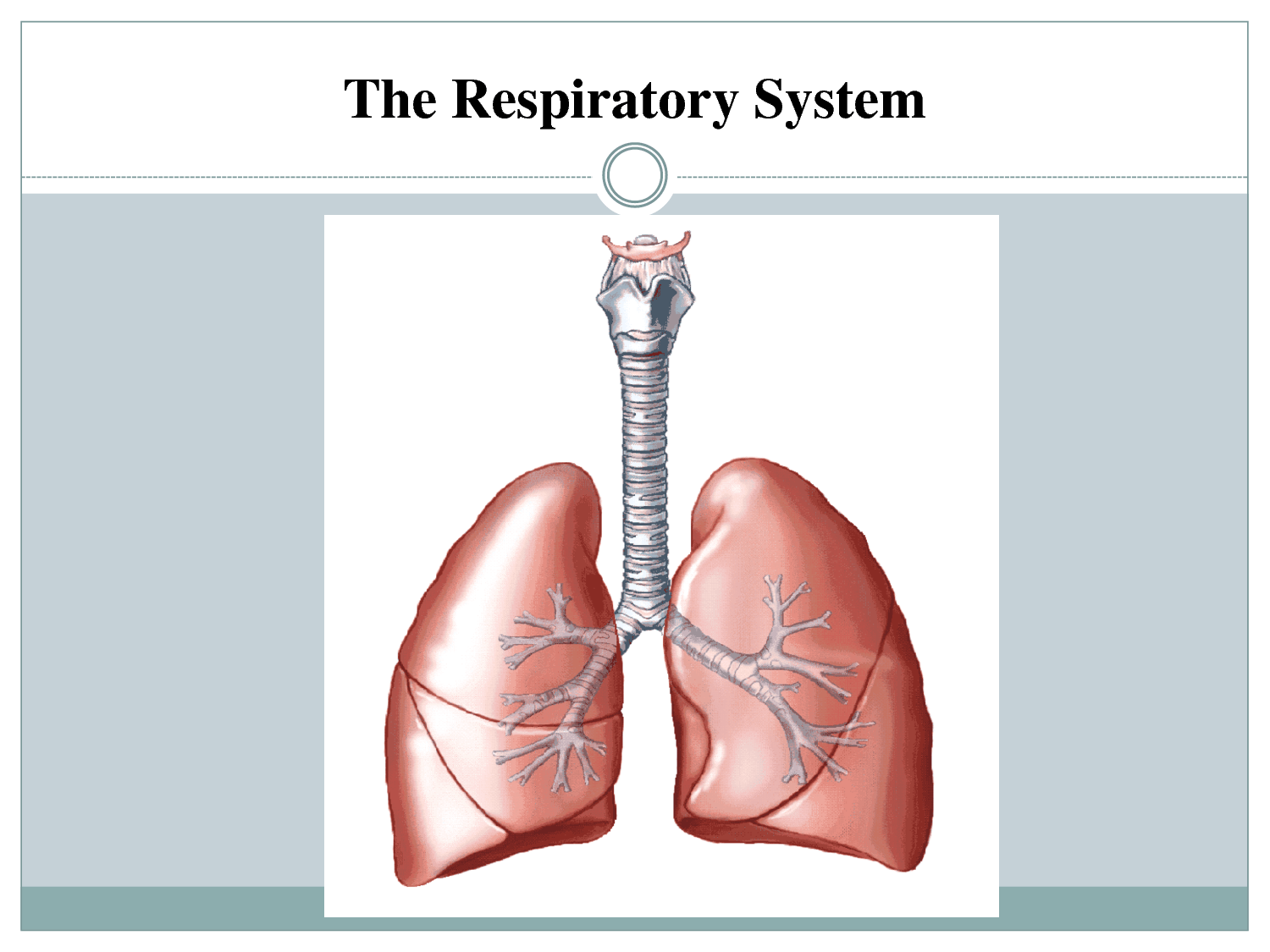
What is the main function of the respiratory system?
to provide oxygen and remove carbon dioxide from the body
to break down food and absorb nutrients
to remove oxygen from the body and deliver carbon dioxide
What are the main organs of the respiratory system that allow us to breathe and for gas exchange to happen?
diapragm
lungs
trachea
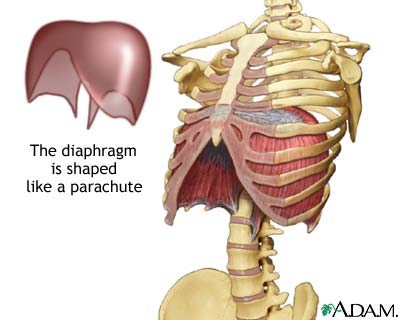
What is function of the dome-shaped diaphragm muscle?
This is where gas exchange happens.
Air passes through the diaphragm on the way to the lungs.
It attaches to the lungs and contracts and relaxes to help in breathing.
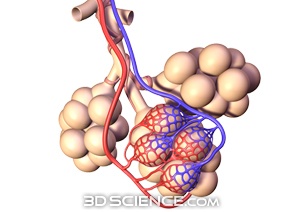
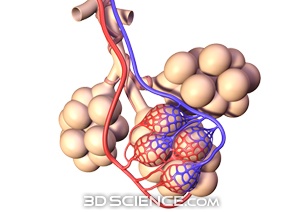

Flap of tissue that covers the opening to the windpipe during swallowing
Pharynx
Trachea
Epiglottis
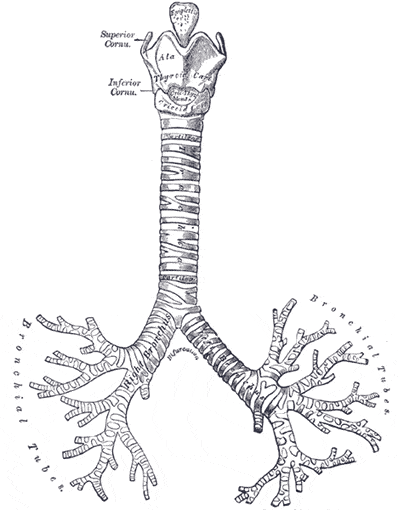
What is tube that leads from the larynx to the bronchi and is also known as your wind pipe?
esophogus
bronchi
trachea
alveoli
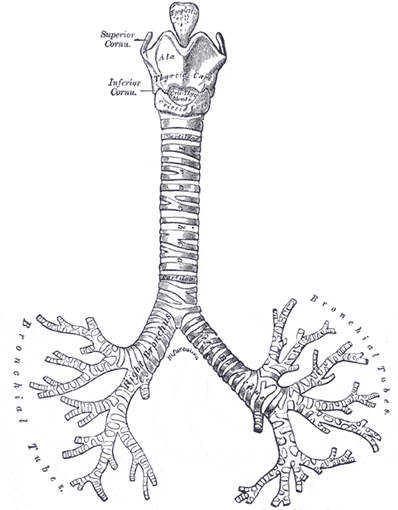
These are the two two main branches from the trachea (one to each lung)
bronchi
alveoli
capillaries
bronchioles

What type of cells carry oxygen in the blood?
red blood cells
white blood cells
The circulatory system works with the ________ system to provide our body with oxygen and get rid of CO2 (carbon dioxide).
respiratory
integumentary
muscular
skeletal

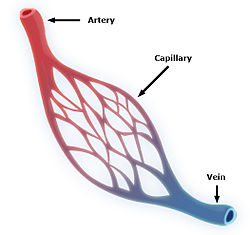
The smallest type of blood vessel is the ---
nerve.
vein.
capillary.
artery.

Veins have special __________ to stop blood from flowing backwards.
gravity
valves
arteries
ventricles


Which best describes the relationship between the muscular system and the circulatory system?
The circulatory system captures carbon dioxide from the air for muscle energy.
The circulatory system produces red blood cells to bring oxygen to the muscles.
The circulatory system provides a framework for muscle movement.
The circulatory system delivers oxygen for muscle energy. Additionally, the heart is made of cardiac muscle.
White blood cells ---
allow for gases to exchange.
give blood its color.
fight infection and disease.
help clot blood.
Platelets ---
allow for gases to exchange
give blood its color
fight infection and disease
help clot blood
The heart is an organ that pumps blood throughout the body supplying oxygen, nutrients, and hormones to and from tissues. It also removes ___________ and other wastes.
hydrogen dioxide
carbon moxoide
oxygen
carbon dioxide
The heart is made up of _________ chambers.
one
two
three
four
Capillaries join _____ together.
veins and arteries
veins and the heart
heart and valves
How does the heart work?
It pumps blood first to the lungs, back to the heart and then around the rest of the body.
It pumps blood first to the rest of the body, back to the lungs and then to the heart.
It pumps blood around the rest of the body, back to the heart and then to the lungs,
Urine is _____ mixed with excess water.
blood cells
protein
glucose
urea
Which organ helps the excretory system by eliminating water and some chemical wastes in perspiration (sweat)?
lungs
skin
liver
kidneys

What is organ is #1?
Kidney
Ureters
Bladder
Urethra
What organ is #3?
Kidney
Ureters
Bladder
Urethra

On the diagram, B is pointing to the ureters. What is the function of the ureters?
Carries urine away from the kidneys to the bladder
Stores urine
Eliminates urea, excess water, and some other materials
Carries urine out of the body and eliminates it
The main purpose of the muscular system is to....
Keep the heart beating
Move the body
Hit the dab
Transfer oxygen
Your skull is an example of a _____ joint.
Immovable
Ball and socket
Hinge
Pivot
Gliding
Which part of long bones makes blood cells and stores fat?
Compact bone
Spongy bone
Marrow
Cartilage
The _____ is the soft inner layer of bone.
Compact bone
Spongy bone
Marrow
Cartilage
Bones are held together by connective tissue called ---
Ligaments
Tendons
Marrow
Cartilage

What bone is highlighted?
Skull (Cranium)
Mandible
Clavicle
Scapula

What bone is highlighted?
Vertebrae
Radius
Pelvis
Ribs
Which is not a function of the skeletal system?
shape and support
movement
protection
gas exchange
What is a joint?
The place where 2 or more bones meet.
A thin membrane that covers the surface of bone.
A band of tissue that hold bones together.
Connective tissue
What are the ends of bone covered with that helps reduce friction when two bones are rubbed together?
marrow
ligament
tendon
cartilage
What is the best definition for digestion?
Breaking down food into smaller nutrients
Getting rid of waste products
Getting food into our bodies
Getting nutrients into our bloodstream, so that our cells can use them
What is the best definition for absorption?
Breaking down food into smaller nutrients
Getting rid of waste products
Getting food into our bodies
Getting nutrients into our bloodstream, so that our cells can use them
In which organ does digestion of food begin?
esophagus
small intestine
stomach
mouth
The muscular tube that moves food from the mouth to the stomach is called the ---
esophagus
small intestine
stomach
mouth
In which organ are nutrients absorbed into the blood?
esophagus
small intestine
stomach
mouth
In which organ are food particles churned and broken down by acids and enzymes?
esophagus
small intestine
stomach
mouth
In which organ are extra water and minerals are absorbed?
liver
small intestine
stomach
large intestine
Food broken down by physical processes is called _____ digestion.
mechanical
chemical
Food broken down by chemical processes is called _____ digestion.
mechanical
chemical
What is not a function of the digestive system?
Filter urea from the blood
Absorb water
Process waste
Break down food into nutrients
Which organ produces the bile that is used to break down fats?
Liver
Large Intestine
Mouth
Pancreas
What stores bile?
Liver
Gallbladder
Small Intestine
Pancreas
Which organ produces digestive juices for the small Intestine? It also produces insulin and is related to diabetes.
Stomach
Liver
Gallbladder
Pancreas

