
Font size
 Worksheets
Atomists and Atoms test review
Total questions: 70
Worksheet time: 42mins
What did Rutherford discover about atoms?
An atom is always negatively charged.
An atom is mostly empty space, but has a dense positively charged center(nucleus).
An atom is always positively charged.
All particles will pass straight through gold foil with no change in path.
What is a positively charged particle?
neutron
electron
proton
atom
What is a negatively charged particle?
neutron
electron
proton
atom
What is a particle with no charge?
neutron
electron
proton
atom
Who discover the electron?
Dalton
Rutherford
Thomson
Bohr
Who proposed a model with electrons moving in specific layers?
Dalton
Rutherford
Bohr
Thomson
What does atom mean?
small
visible
indivisible
particle
Who was considered as one of the founders of the ancient atomist theory?
Aristotle
Parmenides
Empedocles
Democritus
Who discovered the neutron?
JOSEPH JOHN THOMSON
ERNEST RUTHERFORD
NEILS BOHR
JAMES CHADWICK
It is the smallest particle of an element
PROTON
ELECTRON
NEUTRON
ATOM
Where are electrons located in an atom?
The total number of protons and neutrons in the nucleus of an atom
Atomic Number
Mass Number
Atomic Theory
Electron Cloud
The center of an atom where its neutrons and protons are is called the _____________.
nucleus
electron cloud
center

Atoms are made up of ________________
energy
electrons
subatomic particles
gasses

The following subatomic particles are in the nucleus.
Protons and nucleus.
Protons and neutrons.
Protons and electrons
Neutrons and electrons

The mass number of an atom is the mass of ______ + _____
protons + neutrons
protons + electrons
neutrons + nucleus
protons + nucleus

The mass number is always larger than the atomic number (exept for Hydrogen).
TRUE
FALSE
Substances that have only one kind of atom are called:
elements
nitrogen
electrons
nucleus
Electrons have a _____ charge.
neutral
negative
positive
both positive and negative
_____ is what scientists think atoms are like.
Chemistry
The box
The atomic structure
The atomic theory
The _____ is based on the number of protons in the nucleus of the atom.
atomic structure
periodic table of the elements
atomic number
atomic mass
What subatomic particle is represented by this charge (-):
neutron
proton
electron
What subatomic particle is represented by this symbol (+):
neutron
proton
electron
Why do the electrons surround the nucleus?
the negative electrons are attracted to the neutral neutrons
the negative electrons are repelled by the neutral neutrons
the negative electrons are attracted to the positive protons
the negative electrons are repelled by the positive protons
Which of the following correctly lists the pair of subatomic particles that balance the charge of the atom?
Protons and neutrons
Electrons and neutrons
Protons and electrons
Electrons and ions

What is the correct formula for calculating how many neutrons are in an atom?
Protons + Electrons= Neutrons
Atomic mass - Atomic number= Neutrons
Atomic mass + Atomic number = Neutrons
Atomic mass - Protons = Neutrons

How many neutrons does nitrogen have?
7
14
0
6

What is the ATOMIC NUMBER in this element tile?
28
Ni
Nickel
58.693

What is the CHEMICAL SYMBOL in this element tile?
10
Ne
Neon
20.18


Find the element:
Protons: 8
Neutrons: 9
Electrons: 10
Carbon (C)
Oxygen (O)
Hydrogen (H)
Titanium (Ti)

What is the atomic number of the neutral atom represented by the Periodic Table block above?
18
19
39
40

The image shows the periodic grid of potassium. How many electrons are found in the potassium atom?
19
20
39
40
•What elementary particles are the building blocks for protons and neutrons?
•Quarks
• Leptons
• Photons
• Gluons
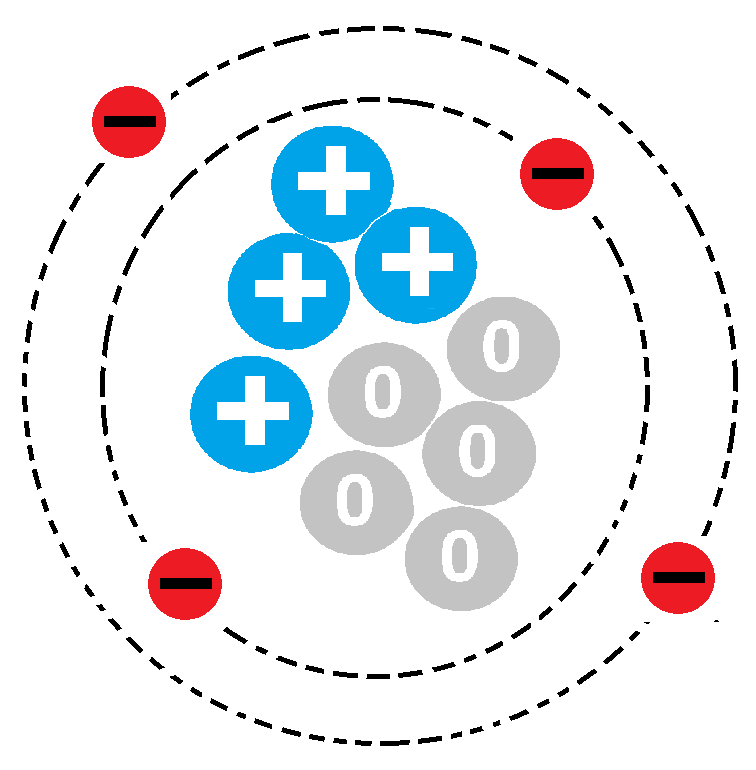
Atoms of the same element which have a different number of neutrons are called _________________.
ions
isotopes
quarks
molecules
If an atom has 12 neutrons and 11 protons, what is its atomic mass?
(a)
What is the mass of a carbon atom that has 6 protons, 7 neutrons, and 6 electrons?
6
7
13
19
Neutral atoms have an equal number of
electrons and neutrons
protons and neutrons
protons and electrons
protons, neutrons, and electrons
An atom of tin has an atomic number of 50 and a mass number of 119. How many protons, electrons, and neutrons are found in one neutral atom of tin?
50 protons, 69 electrons, 50 neutrons
50 protons, 50 electrons, 69 neutrons
69 protons, 50 electrons, 69 neutrons
69 protons, 69 electrons, 50 neutrons

How many neutrons does calcium have?
20
40
60
0
Which subatomic particle determines the identity of an element?
protons
neutrons
electrons

Which element is this?
Nickel
Neon
Sodium
Nitrogen
An atom has:
8 Protons
7 Neutrons
6 Electrons
What is the mass number?
(a)
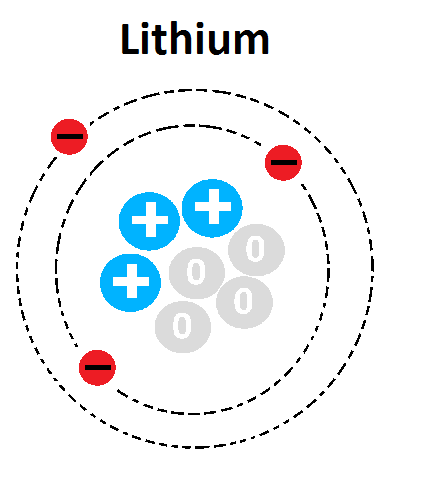
What is the mass number of this atom?
1
3
4
7

How many electrons are in Nitrogen? Use the picture to the left.
(a)

What is the image a picture of?
Einstein Model
Bohr Model
Pierre Model
Newton Model

What is the rounded atomic mass of Calcium?
(a)
True or False: The atomic number is the same number of neutrons.
True
False
True or False: Protons and Neutrons are always the same number
True
False
True or False: Protons and Electrons are equal to the atomic number.
True
False


How many electrons total?
5
6
7
8


Name this element.
boron
sodium
magnesium
lithium
beryllium
How many electrons can be in the 2nd energy level hold?
1
2
4
8
How many electrons does the first shell hold?
1
2
4
8

How many energy levels does Oxygen have?
16
8
2
6
If both protons and neutrons are found in the nucleus, why is it positive?
The reason it is positive is because neutrons have a positive charge and protons have a negative charge.
The reason it is positive is because neutrons have a negative charge and protons have a positive charge
The reason it is positive is because neutrons have no charge and protons have a positive charge.
The reason it is positive is because neutrons have no charge and protons have a negative charge
In ascending order, the maximum number of electrons each shell can hold is
2, 8, 8, 32
2, 8, 18, 32
2, 6, 8, 32
2, 3, 4, 5
Boron (B) has 5 electrons. Its electron configuration is
5
2, 2, 1
1, 2, 2
2, 3

The electron configuration of Nitrogen is
0, 2, 5
N, 2, 5
7
2, 5

The electron configuration of sulfur is
2, 8, 6
2, 8, 8
3, 8, 6
0, 2, 8
Aluminium has 13 electrons. How many electron shells would make up the atom?
1
2
3
4

