
 Worksheets
HB Macromolecule Test Review
Total questions: 48
Worksheet time: 36mins

What does the following sentence describe:
A compound in which there are only single bonds between the atoms in the molecule
Saturated compound
Polar compound
Flamable compound
Aromatic compound

Why is the structure/order of proteins important?
A change in structure causes a change in the function
The order of proteins is not important
The order determines the effectiveness of the protein
The structure of proteins determines the structure of carbohydrates
Which elements are common in Carbohydrates?
Carbon, Hydrogen, Oxygen, and Sulfur
Carbon, hydrogen, and nitrogen
Carbon, hydrogen, oxygen, 1:2:1 ratio
All elements

Atoms that make up nucleic acids
Carbon, hydrogen, oxygen, no ratio
Carbon, hydrogen, oxygen, sulfur, nitrogen
Carbon, hydrogen, oxygen, nitrogen, phosphorous
Carbon hydrogen, oxygen, 1:2:1 ratio
Atoms that make up proteins
Carbon, hydrogen, oxygen, no ratio
Carbon, hydrogen, oxygen, sulfur, nitrogen
Carbon, hydrogen, oxygen, nitrogen, phosphorous
Carbon hydrogen, oxygen, 1:2:1 ratio
What are examples of carbohydrates
Sugar and starch
DNA, RNA
Enzymes, hair, nails
Fats, oils
What is an example of lipids
Fats, oils, waxes
Cellulose, starch
DNA, RNA,
Enzymes, hemoglobin, nails
What do we call compounds with an amino group (-NH2) on one end and a carboxyl group (-COOH) on the other end?
Lipid
Amino Acid
Enzyme
Nucleic Acid
Made of 1 glycerol and 3 fatty acids
steroids
triglycerides
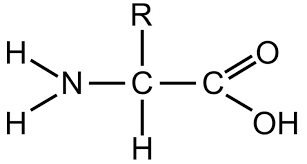
Identify the macromolecule associated with this image.
Protein
Carbohydrate
Lipid
Nucleic Acid
What type of functional group is found on this monomer
Amino Group on the left and carboxyl group on the right
Amino Group on the right and carboxyl group on the left
R- Group
Hydroxyl group

Identify the macromolecule associated with this image.
Protein
Carbohydrate
Lipid
Nucleic Acid
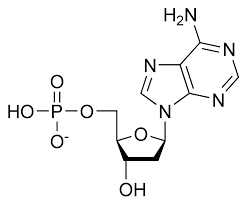
Identify the macromolecule associated with this image.
Protein
Carbohydrate
Lipid
Nucleic Acid

Which of the following is a base pair?
Adenine - Cytosine
Cytosine - Thymine
Deoxyribose - Cytosine
Cytosine - Guanine
What will the matching sequence be for a strand that reads AAGCTAT?
TTCGGG
TTCGATA
AACGATA
CCTGATA

The polypeptide in the diagram consists of;
3 amino acids and 3 peptide bonds
3 amino acids and 2 peptide bonds
4 amino acids and 2 phosphodiester bonds
3 amino acids and 2 phosphodiester bonds
How many molecules of water are needed to completely hydrolyze this polypeptide chain?
1
2
3
4

Which of the following describes the secondary structure of proteins?
The sequence of amino acids
The α-helix and β-pleated sheet folding
The folding of the polypeptide chain due to the 'R' groups
The joining of different protein molecules to make one big molecule

Why is folding so important in proteins?
It gives them a unique, functional shape
It makes them look tidier
It makes every protein molecule different from the next even if they are the same type
The folding is random so is not that important at all

The tertiary structure folding in proteins is primary due to the interactions of....
the 'R' groups
the 'P' groups
the 'A' groups
the 'S'
Which protein structure describes a protein's three-dimensional shape?
Primary
Secondary
Tertiary
Quaternary


How many hydrogens can carbon bond to?
1
2
3
4

Which is shown in the picture?
Amino Acid
Nucleotide
Fatty Acid
Monosaccharide

Stearic acid must be ...
a saturated fatty Acid
liquid at room temperature
a key component to DNA
hydrophilic
Oleic acid must be ...
a saturated fatty Acid
liquid at room temperature
made only be animals
hydrophilic
RNA differs from DNA in which way?
RNA is single stranded
RNA does not have the base Thymine
RNA has the base Uracil
All of these are correct
The RNA Nucleotide contains (you may choose more than 1 answer.)
Phosphate
Amino Acid
Nitrogenous base
Sugar


True/False: People can create all 20 amino acids.
TRUE
FALSE

The backbone of this triglyceride is
a sugar
3 nitrogen bases
a glycerol
a double bonded fatty acid

Which type of reaction is shown?
Dehydration Synthesis
Hydrolysis

This reaction is known as a __________________ reaction.
Dehydration Synthesis
Hydrolysis
Starch + Water -------> Glucose
Dehydration Synthesis
Hydrolysis

Dehydration Synthesis of a monosaccharide
Hydrolysis of a monosaccharide
Dehydration Synthesis of a peptide (amino acid) chain
Hydrolysis of a peptide (amino acid) chain
TRUE/FALSE: Cellulose is more easily broken down that starch
TRUE
FALSE

