NEW
Font size
 Worksheets
Chapter 29 and 30
Total questions: 42
Worksheet time: 42mins

The Hertzsprung-Russell diagram graphs stars' luminosity and ....
color
size
temperature
distance
The Sun is a ___________ star.
red giant
main sequence
protostar
white dwarf

Aldebaran is a ____________
red giant
white dwarf
main sequence star
supergiant

Compared to the Sun, Spica is .......
hotter and brighter
cooler and brighter
hotter and dimmer
cooler and dimmer

A star with a temperature of 10,000 K and a luminosity of 5000 times greater than the Sun would be a ____________.
supergiant
red giant
white dwarf
main sequence star
A star's temperature determines its ________.
size
color
name
health

White Dwarfs are ________ than the Sun.
cooler
dimmer
brighter
larger


Where on the HR Diagram are the Red Giants and Super-giants located?
Top Left
Top Right
Bottom Left
Bottom Right

Which star is hotter than Deneb
Procyon
Sun
Regel
Banard's Star

Which star is considered a giant star?
Mira
Zeta Arindani
Barnard's Star
Betelgeuse

Which star is considered a supergiant?
Sirius B
Sun
Betelgeuse
Van Maanan's Star

Using the HR diagram, choose the color of Zeta Eridani
blue
white
yellow
red
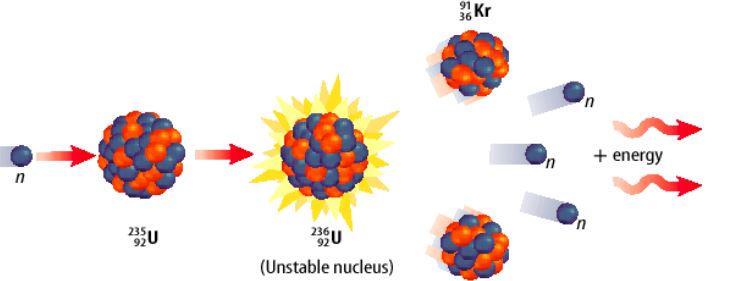
The energy from the sun is created by a process called:
nuclear fission
nuclear fusion
nuclear reaction
nuclear core


What are the inner layers of the Sun?
Core, Radiative zone, and Convection zone.
Crust, mantle, and core.
Core, Photosphere, and Radiative Zone.
The Sun doesn't have inner layers.
What are the outer layers of the Sun?
The Sun has only inner layers.
Photosphere, Chromosphere, and Corona.
Core, Radiative zone, and Convection zone.
Crest, Corona, Mantle.
Nuclear Fusion is when ________ atoms are squeezed together forming _________ atoms.
Hydrogen / Helium
Nitrogen / Hydrogen
Oxygen / Neon
Helium / Oxygen

The second gaseous layer of the Sun's atmosphere; has a reddish color
Chromosphere
Radiation Zone
Photosphere
Convection Zone

What part of the transverse wave is letter A?
trough
crest
wavelength
amplitude

What part of the transverse wave is letter B?
wavelength
amplitude
crest
trough

What part of the transverse wave is letter D?
trough
wavelength
crest
amplitude
Which color of visible light has the highest frequency?
green
blue
red
yellow
Which color of visible light has the longest wavelength?
red
orange
yellow
green
The portion of the electromagnetic spectrum that humans can see is called:
radio waves
visible light
gamma rays
x-rays
When wavelength increases...
energy decreases
energy increases
A light particle is called a(n):
electromagnetic wave
photon
electron
atom

When an iron core is reached gravity takes over and a(n) _________ occurs.
black hole
neutron star
explosion
supernova