wayground logo

Free Printable Worksheets

Font size

S
M
L
XL
Worksheets

Chemical Bonding

Total questions: 48

Worksheet time: 28mins

Name
Class
Date
1.

Predict the bond that is formed between Phosophorus and Chlorine?

a)

Ionic

b)

Covalent

c)

Metallic

d)

H-bond

2.

Which of the pair of elements form an ionic bond?

a)

Magnesium and Oxygen

b)

Magnesium and Sodium

c)

Iron and Zinc

d)

Nitrogen and Hydrogen

3.

How many valence electrons are shown in the diagram?

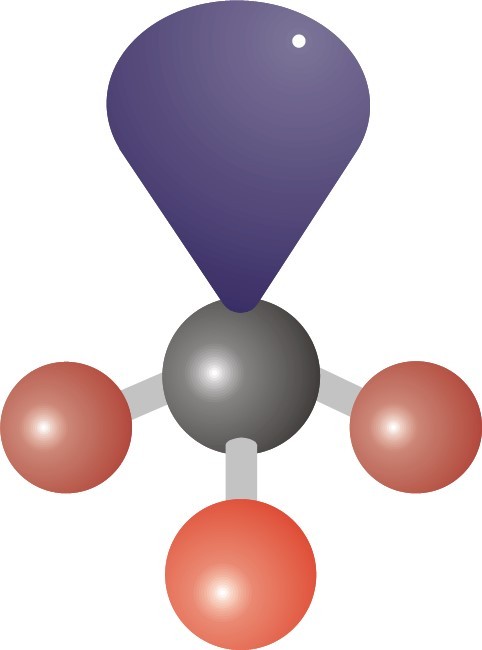
a)

16

b)

7

c)

6

d)

2

4.
How do covalent bonds form?
a)
Donating & receiving valence e- between atoms.
b)
Opposite slight charges attract each other between compounds.
c)
Scientists are still not sure how they form.
d)
Sharing valence e- between atoms.
5.
Which of these is NOT an alloy?
a)
bronze
b)
copper
c)
brass
d)
stainless steel
6.
What is the basis of a metallic bond?
a)
the attraction of neutral metal atoms.
b)
the attraction between protons and neutrons.
c)
the attraction between positive metal ions and interlocking electrons.
d)

the attraction between positive metal ions and free floating electrons. (Sea of Electrons)

7.
The ability of a material to be shaped in all directions without cracking or breaking.
a)
hardness
b)
ductility
c)
malleability
d)
conductivity
8.

Examine the image: How many bonds are formed looking at the model of the compound? And also indetify what type of bond is formed.

a)

2 bonds; covalent

b)

4 bonds; metallic

c)

2 bonds; ionic

d)

4 bonds; covalent

9.

Which of the following is true for ionic bonding & ionic compounds?

a)

They must be made of ions with like charges.

b)

The negative ion must be written first.

c)

Compounds must have an overall charge of zero.

d)

They are made of metals and nonmetals.

e)

The positive ion must be written first.

10.
A charged particle that has gained or lost electrons is called a _____.
a)
molecule
b)
ion
c)
isotope
d)
element
11.

Nitrogen, N, will form which of the following ions?

a)

N

b)

N-3

c)

N-5

d)

N+5

12.
Write the correct chemical formula for Ag  and  Br -
a)
AgBr
b)
silver bromide
c)
Ag2Br2
d)
gold bromide
13.
Write the correct formula for an ionic compound formed from S2- and Rb1+.
a)
SRb2
b)
SRb
c)
Rb2S
d)
RbS2
14.

What will be the charge of a bromine ion?

a)

+7

b)

-7

c)

-1

d)

+1

15.
What molecule is this?
a)
CO
b)
CO2
c)
C2O
d)
C2O2
16.
What region of the periodic table contains atoms that form covalent bonds?
a)
the left side
b)
the middle
c)
the right side
d)
top left
17.
In chemical compounds, covalent bonds form when
a)
the electronegativity difference between two atoms is very large.
b)
electrons are completely transferred between two metals.
c)
pairs of electrons are shared between two nonmetal atoms.
d)
two nonmetal atoms are attracted to each other by opposite charges.
18.
Which of the following is an example of an IONIC COMPOUND?
a)
NaCl
b)
H2O
c)
CO2
d)
NO
19.
Which of the following is an example of a COVALENT COMPOUND?
a)
H2S
b)
KI
c)
CaCl2
d)
MgO
20.
Name this compound: LiO
a)
lithium oxide
b)
oxygen monolithium
c)
monolithium dioxide
d)
dilithium dioxide
21.
What charge does a potassium (K) ion have?
a)
+1
b)
-1
c)
+2 
d)
-2
22.

Chemical bonds between two atoms of the same non-metal are always...

a)

Nonpolar covalent bonds

b)

Polar covalent bonds

c)

Transferring ionic bonds

d)

Nonpolar ionic bonds

23.

With electronegativity differences less than or equal to .40, the bond is...

a)

Nonpolar

b)

Polar

c)
d)

Transferring

24.

Chemical bonds can be covalent, polar covalent, or ionic depending atoms'...

a)

Electronegativity difference

b)

Radius difference

c)

Ionization difference

d)

Radiation difference

25.

With more moderate electronegativity differences between .40 and 1.70, the bond is...

a)

Polar covalent

b)

Nonpolar covent

c)

Transferring ionic

d)
26.

In the case of polar covalent, one atom has a greater attraction for electrons in the other atom, so the electrons are shared...

a)

Unequally

b)

Equally

27.
What type of bond is illustrated above?
a)
Metallic
b)
Ionic
c)
Covalent
d)
Wiggly
28.
Which of the following gives the correct chemical formula for the compound Calcium Nitride?
a)
Ca2N3
b)
CaN
c)
Ca3N2
d)
CaN2
29.

In a triple bond, two atoms share a total of ___ electrons.

a)

two

b)

three

c)

four

d)

six

30.

The electrons involved in the formation of a covalent bond are

a)

transferred from one atom to another.

b)

valence electrons.

c)

found only in s-orbitals.

d)

in filled orbitals.

31.

Valence electrons are: 

a)

Non-bonding electrons

b)

Bonding electrons

c)

Outermost electrons

d)

Innermost electrons

32.

Who give up their electrons easily?

a)

Metals

b)

Non Metals

c)

Noble gases

33.

What is the name of P2S6?

a)

Phosphorous Sulfide

b)

Diphosphorous Hexasulfide

c)

Phosphorous Hexasulfide

d)

Phosphorous (II) Sulfide

34.
 A lone pair is defined as
a)
A pair of bonding electrons
b)
One non-bonding electron
c)
A pair of non-bonding electrons
d)
A pair of electrons on the central atom
35.
What is the VSEPR theory used to predict?
a)
Bond Strength
b)
Polarity
c)
Molecular Shape
d)
Electronegativity
36.
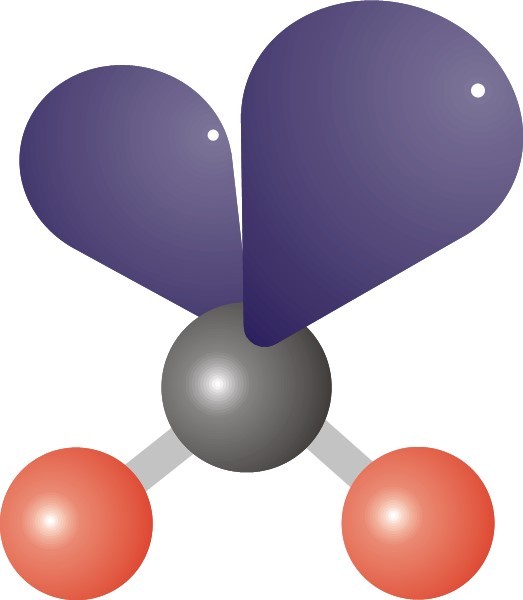
Which of the following shapes has an unshared pairs of electrons on the central atom? 
a)
Bipyramidal
b)
Bent
c)
Trigonal Planar
d)
Tetrahedral
37.
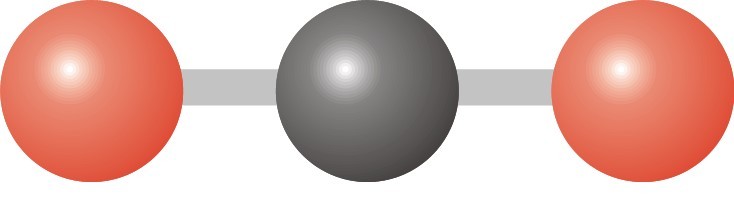
Which molecule would have this molecular geometry?
a)
BF3
b)
CH4
c)
PCl5
d)
CO2
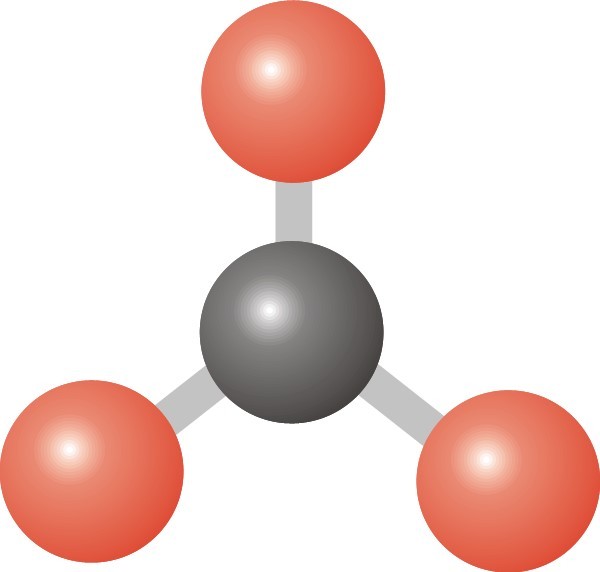
38.
What molecule could this be? 
a)
BF3
b)
CH4
c)
H2O
d)
CO2
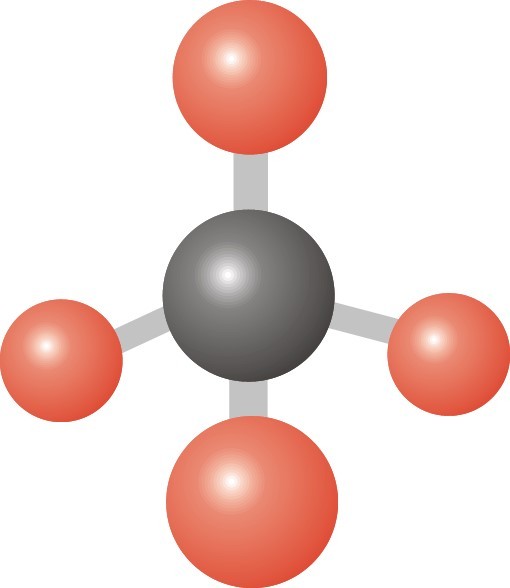
39.
Who could this molecule be?
a)
CH4
b)
CO2
c)
PCl5
d)
BF3
40.
Who could this be? 
a)
CO2
b)
NH3
c)
H2S
d)
CH4
41.
Who could this be?
a)
H2O
b)
NH3
c)
CO2
d)
CH4
42.

What molecular geometry would PH3 have?

a)

Trigonal Pyramidal

b)

Trigonal Bipyramidal

c)

Bent

d)

Linear

43.
How many lone pairs of electrons are on the P atom in PF3?
a)
1
b)
2
c)
3
d)
0
44.

Is this molecule polar?

a)

Yes

b)

No

45.

Is this molecule polar?

a)

No

b)

Yes

46.

Which of the following is the strongest intermolecular force (IMF)?

a)

London Dispersion

b)

Dipole-Dipole

c)

Hydrogen Bonding

d)

Covalent

47.

Which would be the strongest type of Intermolecular force (IMF) between polar molecules without Hydrogen?

a)

Hydrogen Bonding

b)

Covalent

c)

Dipole-Dipole

d)

London Dispersion

48.

Which would be the strongest Intermolecular force (IMF) between nonpolar covalent molecules?

a)

Covalent

b)

Dipole-Dipole

c)

Hydrogen Bonding

d)

London Dispersion