
 Worksheets
Quarter 1 test review
Total questions: 177
Worksheet time: 2hrs 13mins
Used the word "atomos" to decsribe the uncuttable (indivisible) atom.
Democritus
Thomson
Bohr
Dalton

Proposed that electrons move around the nucleus in specific layers, or shells.
Bohr
Rutherford
Chadwick
Thomson
Which of the following is/are conclusions based on Rutherford’s gold foil experiment?
Atom is mostly empty space
The nucleus is positively charged
The atom has a small dense nucleus
All answers are correct
He discovered electrons
J.J. Thomson
John Dalton
Ernest Rutherford
Niels Bohr


What is the charge of an atom with 5 protons, 5 neutrons, and 7 electrons?
0
+5
+2
-2
If an element contains 13 protons and 12 electrons what would be its overall charge?
+1
-1
+13
-13
A Bromine ion gains 1 electron, which of the following is the correct symbol for a Bromine ion?
Br-1
Br+1
Br+7
Br-7
How would you write a Sulfur that has gained 2 electrons?
S+2
S-2
S+6
S-6
If an atom of Boron has 5 protons how many electrons will it need to have to be neutral?
3
4
5
6

How many protons are in a Carbon atom?
(Type a whole number only!)
(a)
What is the charge of a neutron, and what is its location in an atom?
Neutral charge, located in nucleus.
Negative charge, located in nucleus.
Neutral charge, located in the orbitals/cloud.
Negative charge, located in the orbitals/cloud.
What is the charge of a proton, and what is its location in an atom?
Neutral charge, located in nucleus.
Positive charge, located in nucleus.
Neutral charge, located in the orbitals/cloud.
Positive charge, located in the orbitals/cloud.
What is the charge of an electron, and what is its location in an atom?
Negative charge, located in nucleus.
Neutral charge, located in nucleus.
Negative charge, located in the orbitals/cloud.
Neutral charge, located in the orbitals/cloud.
An electron and proton are ALIKE because...
Neither has a charge.
Both are charged.
Both are in the nucleus.
A neutron and proton are ALIKE because...
Neither has a charge.
Both are charged.
Both are in the nucleus.
Protons are DIFFERENT from neutrons because...
One is in the nucleus, the other is in the orbitals/cloud.
One has a charge, the other does not.
Both are in the nucleus.
The mass number of an atom is the number of ...
Electrons plus Protons
Neutrons plus Electrons
Protons plus Neutrons
What Greek philosopher was the first person to propose the idea that matter is made of tiny particles called atoms
Democritus
Dalton
Thompson
Rutherford
Bohr

In an atom of boron-11, has a mass number of 11 how many neutrons are present?
Type a whole number!
(Use your periodic table!)
(a)
Which subatomic particle identifies an element?
Protons
Neutrons
Electrons
Protons and Neutrons
Which particles have a charge?
Protons
Neutrons
Electrons
Which particles are found in the nucleus?
Protons
Neutrons
Electrons
Which particles account for almost all the mass of an atom?
Protons
Neutrons
Electrons
Magnesium's atomic number is 12. This means that a magnesium atom has
12 protons in its nucleus
A total of 12 protons and electrons
12 neutrons in its nucleus
A total of 12 neutrons and electrons
A potassium atom has an atomic mass of 39. Its atomic number is 19. How many neutrons does the iron atom have?
19
39
20
58
Two atoms that are different isotopes of the same element have
a different number of protons but the same number of neutrons
the same number of protons and the same number of neutrons
a different number of protons and a different number of neutrons
the same number of protons but different numbers of neutrons

How many neutrons does this isotope have?
(a)
Element X has two naturally occurring isotopes. One isotope has a mass of 10 amu with a relative abundance of 20%. The other isotope hasa mass of 11 amu and relative abundance of 80%. What is the average atomic mass of Element X
(a)
How is average atomic mass determined?
By adding all of the protons and neutrons together.
by summing the masses of the element's isotopes, each multiplied by its natural abundance on Earth
By multiplying of often protons and neutrons occur and adding up the averages.
If an atom has 5 protons and 6 neutrons what is the proper name of the isotope?
Boron-1
Boron-11
Carbon-11
Carbon 11
Boron Carbonate

How many neutrons does an atom of symbol pictured have?
26
-26
70
What is the total number of particles in the nucleus atom of symbol pictured have?
22
70
48
What is the average mass of this element?
(OH)2
Mg + __HCl ---> MgCl2 + H2
What type of reaction is this?
__H2O2 ----> __H2O + O2
Balance this equation: _Zn + _O2 --> _ZnO
1, 1, 2
2, 1, 2
1, 1, 1
2 ,2, 2
Al + O2 → 2Al2O3
Which side of the yield sign are the reactants found?
to the left
to the right
in the middle
Which side of the arrow are the products found?
to the left
to the right
in the middle
How many water molecules do you need to balance the equation: __H20 --> 2H2 + O2?
1
2
3
0
What is the Law of Conservation of Mass?
It states that matter cannot be created or destroyed.
It states that energy cannot be created or destroyed.
It states that matter can be created or destroyed.
It states that sound can be created or destroyed.
Fe + S --> FeS
N2+O2--> _NO
Balance the following equation:
___ Mg+ ___ O2→___ MgO
1, 1, 3
2, 1, 2
1, 2, 1
2, 2, 2
Which equation is balanced?
PbO2 + 2H2
SO2 + H20 --> H2SO4
2Na + 2H2O --> 2NaOH + H2
Mg + __HCl ---> MgCl2 + H2
_N2 + _H2 --> _NH3
Is this equation balanced?
SO3 + H2O --> H2SO4
__Na + O2 -----> __Na2O
Balance it
2Na + O2 ---> 4Na2O
4Na + O2 ---> 2Na2O
Na + O2 ---> Na2O
2Na + 2O2 / 4Na2O

(a) are made from only one type of atom.
Compounds are created when 2 or more (a) chemically combine.

Mixtures can be separated by (a) means.

What type of matter can ONLY be separated by chemical means?
Element
Mixture
Compound
Atom
What type of matter cannot be separated by any means?
Element
Mixture
Compound
Check all examples that are heterogeneous mixtures.
Saltwater
Pepperoni pizza
Chopped salad
Air
Check all examples that are homogeneous mixtures.
Milk
Tea
Chicken noodle soup
Air
Which of these are compounds?
Water (H2O)
Table salt (NaCl)
Oxygen (O2)
Glucose (C6H12O6)
Which of these is not an element?
Water (H2O)
Copper (Cu)
Carbon (C)
Iron (Fe)
What is the smallest unit of an element that retains the chemical properties of that element?
Electron
Neutron
Molecule
Atom
Which substance is composed of only one type of atom?
Water (H2O)
Table salt (NaCl)
Gold (Au)
Glucose (C6H12O6)

Which of these samples shown best represents an mixture?
A
B
C
D
Which of these samples shown best represents an element?
A
B
C
D
Which of these samples shown best represents a compound?
A
B
C
D

What state of matter is this
solid
liquid
gas

What state of matter is this
solid
liquid
gas

What state of matter is this
solid
liquid
gas

What state of matter is this (inside)
solid
liquid
gas

What state of matter is this
solid
liquid
gas
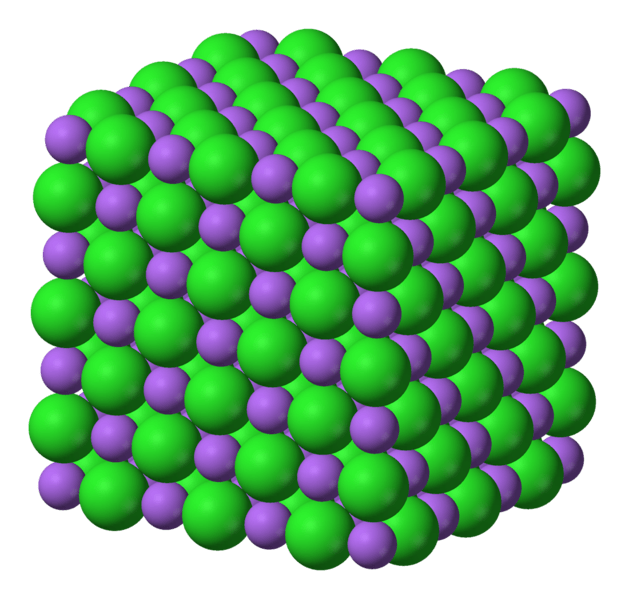
Which state of matter does this picture show?
Solid
Liquid
Gas

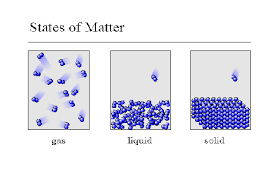
Which state of matter is represented in the following diagram?
Liquid
Gas
Solid


At higher temperatures _____________
atoms in an object have less energy and move slower
atoms in an object have more energy and move faster
As temperature increases, what happens to atoms?
They speed up
They slow down

What is happening in this picture of this lake freezing?
atoms are speeding up
atoms are slowing down

Matter is made of tiny particles called atoms
True
False

State of matter that takes the shape of it's container and has a definite volume.
Solid state
Liquid state
Gas state

State of matter that can fill containers with no fixed shape or volume.
Solid state
Liquid state
Gas state

State of matter in which materials have a definite shape and volume.
Solid state
Liquid state
Gas state

What change of state is taking place in this photograph?
Condensation
Freezing
Melting

Which of the following is a property of gases?
They have a definite volume.
They have no definite shape.
They have no ability to flow.

Which change of state occurs when particles in a solid begin to move slowly past each other?
Melting
Freezing
Condensing
Draw a solid/ dibuja un sólido

Draw a liquid/ dibuja un líquido
Draw a gas/ Dibuja un gaseoso
Choose ALL the solid objects


Choose ALL the liquid objects


Choose ALL the gas objects


Liquid


Gas


Solid


Evaporation is the change of state of a
Gas to solid
Liquid to Gas
Solid to liquid
Liquid to Solid

What is the state change that occurs, when ice turns into a liquid?
Boiling
Condensation
Melting
evaporation

Condensation is when
Liquid turns to a solid
Gas turns to liquid
Solid turns to liquid
Liquid turns to a gas

This image is an example of what particle
Solid
Liquid
Gas

Which statements better define the following element:
Liquid and Solid
Gas and Liquid
Solid and Gas
Gas and Plasma
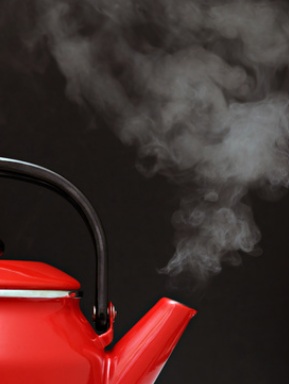
What change of state is taking place in this photograph?
Condensation
Freezing
Vaporization
Melting

The diagram shows the changes in state of water (H2O). What is the process Z called?
Condensation
Freezing
Vaporization
Melting

When a beaker of water is heated its volume increases a little. What is happening to the particles in the liquid?
They are getting bigger.
They are moving slower.
They are moving faster.
They are getting smaller.

When you place a bottle of water in the freezer its volume increases. What is happening to the particles in the liquid?
They are getting bigger.
They are moving slower.
They are moving faster.
They are getting smaller.
Everything is made of...
Solid
Matter
Gas
Liquid
Draw how the particles look in solid form


Which state of matter is represented by the particles in the image?
Solid
Liquid
Gas
Which is a liquid?


Draw how the particles look in a gaseous form

What state of matter takes the shape of the container it's in and can be poured?
(a)
What is the hardest state of matter?
Solid
Gas
Plasma
Liquid
When you heat up a solid, the particles....
Lose Mass
Slow Down
Get Bigger
Move Faster
What is found on the periodic table?
Elements
Compounds
Mixtures
What is a mixture?
elements chemically combined
a physical combination of substances
it is found on the Periodic Table
it is made of any chemicals
__ is a pure substance containing two or more kinds of atoms.
Element
compound
mixture
solution
Below is a list of some substances and their symbols.
Oxygen O
Sodium Chloride NaCl
Gold Au
Neon Ne
How many of these substances are an example of an element?
1
2
3
4
Which of the following represents an element?
H2O
HCl
NaCl
Au
CaCO3
Which of the following substance is NOT a compound?
Carbon dioxide
Hydrogen
Salt
Sugar
What is the difference between an atom and a molecule?
Molecules are groups of atoms held together physically
Molecules are groups of atoms held together chemically
Molecules are mixtures
Molecules are only found in the gas state of matter, while atoms can form solids, liquids, and gasses
What is a difference between molecules and crystals?
Only molecules contain bonded atoms
Only crystals have a regular arrangement of atoms or molecules bonded to each other
Only crystals contain chemical bonds in their structure
Only molecules have an ordered and repeating structure

This picture represents which of the following?
element
compound
How many elements are there in CuSO4?
1
2
3
4
5
Chlorine (Cl₂) is used in the preparation of bleach, a chemical used for cleaning, disinfecting, and removing color. What type of matter is Chlorine?
Element
Compound
Mixture
Solution
Sodium bicarbonate (commonly known as baking soda) has the chemical formula NaHCO₃. How many different elements (types of atoms) does this compound has?
3 (Sodium, Hydrogen and Oxygen)
4 (Sodium, Hydrogen, Carbon, and Oxygen)
5 (Nitrogen, Aluminum, Hydrogen, Carbon, and Oxygen)
3 (Sodium, Hydrogen and Carbon trioxide)
Sodium bicarbonate (commonly known as baking soda) has the chemical formula NaHCO₃. How many ATOMS in total are in the molecule?
7
8
4
6

What is the formula for this compound?
HCl₃
CHCl₃
C₃HCl
3HCCl

Which of the following represents the structure of a crystalline solid?
The model on the left
The model on the right


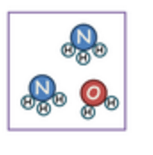
This picture represents:
only one Element
only one Compound
Mixture of Elements
Mixture of Compounds


This is an example of
an extended structure / crystal compound
a molecule of a compound
a molecule of an element
an extended structure / crystal element

This is showing
molecules of an element
extended structure / crystal compound
molecules of a compound
extended structure / crystal element

atom
Pure Substances
Are only made of one type of atom
Have the same properties throughout
Can never be broken down into something simpler
Are only made of molecules
substance that cannot be broken down into a simpler substance
chemical
element
compound
mixture
basic particle from which all elements are made
atom
molecule
element
compound
force of attraction between atoms
atom bond
compound
chemical bond
molecule
group of two or more atoms held together by chemical bonds
atom
molecule
chemical bond
compound
substance made of two or more elements that are chemically combined is a set ratio
compound
chemical formula
molecule
atom
What shows the elements in the compound and the ratio of atoms
chemical formula
chemical bond
molecule
mixture
What holds the hydrogen and oxygen atoms together in a water molecule?
formulas
compounds
mixtures
chemical bonds
How many atoms are in NH3?
2
3
4
5
How many atoms of Oxygen are in O2?
1
2
3
4
A _________ is made of two or more substances that are together in the same place but their atoms are NOT chemically bonded.
compound
mixture
substance
filtration
A type of mixture where you can see the different parts and they can easily be separated into their different parts.
atomic mixture
Compound mixture
Heterogeneous mixture
Homogeneous mixture
A type of mixture that you can't see the different parts.
Homogeneous mixture
Heterogeneous mixture
Compound
distillation
Iron objects can be separated from a mixture using a magnet.
evaporation
magnetic attraction
distillation
filtration
Solids can be separated from liquids by pouring the mixture through a filter.
magnetic attraction
evaporation
filtration
distillation
Liquids can be separated from each other by heating them up to the temperature at which one of the liquids boils. The liquid boils into a gas. Then the gas cools, forming the separated liquid.
evaporation
distillation
magnetic attraction
filtration
When left in the open air, liquid solutions can change to gas, leaving solid components behind.
Evaporation
distillation
filtration
magnetic attraction
Heterogeneous and Homogeneous are two types of what?
compounds
elements
mixtures
atoms
substance that cannot be broken down into a simpler substance
chemical
element
compound
mixture
basic particle from which all elements are made
atom
molecule
element
compound
force of attraction between atoms
atom bond
compound
chemical bond
molecule
group of two or more atoms held together by chemical bonds
atom
molecule
chemical bond
compound
substance made of two or more elements that are chemically combined is a set ratio
compound
chemical formula
molecule
atom
What shows the elements in the compound and the ratio of atoms
chemical formula
chemical bond
molecule
mixture
What holds the hydrogen and oxygen atoms together in a water molecule?
formulas
compounds
mixtures
chemical bonds
How many atoms are in NH3?
2
3
4
5
How many atoms of Oxygen are in O2?
1
2
3
4
A _________ is made of two or more substances that are together in the same place but their atoms are NOT chemically bonded.
compound
mixture
substance
filtration
A type of mixture where you can see the different parts and they can easily be separated into their different parts.
atomic mixture
Compound mixture
Heterogeneous mixture
Homogeneous mixture
A type of mixture that you can't see the different parts.
Homogeneous mixture
Heterogeneous mixture
Compound
distillation
Iron objects can be separated from a mixture using a magnet.
evaporation
magnetic attraction
distillation
filtration
Solids can be separated from liquids by pouring the mixture through a filter.
magnetic attraction
evaporation
filtration
distillation
Liquids can be separated from each other by heating them up to the temperature at which one of the liquids boils. The liquid boils into a gas. Then the gas cools, forming the separated liquid.
evaporation
distillation
magnetic attraction
filtration
When left in the open air, liquid solutions can change to gas, leaving solid components behind.
Evaporation
distillation
filtration
magnetic attraction
Heterogeneous and Homogeneous are two types of what?
compounds
elements
mixtures
atoms

