Wayground logo

Free Printable Worksheets

Font size

S
M
L
XL
Worksheets

Atoms

Total questions: 74

Worksheet time: 49mins

Name
Class
Date
1.

The positively charged particle in an atom.

a)

Proton

b)

Neutron

c)

Electron

d)

Nucleus

2.

The total number of protons and neutrons in the nucleus of an atom

a)

Atomic Number

b)

Mass Number

c)

Atomic Theory

d)

Electron Cloud

3.

The center of an atom where its neutrons and protons are is called the _____________.

a)

nucleus

b)

electron cloud

c)

center

4.

The positive particles of an atom are ___________.

a)

electrons

b)

protons

c)

neutrons

5.
Which is an electron?
a)
A
b)
B
c)
C
6.
How many electrons does Si contain? (click to see image)
a)
14
b)
28
c)
2
d)
4
7.

All matter is made of _________.

a)
energy 
b)
atoms 
c)
electrons 
d)
compounds 
8.
What does the nucleus of an atom contain?
a)
Electrons and neutrons
b)
Protons and neutrons
c)
Neutrinos and positrons
d)
DNA and RN
9.

What is the chemical symbol for Hydrogen

a)

H

b)

He

c)

Hy

d)

Hg

10.

What element has the symbol Al

a)

Argon

b)

Aluminium

c)

Silver

d)

Gold

11.

What is the symbol for Carbon

a)

Ca

b)

C

c)

Co

d)

Cr

12.

What is the symbol for Neon

a)

No

b)

Nn

c)

Ne

d)

N

13.

What is the symbol for Potassium

a)

P

b)

Po

c)

K

d)

Pt

14.

Which element has the symbol O

a)

Osmium

b)

Oxygen

c)

Oganesson

d)

Neon

15.

Which element has the symbol Si

a)

Silicon

b)

Sulfur

c)

Scandium

d)

Strontium

16.

What is the chemical symbol for Hydrogen

a)

H

b)

He

c)

Hy

d)

Hg

17.

What element has the symbol Al

a)

Argon

b)

Aluminium

c)

Silver

d)

Gold

18.

What is the symbol for Carbon

a)

Ca

b)

C

c)

Co

d)

Cr

19.

What is the symbol for Neon

a)

No

b)

Nn

c)

Ne

d)

N

20.

What is the symbol for Potassium

a)

P

b)

Po

c)

K

d)

Pt

21.

Which element has the symbol O

a)

Osmium

b)

Oxygen

c)

Oganesson

d)

Neon

22.

Which element has the symbol Si

a)

Silicon

b)

Sulfur

c)

Scandium

d)

Strontium

23.

Which element has the symbol N

a)

Nitrogen

b)

Neon

c)

Sodium

d)

Nickel

24.

Which element has the symbol Cl

a)

Carbon

b)

Chlorine

c)

Cadium

d)

Copper

25.

What is the symbol for Sodium

a)

S

b)

Au

c)

So

d)

Na

26.

What is the symbol for Magnesium

a)

Mn

b)

Mc

c)

Mg

d)

Md

27.

Which element has the symbol He

a)

Hydrogen

b)

Hafnium

c)

Helium

d)

Mercury

28.

What is the symbol for Calcium

a)

Ca

b)

C

c)

Cl

d)

Cm

29.

What is the symbol for Zinc?

a)

Z

b)

Zi

c)

ZN

d)

Zn

30.

What is the symbol for Copper?

a)

CU

b)

Cp

c)

Cu

d)

Cr

31.

What is the symbol for Iron?

a)

Ir

b)

In

c)

Fe

d)

FE

32.
Gold
a)
Ag
b)
Au
c)
Ge
d)
Go
33.
What is the symbol for Silver?
a)
Au
b)
Ag
c)
S
d)
Si
34.
What is the symbol for Fluorine?
a)
I
b)
Pb
c)
Na
d)
F
35.
Phosphorus 
a)
Ph
b)
Po
c)
P
d)
Ps
36.

Which charge is POSITIVE?

a)

Proton

b)

Neutron

c)

Electron

d)

Cell

37.

Which charge is NEGATIVE?

a)

Proton

b)

Neutron

c)

Electron

d)

Cell

38.

Which particle is NEUTRAL - NO CHARGE?

a)

Proton

b)

Neutron

c)

Electron

d)

Cell

39.

Oxygen has a mass of...

a)

8

b)

16

c)

15

d)

6

40.

Arsenic has a mass of _______

a)

33

b)

79

c)

75

d)

47

41.

How many protons, neutrons, and electrons are in Oxygen?

a)

Protons = 8; Neutrons = 16; Electrons = 8

b)

Protons = 8; Neutrons = 8; Electrons = 8

c)

Protons = 16; Neutrons = 8; Electrons = 16

d)

Protons = 16; Neutrons = 24; Electrons = 16

42.

How many electrons are in Potassium?

a)

19

b)

20

c)

58

d)

39

43.

How many neutrons are in Argon?

a)

18

b)

40

c)

58

d)

22

44.

How many protons are in Chlorine?

a)

35

b)

18

c)

17

d)

52

45.

How many electrons are in Sulfur?

a)

32

b)

16

c)

48

d)

8

46.

How many neutrons are in Phosphorus?

a)

16

b)

15

c)

31

d)

46

47.

How many neutrons are in Magnesium?

a)

36

b)

12

c)

24

d)

6

48.

How many electrons are in Aluminium?

a)

40

b)

27

c)

13

d)

14

49.

How many protons are in Sodium?

a)

11

b)

22

c)

12

d)

33

50.
Where is the proton located?
a)
In the very dense nucleus
b)
Floating around in the negative electron cloud
c)
the loose nucleus
d)
the positive electron cloud
51.
What number on the element key tells you how many protons an element has?
a)
Atomic Mass
b)
Element name
c)
Atomic number
d)
Element Symbol
52.
Elements can have the same number of protons?
a)
True
b)
False
53.
Protons are equal to:
a)
Atomic Mass
b)
Number of neutrons
c)
Atomic Number
d)
All of the subatomic particles
54.
Sodium has an atomic number of 11, how many protons does this atom have?
a)
22
b)
11
c)
12
d)
2
55.

What is "b" in the picture?

a)

Proton

b)

Electron

c)

Neutron

56.

What is "c" in the picture?

a)

Proton

b)

Electron

c)

Neutron

57.
Each element ___ its own atomic number.
a)
has
b)
does not have
c)
sometimes has (depends on the element)
58.

How many protons are in Gold

a)

79

b)

197

c)

118

d)

276

59.

How many protons are in Neon

a)

10

b)

20

c)

21

d)

30

60.

Which number shows the atomic number?

a)

2

b)

4.0026

c)

4

d)

HE

61.

Carbon has how many protons?

a)

12

b)

6

c)

7

d)

4

62.

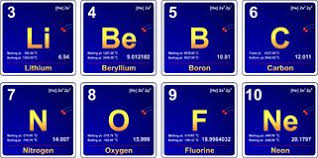
What is the atomic number of Lithium?

a)

3

b)

4

c)

7

63.

What is the mass number of Helium?

a)

2

b)

4

c)

6

64.

What is the atomic number of Boron?

a)

5

b)

6

c)

10

d)

11

65.

Which element has 6 protons?

a)

Be

b)

B

c)

C

d)

N

66.

Which element has 10 protons?

a)

Na

b)

Ne

c)

Mg

d)

Al

67.
Which subatomic particle has a neutral or no charge?
a)
Proton
b)
Electron
c)
Neutron
68.
Which subatomic particle has a negative (-) charge?
a)
Proton
b)
Electron
c)
Neutron
69.
Which two subatomic particles make up the nucleus of an atom?
a)
Protons and Electrons
b)
Neutrons and Electrons
c)
Electrons and Protons
d)
Protons and Neutrons
70.

The name of this particle means indivisible and it is the building block of matter

a)

molecule

b)

compound

c)

atom

d)

isotope

71.
What is the mass number?
a)
the number of protons
b)
the number of protons and neutrons
c)
the number of neutrons
d)
the number of protons and electrons
72.
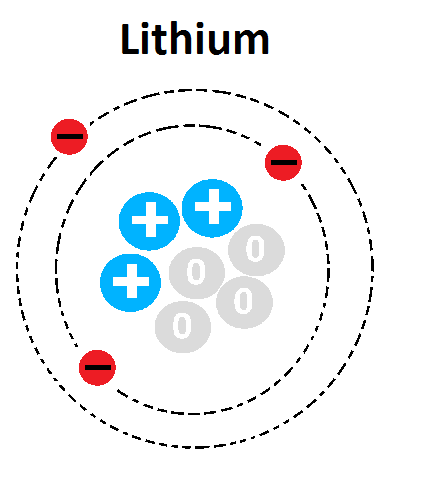
What is the atomic number of this atom?
a)
1
b)
3
c)
4
d)
7
73.
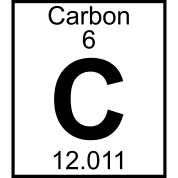
What does the C represent?
a)
atomic mass
b)
atomic number
c)
element name
d)
chemical symbol 
74.
what does the 6 represent?
a)
Atomic mass
b)
atomic number
c)
chemical symbol
d)
element name