
 Worksheets
EOC REVIEW - Cells, Cell Parts, Transport, Photosyn/Respiration
Total questions: 50
Worksheet time: 55mins
The movement of molecules down the concentration gradient (from high to low)
photosynthesis
active transport
ion pumps
passive transport
a solution where there are equal concentrations of solutes both inside and outside the cell.
isotonic solution
hypertonic solution
hypotonic solution
diffusion

Scientist to first see plant cells (in a cork) under a microscope
Louis Pasteur
Robert Hooke
Anton VanLeeuwenhoek
Charles Darwin
After seeing moving/living bacterial cells under a microscope, Anton VanLeeuwenhoek named them:
animalcules
animals
molecules
osteocytes
PROKARYOTES are plants and EUKARYOTES are animals
True
False
PROKARYOTES are what type of cells?
Plants
Animals
Bacteria
Plants and Animals
EUKARYOTES are:
Plants
Bacteria
Animals
Plants and Animals
PROKARYOTES:
have a nucleus
are multicellular at times
have mitochondria and golgi
don't have a nucleus
Where is DNA stored within a Eukaryotic Cell?
nucleus
mitochondria
golgi apparatus
rough endoplasmic reticulum
Which organelle is responsible for the cell being semi permeable and helps the cell maintain homeostasis?
nucleus
cell membrane
cytoplasm
mitochondria
lysosome
Which organelle is responsible for packaging proteins / calcium and sending it around the INSIDE of the cell?
nucleus
golgi apparatus
lysososmes
endoplasmic reticulum (rough/smooth)
ribosomes
This organelle is created in the nucleolus and is responsible for creating proteins (found in both eukaryotic and prokaryotic cells)
endoplasmic reticulum
golgi apparatus
ribosomes
chromatin
flagella
This organelle is the gel like fluid within the cell that helps the cell maintain in shape and holds all the other organelles
cytoplasm
cell membrane
nucleolus
nucleus
cytoskeleton
Check the 3 main parts of the modern cell theory:
prokaryotes are bacteria and eukaryotes are plants/animals
cells come from pre-existing cells
cells are broken down into prokaryotes and eukaryotes
cells are the most basic unit of life
all living things are made of cells
This organelle is made of proteins (microtubules and microfilaments) and helps the cell maintain its size/shape (... think about what gives a human their size/shape)
nucleus
mitochondria
lysosome
cytoskeleton
cytoplasm
This is one of the 3 organelles that plants have that animals do not:
mitochondria
chloroplasts
chromatin
ribosomes
cell membrane
This is one of the organelles that plant cells have that animal cells do not:
mitochondria
ribosomes
cell wall
cell membrane
chromatin
this is one of the organelles that plants have that animals do not:
ribosomes
mitochondria
cell membrane
chromatin
large central vacuole
CHECK ALL THAT APPLY: _______________ cells have a cell membrane
bacteria
animal
plant
All cells (prokaryote and eukaryote) have cytoplasm
true
false
The fluid mosaic model - refers to which organelle and its ability to act more like a fluid than a solid structure (not a rigid structure - things are able to move into/out of it and proteins can move around it)
cell wall
cytoplasm
nuclear pores
cell membrane

the cell membrane is mostly made of what?
phosphoproteins
cholesterols
phospholipids
cytoskeleton proteins
The ability for a cell or an organism to maintain a stable internal environment is their:
metabolism
cytolysis
homeostasis
respiration
CHECK ALL THAT APPLY (4 correct answers)
Differences between active and passive transport include:
passive moves up the concentration gradient while active moves down
passive transport uses no energy while active does
active transport moves things from low concentration to high concentration
passive deals with diffusion / osmosis while active uses pumps
active transport includes endo and exo cytosis
Osmosis is the diffusion of ____________ from high concentration to low concentration
proteins
oxygen
glucose
water
This is when the concentration of molecules is the same throughout, movement is still occurring but at equal rates
equilibrium
homeostasis
metabolism
concentration gradient
A hypertonic solution will cause a cell to
swell
shrink
stay the same size
facilitate duffusion
A hypotonic solution will cause a cell to
swell
shrink
stay the same size
facilitate diffusion
an isotonic solution will cause a cell to
swell
shrink
stay the same size
facilitate diffusion
Types of PASSIVE TRANSPORT include (CHECK ALL THAT APPLY - 3 correct answers)
facilitated diffusion
osmosis
endo cytosis
ion pumps
ion channels
Similarities between facilitated diffusion and active transport pumps include:
they both use proteins to help move material across the membrane
they both move material from low to high concentrations
they both move material from high to low concentrations
there are no similarities
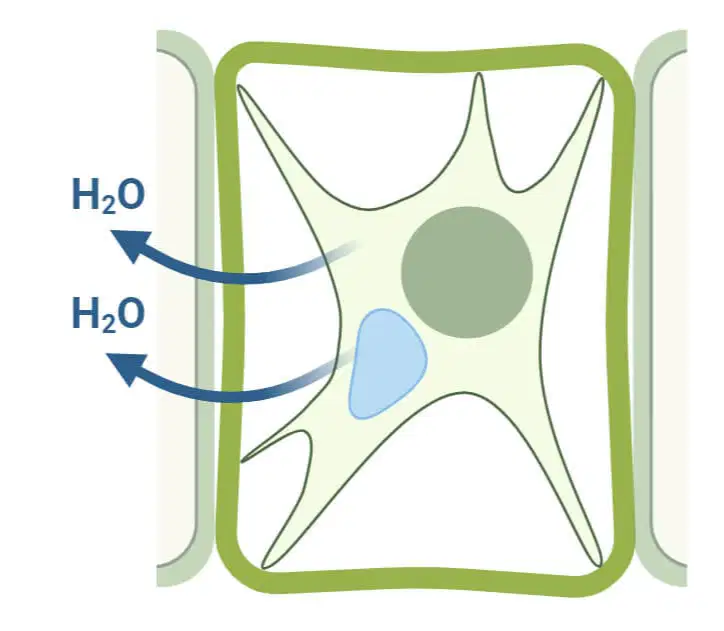
What is it called when the cell membrane shrinks due to being placed in a hypertonic environment
cytolysis
facilitated diffusion
osmosis
plasmolysis
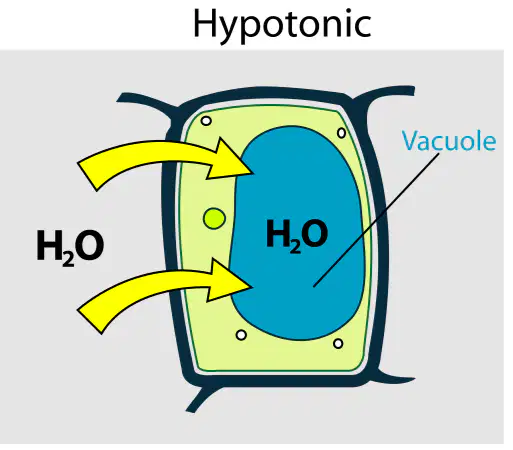
When a plant cell is placed in a hypotonic solution - water continues to fill the large central vacuole which increases it's ____________.
turgor pressure
chances to cytolyse
plasmolysis
osmosis
What is the energy molecule for a cell?
DNA
RNA
ATP
ARM
Endocytosis - when a cell packages a material and sends it out of the cell
Exocytosis - when a cell engulfs/consumes large molecules or fluid
true
false
Pinocytosis - means 'cell drinking' which refers to the cell transporting fluids into it
Phagocytosis - means 'cell eating' which refers to the cell transporting solid material (nutrients/cells) into it
true
false

what is pictured here
endocytosis
exocytosis
turgor pressure
cytolysis

what is pictured here
endocytosis
exocytosis
turgor pressure
cytolysis
what organelle creates energy (ATP) for the cell
nucleolus
nucleus
cell membrane
ribosome
mitochondria
Which equation for photosynthesis is correct
6CO2 + C6H12O6 + LIGHT --> 6H2O + 6O2
6CO2 + 6H2O + LIGHT --> C6H12O6 +6O2
6O2 + C6H12O6 --> 6CO2 + 6H2O + LIGHT
C6H12O6 + 6H2O + LIGHT --> 6CO2 + 6O2
Which equation for cellular respiration is correct?
6CO2 + C6H12O6 + LIGHT --> 6H2O + 6O2
6CO2 + C6H12O6 + --> 6H2O + 6O2 + ATP
6CO2 + C6H12O6 + ATP --> 6H2O + 6O2
6O2 + C6H12O6 + --> 6H2O + 6CO2 + ATP
Aerobic respiration occurs when
Carbon Dioxide is present
Carbon dioxide is not available
Oxygen is present
Oxygen is not available
Which organelle is used in photosynthesis
mitochondria
nucleus
chloroplast
endoplasmic reticulum
which organelle undergoes aerobic cellular respiration
mitochondria
endoplasmic reticulum
chloroplast
nucleus
which organism would be classified as an autotroph
plant
animal
which organism would be considered a heterotroph
plant
animal
What are 3 things that affect the rate of photosynthesis
the amount of glucose present
the amount of light present
the temperature
the amount of oxygen present
the amount of carbon dioxide present
ATP is
a product of photosynthesis
the high energy molecule used by cells
the low energy molecule made in cells
produced in the chloroplasts



