wayground logo

Free Printable Worksheets

Font size

S
M
L
XL
Worksheets

Ecology/Biochemistry/Cells Progress TEST

Total questions: 55

Worksheet time: 3hrs 45mins

Name
Class
Date
1.

Which of the following would NOT occur during succession?

a)

nutrients being cycled through the soil from dead/decaying plants and animals

b)

gradual increase in soil leading to larger plant species

c)

all plant life dying

d)

larger plant roots make soil more stable

2.

During which stage will this ecosystem support the largest variety of plant and animal species?

a)

1

b)

2

c)

3

d)

4

3.
What are examples of pioneer species in a primary succession?
a)
Bushes and Shrubs
b)
Oak trees
c)
Mossess and Lichens 
d)
A rose Bush
4.

Based on the image, what 2 things are needed for larger plants and trees to grow?

a)

deep soil & nutrients in the soil

b)

a pioneer species and a secondary species

c)

lots of soil and water

d)

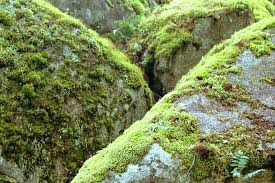
bare rock with mosses & lichens

5.
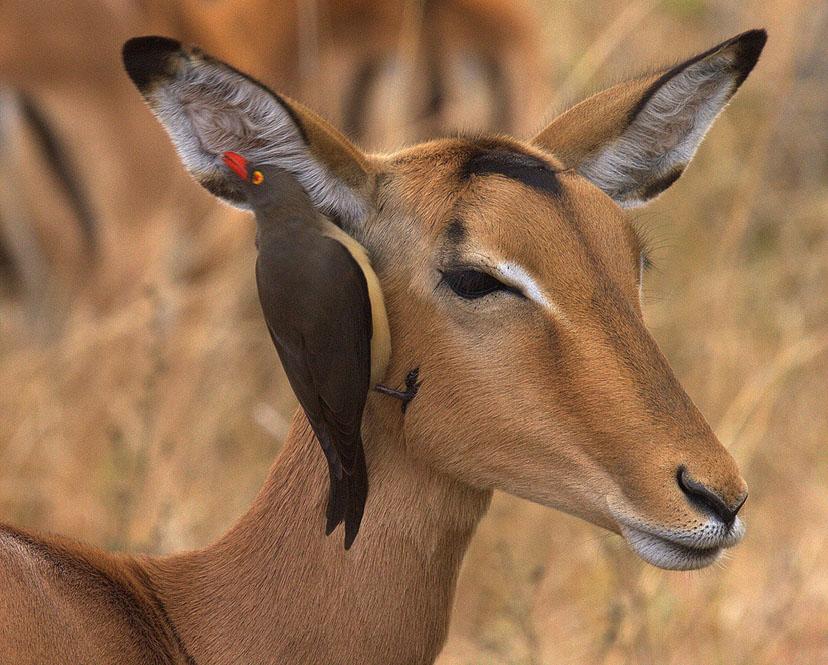
Red-billed oxpeckers are birds that often feed on parasites that infest impala.  This is an example of _______.
a)
commensalism
b)
mutualism
c)
neutralism
d)
competition
6.
Which of the following symbiotic relationships is considered parasitic?
a)
Ticks feeding on a dog
b)
Bees transporting pollen from flowers
c)
Pilotfish swimming under sharks
d)
Birds eating the insects fromo the back of hippo
7.

One organism hunts and eats another organism.

a)

predation

b)

mutualism

c)

carnivore

d)

parasitism

8.

In an ecosystem, lizards are observed eating members of the insect population.  In this same ecosystem, birds are also observed using insects as a food source.  The relationship between lizards and birds would best be described as –

a)

predation

b)

 competition

c)

parasitism

d)

mutualisim

9.

Cattle egrets forage (feed) in fields among cattle. The egret gets easy access to flying insects stirred up by the cattle, and the cattle don't care if they are there or not. They have what type of relationship?

a)
mutualism
b)
commensalism
c)
competition
d)
parasitism
10.

What is the result of organisms not having a consumer that eats them?

a)

their population will decrease

b)

nothing will be different

c)

their population will increase

11.
Which organism receives the least amount of energy from the producer?
a)
Owl
b)
Grasshopper
c)
Lilypad
d)
Mouse
12.

If the producers have 10,000 kcal how much do the secondary consumers have?

a)
1,000 kcal
b)
100 kcal
c)
10 kcal
d)
1 kcal
13.

How do plants get the nitrogen that they need?

a)

from the air

b)

from the soil

c)

from animals

d)

they make it

14.

What happens to all living organisms in an ecosystem when they die?

a)

adaptation

b)

fermentation

c)

decomposition

d)

production

15.

Which process that puts carbon dioxide into the air is represented by "A" in this diagram?

a)

evaporation

b)

runoff

c)

percolation

d)

respiration

16.

Which statement below is supported by the graph?

a)

there were less birds in the 1970's than there were in the 2000's.

b)

the bird population had declined since the 1970's

c)

every state has the same number of birds

d)

the birds have the best habitats in Illinois and West Virginia.

17.
Removal of which organism from the food web would cause the greatest impact?
a)

penguin

b)

squid

c)

krill

d)

seagull

18.
What is the function of a carbohydrate?
a)
A. Main source of information
b)
B. Main source of energy
c)
C. Main source of fats
d)
D. None of the above
19.
What category should this molecule be classified as?
a)
A. Carbohydrates
b)
B. Lipids
c)
C. Proteins
d)
D. Nucleic Acids
20.

Which biomolecule is responsible for building and repairing cells, including muscle tissue?

a)

A. Carbohydrates

b)

B. Lipids

c)

C. Proteins

d)

D. Nucleic Acids

21.

Enzymes are made up of.........

a)

A. Protein

b)

B. Lipids

c)

C. Nucleic Acid

d)

D. Carbohydrates

22.
DNA and RNA are large polymers made of nucleotides. Which class of biomolecules are these monomers and polymers classified under?
a)
A. Carbohydrates
b)
B. Lipids
c)
C. Proteins
d)
D. Nucleic Acids
23.
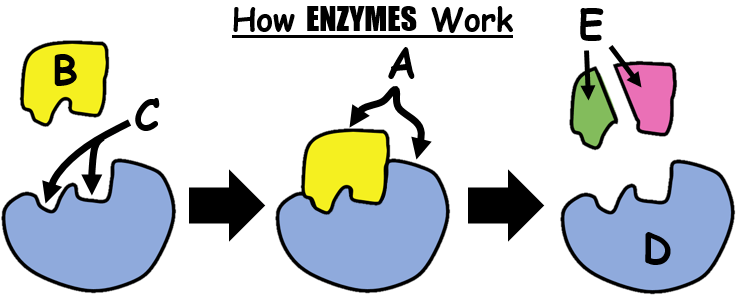
Where do substrates bind to enzymes?
a)
A. Active site
b)
B. Product
c)
C. Here
d)
D. Enzyme opening
24.

What is it called when an enzyme changes shape due to not being in optimal pH or temperature?
a)
A. Monomer
b)
B. Denature
c)
C. Non-functioning
d)
D. Active site
25.
What is the relationship between enzymes and chemical reactions?
a)
Enzymes slow down reactions
b)
Enzymes speed up reactions
c)
Enzymes both slow down and speed up reactions
d)
There is no relationship
26.

Which biomolecule is made of amino acids?

a)

Nucleic Acid

b)

Carbohydrate

c)

Protein

d)

Lipids

27.
Which biomolecule has sugars and starches?
a)
Lipids
b)
Proteins
c)
Carbohydrates
d)
Nucleic Acid
28.

Which biomolecule contains your genetics?

a)
Carbohydrate
b)
Lipid
c)
Nucleic Acid
d)
Protein
29.
Which biomolecule is a main source of quick energy?
a)
Nucleic Acid
b)
Protein
c)
Lipid
d)
Carbohydrate
30.
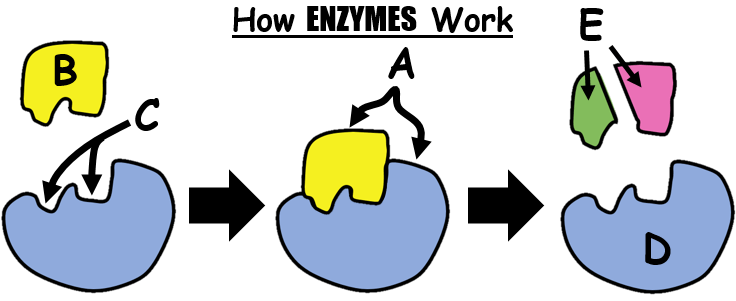
Letter D...
a)
active site
b)
enzyme
c)
substrate
d)
products
31.

Which biomolecule makes up the cell membrane and hormones?

a)

lipids

b)

protein

c)

nucleic acid

d)

carbohydrate

32.

Which biomolecule is formed from monomers called monosaccharides?

a)
Lipid
b)
Protein
c)
Nucleic Acid
d)
Carbohydrate
33.

How do enzymes speed up chemical reaction?

a)

Increasing activation energy

b)

Decreasing activation energy

c)

Increasing deactivation energy

d)

Decreasing deactivation energy

34.
What is a substance called if it speeds up a chemical reaction?
a)
reusable
b)
catalyst
c)
specific
d)
fragile
35.
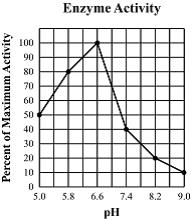
Which of the following conclusions can be drawn from this graph?
a)
The optimum pH of the enzyme is 6.6.
b)
The optimum pH of the enzyme is 5.8
c)
The enzyme’s activity increases as pH increases 5.0 to 9.0
d)
The enzyme’s activity is greater around pH of 8.0 .
36.
Any substance that is acted upon by an enzyme is called a(n)?
a)
Coenzyme
b)
Substrate
c)
Vitamin
d)
Polypeptide
37.
Letter E...
a)
active site
b)
enzyme
c)
substrate
d)
products
38.

Which biomolecules provide energy?

(both short term & long term)

a)

Carbohydrates and Proteins

b)

Lipids

c)

Nucleic Acids

d)

Carbohydrates and Lipids

39.

Which macromolecule is MOST important for a hibernating bear?

a)

Carbohydrate

b)

Lipid

c)

Protein

d)

Nucleic Acid

40.

Which macromolecule has the most CALORIES per GRAM?

(energy available)

a)

Carbohydrates

b)

Lipids

c)

Proteins

d)

Nucleic Acids

41.
A single-celled organism that lacks a membrane-bound nucleus, mitochondria, or any other membrane -bound organelle .
a)
Prokaryote
b)
Eukaryote
c)
Nucleus
d)
Single-celled organism
42.

The theory of Endosymbiosis explains

a)

How eukaryotes (complex) developed from prokaryotes (simple)

b)

How species develop

c)

How bacteria live

d)

How prokaryotes (simple) developed from eukaryotes (complex)

43.
All living organisms are made up of:
a)
organelles
b)
cytoplasm
c)
DNA
d)
cells
44.
The basic unit of structure and function in the human body is the....
a)
organ
b)
organ system
c)
cell
d)
tissue
45.
Plants and animal cells are examples of ___ cells 
a)
prokaryotic cells 
b)
eukaryotic cells 
46.
What is NOT TRUE about the cell membrane
a)
It controls what enters and leaves the cell
b)
Semipermeable
c)
Phospholipid bilayer
d)
Contains digestive enzymes
47.
Which type of cell is shown?
a)
Prokaryote
b)
Eukaryote
48.

What can only be found in plant cells?

a)

Cell membrane

b)

Vacuole

c)

Chloroplast

d)

Mitochondrion

49.

What organelle is called the "powerhouse" of a cell because it produces energy?

a)

Chloroplast

b)

Nucleus

c)

Mitochondria

d)

Ribosome

50.

"Endosymbiosis" means

a)

Living together

b)

Living inside

c)

Entering together

d)

Joining together

51.
What is the correct order of organization
a)
cells->tissue->organs->organ systems-> organism
b)
tissue->cells->organs->organ systems-> organism
c)
organs->organ systems-> organism->cells->tissue
d)
cells->tissue->organs->organism->organ system
52.
Which cell structure is largely responsible for maintaining homeostasis within the cell?
a)
Cell Membrane
b)
Lysosomes
c)
Mitochondria
d)
Endoplasmic Reticulum
53.
Which of the following best describes the overall structure of the cell membrane?
a)
A phospholipid bilayer with embedded proteins.
b)
A carbohydrate membrane with embedded amino acids.
c)
A protein bilayer with embedded phospholipids.
d)
Nucleic acid membrane with embedded proteins.
54.

Why do the fatty acid tails of phospholipids turn toward the inside of the cell membrane?

a)

They are hydrophilic.

b)

They are hydrophobic.

c)

They are too long.

d)

They are too short.

55.

I make proteins for the cell. What am I?

a)

ribosome

b)

mitochondria

c)

chloroplast

d)

lysosome