Wayground logo

Free Printable Worksheets

Font size

S
M
L
XL
Worksheets

Earth Chemistry

Total questions: 50

Worksheet time: 54mins
Name
Class
Date
1.
What is the chemical symbol for Lithium?
a)
H
b)
He
c)
Li
d)
N
2.
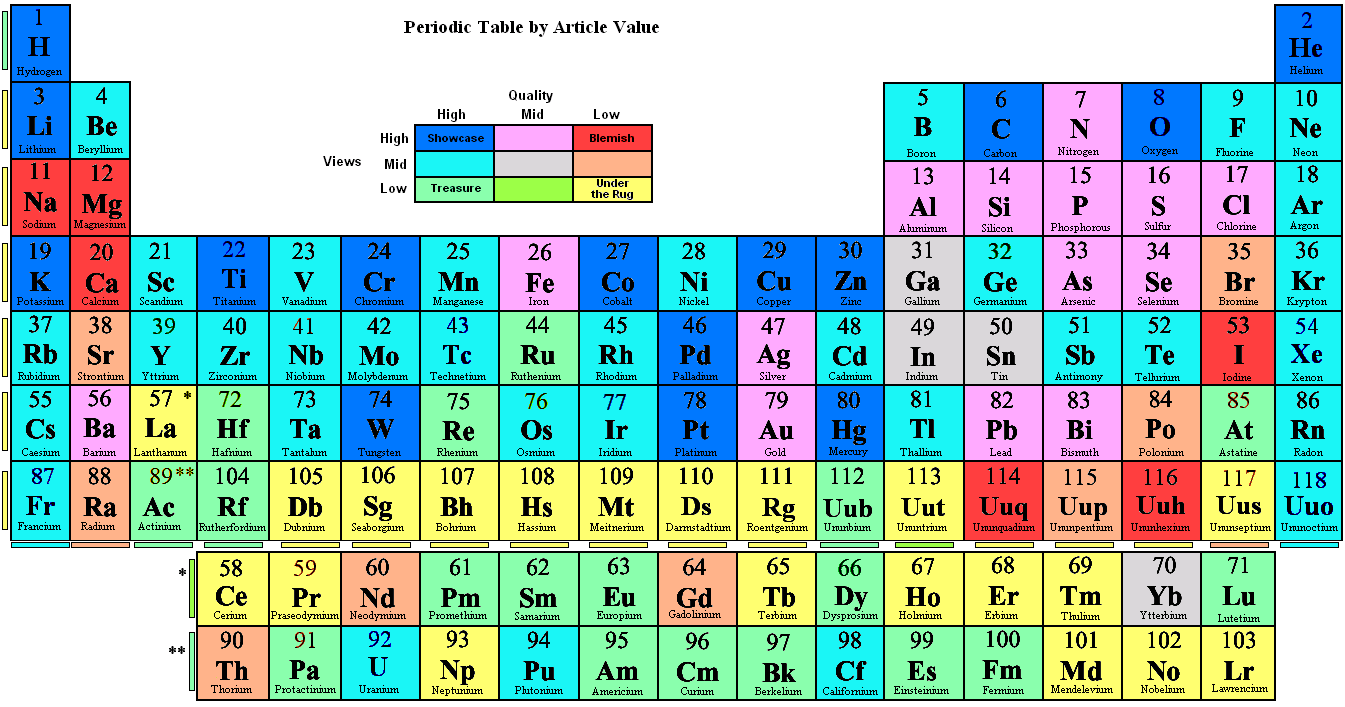
Which element is not a metal?
a)
H
b)
Re
c)
Al
d)
B
3.
The atoms along the staircase are called 
a)
metals
b)
nonmetals
c)
metalloids
d)
noble gases
4.
Which is a halogen?
a)
Helium
b)
Chlorine
c)
Oxygen
d)
Neptune
5.
Which is an alkali metal?
a)
Magnesium
b)
Iron
c)
Sodium
d)
Europium
6.
The simplest substance is..?
a)
Carbon
b)
An element
c)
Water
d)
A simple compound 
7.
A proton is....
a)
A negatively charged subatomic particle
b)
A positively charged subatomic particle
c)
A neutrally charged subatomic particle
d)
The only subatomic particle located in the nucleus
8.
A neutron has a charge of
a)
+2
b)
No charge
c)
-1
d)
+1
9.
The period for Bromine is ___________.
a)
3
b)
2
c)
4
10.
Beryllium is in group number______.
a)
Group 2
b)
Group 3
c)
Group 4
d)
Group 7
11.
The periodic table has __ periods.
a)
18
b)
8
c)
2
d)
7
12.

Group 8a elements are known as the _____ _____ and have full valence shells.

a)

royal gases.

b)

supreme solids.

c)

noble gases.

d)

legit liquids.

13.
What period and group is Silver (Ag)? 
a)
Period 2, Group 1
b)
Period 3, Group 16
c)
Period 5, Group 11
d)
Period 2, 14
14.
Rows on the period table are called _____ while columns are called _____.
a)
groups, families
b)
groups, periods
c)
periods, groups
d)
families, groups
15.
In what section would Transition Metals be found?
a)
orange
b)
light blue
c)
blue
d)
white
16.
A negatively charged particle that moves around the nucleus is a(n)
a)
proton
b)
neutron
c)
electron
d)
quark
17.

What is the name of this family (Group 1A)?

a)

Alkali Metals

b)

Alkaline-earth metals

c)

Halogens

d)

Noble Gases

18.

What is the atomic mass of Neon?

a)

10

b)

20.18

c)

10.18

d)

2.18

19.
How many protons are in Beryllium?
a)
4
b)
9
c)
5
d)
2
20.
How many neutrons are in a Gold atom?
a)
79
b)
196
c)
118
d)
275
21.

How many electrons does an Iodine ion have?

a)

54

b)
126
c)

53

d)
179
22.

How many electrons are in a gold atom in element form?

a)
79
b)
196
c)
117
d)
275
23.
What is the atomic weight of Iron?
a)
26
b)
55.845
c)
56
d)
30
24.
What number is circled?
a)
Number of Neutrons
b)
Number of Protons
c)
Atomic Mass
d)
Number of Electrons
25.
How many neutrons does an Oxygen atom have?
a)
8
b)
16
c)
24
d)
7.999
26.
What is the number highlighted?
a)
Atomic number
b)
Atomic mass
c)
Number of protons
d)
Number of electons
27.
How many protons are in Boron (B) ?
a)
3
b)
5
c)
10
d)
11
28.

How many electrons are in Manganese (Mn) element ?

a)
12
b)
25
c)
55
d)
30
29.
How many neutrons are in Phosphorus (P) ?
a)
15
b)
31
c)
16
d)
14
30.
How many protons are in Zirconium (Zr) ?
a)
40
b)
91
c)
30
d)
65
31.

How many electrons are in the ion Bromine (Br) ?

a)
35
b)
80
c)

36

d)

45

32.
Which element has 31 protons ?
a)
Gallium 
b)
Germanium
c)
Gadolinium
d)
Polonium
33.
How do you find the neutrons?
a)
Atomic mass - atomic number
b)
Atomic number- Atomic Mass
c)
Atomic number
34.
How many neutrons are in a Gold atom?
a)
79
b)
196
c)
118
d)
275
35.

How many neutrons does an atom of boron have?

a)

11

b)

5

c)

6

d)

13

36.
The group number tells us how many _________ there are in an element.
a)
groups
b)
valence electrons
c)
energy levels
d)
chemicals
37.
Sodium (Na) is found in period 
a)
3
b)
2
c)
4
d)
1
38.
What is the left part of a chemical equation called?
2H2 + O2 --> 2H2O
a)
Reactants
b)
Products 
c)
Yields 
d)
Chemical Equation 
39.
What is the right part of a chemical equation called...
2H2 + O2 --> 2H2O
a)
Reactants
b)
Products 
c)
Yields 
d)
Chemical Equation 
40.

Without balancing the final equation, predict the products for the synthesis reaction:  Li + Cl →Li\ +\ Cl_{ }\ \rightarrow  ?

a)

LiCl2LiCl_2  

b)

LiClLiCl_{ }  

c)

Li2Cl2Li_2Cl_2  

d)

Li2ClLi_2Cl_{ }  

41.

Without balancing the final equation, predict the products for Al + Cl → ?Al\ +\ Cl_{\ }\rightarrow\ ?  

a)

Al3ClAl_3Cl  

b)

AlClAlCl  

c)

AlCl3AlCl_3  

d)

Al3Cl2Al_3Cl_2  

42.

Without balancing the final equation, predict the products for the synthesis reaction: Li + P → ?Li\ +\ P_{ }\ \rightarrow\ ?  

a)

Li3PLi_3P  

b)

LiP3LiP_3  

c)

LiP4LiP_4  

d)

LiPLiP  

43.

Without balancing the final equation, predict the products for the synthesis reaction: Al + S → ?Al\ +\ S_{ }\ \rightarrow\ ?  

a)

AlS8AlS_8  

b)

Al3S2Al_3S_2  

c)

Al3S8Al_3S_8  

d)

Al2S3Al_2S_3  

44.

What is the final balanced equation for: Ca + F → ?Ca\ +\ F_{ }\ \rightarrow\ ?  

a)

Ca + F → CaF2Ca\ +\ F_{ }\ \rightarrow\ CaF_2  

b)

Ca + F → 2CaFCa\ +\ F_{ }\ \rightarrow\ 2CaF_{ }  

c)

Ca + F2 → CaF2Ca\ +\ F_2\ \rightarrow\ CaF_2  

d)

2Ca + F2 → Ca2F22Ca_{ }\ +\ F_2\ \rightarrow\ Ca_2F_2  

45.

What is the final balanced equation for: Li + P → ?Li\ +\ P_{ }\ \rightarrow\ ?  

a)

Li + P → LiP4Li\ +\ P_{ }\ \rightarrow\ LiP_4  

b)

 Li +  P →  LiP3\ Li\ +\ \ P_{ }\ \rightarrow\ \ LiP_3  

c)

4 Li + P4 → 4 LiP4\ Li\ +\ P_4\ \rightarrow\ 4\ LiP_{ }  

d)

 Li + P →  Li3P\ Li\ +\ P_{ }\ \rightarrow\ \ Li_3P  

46.

What is the final balanced equation for: Na + Br → ?Na\ +\ Br_{ }\ \rightarrow\ ?  

a)

Na + Br → NaBr2Na\ +\ Br_{ }\ \rightarrow\ NaBr_2  

b)

 Na + Br →  NaBr\ Na\ +\ Br_{ }\ \rightarrow\ \ NaBr  

c)

Na + Br2 → 2 NaBrNa\ +\ Br_2\ \rightarrow\ 2\ NaBr  

d)

4 Na + Br2 → 2 Na2Br4\ Na\ +\ Br_2\ \rightarrow\ 2\ Na_2Br  

47.

Draw the dot diagram for Carbon

48.

Draw the dot diagram for Bromine.

49.

Draw the dot diagram for Helium.

50.

Draw the dot diagram for Krypton.