
 Worksheets
Unit 2 Review!
Total questions: 45
Worksheet time: 29mins
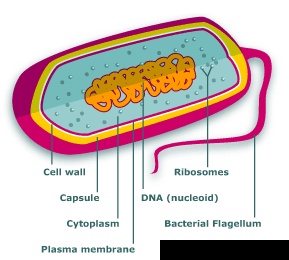

Bacteria is what kind of cell?
Eukaryotic
Prokaryotic

What kind of cells are these?
Eukaryotic
Prokaryotic

Which invention was the most important thing that helped scientists develop the cell theory?
compound light microscope
petri dish
scanning electron microscope
dissection tools
While looking at cork, Hooke observed box-shaped structures, which he called “cells” because...
they reminded him of the cells, or rooms, in monasteries.
they looked like cellulitis
Which organelle contains DNA and controls the cell?
Cell membrane
nucleus
nucleolus
lysosme
Which organelle controls what goes in and out of the cell?
nucleus
nucleolus
cell membrane
nuclear membrane
Proteins are produced at this organelle.
golgi body
ribosome
cytoskeleton
cilia
this organelle makes ATP.
chloroplast
mitochondria
ribosome
nucleolus
The _____________ stores food, water, wastes, and other materials in both plant and animal cells.
Vacuole
Mitochondria
Cytoplasm
Nucleus
What two organelles are NOT in an animal cell?
Cell Membrane and Mitochondria
Nucleus and Ribosomes
Cell Wall and Chloroplasts
Golgi Body and Lysosomes
Controls what enters and exits ALL cells
Golgi Body
Lysosomes
E.R.
Cell Membrane

Name this organelle
Ribosomes
Vacuole
Nucleus
Chloroplast
Jelly-like substance that fills ALL cells
E.R.
Cell Membrane
Cytoplasm
Ribosomes
Students are observing particles moving against the concentration gradient in a lab investigation. Which type of transport are they observing?
osmosis
active Transport
facilitated diffusion
diffusion

This picture shows molecules of red dye that have moved. What is this type of movement called?
Osmosis; the water molecules are moving from high concentration to low
Diffusion; the dye molecules are moving from low to high concentration
Diffusion; the dye molecules are moving from high to low concentration.
Facilitated diffusion; because the molecules are moving through a protein channel.
The cell membrane is responsible for allowing molecules to diffuse into or out of the cell. What type of movement is diffusion?
Passive transport
Active transport

This picture is a representation of what type of transport?
Osmosis because it is diffusing through a protein from an area of high concentration to low concentration.
Facilitated diffusion because it is diffusing through a protein from an area of high concentration to low concentration.
Facilitated diffusion because it is diffusing through a protein from an area of low concentration to high concentration.
Simple diffusion because it is diffusing through a protein from an area of high concentration to low concentration.

Which cell do you think would be most ideal for maintaining homeostasis?
The smallest cell because it would be more efficient to remove and obtains molecules
The largest one because it would be able to obtain more food and store for longer periods of time.
The largest one because it has more room to grow
The medium cell because it would be more efficient to remove and obtains molecules

The cell shrunk in size, which means it was placed in a ____ solution.
Isotonic
Hypertonic
Hypotonic
What is the diffusion of water across a cell or semi-permeable membrane?


What is the name of this part?
objective lens
eyepiece/ocular lens
diaphragm
slide

What is the name of this part?
arm
eyepiece/ocular lens
nosepiece
objective lens

What is the name of this part?
arm
eyepiece/ocular lens
nosepiece
objective lens

What is the name of this part?
stageclips
stage
nosepiece
slide

What is the name of this part?
stageclips
stage
nosepiece
slide

What is the name of this part?
stageclips
stage
objective lens
slide

What is the name of this part?
base
leg
arm
eyepiece

