
 Worksheets
Injury Assessment and Fractures
Total questions: 55
Worksheet time: 28mins
Which of the following would be a clear sign of a fracture?
Deformity
Pain
Instability
Swelling
Which of the following is not classified as a soft tissue injury?
An abrasion
A blister
A strain
Broken tooth
Stress fractures are
Hard tissue
Soft tissue
Direct
Overuse
A female patient is brought to the emergency room with an injury to her lower leg from an ATV accident. You notice a white tip of a bone protruding through the skin as you cut her pant leg off. Her injury is described as what kind of fracture.
Comminuted
Pathologic
Compound
Stress


The diagram shows a fracture that has two bones crushing into each other. What type of fracture is this?
Simple
Compound
Impacted
Comminuted

Open
Closed
Trauma
Stress
Pathologic
A(n) __________ fracture occurs in the growth section of a child’s bone and might lead to bone growth abnormalities.
greenstick
diaphyseal
epiphyseal
metaphyseal
Skeletal muscle is attached to the bone by tough, ropelike fibrous structures called:
fascia
tendons
cartilage
ligaments
Common signs and symptoms of a sprain include all of the following, except:
swelling
deformity
ecchymosis
guarding

This type of fracture is common in sports like skiing, where the ski or foot gets stuck in one place and the body gets twisted in the opposite direction
Transverse
Oblique
Spiral
Salter-Harris

Name the type of fracture that you see pictured here
Spiral fx
Transverse fx
Oblique fx
Salter-Harris fx
This type of fracture occurs when the ligament or tendon is ripped away from the bone, taking a small piece of bone with it
Stress fx
Avulsion fx
Transverse fx
Oblique fx
Which of the following is not a sign / symptom of a fracture
sound from the bone breaking
loss of power
swelling and deformity
normal range of movement
The main objective of the primary assessment is to:
identify immediate life threats
determine treatment priorities
correct life-threatening conditions
All of the above
The medical term for a bruise is:
Fracture
Dislocation
Sprain
Contusion
Sprain and strains have __ different grades depending on the severity
1
3
5
7
Which of the following items should be included in the "Observation" section of a HOPS evaluation?
How the athlete got injured
The position of the body part when injured
Compare injured side to non-injured
Location of point tenderness
All belong in the Observation section
When assessing ABCs, what pulse location is the most used and easiest to find
Radial
Carotid
Brachial
Dorsalis Pedis
All are questions you would ask to take a history EXCEPT
When did you hurt it?
Have you ever injured this body part before?
How bad is your pain on a scale of 1-10?
Was there a recent change to your training?
All are questions you would ask.
What would be included in the "O" section of a SOAP Note?Select all that apply.
Mechanism of Injury
Symptoms
Signs
Palpation
Special Tests
All of the following statements are true of Palpation EXCEPT
Begin palpation at the injured area
You are looking for local heat with palpation.
You are looking for crepitus with palpation.
You should apply pressure to the long bones and soft tissues.
All statements are true.
What section of the SOAP note would include your professional opinion about what injury the patient is dealing with?
Subjective
Objective
Assessment
Plan
What section of the SOAP note includes the doctor you are referring the athlete to and your short/long-term rehab goals?
Subjective
Objective
Assessment
Plan
Which of the following is an example of a symptom?
Cyanosis
Headache
Tachycardia
Hypertension
Rehab instructions the patient is to receive would go under what category?
S
O
A
P
PALPATION of the injury would go under what category?
S
O
A
P
WHEN DID IT OCCUR...HOW DID IT OCCUR? These questions belong to which section of a SOAP Note?
S
O
A
P
Which parts of HOPS would be documented in the "O" portion of a SOAP Note? Select ALL that apply.
History
Observation
Palpation
Stress/Special Tests
Which parts of HOPS would be documented in the "S" portion of a SOAP Note? Select ALL that apply.
History
Observation
Palpation
Stress/Special Tests
Toward the midline of the body
Inferior
Superficial
Proximal
Medial
Away from the midline of the body
Inferior
Distal
Lateral
Posterior
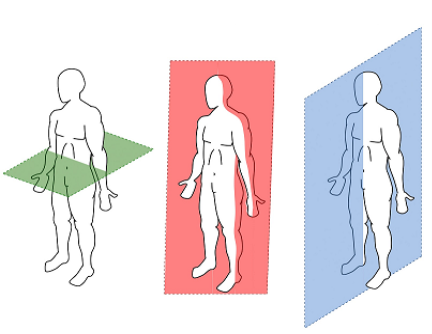
Divides the body into left and right portions.
Frontal
Transverse
Sagittal.
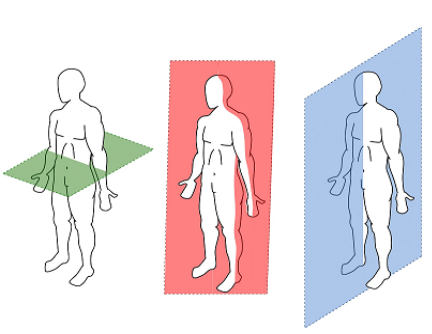
Divides the body into front and back portions.
Sagittal
Coronal
Transverse
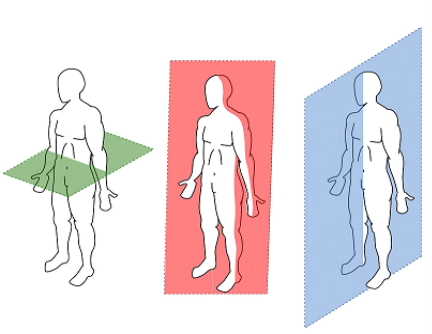
Divides the body into top and bottom portions.
Sagittal
Frontal
Transverse
Deviation of an extremity distal to a joint away from the midline
Varus
Valgus
External rotation
Internal rotation
Deviation of an extremity distal to a joint toward the midline
Varus
Valgus
Inversion
Everstion
Cause of an injury or disease
Symptom
Pathology
Sign
Etiology
Structural and functional changes that result from the injury process
Etiology
Symptom
Pathology
Sign
Subjective- Something the athlete tells you regarding an injury or illness
Sign
Pathology
Etiology
Symptom
Objective finding, definitive indicator of disease or injury
Sign
Symptom
Etiology
Pathology
X-Ray after injection of a radio-opaque dye
MRI
CT Scan
Arthrography
Arthroscopy
3D imaging that utilizes radiation. Better for visualization of bones and bleeding and is the quicker option for 3D imaging when time is of the essence
MRI
CT Scan
Arthogram
EMG
Nerve conduction study-graphic recording of muscle contractions
EEG
EMG
ECG
EMR

