
NEW
Font size
 Worksheets
9C chemistry 1st midterm review 2223
Total questions: 40
Worksheet time: 20mins
Which diagram does not show the outermost shell electrons in the molecule correctly?


Which two elements react together to form an ionic compound?
R and T
T and X
X and Z
Z and R

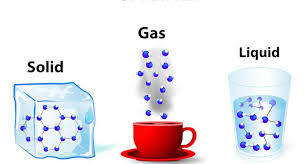
The three states of matter are represented by diagrams X, Y and Z. Which change occurs during condensation?
X to Y
X to Z
Y to X
Z to X
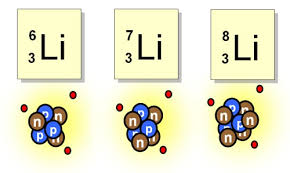
What is the difference between Neon-20 and Neon-22?
They have different numbers of electrons.
They have different numbers of neutrons.
Only 1 is radioactive.
No difference.
Which of the following is NOT TRUE about covalent compounds?
They have low melting and boiling points.
They are formed from 2 nonmetals.
They can conduct electricity when dissolved in water (aqueous).
Which element is most likely to form 4 bonds?
Carbon
Fluorine
Sulfur
Nitrogen
A single covalent bond is made up of _____ electrons.
one
two
three
four
What is Covalent Bonding?
Bonding that is the result of two nonmetals sharing electrons
Bonding between two metals
Bonding that is the result of a nonmetal and a metal exchanging electrons
Bonding between more than two elements

Why do ionic compounds NOT conduct electricity when they are in their solid state?
Their ions are free to move.
Their ions are held in fixed positions.
Their electrons are free to move
Their electrons are held in a fixed state
What type of bond can be formed between a hydrogen atom (H) and a chlorine atom (Cl)?
ionic bond
metallic bond
covalent bond
intermolecular bonding

The image is showing a displayed formula of ammonia, NH3. What is the total number of electrons used for bonding in this molecule?
3
4
5
6

How many electrons participate in the formation of covalent bonding between these 2 atoms?
2
4
6
12
When an atom loses an electron, it becomes a
positive ion
negative ion
neutral ion
neutral atom
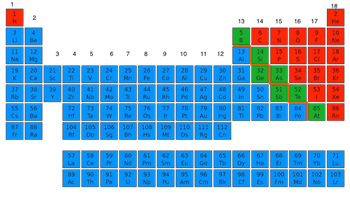
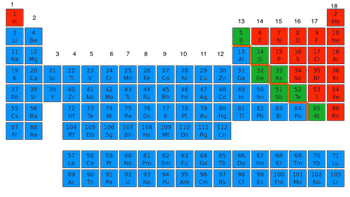
Ionic bond is formed from a combination of ________________element and __________________ element.
metal, non-metal
metal, metal
non-metal, non-metal
Lead Chloride is an ionic compound, made up from Pb2+ ions and Cl- ions. Which is the correct formula for this compound?
PbCl3
PbCl
PbCl4
PbCl2
Bonds formed by transferring electrons from one atom to another are
ionic
metallic
covalent

The positions of elements P, Q, R, S and T in the Periodic Table are shown. The letters are not the symbols for the elements.
Which element forms an ionic compound with element P?
Q
R
S
T
Which substance is not a macromolecule?
diamond
graphite
silicon (IV) oxide
carbon dioxide
How many covalents are there in a CH4 molecule?
1
2
3
4
Oxygen has 6 valence electrons. How many covalent bond(s) can an oxygen atom form with another atom(s)?
1
2
3
4
Which of the following will conduct electricity because of delocalised electrons ?
Diamond
Graphite
Both
Used to make cutting and grinding tools
Diamond
Graphite
Both

none of these
Which has weak intermolecular forces in between layers?
graphite
diamond
none of these
Which of these allotropes have high melting point?
diamond
graphite
both
Which of these is used as a lubricant?
diamond
graphite
Why is diamond hard and strong? It has
weak intermolecular forces
weak covalent bonds
strong covalent bonds
van der Waals forces of attraction
Which of the following fits the description: Melting points are very high and a large amount of energy is needed to break all the covalent bonds.
metals
ionic compound
giant covalent compound

silicon (IV) oxide
Atom X has 7 valence electrons and atom Y has 6 valence electrons. What is the chemical formula formed if these two types of atom combine?
XY
X2Y
XY2
X2Y2
When the solid NaOH is dissolved in water, aqueous solution of NaOH is formed. Which of the following is correct?
There is a mixture Na atoms and OH molecules in the water.
The NaOH exists as fine solids in the water.
There is a mixture of Na metals and OH -ions in the water.
There is a mixture of Na+ ions and OH- ions in the water.

Why is graphite so soft and slippery?
It is made of layers of atoms with weak forces between the layers
It is made of small molecules
It is an ionic compound
The covalent bonds are weak
Potassium has mass number 39 and 20 neutron. Determine the electronic configuration of potassium.
2, 8, 8, 1
2, 8, 8, 2
2, 8, 9
2, 8, 1
__P4 + __O2 --> __P2O3
Why do metals conduct electricity and heat?
The electrons are delocalised and able to move freely

