
 Worksheets
review
Total questions: 85
Worksheet time: 2hrs 21mins
As a part of the water cycle, water from Earth's surface enters the clouds and finally falls back to the ground in the form of rain. What is the correct sequence of processes water undergoes?
Evaporation, Condensation, Precipitation
Precipitation, Condensation, Evaporation
Condensation, Evaporation, Precipitation
Evaporation, Precipitation, Condensation

The image shows various stages in the water cycle. During which stage does water flow back towards the sea as runoff?
W
X
Y
Z
Condensation occurs when water vapor_____________.
heats up and becomes liquid water
cools off and becomes liquid water
freezes and becomes ice
rains on the land

What step of the water cycle does this picture show?
Condensation
Runoff
Precipitation
Evaporation

Which best explains why runoff is important?
It returns water to other locations on Earth
It increases the chance of flooding
It makes evaporation occur faster
It increases condensation
In which area would the rate of evaporation be the lowest?
Over the ocean
Over the mountains
Over the rainforest
Over the desert

What are formed when water vapor condenses and come together?
Clouds
Mountains
Transpiration
Valleys
The sum total of all water on Earth and in its atmosphere is called the:
Biosphere
Terrasphere
Hydrosphere
Liquisphere
Which of the following describes condensation?
Ice becoming water when placed into a warm liquid.
Water becoming ice in a freezer
Liquid water being heated until it turns into steam.
Steam from a teapot turning into liquid water.
What can you infer from the fact that there is the same amount of water on the planet now as there was one billion years ago?
The total amount of water on earth changes gradually over time.
There will probably be the same amount of water on the planet a billion years from now.
There have been many fluctuations in the water cycle over the last billion years.
There will be much less water on earth one billion years from now.

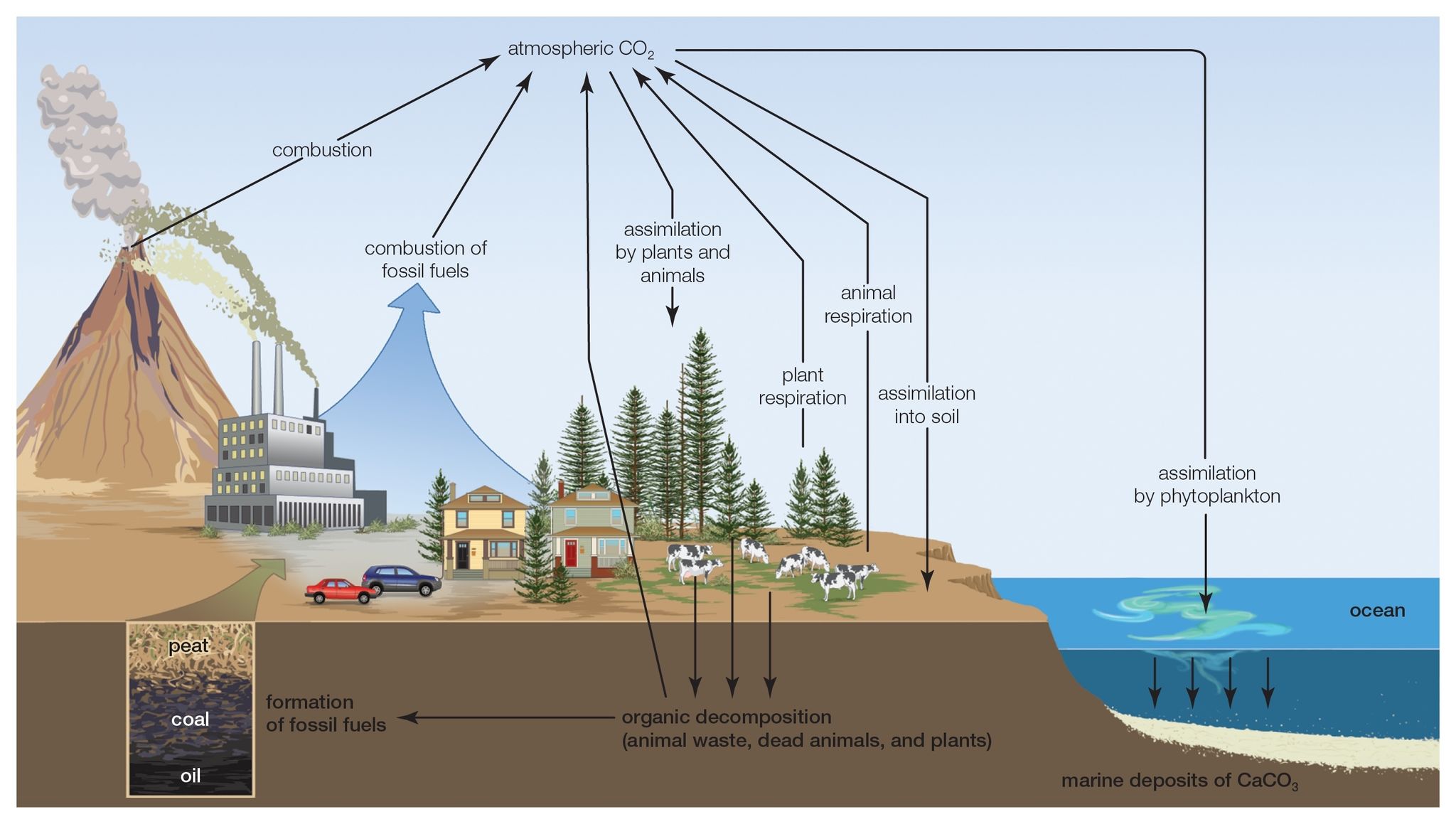
The Carbon Cycle has the greatest impact on ______________ on Earth
Living organisms
Climate change
Plants
The sun
Two everyday processes that use oxygen -
Bacteria fixation
Breathing
Decomposition
Denitrification
________ and _______ need Nitrogen
Humans
Animals
Aquatic life
Plants
Deforestation causes an increase in ____________
Oxygen
Nitrogen
Carbon dioxide
Increased habitats
Where do plants get the energy for photosynthesis to take place?
nutrients in the soil
the sun
chlorophyll
bee pollination
True or False: Plants make their own food and use the energy from the food that is made.
True
False
Where do the leaves and stems of plants get their green color from?
glucose
oxygen
carbon dioxide
chlorophyll
How are bacterial cells different from the cells of eukaryotes?
The bacteria are prokaryotes, and the genetic material is not contained in the nuclei.
The bacteria are eukaryotes, and the genetic material is not contained in the nuclei.
The bacteria are prokaryotes, and the genetic material is contained in the nuclei.
The bacteria are eukaryotes, and the genetic material is contained in the nuclei.
Decreasing ocean temperature causes the density of the water to ______.
decrease
increase
stay the same
fluctuate
Nutrients are brought to the surface for phytoplankton to use at _______.
gyres
eddies
upwellings
the equator
________ and _______ affect the ocean's density and cause the Global Conveyor Belt to travel
gravity and the Coriolis Effect
temperature and salinity
wind and climate
temperature and the Coriolis Effect
In what zone does approximately 90% of all ocean life live?
photic (=euphotic)
aphotic
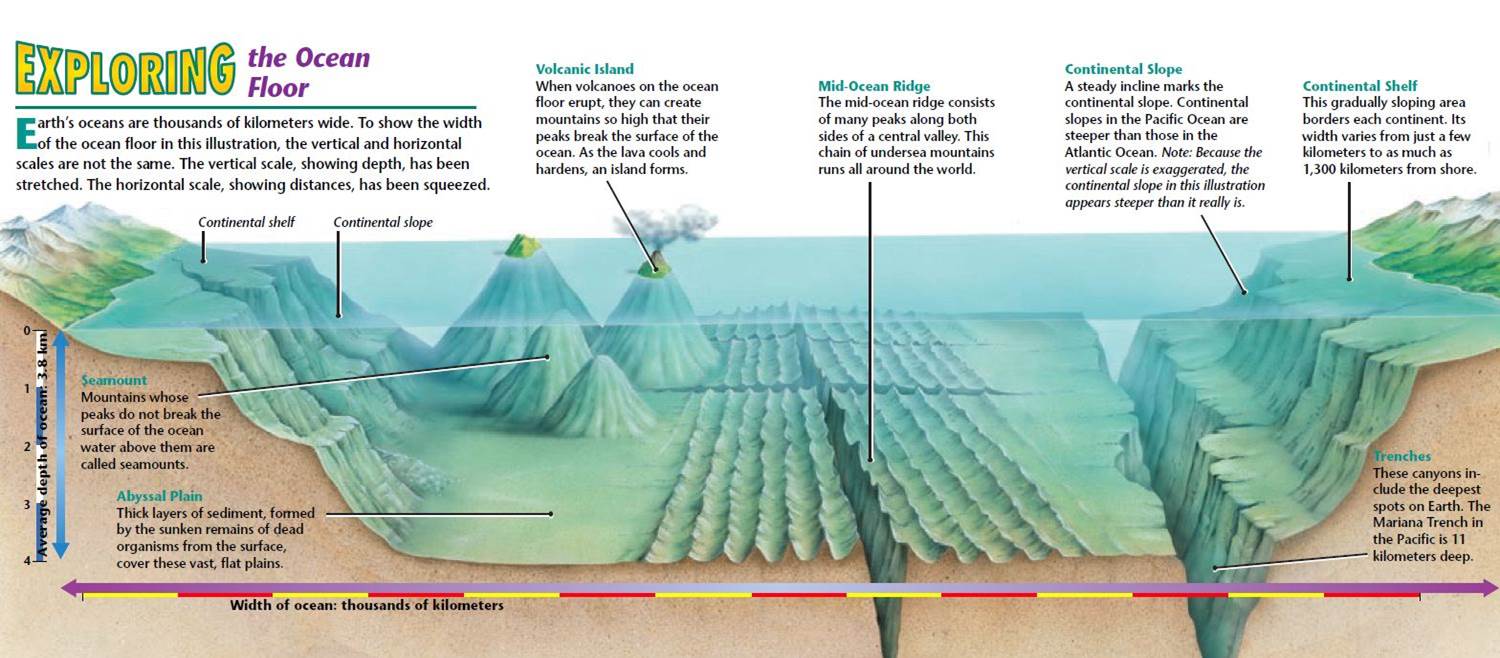
You like to breathe? More than half of Earth's oxygen is created by ______________in the ocean, but their levels are declining because oceans are warming up.... 😠
phytoplankton
zooplankton
chemosynthesis, hydrothermal vents
agricultural plants
Another reason algae /phytoplankton are important is because these serve as _____________ to most food chains in the ocean
salinity protection
primary food source
barriers from strong currents/weather systems
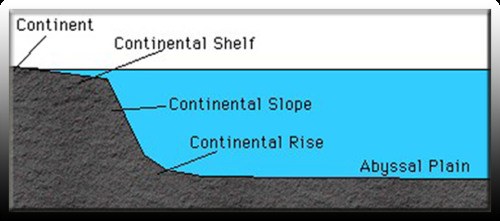
Which ocean floor feature is the steep cliff-like drop beyond the continental shelf?
Continental Shelf
Continental Slope
Abyssal Plain
Ocean Trench
Which of the following cell parts do cyanobacteria have? (More than one answer)
Chloroplasts
Cell wall
Nucleus
Chlorophyll
Select the following that apply to cyanobacteria (More than 1 answer)
Multicellular
Unicellular
Prokaryote
Eukaryote
Make their own food (Photosynthesize)
What is the name of some of the very first Algae on our planet?
Blue Algae
Green Algae
Cyanobacteria
Protozoa
How long ago did these Cyanobacteria first show up?
1 million years ago
4 million years ago
3.5 billion years ago
last week

Diatoms and Dioflagellates are both in which domain?
(¿En qué dominio están las Diatoms y los Dinoflagellates?)
Prostia
Eukarya
Fugni
Pyhtopanktoi

Check all that applies about Diatoms:
(Marque todo lo que se aplica sobre las Diatoms)
They can swim.
Blooms produce brown tides.
They photosynthesize.
They are heterotrophic (eat other organisms).
They're transparent.

Dinoflagellates are similar to plants because...
(Dinoflagellates son similares a las plantas porque...)
They don't move or eat other organisms.
They photosynthesize and have similar cell walls.
They reproduce sexually.
They have no similarities, actually.
Why are diatoms and dinoflagellates important in an ecosystem?
(¿Por qué son importantes diatoms y dinoflagellates en un ecosistema?)
They provide much of the energy for other organisms.
They keep the water perfectly clear.
They absorb toxins and chemicals, so that other animals don't have to.
They're not actually very important.
What's are some similarities between diatoms and dinoflagellates?
(¿Cuáles son algunas similitudes entre las diatoms y los dinoflagellates?)
Both are microscopic.
Both are usually beneficial, but can be harmful during "blooms."
Both are heterotrophic.
Both have evolved ways to move toward light to photosynthesize.
Mr. Hellmer loves both deeply.
Why is diatoms the most important form of algae?
They cause red tides
They make glass
They produce most of our oxygen supply
They make sand
What can show that an algae is protist and not a plant?
It's a thickening agent
It is an autotroph
It lives in water
It is green
A sessile colony...
stay in one place
moves around
stays in one place (holdfast)
stays in one place but moves if they are out of food
What part of an amoeba is listed below has a possibilty of exploding with water?
cell wall
contractile vacuole
pellicle
nucleus
Why is algae not a plant?
It does not have roots.
It floats.
It does not have roots and it floats.
What kind of algae is made into biofuel?
Brown algae
Red algae
Green algae
These are animal like plankton
diatoms
phytoplankton
zooplankton
These plankton can make their own food.
zooplankton
copepods
crab larvae
phytoplankton
These zooplankton live only their early lives as plankton then grow to live as benthos or nekton.
meroplankton
holoplankton
funny plankton
These zooplankton spend their whole lives as plankton.
meroplankton
Spongebob
holoplankton

barnacle
crab
starfish
red drum (redfish)
great blue heron

barnacle
crab
starfish
red drum (redfish)
great blue heron

barnacle
crab
starfish
red drum (redfish)
great blue heron

barnacle
crab
starfish
red drum (redfish)
great blue heron

barnacle
crab
starfish
red drum (redfish)
great blue heron

sea urchin
coral
jellyfish
bottlenose dolphin
sea snail

sea urchin
coral
jellyfish
bottlenose dolphin
sea snail

sea urchin
coral
jellyfish
bottlenose dolphin
sea snail

sea urchin
coral
jellyfish
bottlenose dolphin
sea snail

sea urchin
coral
jellyfish
bottlenose dolphin
sea snail
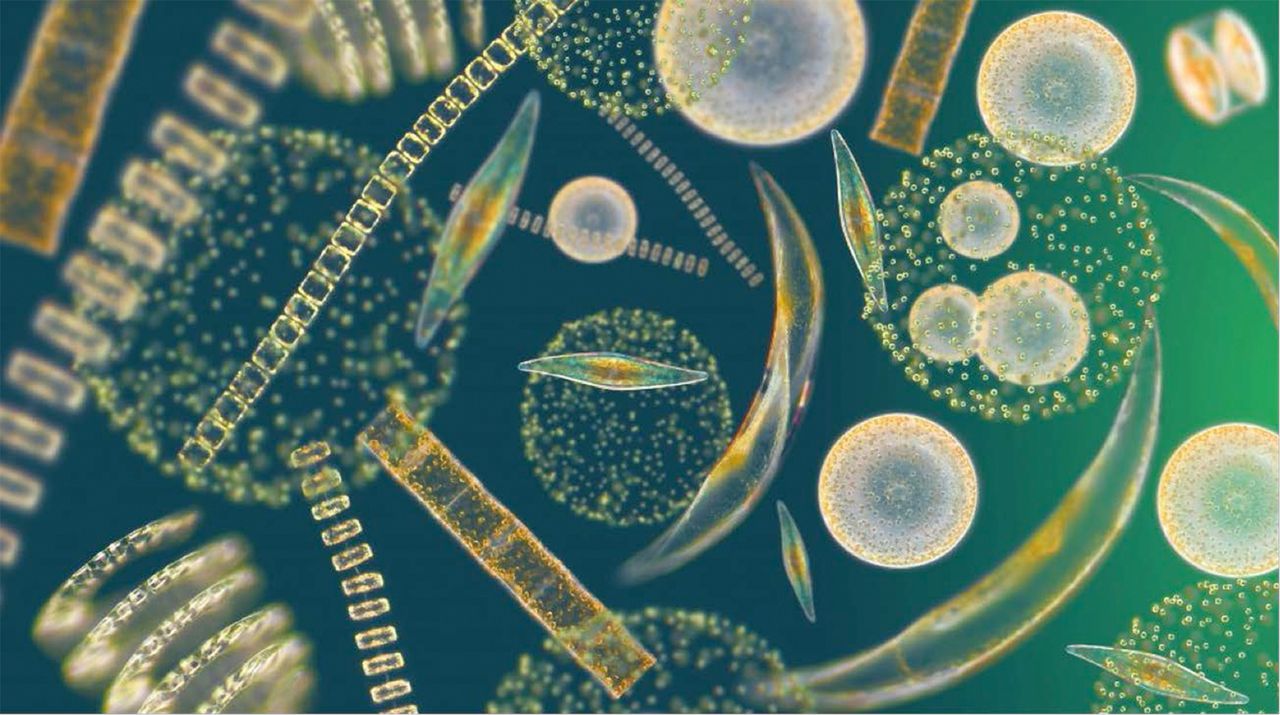
Animal plankton are also called
phytoplankton
zooplankton
both
neither
Plant plankton are also called
phytoplankton
zooplankton
both
neither

What is the name of this location on the shell of the clam?
Umbo
Foot
Mouth
Mollusc
Which part of the Mollusk body is specialized for burrowing and movement?


Classification system (starting from the largest group)
phylum, kingdom, class, order, family, genus, species
kingdom, class, phylum, order, family, genus, species
kingdom, phylum, class, order, family, genus, species
kingdom, phylum, class, family, order, genus, species

