wayground logo

Free Printable Worksheets

NEW

Font size

S
M
L
XL
Worksheets

National 5 Chemistry- Atomic Structure Revision

Total questions: 38

Worksheet time: 20mins

Name
Class
Date
1.
Which subatomic particle has a positive (+) charge?
a)
Neutron
b)
Proton
c)
Electron
2.
Which subatomic particle has a negative (-) charge?
a)
Proton
b)
Electron
c)
Neutron
3.
Which subatomic particle has a neutral or no charge?
a)
Proton
b)
Electron
c)
Neutron
4.
Where is the nucleus located in an atom?
a)
Near the electron shells/levels
b)
Near the center of an atom
5.
Where are the Electrons found in the structure of an atom?
a)
In the nucleus
b)
In spaces around the nucleus
6.
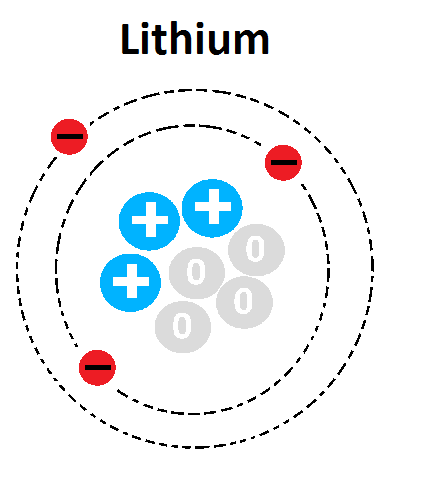
The subatomic particles in green are...
a)
Protons
b)
Neutrons
c)
Electrons
7.
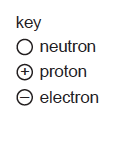
In this picture, the Electrons are found in which color?
a)
Blue
b)
Red
c)
Green
8.

The Atomic number is known as the _______

a)

Number of electrons in an atom

b)

Number of Protons in an atom

c)

Number of neutrons in an atom

d)

Number of Protons and electrons in an atom

9.

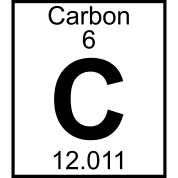
What is the Atomic Mass Number of the element mentioned above

a)

12

b)

6

c)

C

d)

16

10.
True or False - Protons and Neutrons have about the same mass.
a)
True - They have about the same mass
b)
False - They do not have about the same mass
11.
Which two subatomic particles make up the nucleus of an atom?
a)
Protons and Electrons
b)
Neutrons and Electrons
c)
Electrons and Protons
d)
Protons and Neutrons
12.
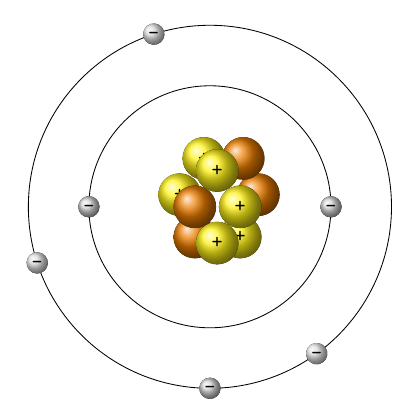
How many electron shells/levels does this atom have?
a)
1
b)
2
c)
3
d)
4
13.
How many protons does this atom have?
a)
3
b)
6
c)
4
d)
2
14.

In a neutral atom,

a)

protons = electrons

b)

protons = neutrons

c)

neutrons = electrons

d)

protons = neutrons = electrons

15.

The mass of an atom is

a)

equal to the number of protons

b)

the protons + electrons

c)

the protons + neutrons

d)

the protons + neutrons + electrons

16.
All ____________ are made up of two or more atoms bonded together.
a)
atoms
b)
molecules
c)
electrons
d)
elements
17.
What is the atomic number of this atom?
a)
1
b)
3
c)
4
d)
7
18.
What is the mass number?
a)
the number of protons
b)
the number of protons and neutrons
c)
the number of neutrons
d)
the number of protons and electrons
19.
What does the C represent?
a)
atomic mass
b)
atomic number
c)
element name
d)
chemical symbol 
20.
what does the 6 represent?
a)
Atomic mass
b)
atomic number
c)
chemical symbol
d)
element name
21.
How is the number of neutrons in the nucleus of an atom calculated?
a)
Add the number of e- and p+ together
b)
Subtract the number of e- from p+
c)
Subtract the number of p+ from the mass number
d)
Add the mass number to the number of e-
22.
The only element with no neutrons in its nucleus.
a)
Oxygen
b)
Helium 
c)
Hydrogen
d)
Lithium
23.

What is one way Neutrons are different from electrons?

a)

they both are negative

b)

neutrons have no charge, while electrons have a negative charge

c)

Both are in the nucleus( center of atom)

d)

Electrons are inside nucleus and neutrons are outside the nucleus.

24.

What is the atomic number?

a)

35

b)

18

c)

17

d)

52

25.

How many protons and electrons does this element have?

a)

35

b)

18

c)

17

d)

52

26.

How many neutrons does Chlorine have?

a)

18

b)

17

c)

35

d)

52

27.

How many neutrons does calcium have?

a)

20

b)

40

c)

60

d)

0

28.

What is the atomic mass of Neon?

a)

10

b)

20

c)

30

29.
Referring to the table, what is the relative mass of a proton?
a)
10
b)
1
c)
0.1
d)
0.01
30.

A lithium nucleus contains 3 protons and 4 neutrons.

What is its nuclide notation?

a)
b)
c)
d)
31.

A particular nuclide of chlorine can be represented by the symbol shown.

37Cl

17

How many electrons are there in a neutral atom of this nuclide?

a)

17

b)

20

c)

37

d)

54

32.

A nucleus X has 17 protons and 18 neutrons.

Which notation is correct for this nucleus?

a)
b)
c)
d)
33.

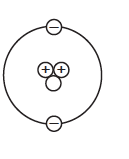
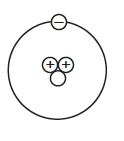
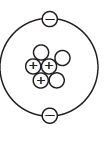
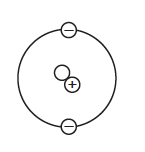
Which diagram could represent the structure of a neutral atom?
a)
b)
c)
d)
34.

What is the relative charge of a neutron?

a)

+1

b)

-1

c)

0

35.

What is the relative charge of a proton?

a)

+1

b)

-1

c)

0

36.

What is the relative charge of an electron?

a)

+1

b)

-1

c)

0

37.

A substance made up of atoms of two or more different elements joined by chemical bonds

a)

Compound

b)

Heterogeneous Mixture

c)

Homogeneous Mixture

d)

Solution

38.

Pure substance that consists entirely of one type of atom.

a)

Solution

b)

Mixture

c)

Compound

d)

Element