
 Worksheets
Review Quiz
Total questions: 97
Worksheet time: 1hrs 21mins
Which are micronutrients?
Water, lipids, proteins
Fibre, vitamins, minerals
Carbohydrates, fibre, proteins
Vitamins, minerals, water
What is the composition of the triacylglycerol molecule?
Three glycerol molecules and one fatty acid
Three glycerol molecules and three fatty acids
One glycerol molecule and two fatty acids
One glycerol molecule and three fatty acids
What characterizes saturated fats?
. They contain one or more double bonds between carbon atoms within the fatty acid.
They originate from plant-based foods such as avocado and cashew nuts.
They have no double bonds between the individual carbon atoms of the fatty acid.
They are often found as liquids at room temperature
What is glycogen?
A disaccharide built from glucose molecules
A polysaccharide built from glucose molecules
A form of glucagon
A storage molecule for proteins
Which is the most lateral in the anatomical position?
sternum
ulna
radius
skull
Which bones form part of the appendicular skeleton?
Femur, radius, ribs, patella
Coccyx, humerus, ulna, tibia
Pelvic girdle, clavicle, fibula, carpals
Sternum, phalanges, femur, tarsals
Which energy system is the quickest to re-synthesize ATP?
Anaerobic glycolysis
Aerobic glycolysis
Lactic acid
Creatine phosphate
Which of the following are major storage sites for triglycerides?
I. Skeletal muscle
II. Smooth muscle
III. Adipose tissue
I and II only
I and III only
II and III only
I, II and III
What is the process by which glycogen is broken down to glucose?
Glycogenolysis
Glycolysis
Gluconeogenesis
Lipolysis
Which type of process is taking place when ATP is converted to ADP and phosphate?
I. Metabolism
II. Anabolism
III. Catabolism
I only
I and II only
III only
. I and III only
Which joint is formed at the proximal head of the femur?
Shoulder
Elbow
Hip
Knee
What type of joint is found where the radius and carpals articulate?
Hinge
Ball and socket
Gliding
Condyloid
What type of bones are the phalanges?
flat
long
short
irregular
Which is a micronutrient?
Lipid
Fibre
Water
Protein
Which is an unsaturated fat?
Palm oil
Olive oil
Tropical oil
Coconut oil
What is the chemical composition of a protein molecule?
Oxygen and nitrogen
Carbon, oxygen and nitrogen
Hydrogen, nitrogen and oxygen
Carbon, hydrogen, oxygen and nitrogen
Which are major triglyceride storage sites?
Adipose tissue and liver tissue
Adipose tissue and cardiac muscle
Adipose tissue and nerve tissue
Adipose tissue and skeletal muscle
What is the definition of cell respiration?
All biochemical reactions that occur within an organism
. The controlled release of energy from organic compounds in the form of ATP
. Energy requiring reactions whereby small molecules are built up into larger ones
. Chemical reactions that break down complex organic compounds into simpler ones
What is the chemical composition of a glucose molecule?
CH3 and COOH
C, H and O
C, H, O and N
C, H and OH
Which of the following describes lipolysis?
The process of releasing triglycerides from the body’s fat stores
The process of converting glucose to pyruvate
The aerobic anabolism of a substance
The process of converting carbohydrates to fats in the liver
What is the function of adrenaline during exercise?
Stimulates the storage of glycogen
Stimulates the breakdown of glycogen
Stimulates the breakdown of glucagon
. Stimulates the storage of glucagon
Which of the following is the function of the Golgi apparatus?
It is involved in the processing and packaging of proteins and fats
It is involved in organising the cell during cell division
It is involved in the anaerobic production of ATP
It assists in the breakdown of food particles
Which of the following are features of the ATP-CP system?
I. It provides the energy for the first three minutes of activity.
II. CP is broken down to provide a phosphate molecule.
III. It creates lactic acid as a by-product.
. I only
II only
I and II only
. II and III only
Which of the following bones has the movement of the body as its main function?
. Fibula
Skull
Coccyx
Sternum
What is the main function of the knee joint ligament?
To secrete synovial fluid
To absorb shock
To help with joint stability
To provide a friction-free environment


What is this called?
Clavicle
Cranium
Tibia
Carpals
The jaw bone is also known as...
Mandible
Tongue
Fibula
Scapula
The collar bone is also known as
Ribs
Scapula
Clavicle
Pelvis
Shoulder blade
Cartilage
Humerus
Clavicle
Scapula

What bone is this?
Ribs
Pelvis
Radius
Tarsals
Which is not a function of the skeletal system?
Shapes and supports the body
Works with the muscular system to move parts of the body
Transmits messages to all parts of the body
Store fat cells, calcium, and other minerals

The highlighted bone(s) is/are known as the ________.
clavicle
vertebrae
scapula
carpals


This long bone helps protect the heart and lungs and is called the:
scapula
clavicle
vertebrae
sternum
The eyes are _________ to the ears
medial
lateral
anterior
posterior
The heart is ____________ to the hips
posterior
anterior
superior
inferior
The nose is on the _________side of the body
superior
anterior (ventral)
posterior (dorsal)
proximal

What is the name for the outer part of the skeleton?
(Highlighted in red on the picture)
Axial
Appedix
Appendicular
Axis

The skeleton can be divided into two sections. Which section is defined as the central and core skeleton?
Axial
Appendicular
Appendix
Axis
The nose is on the _________side of the body
superior
anterior (ventral)
posterior (dorsal)
proximal
_______ means towards the side of the body.
distal
proximal
medial
lateral


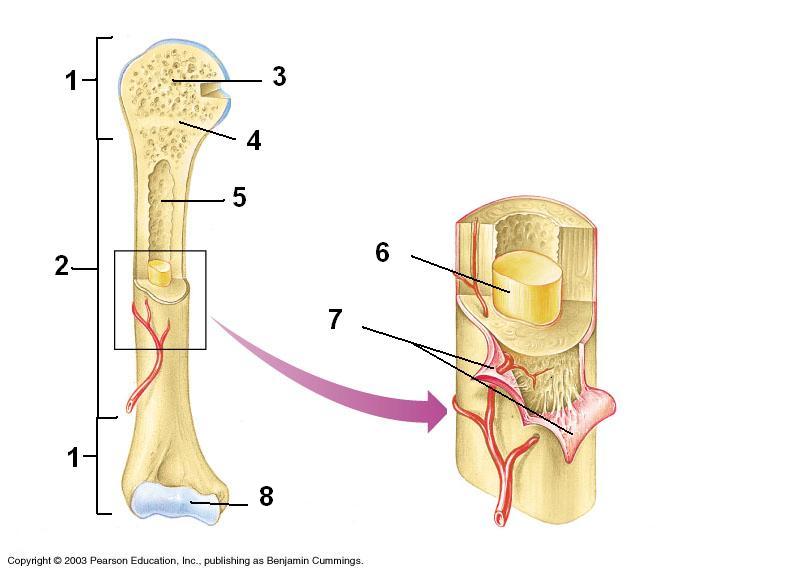
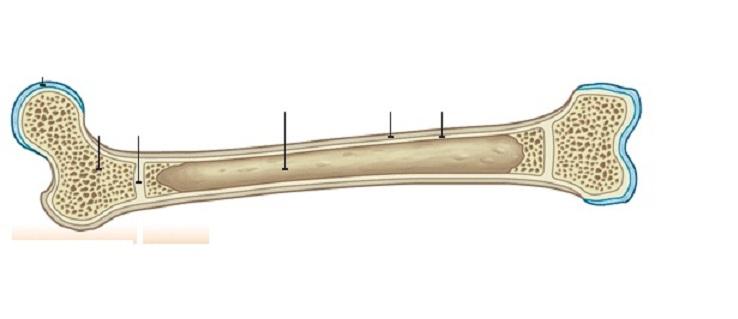

vertebra

Which of these is a short bone?
Femur
Carpal
Scapula
Ulna
The fibula is what type of bone?
Long Bone
Short Bone
Flat Bone
Irregular Bone
Sesamoid Bone
What is the job of a long bone?
Support your organs during physical activity
Support the weight of your body during physical activity
To protect your vital organs during physical activity
To protect your muscles during physical activity
What connects bone to bone?
Tendons
Ligaments
Joint Capsule
Bursae
What is an anabolic reaction?
When small molecules are combined into larger molecules
When complex molecules are broken into smaller molecules
When there is a net release of energy
When no energy is used or released within the reaction
Which element distinguishes an amino acid from a fatty acid?
Carbon
Hydrogen
Oxygen
Nitrogen

The diagram shows the nutritional information from an energy gel packet. Which nutrient provides the most energy per serving?
Total fat
Total Carbohydrate
Protein
The nutrients provide equal amounts of energy
What are the products of anaerobic glycolysis?
2 ATP per glucose molecule and lactic acid
2 ATP per glucose molecule and no lactic acid
34−36 ATP per glucose molecule and no lactic acid
34−36 ATP per glucose molecule and lactic acid
Which type of athlete receives the majority of their energy during performance through aerobic respiration?
Weightlifter
Gymnast
100 m swimmer
1500 m runner

Which molecule is represented by the diagram?
Glucose
Fat
Amino Acid
Protein
What is the correct order (greatest to least) for the amount of energy contained in 100 g of each body fuel?
Carbohydrate, protein, lipid
Lipid, carbohydrate, protein
Protein, carbohydrate, lipid
Lipid, protein, carbohydrate
What type of process is lipolysis?
Aerobic anabolism
Anaerobic anabolism
Aerobic catabolism
Anaerobic catabolism
Which energy system is the most rapid to resynthesize ATP?
Anaerobic glycolysis
Aerobic glycolysis
Lactic acid
Creatine phosphate
The ATP-PC system is used during
High intensity / long duration
High instensity / short duration
Sleeping
Low intensity / long duration
The lactic acid system is used during
Moderate-high intensity / prolonged duration (90 sec)
Low intensity / high duration (3+ hours)
High intensity / high duration (3+ hours)
Low intensity / short duration (10 sec)
The aerobic system uses oxygen
True
False
An elite 3000m runner would predominantly use which energy system during a race?
ATP-PC Energy System
Anaerobic Glycolysis Energy System
Aerobic Energy System
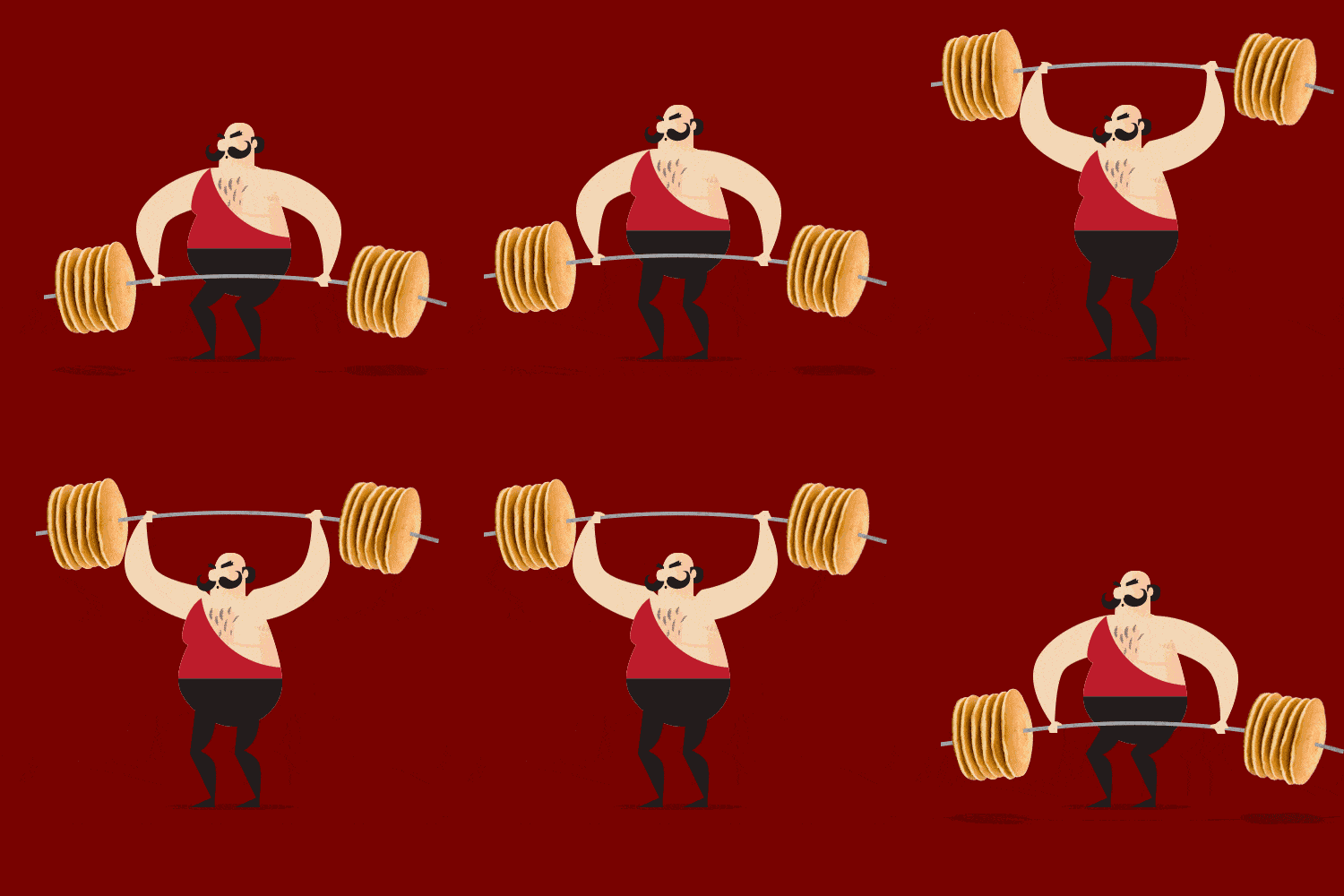
Which would be the dominant energy system in this physical activity?
ATP-PC System
Lactic Acid System
Aerobic System
The ATP-PC system is utilised during what exercise intensity?
Sub-maximal intensity (<85% MHR)
High Intensity (85% MHR)
High Intensity (95% MHR)
At rest
What is the chemical compound that enables the muscles to contract?
ADP
ATP
ABC
APT
ATP stands for what?
Aerobic Tri-potassium
Adenosine Tri-phosphate
Adrenaline Twitch Protein
Anaerobic Triple Phosphate
What is a function of adrenaline?
Increases stimulation of the parasympathetic nervous system
Increases heart rate
Decreases glycogenolysis
Decreases heart rate
Which hormone converts glucose to glycogen?
insulin
glucagon
both insulin and glucagon
neither insulin nor glucagon
Which hormone converts glycogen to glucose?
insulin
glucagon
both insulin and glucagon
neither insulin nor glucagon
STARCH is
monosaccharide
disaccharide
oligosaccharide
polysaccharide
What is the polysaccharide used by animals to store glucose?
glycogen
fructose
starch
cellulose
The organelle that makes ATP or energy is all cells is
Mitochondria
Chloroplast
Nucleus
Vacuole
The control center of the cell. It contains the DNA
Vacuole
Chloroplast
Nucleus
Mitochondria

Cell parts that build proteins according to the DNA code
Mitochondria
Chloroplast
Nucleus
Ribosomes

