
 Worksheets
Chemical Reactions
Total questions: 103
Worksheet time: 3hrs 39mins
Which of the following are signs of a chemical reaction?
Formation of a gas
A change in temperature
A change in color
A change in size
In a chemical reaction, the number of atoms in the reactants and the products...
Must be the same
Must be different
Which of these is NOT a sign of a chemical reaction?
A phase change
Formation of a precipitate
A color change
A temperature change
When a chemical reaction occurs...
New molecules and atoms are formed
Molecules and atoms are rearranged
Molecules and atoms disappear
Molecules and atoms are destroyed

Is the chemical equation here balanced?
Yes
No
Imagine you have an unknown substance in your hand. You know that it has a mass of 100g and a volume of 10cm3. What is the density of this unknown substance?
5g/cm3
11g/cm3
10g/cm3
25g/cm3
In a cup you have 50g of water. This means you have how many mL's of water?
Remember: water has a density of 1g/mL.
10mL
74mL
100mL
50mL
A pure substance is made of how many different types of atoms/molecules?
4
3
1
2
A mixture is made of at least how many different types of atoms/molecules?
2
1
4
7
You have 2 chemicals, CHEMICAL A and CHEMICAL B. They are both liquids. When you combine them you notice some crystals starting to form within them. Did a chemical reaction occur?
Yes
No
You have a large glass of water and you stir salt into it until all the salt completely dissolves. Is this a chemical reaction?
Yes
No

This is the decomposition reaction of hydrogen peroxide. According to the law of conservation of mass, if you start with 40g of hydrogen peroxide you should end up with _____g of water and oxygen combined.
10
20
30
40
You have a beaker full of water. If you add a solid substance to the beaker and the water level rises, is this a chemical reaction? Why or why not?
Yes because it is a mixture now.
No because there was no sign of a chemical reaction.
Yes because the water moved.
No because the temperature changed.
Your pet rock has a density of 150g/cm3. You know it has a volume of 5cm3. What is its mass?
800g
750g
5g
1,000g
Your dog has a mass of 2,000g and a volume of 500cm3. What is your dog's density?
1g/cm3
5g/cm3
12g/cm3
4g/cm3
A substance that is formed as the result of a chemical reaction is a __________________
Product
Reactant
Starters
Enders
A change in the shape of an object is an example of _________________.
a chemical change
energy
an endothermic change
a physical change
Which one shows that a chemical reaction has occurred?
dissolving
melting
formation of a gas
bending
What is the BEST definition of a chemical reaction?
A change in matter that produces one or more NEW substances
When two things combine and EXPLODE.
In the equation 2Mg+O2 → 2MgO which are the reactants?
A substance that cannot be broken down into any other substance by ordinary chemical means is called
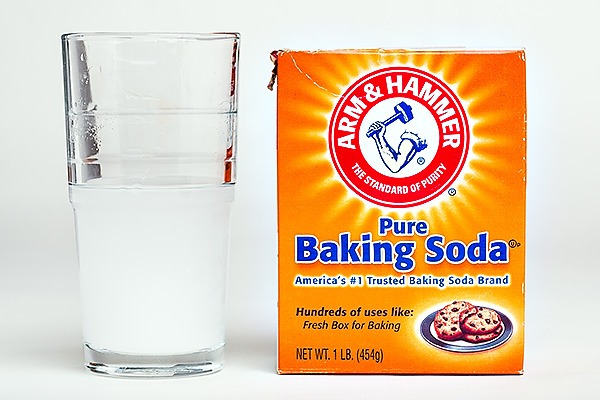
NaHCO3 is an example of

What are the products of the chemical reaction pictured?
CH4 and CO2
CH4 and O2
CO2 and 2 H2O
O2 and H2O

CH4 + 2O2 → CO2 + 2H2O
How many oxygen atoms are in the products for the chemical reaction below?
4Fe + 3O2 → 2Fe2O3
2
3
5
6
The Law of Conservation of Mass says that matter can neither be __________ or __________.
created; destroyed
recycled; renewed
subtracted; added
joined; separated
How many atoms are in the products below?
4Fe +3O2 → 2Fe2O3
7
10
17
20
H2 + O2 --> H2O

Two substances combine into 1 substance.
Synthesis
Decomposition
Single Replacement
Double Replacement

One substance breaks down into two or more substances.
Synthesis
Decomposition
Single Replacement
Double Replacement

One element trades places with another element in a compound.
Synthesis
Decomposition
Single Replacement
Double Replacement

When the positive ion of one compound replaces the positive ion of another compound to form two new compounds.
Synthesis
Decomposition
Single Replacement
Double Replacement
A + B --> AB
Synthesis
Decomposition
Single Replacement
Double Replacement
AB --> A + B
Synthesis
Decomposition
Single Replacement
Double Replacement
A + BC --> B + AC
Synthesis
Decomposition
Single Replacement
Double Replacement
AB + CD --> CB + AD
Synthesis
Decomposition
Single Replacement
Double Replacement
C + H2 --> CH4
Synthesis
Decomposition
Single Replacement
Double Replacement
Ni(ClO3)2 --> NiCl2 + O2
Synthesis
Decomposition
Single Replacement
Double Replacement
Cl2 + KI --> KCl + I2
Synthesis
Decomposition
Single Replacement
Double Replacement
HCl + NaOH --> NaCl + H2O
Synthesis
Decomposition
Single Replacement
Double Replacement

Matter and mass can not be
Shaken or stirred
Made
created or destroyed
Transferred

Which type of reaction has only one reactant?
synthesis
Double replacement
Chemical reaction
decomposition
4Si + S8 --> 2Si2S4
What type of reaction is this?
Synthesis
Decomposition
Single displacement
Double displacement
3Mg + N2 --> Mg3N2
What type of reaction is this?
Synthesis
Decomposition
Single displacement
Combustion
What type of reaction is this?
P4 + 3O2 --> 2P2O3
Synthesis
Decomposition
Single displacement
Combustion
2H2 + O2 --> 2H2O
Zn + 2HCl --> ZnCl2 + H2
AgNO3 + NaCl → AgCl + NaNO3
2HI --> H2 + I2
Which of the following general formulas represents a single-replacement reaction?
AB → A + B
A + B → AB
A + BC → AC + B
AB + CD → AD + CB

The Law of Conservation of Mass states that the total mass of the reactants should be
More than the mass of the products
Equal to the mass of the products
Ignored during the reaction
Less than the mass of the products

Which of the following reactions involves the ions of two compounds exchanging places to form two new compounds?
Synthesis
Double replacement
Combustion
Single Displacement

When balancing equations, the rule is that you can only add, change, and remove ____________
Coefficients
Mass
Subscripts
Elements

Balance this equation.
_CF4 + _Br2 -- _CBr4 + _F2
2,1,2,1
1,2,2,1
1,2,1,2
2,2,2,2
What is the formula for rate of reaction
Quantity of product X Time required
Quantity of product / Time required
Quantity of product + Time required
We can describe the rate of a reaction best with the following word.
displacement
speed
mass
What must be met for reactant collisions to result in a successful product?
The reactants must be mixed with each other in the proper proportions.
The reactants must collide with enough energy, and be in the right positions.
The reactants must have enough energy, and form the activated complex.
What happens to the rate of a reaction when temperature increases?
The rate of reaction slows down
The rate of the reaction speeds up
The rate of reaction stays the same
True or False: Increasing the temperature will increase the kinetic energy of particles.
false
true
True or False: Lowering the temperature will speed up a reaction.
false
true
True or False: Catalysts allow reactions to proceed at a faster rate.
True
False
What do we call a substance that increases the rate of a reaction without being used up during the reaction?
catalyst
product
reactant
True or False: The smaller the surface area of reactants equals a slower reaction speed
True
False
True or False: Increasing the concentration of the reactants will slow down the reaction.
True
False
True or False: A catalyst increases the efficiency of collisions between reactants.
true
false
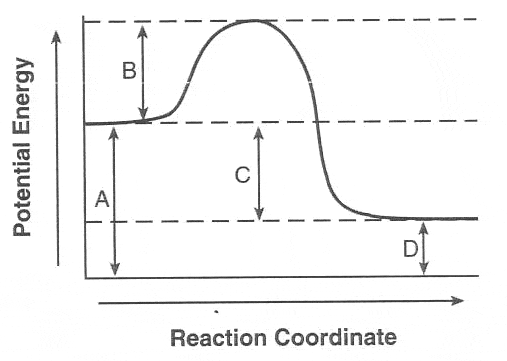
Look at the picuture: Is this an exothermic or endothermic reaction?
Endothermic
Exothermic
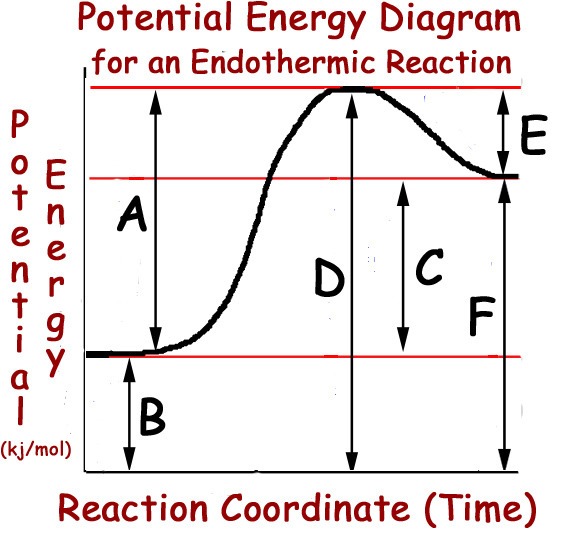
Look at the picture: Is this an exothermic or endothermic reaction?
Endothermic
Exothermic
True or False: Grinding a seltzer tablet into powder increases the rate of reaction due to increased surface area
True
False
A change of reaction rate is possible only by adding a catalyst
Why does a higher temperature increase the rate of a reaction?
Energy in the system is increased
Energy in the system is decreased
Energy in the system is maintained
Why does a higher concentration increase the rate of reaction?
higher concentrations increase the frequency of collisions
higher concentrations decrease the temperature
Predict the rate of reaction when the concentration of reactants is increased
Reaction rate will increase.
Reaction rate will decrease.
Catalysts will form to decrease the rate of reaction.
In a chemical reaction, how quickly or slowly reactants turn
into products is called the
Catalyst Rate
Reaction Rate
Concentration Rate
What is the name given to a catalyst in the human body?
Reactant
Product
Enzyme
Predict the reaction rate response to increased concentration of reactants
Faster reaction rate
Slower reaction rate
Constant reaction rate
Does a temperature increase causes particles to speed up, slow down or increase concentration?
Slow down
Speed up
Increase concentration
How does a catalyst work in speeding up a reaction?
By lowering the activation energy of a reaction
By raising the activation energy of a reaction
By raising the concentration of reactants of a reaction
What happens to heat in an exothermic reaction?
Heat is taken in
Heat is released
Why does a higher concentration of reactants increase the rate of reaction?
it increases the frequency of particle collisions
it lowers the activation energy
it increases the energy of particle collisions
This is what we call the level of energy required to break the bonds of the reactants.
Carbonic energy
Activation energy
Concentration energy
Reactants or Products: These are jocated on the left side of the chemical equation
reactants
products

