
Font size
 Worksheets
Chemistry in Biology
Total questions: 65
Worksheet time: 37mins
An atom that has lost or gained electrons is called a(n)_________
All organic compound contains the element ________.
A bond that is formed when electrons are shared between atoms.
Two or more elements that are chemically bonded together are called?
Neutrons
Compounds
Solutions
Protons
Which of the following is NOT a subatomic particle?
Proton
Neutron
Electron
Element
This type of bond is formed when electrons from one atom are transferred to another atom.
Ionic
Covalent
Adhesion
Cohesion

Neutrons have ___________ charge.
positive +
negative -
no charge (neutral)

Protons have a ________ charge.
positive +
negative -
no charge (neutral)
Hy
HE
Ca
Co
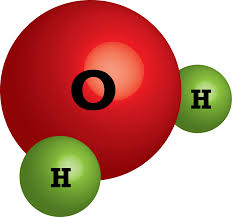
How many atoms of Hydrogen are in this compound?
1
2
3
4
Anything that takes up space and has mass....
chemistry
weight
object
matter
The smallest basic unit of matter is the
element
compound
atom
cell
All matter is made of
atoms
cells
energy
compounds
Which one of these is NOT a sub-atomic particle?
proton
neutron
nucleus
electron
What two sub-atomic particles are found in the nucleus of an atom?
Neutrons and Protons
Shells and Electrons
Electrons and Protons
Electrons and Neutrons
When an atom loses an electron, it becomes a
positive ion
negative ion
neutral ion
neutral atom
Valence electrons are found
in the innermost energy level of an atom
in the middle energy levels of an atom
in the outermost energy levels of an atom
True or False
Atoms can share electrons
True
False
In a covalent bond, electrons are
Gained
Pulled apart
Shared
In the nucleus
In ionic bonds, electrons are
Gained or lost
Shared
Mixed randomly
Negatively charged
Positive ions
Gain electrons
Lose electrons
Negative ions
Gain electrons
Lose electrons
Atoms are made up of
neutrons, protons, and electrons
pretons, newtons and eletrons
none
Living things are composed mainly of three elements
carbon, hydrogen, and oxygen
carbon dioxide,
only oxygen
none of the above
Stores genetic information
carbohydrates
lipids
proteins
nucleic acids
Source of quick energy, it is the first organic compound burned by the body.
carbohydrates
lipids
proteins
nucleic acids
Long-term storage of energy; contains the most energy per gram of any of the organic molecules.
carbohydrates
lipids
proteins
nucleic acids
The monomers of this organic compound are called "monosaccharides".
carbohydrates
lipids
proteins
nucleic acids
Two of these organic compounds are DNA and RNA.
carbohydrates
lipids
proteins
nucleic acids
The monomers of these organic compounds are called "amino acids".
carbohydrates
lipids
proteins
nucleic acids
The monomers of these organic compounds are called "nucleotides".
carbohydrate
lipid
protein
nucleic acid

The four types of organic compounds found in living things are...
Organic compounds always contain which element?
Fats, oils, waxes, cholesterol, hormones are all what type of organic compound?
carbohydrates
lipids
proteins
nucleic acids
What is the function of an enzyme?
speed up chemical reactions
Enzymes are what type of organic compound?
Lipids
Carbohydrate
Protein
Nucleic Acid
Which of the following are organic compounds?
Check all that apply.
carbohydrates
lipids
protein
water
nucleic acids
Rice, potatoes, bread and legumes are good sources of which organic compound?
carbohydrates
lipids
proteins
nucleotides
What are the monomers of proteins?
What elements are present in all proteins?
CHO
CHON
CHOP
CHONP
Macromolecules are made of repeating subunits called...
monomers
monosaccharides
polymers
polysaccharides
A __________ consists of many monomers bonded together.
monomer
hydrocarbon
peptide
polymer
The special properties of water that causes water molecules to cling to other water molecules is called...
surface tension
adhesion
cohesion
high specific heat
A water strider can skate along the surface of water because:
Low surface tension of water
Hydrogen bonds result in water cohesion (surface tension)
Covalent bonds result in water cohesion
Water striders have adapted to take advantage of water cohesion
Water is a polar molecule because:
The molecule has two poles, at which it is colder than the other regions of the molecule.
The water molecule is neutral
The unequal sharing of electrons gives the water molecule a slight negative charge near its oxygen atom and a slight positive charge near its hydrogen atoms.
The unequal sharing of electrons gives the water molecule a slight negative charge near its hydrogen atoms and a slight positive charge near its oxygen atom.

What element symbol is "C"?
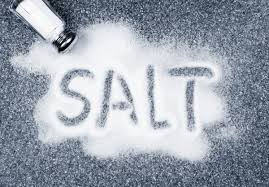
Is NaCl (table salt) an organic or inorganic compound?

What is the atomic number of the element Phosphorus?
31
16
15
46

How many electrons are in the element Nitrogen?
14
7
21

What is this enzymes optimal temperature?
10*C
40*C
50*C
70*C
The indicator "Lugol's iodine" tests for the presence of which organic compound?
simple sugars
protein
fats/lipids
starch
If an element has an atomic number of 11 and a mass number of 23, how many protons does it have?
11
12
23
34
If an element has an atomic number of 16 and a mass number of 31, how many neutrons does it have?
15
16
31
47
The indicator "Biuret's Solution" tests for the presence of which organic compound?
simple sugars
protein
fats/lipids
starch
If an atom gains 2 electrons in an ionic bond, what charge would the atom have?
+2
-2
It depends on the number of neutrons in the atom

The picture is illustrating the process of...

The following figure illustrates the process of...

How many water molecules are released in the formation of this polymer?
1
2
3
4
Water is used to break bonds between polymers in the process of...
Dehydration synthesis
This process produces water as a by-product.
Hydrolysis

