
 Worksheets
Periodic Table WebQuest
Total questions: 68
Worksheet time: 44mins
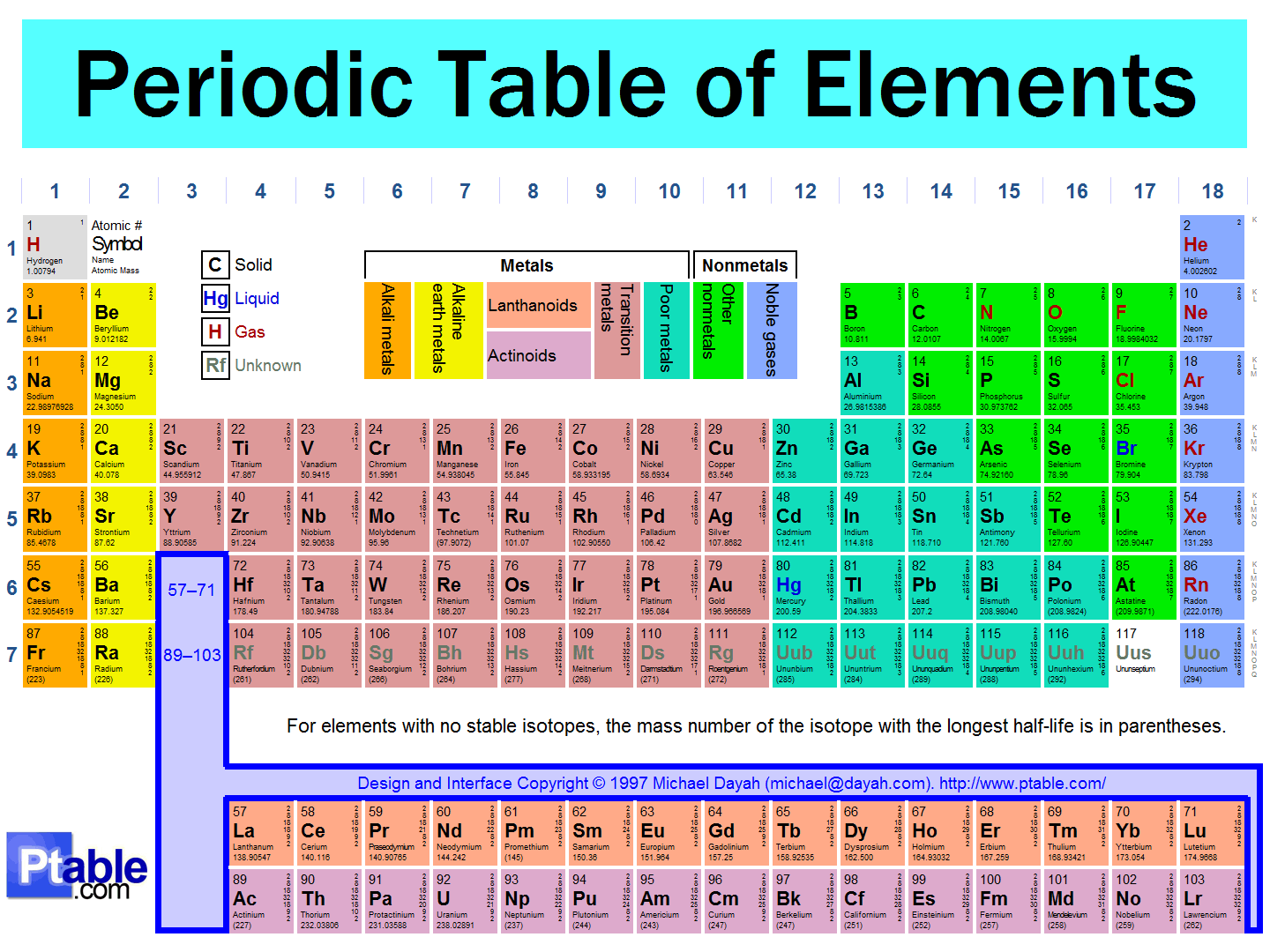
The vertical (up and down) columns in the Periodic Table are called
groups
towers
periods
atomic numbers
The vertical (up and down) columns in the Periodic Table are called
(a)
Name this group: These metals are the most reactive.


Name this group: These metals are the second most reactive.


Name this group: These metals contain familiar metals such as gold, iron, and copper.


I am a metal
I am in group 2
I am in period 6
I am…
Mo
Re
S
Ba
I am a nonmetal
I am in period 2
I am in group 16/6A
Ba
Si
Ba
O
Find an element with similar chemical properties to Barium (Ba).
Ca an Ra, because they are in the same group and have similar chemical properties.
Cs and La, b/c they are in the same period number.
Ca and Y, b/c they are 90 degree angle and have similiar properties.

Elements in the same group or family have the same number of
neutrons
valence electrons
electrons
energy levels
What are the elements found along the "staircase" called? They have properties of both metals and non-metals.
Metalloids
Non-metals
Transition metals
Metals
Which of the following elements is most likely to have similar properties to those of sodium (Na)?
Magnesium (Mg)
Sulfur (S)
Francium (Fr)
Titanium (Ti)
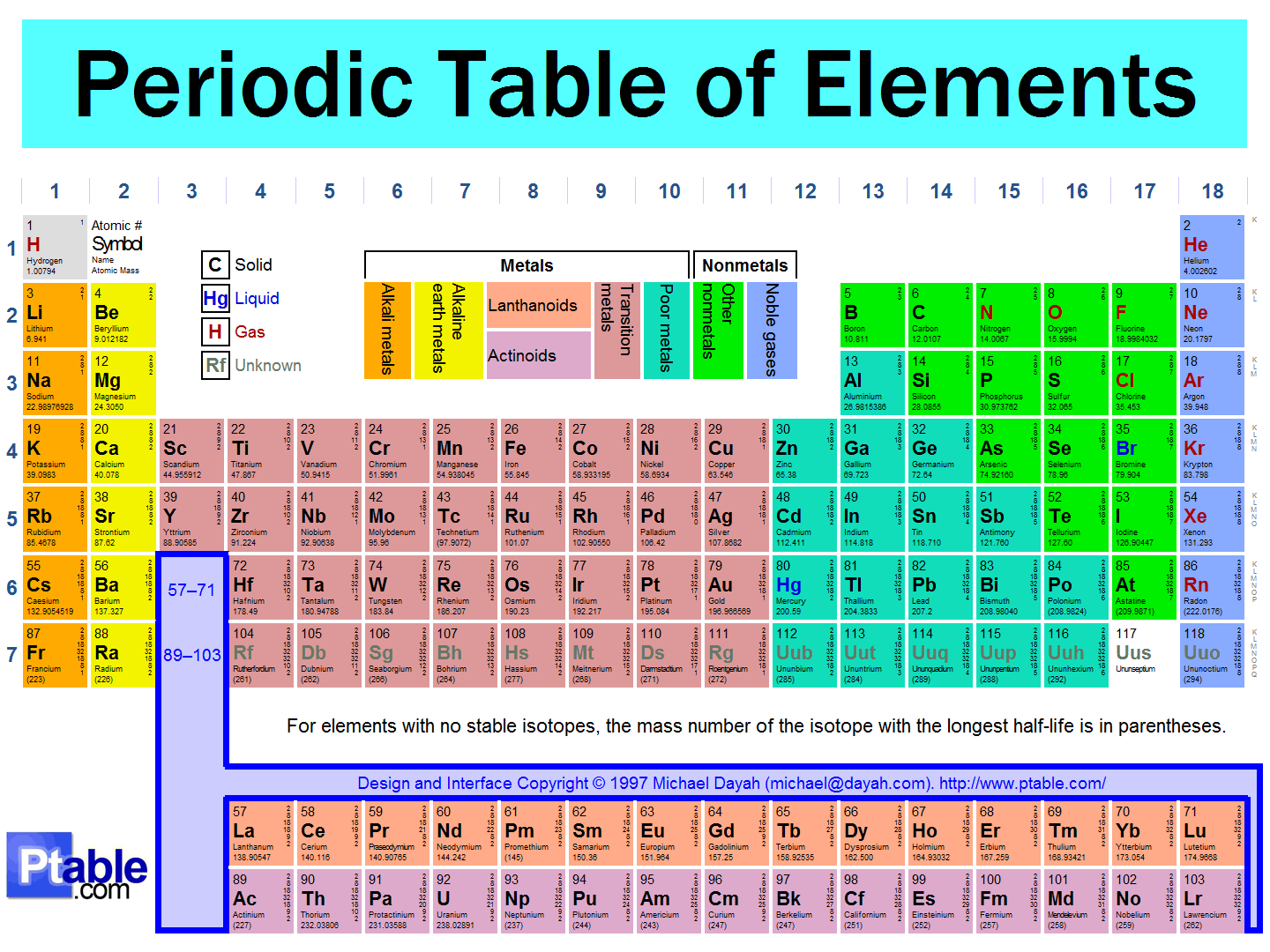

Identify the group / family:
(a)

Identify the group / family:
(a)

Identify the group / family:
(a)

Identify the group / family:
(a)

Identify the group / family:
(a)

Identify item #1
Chemical symbol
Atomic number
Atomic mass
Element name
Mass number
Identify item #2
Chemical symbol
Atomic number
Atomic mass
Element name
Mass number
Identify item #3
Chemical symbol
Atomic number
Atomic mass
Element name
Mass number
Identify item #4
Chemical symbol
Atomic number
Atomic mass
Element name
Mass number

Identify the period:
Period 6
Period 5
Period 4
Period 7
Period 3
Match the following:
Alkali Metal
Potassium (K)
Noble Gas
Krypton (Kr)
Halogen
Iodine (I)
Alkali Earth Metal
Strontium (Sr)
Transition Metal
Copper (Cu)
Match the following:
Metals
Shiny, good conductors of heat and electricity
Nonmetals
Dull, brittle, not good conductors of heat or electricity
Metalloids
Have properties of both metals and nonmetals
Mark (with an x) the element in period 3 of the alkali metal family.

Mark (with an x) the element in period 4 of the Halogen family.
Each row on a periodic table is called a (a) .
All of the elements in a period have the same number of (a) .
Each column on the periodic table is called a (a) .
Outer electrons that are involved in chemical bonds with other atoms are called (a) .
Every element in the first column (group one) has (a) electron in its outer shell.
Every element in the second column (group two) has (a) electrons in the outer shell.
How many valence electrons does nitrogen have?
(a)
How many valence electrons does phosphorus have?
(a)
How many valence electrons does arsenic have?
(a)
The noble gases and helium are all "happy," because their valence shell is (a) .
Helium has (a) electrons in its outer shell.
Although helium doesn't have eight valence electrons, it is still grouped with the (a) .
Metals are good at (a) electricity.
Metals are very (a) , most form compounds with other elements quite easily.
Metals usually make (a) when the compounds are dissolved in solution.
What is the group number associated with the alkaline metals?
(a)
Alkaline metals are very reactive because they all have (a) valence electron.
Alkaline Earth metals have (a) valence electrons.
All of the noble gases have full outer shells with (a) electrons (except helium).
The only noble gas without eight valence electrons is (a) , which is happy with only two.
Halogens have (a) valence electrons.
Halogens require only (a) electron in order to acquire a full outer shell.
(a) is the most reactive halogen and reacts with most elements on the periodic table.
Metalloids have properties of both (a) .

Identify the family:
(a)

Identify the family:
(a)

Identify the family:
(a)

Identify the family:
(a)

Identify the family:
(a)
What is the name of the element located in period #3 and family #14?
(a)
What is the name of the element located in period #5 and family #18?
(a)
What is the name of the element located in period #4 and family #1?
(a)
To which family does bromine belong?
(a)

