
Font size
 Worksheets
Unit 3 Atomic Structure and Radioactivity(Chem)
Total questions: 47
Worksheet time: 1hrs 20mins
Found in the nucleus
Protons
Neutrons
protons and neutrons
electrons and protons
a nitrogen atom that has gained three electrons
N−3
N+3
Mg
Phosphorus-28
If 75% of the isotopes of an element have a mass of 35.0 amu, and 25% have a mass of 37.0 amu, what is the average atomic weight?
35.0 amu
35.5 amu
36.0 amu
37.0 amu
All neutral atoms in a given sample of an element contain the same number of
protons and electrons
proton and neutrons
neutrons
electrons
Hydrogen has three isotopes with mass numbers of 1, 2, and 3, and has an average atomic weight of 1.00794 amu. From this you can conclude that
Most H atoms have a mass number of 1
More H atoms have a mass number of 2 than 1 or 3
The three isotopes occur in equal abundances
isotopes only have a mass of 1
Why are most atomic masses on the periodic table decimal numbers?
Only parts of a neutron are present in some atoms
Electrons only have a mass of 0.25 amu
They are a weighted average of naturally occurring isotopes
They are estimates

The average atomic weight of Neon is
22.99
21
90.0
20.18
Element X has two naturally occurring isotopes: X-24 (15%) and X-26 (85%). Why is 25 not a reasonable estimate for the average atomic weight?
X-26 is much more abundant
X-24 is much more abundant
The average must be higher than the heaviest isotope
25 is a reasonable estimate
Which statement correctly describes the charge of the nucleus and electron cloud?
Nucleus is positive, electron cloud is negative
Nucleus is neutral, electron cloud is negative
Nucleus is negative, electron cloud is negative
Nucleus is positive, electron cloud is neutral
An atom is electrically neutral when
there are no protons
there are no electrons
the number of protons and electrons is equal
there are more neutrons than protons
What is the net charge of an ion with 10 electrons, 11 protons, and 12 neutrons?
+1
-1
23
+2
What is the total number of electrons in a Mg+2 ion?
12
10
14
2
a Ca+2 ion differs from a Ca atom in that the neutral atom
has fewer protons
has 2 fewer electrons
has 2 more electrons
has more neutrons
When a Na atom forms an Na+ ion, the number of protons
increases by 1
stays the same
decreases by 1
become negative
An aluminum atom with 14 neutrons
Al+3
Aluminum-10
Aluminum-27
Si

The atomic number of bromine is
35
79.904
80
Can't tell from this picture
An atom with 17 protons, 18 neutrons, and 18 electrons....
is an ion: Cl-
has a mass number of 36
has an atomic number of 18
is Ar-36
An atom with 17 protons, 18 neutrons, and 18 electrons....
is an ion of Ar-
Has a mass number of 35
is Ar-36
is an ion of Cl+
Which of the following has a different number of ELECTRONS than the other three?
Mg+2
Ne
O−2
Br-
The number of which particle acts as its "address" on the periodic table?
protons
neutrons
electrons
protons plus neutrons
When an atom gains or loses electrons it becomes
an ion
an isotope
positively charged
a different element
Atoms of the same element with different numbers of neutrons are
identical
ions
isotopes
different elements
What is the total number of electrons is a Cr+3 ion?
18
21
24
27
Isotopes of the same element have the same
mass number
atomic number
number of neutrons
relative abundance

The mass number of this mystery atom is
13
24
11
35
The number of neutrons in this mystery atom is
13
24
11
35
Neutral atoms of carbon-12 and carbon-13 differ in their number of
protons
neutrons
electrons
nuclei

A reasonable estimate for the atomic weight of this element would be
10.7
10
11
10.5
When carbon-14 decays, it
becomes a different element
will be completely gone from the sample in one half-life
becomes an ion
increases in abundance in the sample
Which of the following has a different number of protons than the other three?
O−2
O−1
O+2
N
Carbon dating works because 14C
is not detectable
is extremely stable
decays at a steady and predictable rate
evaporates more in higher temperatures
Oxygen isotopes can be used to determine past climate by measuring the isotope ratios in
plants that lived long ago
precipitation that fell long ago
plants alive today
the atmosphere today
Nuclear fusion produces dangerous radioactive waste.
False; fission does that.
True, that's why we don't use it.
False, no waste or byproducts are produced.

What happened in the nucleus of the carbon atom? (Select all that are true)
The mass decreased
The mass stayed the same
The number of protons increased
The number of neutrons decreased

What happened in the nucleus of the oxygen atom? (Select all that are true)
The mass decreased
The mass stayed the same
The number of protons decreased
The number of neutrons increased
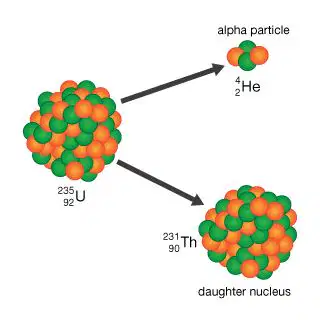
What kind of process is shown to the left?
ionization
fission
fusion
The atomic number of this mystery element is
13
24
11
35
Isotopes can be used to answer questions by measuring
the ratios of the different isotopes in things/places
the amount of radiation they emit
the number of neutrons they have
their charge
Carbon-14 is not found in fossil fuels because
Fossil fuels do not contain any carbon
It was not present on Earth millions of years ago
Plants do not use it for photosynthesis
it is unstable and has all decayed since the organisms died
By looking at an atom's location on the periodic table, you can determine its
number of electrons
atomic number
mass number
charge
Match the following changes in subatomic particles to their effect on the atom.
Number of protons
Number of neutrons
Number of electrons
The half-life of an isotope is
the time it takes for half of the atoms in a sample to decay
the number of protons plus neutrons
the difference between the number of protons and electrons
the time it takes of the atom to lose half of its electrons
If you have 500 atoms of the fictional radioactive element atomium-350, how many atoms would you expect to remain after TWO half-lives have passed?
500
250
125
150
How are oxygen-16 and oygen-18 different?
O-18 has two more electrons
O-18 has two more protons
O-18 has two more neutrons
O-18 has two fewer electrons
During radioactive decay, an atom of one element might change into an atom of a different element.
True
False
During nuclear _, large atoms break apart into smaller ones.
fusion
Nuclear power is generated using which process?
ionization
fission
fusion
protonation

