
 Worksheets
Government Unit 2
Total questions: 137
Worksheet time: 2hrs 40mins
What is Judicial Review?
The courts have the ability to do a retrial on a court case.
Judges have a review system for some court cases.
Congress reviews the court cases of the Judicial Branch to check and see if they followed the letter of the law.
The courts can review laws and declare them unconstitutional.

Federal government
Executive branch
Constitution
Congress

Powers of Congress that are stated in the Constitution.
expressed
reserved
implied
concurrent

The division of power between the central government and state governments is called
Federalism
In the Constitution, the implied powers of Congress come from the
Necessary and Proper Clause
Supremacy Clause
Relative Clause
Santa Clause
Which level of government provides garbage collection services to homes and businesses?
U.S. Government
Government of the State of California
County and municipal government
Which level of government has the most power over public schools?
Which level of government makes treaties and deals with foreign countries?
Which level of government declare war?
Which level of government can create an army and a navy?
Collecting taxes is a __________ power.
Federal
State
Concurrent
This choice is wrong
Which level of government can print money?
The branch of government that interprets laws.
Congress
Executive
Legislative
Judicial
What is the theoretical reason behind the Framers’ favoring of a bicameral Congress?
The British Parliament was bicameral.
The original 13 colonies followed a bicameral style.
One house can act as a check on the other.
The Constitution called for a bicameral legislature.
Implied powers can exist because of the ____________ clause.
due process
free exercise
commerce
necessary and proper
Powers explicitly granted to Congress by the Constitution are called?
Concurrent Powers
Inherent Powers
Expressed (Enumerated) Powers
Implied Powers
What is the meaning of the Necessary and Proper Clause?
Congress's ability to make laws is severely limited by the Constitution.
Congress is given limited authority to interpret reserved powers.
Congress must follow a concrete or strict interpretation of the Constitution.
Congress can make any law that it deems appropriate to carry out its expressed powers.
All of the following are powers of Congress except:
implied powers
expressed powers
inherent powers
judicial powers
Which term means "having two houses"?
Bicameral
Bipartisan
Two-party
Two-house
Collecting income taxes from your paycheck is an example of a(n)...
Implied power
Concurrent power
Expressed power
Inherent power
Declaring war is an example of a(n)...
Concurrent power
Expressed power
Inherent power
Implied power
What is the main job of the Legislative Branch?
to enforce laws
to make judgments in court about whether or not laws are constitutional
to make the laws
to follow the laws
Popular sovereignty refers to
the way a ruler governs the country
a government that gets its power from the people.
how amendments are added to the Constitution.
The idea of limited government says that
the government can has to choose how much power it has.
the government can only rule 50 states at a time.
the government may only do those things that the people have given it the power to do.
The principal of the constitution that state the powers of government are given to the three branches equally is known as
power inclusion.
ideal government.
separation of powers.
The idea that each branch of government is subject to be checked on by another branch is known as
check and balances.
power checking.
power sharing.
The power of _________ is the power of the courts to determine whether what the government is doing is permitted by the Constitution.
judicial review
judicial checks
governmental review
Federalism is
the way taxes are collected.
how a government can take all of the power.
the division of power among a central government and a smaller, regional or local government.
The principle that states each branch of government has the ability to limit the power of the other branches
Checks & Balances
Federalism
Popular Sovereignty
Separation of Powers
These are personal liberties (freedoms) and privileges that should be guaranteed to every citizen
Individual Rights
Separation of Powers
Limited Government
Popular Sovereignty
This principle states that the government should be divided into 3 branches: legislative, judicial, and executive
Popular Sovereignty
Separation of Powers
Limited Government
Checks & Balances
This is the idea that everyone, citizens and powerful leaders alike, must obey the law
Federalism
Republicanism
Limited Government
Popular Sovereignty
In Roman societies, they valued _____________ over the individual.
Security
The Common Good
Liberty
Freedom
This philosophy placed the Community over the needs of the Individual.
Democracy
Classical Republicanism
Federalism
Rights that everyone has, given to them by God or Nature, not a government.
Inalienable Rights / Natural Rights
Constitution
Freedom of speech
The right to bear arms
Self interest motivates individuals. Which idea is it?
Classical Liberalism
Classical Republicanism
Government exists to serve the community. Which is it?
Classical Liberalism
Classical Republicanism
This school of thought believes in individual rights. Which is it?
Classical Liberalism
Classical Republicanism
As a taxpayer, money goes towards schools, infrastructure projects, libraries, building roads, and parks. Does this principle of our democracy fall within classical liberalism or classical republicanism?
Classical Liberalism
Classical Republicanism
Putting a person in quarantine to stop the spread of disease to a society is practicing which philosophy?
Classical Liberalism
Classical Republicanism
Classical Liberalism is most strongly linked with which of the following ideologies?
Nationalism
Collectivism
Individualism
Totalitarianism

A supporter of the ideas expressed in the image would be classified as a
Fascist
Communist
Classical liberal
Utopian socialist
Led to the writing of the U.S. Constitution
Declaration of Independence
Articles of Confederation
Charters of the Virginia Company of London
U.S. Constitution
The Anti-Federalists believed that a strong ___________would lead to tyranny, or oppressive rule.


Taxation

The primary author of the Declaration of Independence was
1776
grievance
Thomas Jefferson
unalienable rights
These were the people who wanted to ratify the new Constitution
Federalists
Anti-Federalists
These people argued that the Constitution did not protect individual rights, and that a bill of rights was needed to protect freedom of speech, religion, and the press
Federalists
Anti-Federalists
Alexander Hamilton, James Madison, and John Jay
Federalists
Anti-Federalists
Wanted a weak national government that would not threaten states’ rights
Federalists
Anti-Federalists


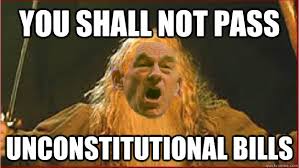
The Supreme Court ruling a State law unconstitutional is an example of what?
Judicial Review
Judicial Restraint
Judicial Activism
Jurisdiction

Rights of accused persons, including the right to due process of law
1st Amendment
5th Amendment
6th Amendment
8th Amendment
Anything not specifically written down as a power of the central government is reserved for the states
1st Amendment
3rd Amendment
9th Amendment
10th Amendment
Right to an impartial jury in civil cases
3rd Amendment
6th Amendment
7th Amendment
9th Amendment
Right to a speedy trial
5th Amendment
6th Amendment
7th Amendment
8th Amendment
Protection against unreasonable search and seizure
4th Amendment
5th Amendment
6th Amendment
8th Amendment
Freedom of the press
1st Amendment
2nd Amendment
6th Amendment
8th Amendment
Protection against cruel and unusual punishment
1st Amendment
4th Amendment
6th Amendment
8th Amendment
Right to a public trial and an impartial jury in criminal cases
5th Amendment
6th Amendment
7th Amendment
9th Amendment
Freedom to petition the government for settlement of a complaint
1st Amendment
4th Amendment
9th Amendment
10th Amendment
Freedom of assembly
1st Amendment
4th Amendment
8th Amendment
9th Amendment
Protection against excessive bail, excessive fines
2nd Amendment
4th Amendment
5th Amendment
8th Amendment
Freedom of speech
1st Amendment
3rd Amendment
7th Amendment
10th Amendment
Protection against double jeopardy
4th Amendment
5th Amendment
6th Amendment
9th Amendment
Right to bear arms
2nd Amendment
4th Amendment
9th Amendment
10th Amendment
Freedom of religion
1st Amendment
4th Amendment
9th Amendment
10th Amendment
What was the purpose of the Constitution?
It was created to break away from England.
It was a plan for how the government would run that guaranteed our rules, rights, and responsibilities.
It freed the slaves
It said that England and the U.S. would always be enemies.
What is the supreme law of the land in the United States
the Declaration of Independence
the Articles of Confederation
the US Constitution
Common Sense
Which of the following individuals can sign a warrant?
Teacher
Friend
Judge
Police Officer
What does 'due process' mean?
That someone doesn't have to testify against themselves
That people must be read their rights
That people have the right to a fair trial
That the government can't take your property without paying a fair price for it
That you can't be tried for the same crime twice
Acording to the 6th Amendment it says that anyone who is accused has the right to a ______ trial.
public
private
large
One of the 1st requirements of the 6th Amendment is the right to a _______ trial.
slow
speedy
small
What is an example of Cruel and Unusual Punishment?
50 years in Prison
Torturing the criminal
$100,000 bail
Community Service
What is the 10th Amendment?
The 10th Amendment is focused on international trade agreements.
The 10th Amendment states that powers not delegated to the federal government are reserved for the states or the people.
The 10th Amendment is related to freedom of speech.
The 10th Amendment is about the right to bear arms.
The first amendment guarantees
right to petition
right to bear arms
right to assemble
no search and seizure
The U.S. government wants to house troops in your home what amendment can you use to stop this?
3rd
8th
4th
6th
What is the main purpose of the 8th amendment in the U.S. Constitution?
To protect against cruel and unusual punishment
To guarantee the right to a speedy trial
To prevent the quartering of troops in private homes
To ensure the right to a fair trial
Which amendment in the U.S. Constitution guarantees the right to a fair trial?
3rd
8th
4th
6th
What is the significance of the 5th amendment in the U.S. Constitution?
To protect against cruel and unusual punishment
To guarantee the right to a speedy trial
To prevent self-incrimination
To ensure the right to a fair trial
What is the main purpose of the 4th amendment in the U.S. Constitution?
To protect against cruel and unusual punishment
To guarantee the right to a speedy trial
To prevent unreasonable searches and seizures
To ensure the right to a fair trial
What is the purpose of the 10th amendment?
How does the 10th amendment help the states?
allows to make own laws
retains some power to states
allows for different laws in different states
power to the states
What is the significance of the 1st amendment in the U.S. Constitution?
To protect freedom of speech and religion
To guarantee the right to a speedy trial
To prevent unreasonable searches and seizures
To ensure the right to a fair trial
Which amendment guarantees the right to bear arms?
1st
2nd
3rd
4th
Which amendment guarantees the right to a trial by jury?
5th
6th
7th
8th
What is the purpose of the 9th amendment?
To limit the powers of the federal government and reserve certain powers to the states or the people
To ensure equal representation for all states in the federal government
To establish a system of checks and balances between the federal government and the states
To protect rights not specifically mentioned in the Constitution
What is the significance of the 6th amendment in the U.S. Constitution?
To protect against cruel and unusual punishment
To guarantee the right to a speedy trial
To prevent self-incrimination
To ensure the right to a fair trial
I have a civil dispute that is over 20 dollars what am I guaranteed according to the 7th amendment?
trial by jury
a verdict in my favor
a hearing
nothing
The 5th amendment protects you from losing your property to the government unless
there is good reason
fairly compensated
told in advance
give something of higher value
The 4th amendment says that in order to search your property they have to have?
probable cause
warrant
suspicion
a random anonymous tip
The purpose of the Bill of rights is to?
give power to the central government
give power to the president
protect civil liberties
give power to the judicial branch
These Constitutional rights protect us from the government having too much power over all people.
civil rights
civil liberties
natural rights
all the above
What is the term for the governments' ensuring of equal protection and freedom from discrimination?
civil rights
civil liberties
civil air patrol
civil actions
What are the freedoms contained in the First Amendment sometimes called?
due process
essential freedoms
suffrage
civil liberties

Jensen has been in a wheelchair for most of his life. He enjoys being outside, but the curbs down the street have not been modified for wheelchair access, so he can't travel safely for very far. Is this a violation of his civil rights or his civil liberties?
Civil Rights
Civil Liberties
Both civil rights and civil liberties
no violation has occured
Which amendment protects citizens from unfair treatment by the state and local governments?
First
Fifth
Fourteenth
Fifteenth
Which amendment protects citizens from unfair treatment by the state and local governments?
First
Fifth
Fourteenth
Fifteenth
Choose the 2 due process amendments below.
6th
14th
5th
12th
The first 10 amendments are called _____
The Preamble
The Constitution
The Bill of Rights
Amendment Process
When you plead the fifth, what rights are you invoking?
Right to due process
Right to not self-incriminate
Right to no double jeopardy
Right to life

Which amendment gives you due process? This means everyone must follow the law. You cannot be brought to trial twice for the same crime. You do not need to tell on yourself.
Fifth Amendment
Sixth Amendment
Seventh Amendment
Eight Amendment


